
Pineapple coconut zucchini bread bakes up with a tender crumb, a glossy, lightly sweet top, and just enough tropical flavor to keep every slice interesting. The zucchini disappears into the batter while still doing its quiet work, and the crushed pineapple keeps the loaf moist without making it heavy. Toasted coconut on top gives the finished bread a little crunch and a nutty finish that plain zucchini bread just doesn’t have.
What makes this version work is balance. The zucchini brings moisture, the pineapple adds sweetness and softness, and the oil keeps the loaf supple even after it cools. The trick is draining the pineapple well and squeezing the zucchini dry before they go in. If either one carries too much liquid, the loaf bakes up dense in the middle and never quite sets the way it should.
Below you’ll find the small details that matter: how to keep the crumb from turning gummy, why the coconut belongs on top as much as inside the batter, and a few smart swaps if you need to adapt the loaf for your kitchen.
I squeezed the zucchini and drained the pineapple like you said, and the loaf baked up perfectly moist instead of soggy. The coconut on top toasted into this sweet little crust, and it sliced cleanly once it cooled.
Save this pineapple coconut zucchini bread for when you want a moist quick bread with a toasted coconut top and a bright pineapple finish.
The reason this loaf stays moist without turning heavy
Zucchini bread can go wrong in two opposite ways: dry and crumbly, or wet and gummy. This loaf avoids both by using just enough pineapple to add sweetness and moisture, while keeping the zucchini in a supporting role instead of letting it dominate the batter. The structure comes from the flour, eggs, and oil working together, so the bread stays tender without collapsing.
The biggest mistake is treating the produce like it can go straight into the bowl with all its moisture intact. Zucchini holds a surprising amount of water, and crushed pineapple brings even more. Once those two are combined, the batter needs to look thick and scoopable, not loose or pourable. If it seems thin before baking, the loaf will need far longer in the oven and still may sink in the center.
What each ingredient is actually doing in the batter
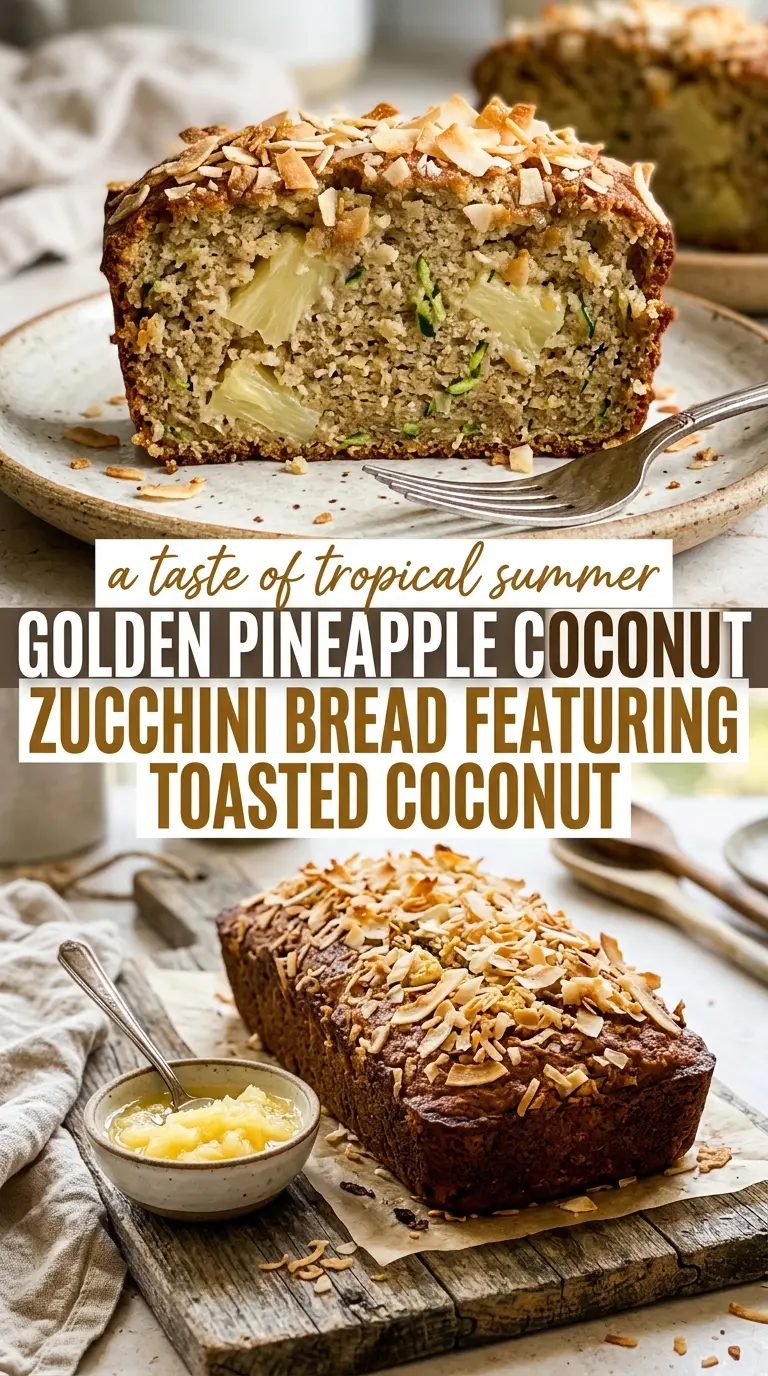
- Zucchini — This gives the loaf moisture and a soft crumb without a strong vegetable taste. Squeeze it dry after shredding, or the bread turns dense in the center.
- Crushed pineapple — The pineapple is what gives this loaf its bright sweetness and extra tenderness. Drain it well, but don’t press it bone-dry; a little fruit moisture is part of what makes the crumb so good.
- Vegetable oil — Oil keeps quick bread soft for days, which is why this loaf still tastes good after it cools. Melted butter would bring more flavor, but it won’t give the same plush texture.
- Shredded coconut — Coconut adds chew and a subtle toasty note inside the loaf, especially if you top the batter with a little extra before baking. Sweetened or unsweetened both work, but sweetened coconut will give you a sweeter slice.
- All-purpose flour — This gives the loaf its shape and keeps the crumb from becoming too wet. Swapping in whole wheat flour will make it heavier, so if you do that, replace only half the flour.
- Baking soda — Baking soda helps the loaf rise and also reacts with the pineapple’s acidity. Don’t leave it out or the bread will bake up flatter and denser.
How to mix the batter so the loaf rises instead of sinking
Start with the wet ingredients
Whisk the eggs, oil, and sugar until the mixture looks smooth and a little glossy. That step helps dissolve the sugar enough that the finished loaf bakes with a finer crumb. Once the zucchini and pineapple go in, the batter will look loose and shaggy at first, and that is normal.
Fold the dry ingredients in last
Add the flour, baking soda, and coconut only until no dry streaks remain. Overmixing works the gluten too hard and gives you a tight, rubbery loaf instead of a tender one. Stop as soon as the batter looks evenly combined, even if a few small lumps remain.
Watch the coconut on top
Sprinkle extra coconut over the batter before it goes into the oven. It browns into a sweet, crisp cap that gives each slice a little texture contrast. If your oven runs hot, tent the loaf lightly with foil during the last part of baking so the coconut doesn’t darken too fast.
Make it dairy-free as written
This loaf already skips dairy, so you don’t need to change a thing. That’s part of why the crumb stays soft and the pineapple flavor comes through cleanly without any butter competing for attention.
Swap in walnuts for a little crunch
A handful of chopped walnuts adds a nutty edge that works well with pineapple and coconut. Fold them in with the dry ingredients so they distribute evenly, and expect a more textured slice with a little less of that soft, cake-like feel.
Use muffin tins for faster baking
The same batter works well as muffins if you want grab-and-go portions. Fill the cups about three-quarters full and start checking them early, since they bake much faster than a loaf and dry out if you wait for the center to look too dark.
Storage and Reheating
- Refrigerator: Store tightly wrapped for up to 5 days. The crumb stays moist, though the coconut topping softens a bit after the first day.
- Freezer: This loaf freezes well. Wrap slices individually and freeze for up to 3 months, then thaw at room temperature so the texture doesn’t turn damp.
- Reheating: Warm slices in a toaster oven or a dry skillet over low heat. A microwave works in a pinch, but too much heat makes the crumb rubbery and dulls the coconut topping.
Questions I get asked about pineapple coconut zucchini bread
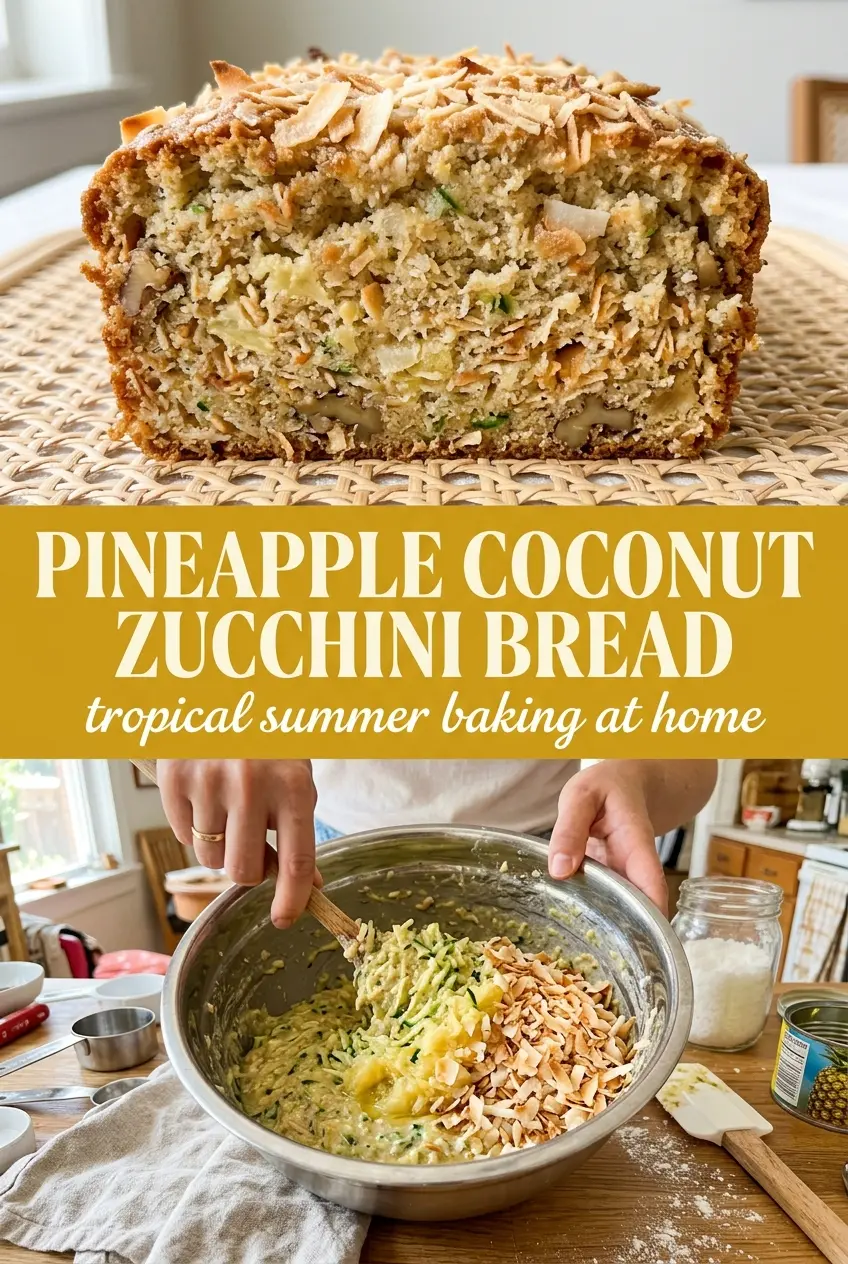
Pineapple Coconut Zucchini Bread
Ingredients
Equipment
Method
- Preheat the oven to 350°F and grease a loaf pan.
- Toast the shredded coconut lightly in a dry skillet over medium heat until golden, about 2-4 minutes, watching closely so it doesn’t burn.
- Whisk the eggs, vegetable oil, and granulated sugar until smooth, about 30-60 seconds.
- Stir in the shredded zucchini and drained crushed pineapple until evenly distributed, with no dry pockets.
- Fold in the all-purpose flour, baking soda, and toasted shredded coconut until just combined and the batter looks thick, avoiding overmixing.
- Pour the batter into the prepared loaf pan and sprinkle extra coconut on top.
- Bake at 350°F for 55-60 minutes, until a toothpick inserted in the center comes out clean and the top looks golden.
- Cool in the pan for 10 minutes before transferring to a wire rack, so the loaf sets without steaming.