
Translucent peach slices suspended in a thick amber syrup give these peach preserves the kind of old-fashioned finish that makes an ordinary piece of toast feel worth sitting down for. The fruit stays intact instead of cooking down into a uniform mash, so every spoonful brings tender slices, glossy syrup, and that clean peach flavor that tastes like it came straight from the orchard. The vanilla softens the edges without turning the preserves dessert-like, and the lemon keeps the sweetness bright instead of flat.
The trick here is patience at the start and restraint at the end. Letting the peaches sit with the sugar and lemon pulls out their juices before the pot ever hits the stove, which means you start with a natural syrup instead of forcing the fruit apart over high heat. Then you simmer until the liquid thickens and the peaches turn translucent, not until everything collapses. That small difference is what gives you preserves with real texture.
Below, you’ll find the timing that keeps the fruit whole, the one ingredient that matters more than you’d think, and a few useful ways to use these preserves beyond biscuits.
The peaches stayed in actual slices instead of turning to mush, and the syrup set up beautifully after cooling. I used the preserves on biscuits the first day and brushed the rest over grilled pork the next night.
Save these peach preserves for the days when you want glossy fruit, a vanilla-scented syrup, and a jar that tastes as good on biscuits as it does over pork.
The Secret to Keeping Peach Slices Whole in Preserves
Most peach preserves go wrong because the fruit gets bullied. High heat, constant stirring, and too much time in the pot turn those pretty slices into peach sauce before the syrup has a chance to tighten up. The answer is to let the sugar draw out the juices first, then cook at a steady boil only until the peaches look translucent and the liquid coats the back of a spoon.
The other mistake is judging doneness while the mixture is still scorching hot and loose. Hot preserves always look thinner than they will after cooling. If you keep cooking until they seem thick in the pot, you usually end up with jam that sets too firmly or fruit that breaks apart. Stop when the syrup has body and the peaches still hold their shape.
What the Peaches, Lemon, and Vanilla Are Each Doing Here
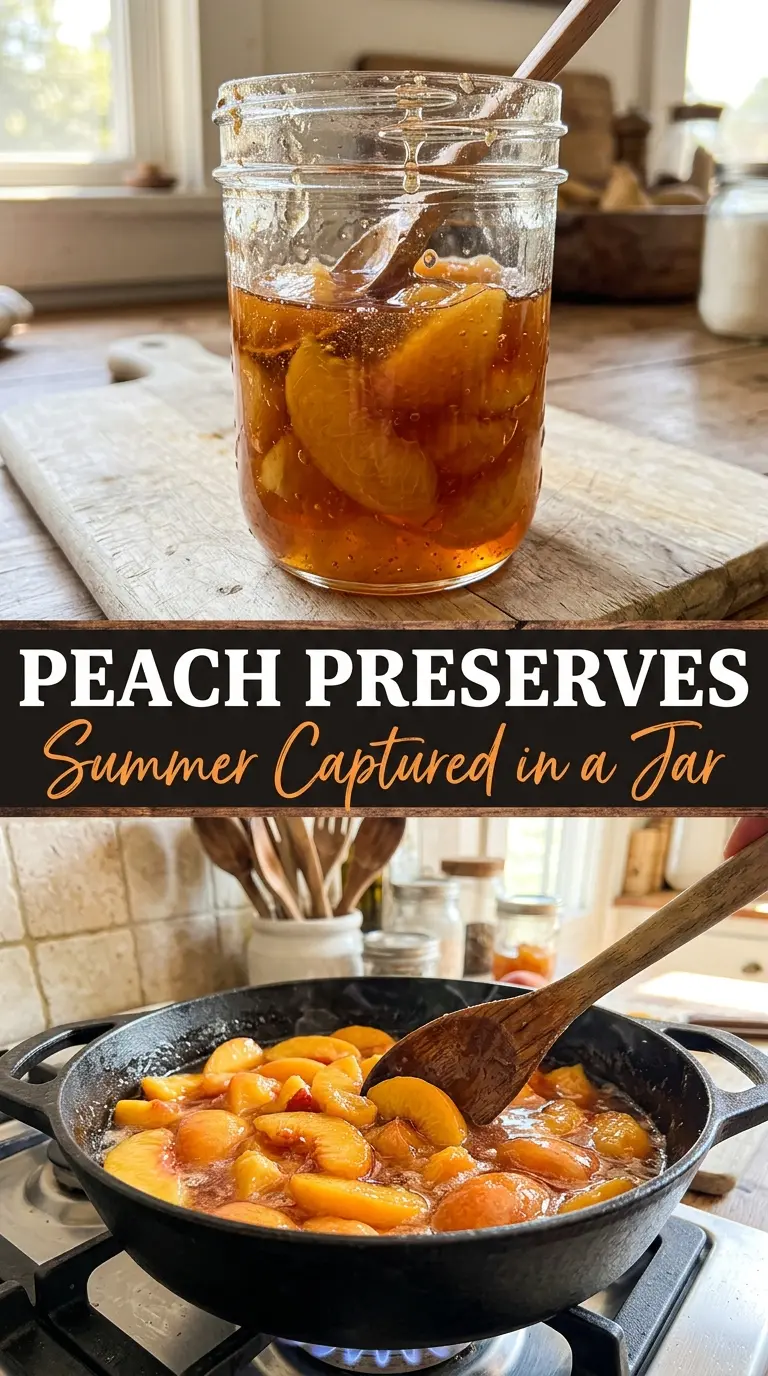
The peaches need to be ripe and fragrant, but not soft enough to fall apart when sliced. That middle ground gives you preserves with visible fruit instead of a puree. If your peaches are slightly underripe, the finished jars can taste flat, so let them sit on the counter until they smell sweet at the stem.
Sugar does more than sweeten here. It pulls moisture from the fruit and helps create the syrup that suspends the slices. Lemon juice keeps the preserves from tasting cloying and also helps the texture set a little more cleanly. Vanilla is subtle, but it rounds out the sharp edges and makes the peach flavor taste deeper.
- Peaches — Use fresh, ripe peaches for the best flavor. Peel them so the syrup stays smooth and the texture feels polished in the jar.
- Sugar — Don’t cut this too aggressively or the preserves won’t have the body you’re after. You can reduce it a bit if your peaches are very sweet, but the syrup will be looser.
- Lemon juice — Fresh lemon juice gives the cleanest finish. Bottled works in a pinch, but the flavor is a little duller.
- Vanilla extract — Add it at the end so the aroma stays bright. Vanilla bean paste works too if you want those tiny specks in the jar.
How to Cook the Syrup Without Breaking the Fruit
Macerating the Peaches
Combine the sliced peaches with the sugar and lemon juice, then let them sit until a glossy syrup forms at the bottom of the bowl. The fruit should look wetter and slightly shrunken, and you should see enough liquid to help the pot come up to temperature evenly. If you rush this stage, the peaches need more heat to release their juices later, and that extra heat is what starts breaking them down.
Building the Boil
Transfer everything to a heavy pot and bring it to a boil over medium heat. A heavy pot matters because it spreads the heat and keeps the bottom from scorching while the sugar dissolves. Stir gently and only as needed to prevent sticking; aggressive stirring can tear the peach slices before they’ve had a chance to turn translucent.
Cooking to the Right Thickness
Let the mixture simmer until the syrup thickens and the fruit looks clear around the edges, which usually takes 30 to 45 minutes. You want a lively simmer, not a violent boil that throws syrup up the sides of the pan. If foam rises, skim it off with a spoon for a cleaner jar and a prettier finish. The preserves are ready when the syrup clings to a spoon and the peaches still hold distinct shape.
Finishing and Jarring
Stir in the vanilla off the heat so the aroma doesn’t cook away. Ladle the hot preserves into sterilized jars while the mixture is still fluid enough to pour cleanly. If you wait too long, the syrup can thicken in the pot and make it harder to pack the fruit evenly. Seal according to your preferred canning method or cool and refrigerate for short-term use.
Three Ways to Make These Peach Preserves Fit Your Kitchen
No Vanilla, Cleaner Peach Flavor
Leave the vanilla out if you want a sharper, more fruit-forward preserve. You’ll lose the warm background note, but the peaches will taste brighter and more straightforward, which works well if you plan to use the jars in savory dishes.
Lower-Sugar Version
You can reduce the sugar slightly, but expect a looser syrup and a shorter shelf life if you’re not canning them properly. The tradeoff is a less glossy finish and a more pronounced fresh-peach taste.
Freezer Jam Style for Easy Storage
If you don’t want to process jars, cool the preserves and freeze them in freezer-safe containers, leaving headspace at the top. The texture stays close to fresh preserves, though the fruit softens a little more after thawing.
Storage and Reheating
- Refrigerator: Store in a sealed jar for up to 3 weeks. The syrup may thicken more as it chills, which is exactly what you want.
- Freezer: Freezes well for up to 6 months in freezer-safe containers with headspace. Thaw overnight in the refrigerator.
- Reheating: Warm only what you need in a small saucepan over low heat or in short microwave bursts. High heat can make the fruit collapse and the syrup turn sticky.
Answers to the Questions Worth Asking
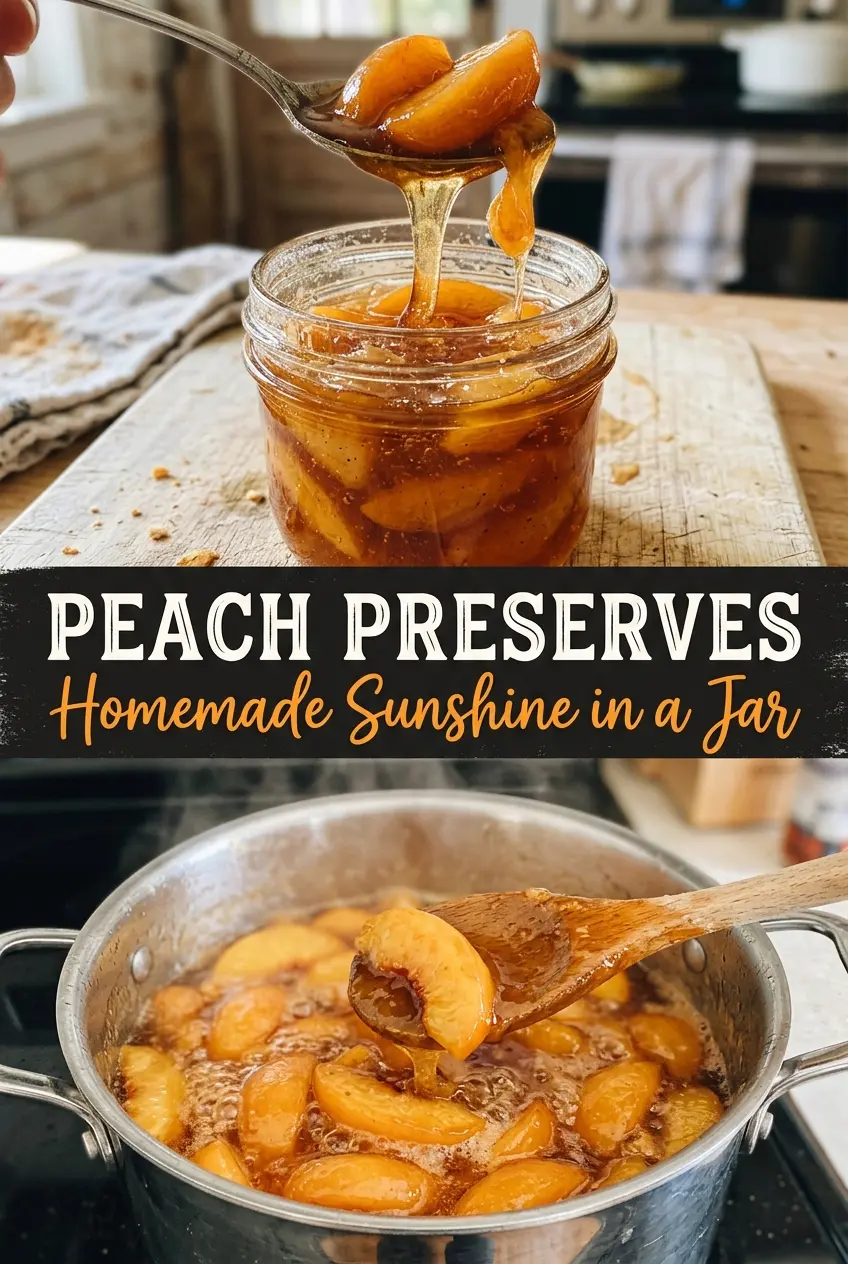
Peach Preserves Recipe
Ingredients
Equipment
Method
- Combine fresh peaches, sugar, and lemon juice in a bowl, then let stand to macerate for 2 hours.
- While the peaches macerate, avoid stirring so the syrup builds as fruit juices release, creating a thickened peach mixture.
- Transfer the macerated peach mixture to a heavy pot and bring it to a boil over high heat.
- Reduce to a simmer and cook for 30-45 minutes, stirring occasionally, until the fruit looks translucent and the syrup thickens.
- Stir in vanilla extract and cook for 1-2 minutes just until incorporated, leaving the preserves fragrant.
- Ladle the hot preserves into sterilized jars and let cool before sealing.