
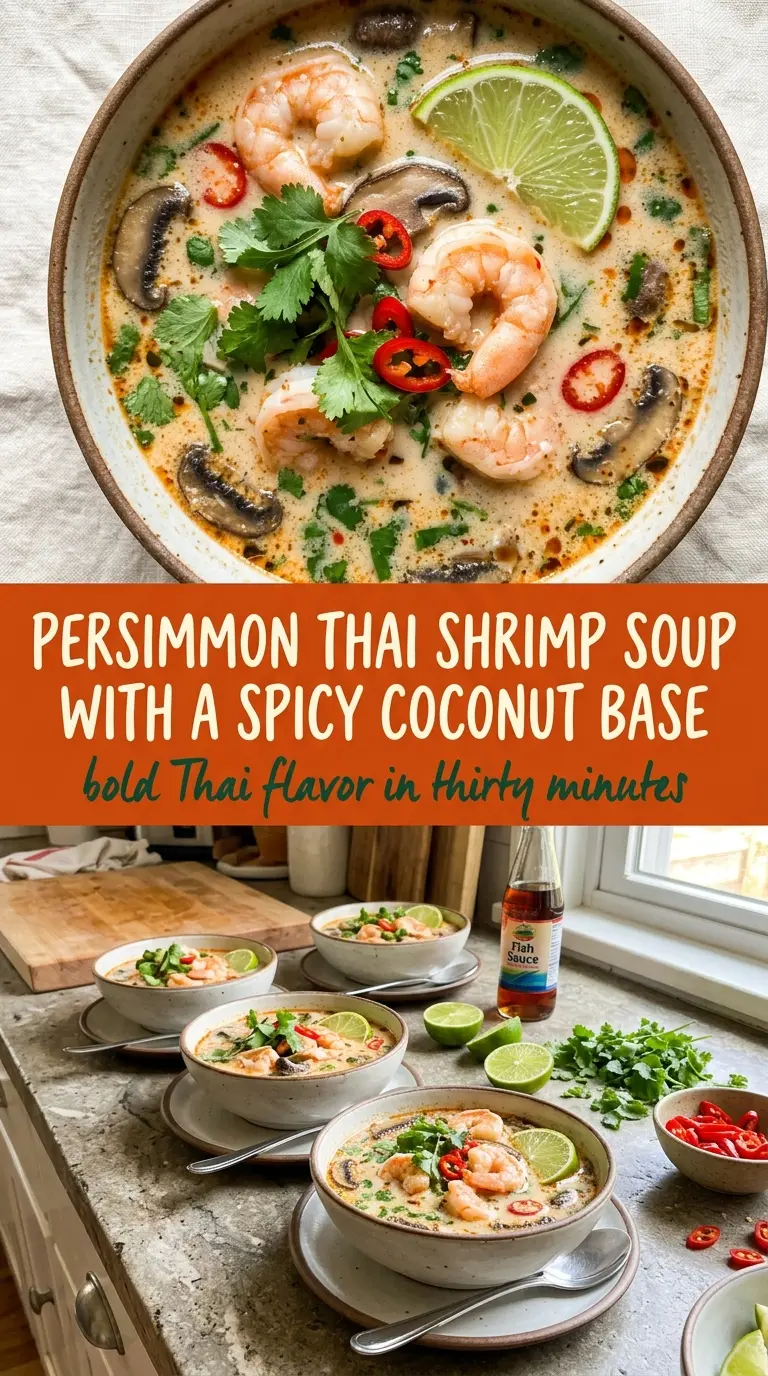
Plump shrimp, silky coconut broth, and a sharp hit of lime make this soup feel layered and bright instead of heavy. The broth picks up heat from red curry paste, warmth from ginger, and that unmistakable citrusy edge from lemongrass, so every spoonful tastes like it had a lot more work behind it than it actually did. The shrimp stay tender because they go in at the end, after the broth has already been built.
The key here is giving the aromatics a full minute in the oil before any liquid goes in. That short step wakes up the curry paste and softens the raw edge of garlic and ginger. Coconut milk also matters more than you might think: full-fat gives the broth body and helps it cling to the shrimp and mushrooms instead of tasting thin. By the time the lime goes in, the soup should smell rich and round with a clean citrus finish.
Below, I’ve added the little details that keep this soup from turning flat or overcooked, plus a few smart swaps if you need them. The process is straightforward, but the timing on the shrimp and the order of the liquids make all the difference.
The coconut broth turned out silky and the shrimp stayed tender, not rubbery. I loved how the lime at the end kept it bright, and my husband went back for a second bowl before I even sat down.
Save this Paleo Thai Shrimp Soup for a fast coconut curry-style dinner with bright lime and tender shrimp.
The reason the shrimp goes in after the broth tastes finished
Overcooked shrimp is the fastest way to ruin this soup. They only need a few minutes in hot liquid, and once they curl into tight little C-shapes and turn opaque, they’re done. If they simmer too long, they go firm and dry, and the broth starts tasting dull because you’ve lost that sweet seafood finish.
The other trap is building the soup too quickly and letting the coconut milk do all the work. The broth should already have a clear ginger-garlic-curry base before the coconut milk goes in. That way the soup tastes layered, not just creamy. If it seems flat at the end, it usually needs lime and salt, not more curry paste.
What Each Ingredient Is Actually Doing in This Dish
- Red curry paste — This is the backbone of the soup’s heat and color. Brands vary a lot, so taste yours if you know it runs salty or mild. If you use a very concentrated paste, start with a little less and add more only after the broth has simmered.
- Full-fat coconut milk — Use the full-fat kind from a can, not the carton version. You need the richness here to carry the spice and keep the broth from tasting watery. Light coconut milk will work in a pinch, but the soup won’t have the same silky body.
- Lemongrass — Fresh minced lemongrass gives the broth that clean, citrusy Thai note that dried herbs can’t really mimic. If you can’t find it, use a little extra lime zest and a strip of lemon peel simmered in the broth, then remove it before serving.
- Fish sauce — This doesn’t make the soup taste fishy; it deepens the savory base. If you need a substitution, use tamari or soy sauce for a similar salty backbone, but the flavor will be less round.
- Shiitake mushrooms — These add a meaty texture and an earthy note that balances the coconut milk. Button mushrooms will work, but they’re milder and won’t give the same depth.
How to build the broth so it tastes rich instead of flat
Wake up the aromatics first
Start with the oil, onion, garlic, ginger, lemongrass, and curry paste. Let them cook just long enough to smell fragrant and slightly toasted, about a minute. That short bloom pulls the flavor out of the paste and takes the raw edge off the garlic. If the pan looks dry, lower the heat instead of adding more oil; too much heat here can scorch the paste before it has a chance to loosen.
Let the broth simmer before the coconut goes in
Once the broth and fish sauce are in, give the pot ten minutes at a gentle simmer. This is where the base settles and the lemongrass and ginger actually infuse the liquid. A hard boil works against you here and can make the broth taste muddled, so keep it at a steady simmer with small bubbles around the edges.
Finish with coconut, mushrooms, and shrimp in that order
Add the coconut milk before the mushrooms and shrimp so the broth turns creamy before the seafood goes in. Mushrooms need a few minutes to soften and release their moisture, and shrimp should go in last so they stay plump. Pull the pot from the heat as soon as the shrimp are opaque through the center. Then add the lime zest and juice off the burner so the citrus stays bright instead of cooking off.
How to adapt this for dairy-free, lower-carb, or a different protein
Make it dairy-free and paleo-friendly
It already is, as long as you use full-fat coconut milk and a curry paste without added dairy. Check the label on the paste because some brands sneak in sugar or preservatives you may want to avoid. The coconut milk gives you all the creaminess you need, so there’s nothing to replace here.
Swap the shrimp for chicken
Use thinly sliced boneless chicken thighs and simmer them in the broth until just cooked through before adding the coconut milk. Thighs stay tender and fit the soup’s rich broth better than breast meat, which can go chalky if it cooks too long. Cut the pieces small so they finish at the same pace as the mushrooms.
Use cauliflower rice for a lower-carb bowl
Stir in cauliflower rice during the last few minutes if you want the soup to eat more like a full meal. It will soak up some broth and soften the texture, which makes the bowl feel heartier. Add it near the end so it doesn’t turn mushy.
Storage and Reheating
- Refrigerator: Store for up to 3 days. The shrimp stays best on day one, and the coconut broth may thicken slightly in the fridge.
- Freezer: Freeze the broth without the shrimp if you can. Coconut soup freezes well, but shrimp can turn mealy after thawing, so add fresh shrimp when reheating.
- Reheating: Warm it gently over low heat until steaming, not boiling. High heat can tighten the shrimp and make the coconut milk separate a little, so go slow and add a splash of broth if the soup has thickened too much.
Answers to the questions worth asking

Paleo Thai Shrimp Soup
Ingredients
Equipment
Method
- Heat the oil in a large stock pot over medium heat, add the onion, and cook until fragrant, about 3 minutes, stirring occasionally (visual cue: the onion softens and looks slightly translucent).
- Stir in the garlic, ginger, lemongrass, and curry paste, and cook for 1 minute at medium heat (visual cue: the mixture becomes fragrant and darker in color).
- Pour in the chicken broth while stirring continuously, then stir in the fish sauce and simmer for 10 minutes at a gentle simmer (visual cue: the broth turns slightly red-orange and looks infused).
- Pour in the coconut milk and stir, then add the mushrooms and cook until soft, about 5 minutes at a gentle simmer (visual cue: mushrooms shrink slightly and feel tender).
- Add the shrimp and cook until no longer translucent, about 5 minutes (visual cue: shrimp curl and turn pink throughout).
- Stir in the lime zest and lime juice, season with salt, and serve hot (visual cue: the soup smells bright and looks glossy).
- Garnish each bowl with cilantro and scallions and serve immediately (visual cue: green herbs sit on top for contrast).