
Deep violet blueberries turn into a glossy jam with a soft set and a floral edge that never tastes perfumey when the lavender is handled the right way. This is the kind of small-batch jam that feels a little special on toast, spooned over yogurt, or tucked into a thumbprint cookie, but it still comes together with straightforward pantry ingredients and no boxed pectin.
The trick is keeping the lavender in the background instead of letting it take over. A short steep in hot liquid pulls out the aroma, then straining keeps the jam smooth. The blueberries do the real work here: once they break down and the mixture cooks long enough for the water to evaporate, the natural fruit pectin and lemon juice give you that spoon-coating texture without needing anything extra.
Below you’ll find the step that keeps the floral note balanced, the simmer cues that tell you the jam is ready, and a few ways to adapt the batch if you want it a little less sweet or a little more rustic.
The lavender stayed delicate and the jam set up beautifully after the full simmer. I used the spoon test and it gelled right at the end without getting candy-sweet.
Save this no-pectin blueberry lavender jam for the batch that sets naturally and keeps the floral note light.
The Reason This Jam Sets Without Pectin
No-pectin jam lives or dies by evaporation. If you rush the cook, you’ll end up with blueberry syrup, not jam, because the fruit hasn’t had enough time to concentrate. The mixture needs a steady simmer until the bubbles look thicker, the foam settles down, and the spoon starts leaving a trail that closes slowly behind it.
Blueberries bring enough natural pectin to set up on their own, especially when they’re cooked down with lemon juice. The lemon doesn’t just brighten the flavor. It helps the fruit proteins do their thickening work. Lavender is the one ingredient that can tip this from elegant to soap-like, so the goal is to steep it briefly and strain it out before the simmer begins.
What Each Ingredient Is Actually Doing in This Dish
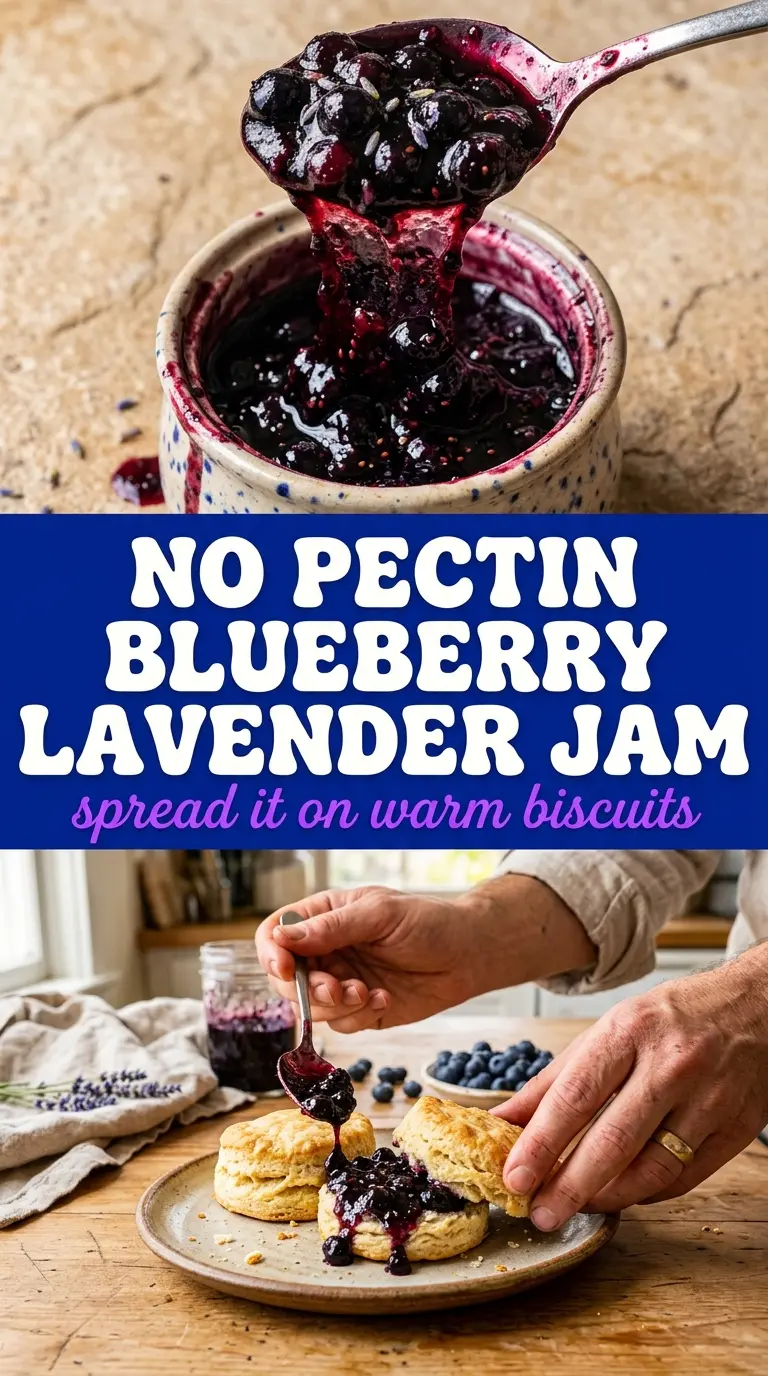
- Blueberries — Fresh berries give you the brightest flavor, but frozen blueberries work well too. Use them straight from frozen; thawing first just creates extra liquid you don’t need.
- Dried culinary lavender — Culinary lavender is the only kind I use here. Ornamental lavender can taste harsh and dusty. If yours is strong, start with a little less and taste the steeped liquid before committing.
- Sugar — Sugar does more than sweeten. It helps the jam gel and gives the finished texture its shine. Cutting it much lower changes the set, so this isn’t the place for a big reduction unless you plan to refrigerate and use it quickly.
- Lemon juice — Fresh lemon juice is worth using. Bottled works in a pinch, but the flavor is flatter. The acid sharpens the berries and helps the jam tighten as it cooks.
The Simmer That Turns Fruit Into Jam
Crushing the Berries First
Crush the blueberries in a heavy pot before anything else so they release juice early and cook evenly. You want a mixture that looks loose and juicy, not a pile of whole berries floating in liquid. If you leave too many berries intact, the jam can cook unevenly and you’ll end up with skins and liquid that finish at different times.
Steeping the Lavender Without Overdoing It
Warm the lavender just long enough to perfume the fruit mixture, then strain it out. A short steep keeps the flavor soft and round; a long one turns bitter and makes the jam taste like potpourri. If you’re worried about getting the balance wrong, start with the smaller amount of lavender and add more only after you taste the infused liquid.
Cooking Until the Spoon Tells the Truth
Add the sugar and lemon juice, then simmer steadily for about 40 minutes, stirring often as the mixture thickens. At first it will bubble loosely and look thin. Near the end, the bubbles get smaller and the jam starts to drag slightly across the bottom of the pot when you stir. If it thickens around the edges but still looks loose in the center, keep going; jam usually looks too thin until it’s almost ready.
Jarring and Water-Bath Processing
Pour the jam into hot jars while it’s still flowing easily, leaving the headspace needed for a proper seal. Wipe the rims clean, close the jars, and process them in a boiling water bath for 10 minutes. If you skip the water bath, the jars may seal in the fridge, but they won’t have the same shelf-stable result or peace of mind.
How to Adapt This Jam for Different Jars, Tastes, and Diets
Make It Less Floral
Use half the lavender, steep it for the shortest time, and strain well. You’ll still get a faint floral note, but the berries stay in front. This is the version I make for people who think they don’t like lavender jam.
Use Frozen Blueberries
Frozen berries work without any special treatment. Add them straight to the pot and expect a little extra cook time while the fruit thaws and releases its liquid. The texture ends up just as good, though the color can look a touch darker.
Lower-Sugar Version for the Fridge
You can reduce the sugar a little for a softer, fruit-forward jam, but treat it as a refrigerator jam instead of a shelf-stable one. Less sugar means a looser set and shorter storage life, so keep it chilled and use it first on toast, oatmeal, or swirled into yogurt.
Make It Vegan-Friendly and Gluten-Free by Default
This jam already fits both diets as written. The only thing to check is that your lavender is labeled culinary and your jars are clean and properly processed. That matters more than any special ingredient swap here.
Storage and Reheating
- Refrigerator: Once opened, keep the jam chilled and use it within 3 weeks. The texture firms up a bit more in the fridge.
- Freezer: Frozen jam works well if you leave headspace in freezer-safe containers. Thaw overnight in the refrigerator.
- Reheating: Jam usually doesn’t need reheating, but if it thickens too much after chilling, warm the jar gently in a bowl of hot water. Don’t microwave the whole jar, and don’t boil it hard again or the set can loosen.
Questions I Get Asked About This Recipe
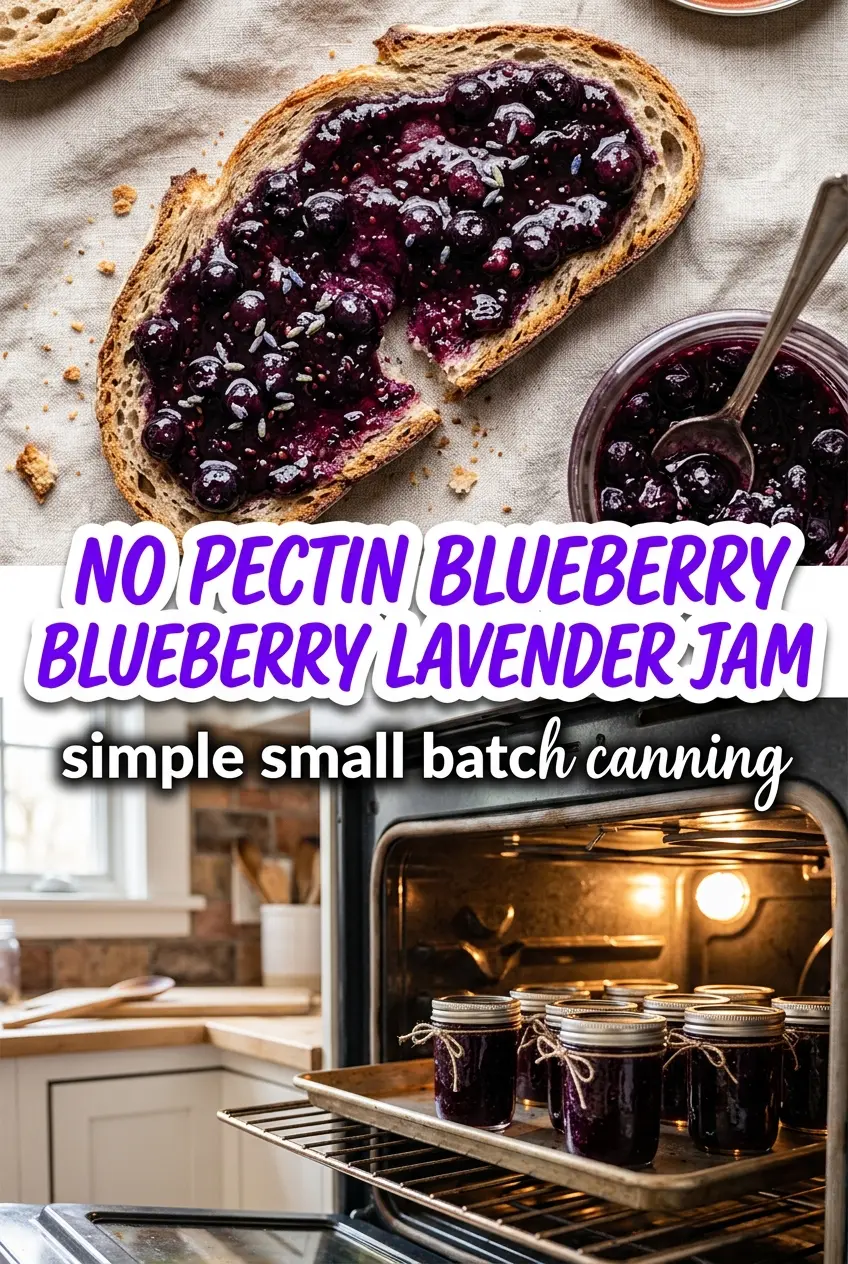
No Pectin Blueberry Lavender Jam
Ingredients
Equipment
Method
- Add the fresh blueberries to a pot and crush them until mostly broken down, leaving a few small chunks for texture. Keep the mixture over medium heat to begin releasing juices.
- Steep the dried culinary lavender in a small amount of hot liquid just until fragrant, then strain out the buds. Stir the strained lavender into the blueberry mixture off heat so the flavor stays delicate.
- Add sugar and lemon juice to the pot and simmer on medium until thickened, about 40 min, stirring as it reduces. Cook until the jam coats the back of a spoon and shows slow, glossy drips (visual cue: it looks darker and more syrupy than at the start).
- Jar the jam while hot, filling clean jars and leaving appropriate headspace, then wipe rims. Invert jars briefly only if your canning method requires it, then proceed immediately to processing.
- Process the filled jars in a water bath at a steady boil for 10 min. Let jars cool undisturbed until sealed (visual cue: lids stay concave and do not flex when pressed).