
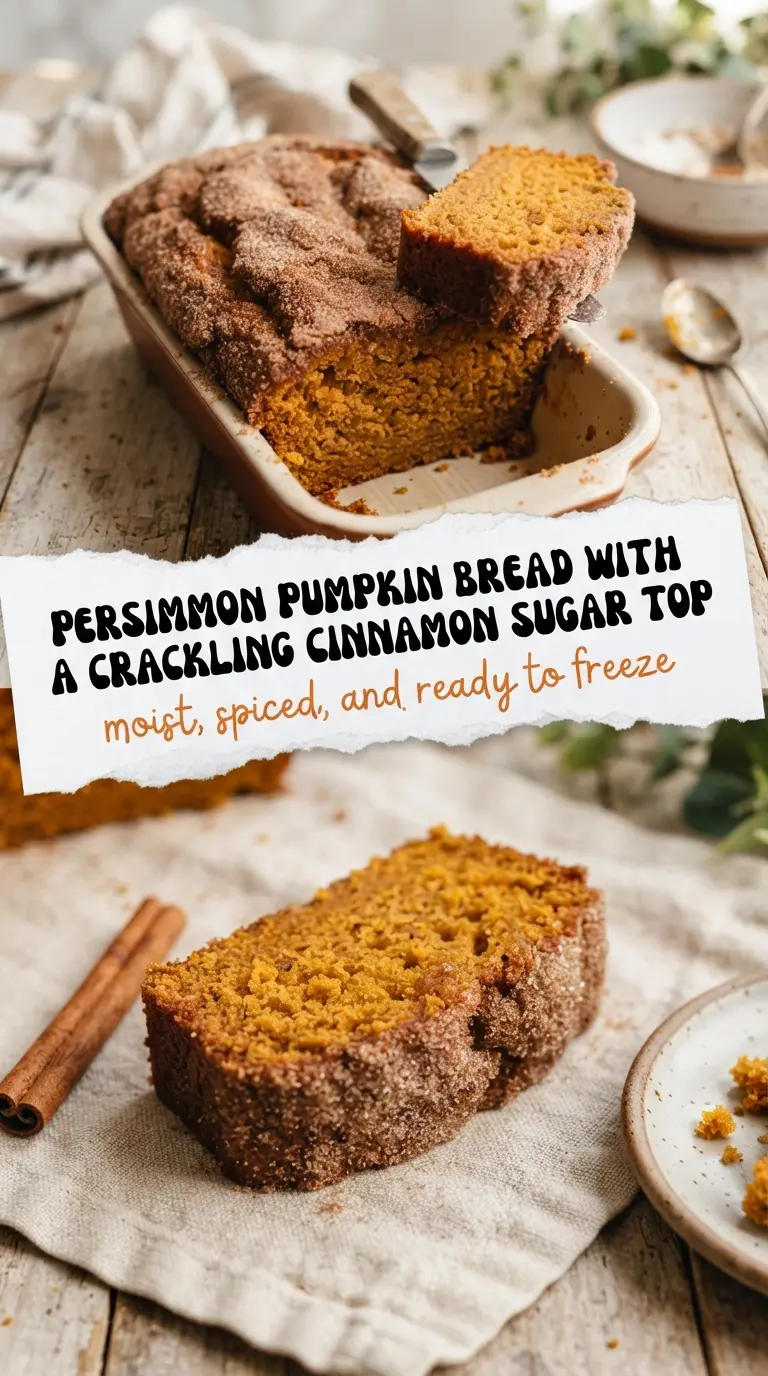
Warm pumpkin bread with a crackly cinnamon-sugar top is the kind of loaf that disappears fast once it hits the counter. The crumb stays tender for days, the spice is gentle instead of overpowering, and the top bakes into a thin, crisp lid that gives way to a soft slice underneath. It’s the sort of loaf people cut “just a sliver” from and then come back for another slice ten minutes later.
What makes this version work is the balance of moisture and structure. Pumpkin puree brings a dense, plush texture, while oil keeps the bread soft even after it cools. The cinnamon and nutmeg stay in the background where they belong, so the loaf tastes warm and cozy without tipping into pumpkin pie territory. The cinnamon-sugar topping goes on before baking, which is why it forms that light crackle instead of melting into the batter.
Below, I’ve included the small details that matter most: how to keep the center from baking up gummy, why the batter should be mixed just enough to disappear, and the easiest way to freeze slices for later.
The loaf came out with that perfect crackly top and a really tender crumb. I froze half in slices, and it thawed overnight without getting soggy at all.
Save this moist pumpkin bread for the days when you want a soft, cinnamon-topped loaf that freezes beautifully and slices cleanly.
The Little Trick That Keeps Pumpkin Bread Tender Instead of Heavy
Pumpkin bread goes wrong when the batter is overmixed or the loaf is pulled before the center has set. Pumpkin puree carries a lot of moisture, and if you keep stirring after the flour disappears, you build too much gluten and end up with a tight, rubbery crumb. Stir just until no dry streaks remain, then stop. That’s the difference between a loaf that slices like cake and one that eats like a dense brick.
The other common problem is underbaking the middle. The top can look done early because the sugar crust browns fast, but the center needs a full hour in most standard loaf pans. If the middle still jiggles when you tap the pan gently, it needs more time. A clean skewer in the center is the safest check, and the loaf should feel set, not squishy, when you press the top.
What Each Ingredient Is Doing in This Loaf
- Pumpkin puree — This is where the moisture and that deep pumpkin flavor come from. Use plain pumpkin puree, not pumpkin pie filling, or the sweetness and spice will throw the loaf off balance.
- Vegetable oil — Oil keeps the bread soft even after it cools and chills. Butter gives more flavor, but it also firms up once cold, which makes this loaf less tender the next day.
- Cinnamon and nutmeg — These spices warm the loaf without overwhelming it. Freshly opened cinnamon helps, but the bigger win is not overdoing the nutmeg; too much turns the bread sharp instead of cozy.
- Flour — All-purpose flour gives the loaf enough structure to rise without becoming heavy. If you swap in a gluten-free blend, use one that already contains xanthan gum so the crumb doesn’t crumble apart.
- Cinnamon sugar topping — This is what gives the top its light crackle. Don’t bury it in the batter; sprinkling it over the surface before baking lets it bake into a crisp lid.
Mixing the Batter, Topping It, and Baking It Through
Dry Ingredients First
Whisk the flour, baking soda, salt, cinnamon, and nutmeg together before you touch the wet ingredients. That keeps the leavener and spices distributed evenly, so you don’t end up with bitter little pockets of baking soda or a spice-heavy streak in one slice. The bowl should look uniform before you move on.
The Wet Mixture
Whisk the pumpkin puree, sugar, oil, and eggs until the mixture looks smooth and glossy. You’re not trying to whip air into it; you’re just dissolving the sugar and blending the eggs so the batter bakes evenly. If the eggs sit in streaks, the loaf can bake up unevenly with a slightly custardy band in the center.
Bringing It Together
Fold the dry ingredients into the wet mixture with a spatula and stop as soon as the flour disappears. A few small streaks are better than beating it into submission. Overmixing is the fastest way to lose that soft, even crumb pumpkin bread is supposed to have.
The Cinnamon Sugar Finish
Spread the batter into a greased loaf pan, then sprinkle the cinnamon-sugar mixture evenly over the top. It will look like a lot, but that thin layer is what bakes into the crackling crust. Bake at 350°F for about 60 minutes, and if the top gets dark before the center is done, lay a piece of foil loosely over the loaf for the last stretch.
How to Adapt This for Different Pan Sizes, Diets, and Make-Ahead Needs
Gluten-Free Version
Swap the all-purpose flour for a 1:1 gluten-free baking blend that includes xanthan gum. The loaf will still be tender, but it may need the full bake time and a longer cooling period before slicing so it sets cleanly.
Dairy-Free and Naturally Dairy-Free
This loaf is already dairy-free as written, which is one reason oil works so well here. If you want a richer finish, serve it with dairy-free butter, but don’t replace the oil in the batter with melted butter unless you’re okay with a firmer crumb the next day.
Freezing for Quick Slices Later
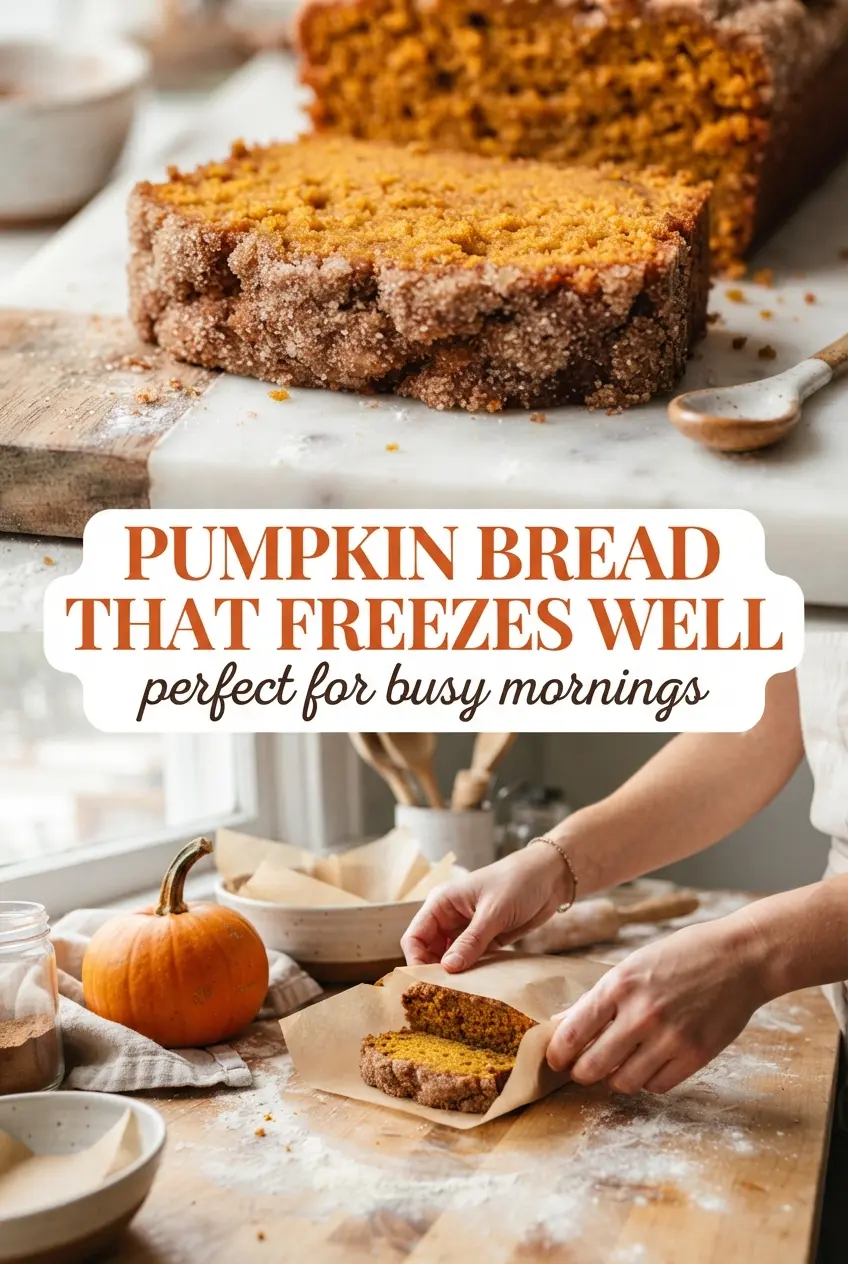
Cool the loaf completely, slice it, and wrap the slices tightly before freezing. Individual slices thaw faster and hold their texture better than freezing the whole loaf and cutting it later, which can crush the tender crumb.
Storage and Reheating
- Refrigerator: Keep tightly wrapped for up to 5 days. The crumb stays moist, though the sugar topping softens a little after the first day.
- Freezer: This loaf freezes well. Wrap the cooled loaf or individual slices in plastic wrap, then foil, and freeze for up to 3 months.
- Reheating: Thaw slices overnight or warm them straight from frozen in a low oven. A toaster or microwave works in a pinch, but high heat dries the edges before the center warms through.
Answers to the Questions Worth Asking
Moist Pumpkin Bread
Ingredients
Equipment
Method
- Heat the oven to 350°F and grease a loaf pan. The oven should fully come to temperature before baking.
- Whisk the all-purpose flour, baking soda, salt, cinnamon, and nutmeg until evenly blended. Stop when the color looks uniform with no visible spice streaks.
- Whisk the pumpkin puree, granulated sugar, vegetable oil, and eggs until smooth. The mixture should look glossy and well combined.
- Fold the dry mix into the pumpkin mixture just until no dry pockets remain. The batter should be thick and smooth, with minimal stirring.
- Sprinkle the cinnamon sugar topping over the batter, covering the surface evenly. You should see a light dusting across the top.
- Bake at 350°F for 60 minutes, until the top is golden and a toothpick in the center comes out clean. Let it cool briefly after baking so the crust sets.