
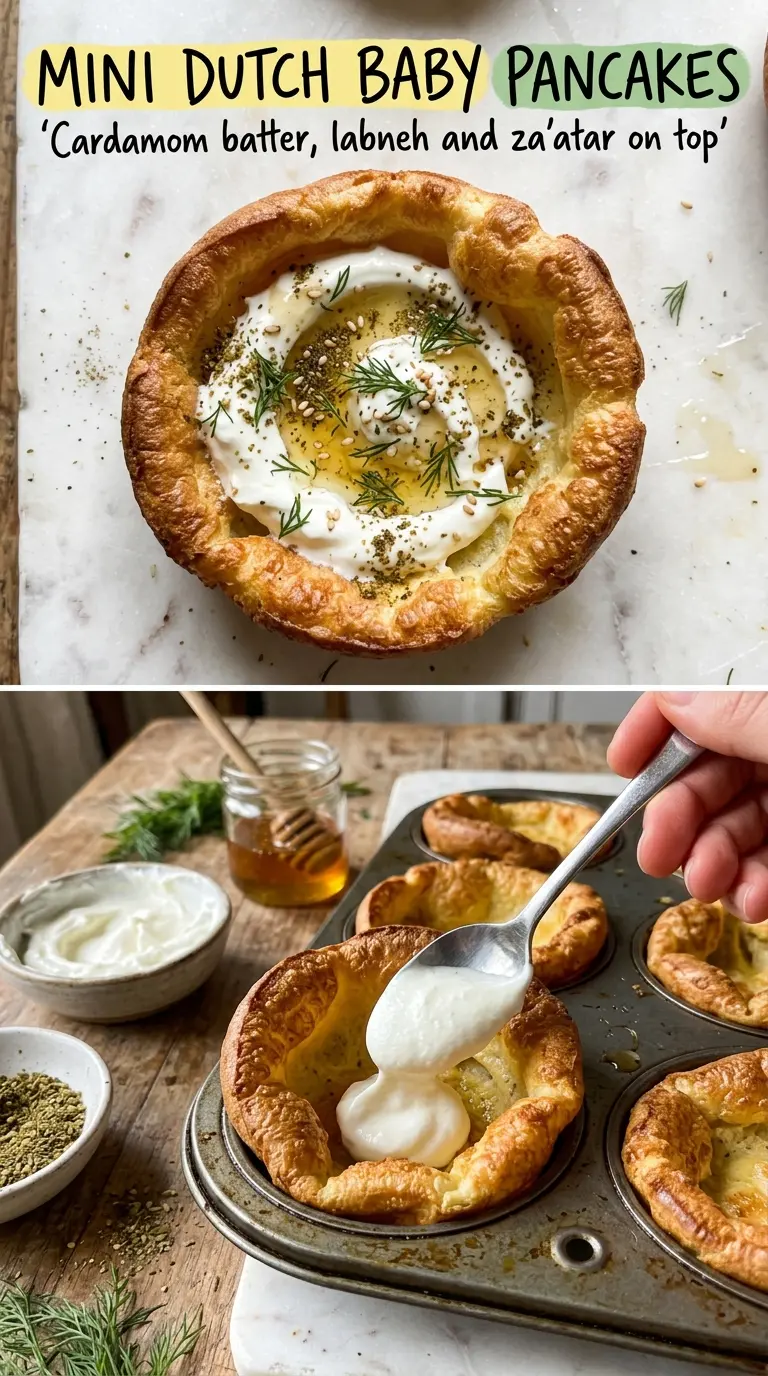
Mini Dutch baby pancakes come out with crisp, buttery edges, a custardy center, and that dramatic puff that makes them feel like a small event at the table. They bake fast in a hot muffin tin, which means you get the same airy lift as a full Dutch baby without needing a skillet or slicing anything for a crowd. The best part is how they hold onto toppings: the cups catch honey, fruit juices, and labneh without collapsing into a soggy mess.
This version leans on cardamom in the batter, which gives the pancakes a warm floral note that plays nicely with the tang of labneh and the herbal crunch of za’atar. The batter is blended until smooth so it bakes up tender instead of eggy, and the muffin tin gets heated before the butter goes in so the edges start sizzling the second the batter hits the pan. That hot start is what gives you the lift.
Below, you’ll find the timing that keeps these puffed, the topping combination that makes them taste intentional, and a few ways to swap in different fruit or a dairy-free topping without losing the point of the dish.
The batter puffed up beautifully in the muffin tin and the cardamom with the labneh and honey tasted like it belonged together. I loved that the centers stayed custardy while the edges got crisp, and they were gone in minutes.
Save these cardamom mini Dutch babies for brunch when you want crisp edges, puffed centers, and a topping combo that feels a little special.
The Hot Tin Is What Gives These Mini Dutch Babies Their Lift
Most Dutch baby failures start before the batter ever goes in. A cool pan means the butter melts lazily, the batter warms slowly, and the eggs set before the steam can create that dramatic puff. With mini Dutch babies, the muffin tin needs to be hot enough that the batter sizzles the second it hits the cups. That instant heat sets the outer edges fast and gives the center time to rise instead of spreading flat.
The other mistake is overfilling. Halfway is the line here. These puff up a lot, and if the cups are too full, the batter rises into a heavy dome instead of a light shell with a custardy middle. You’re looking for deep golden edges, tall puffs, and centers that still have a slight wobble when they come out of the oven. They settle a little as they cool, which is normal.
What Each Ingredient Is Actually Doing in This Dish
- Eggs — These are the structure and the lift. Dutch baby pancakes depend on egg foam and steam, so fresh large eggs matter more than a bargain swap. You can’t fully replace them and keep the same puff.
- Whole milk — The fat helps the pancakes stay tender and custardy. Lower-fat milk works, but the centers won’t taste as plush. If you need a dairy-free version, use unsweetened oat milk; it’s the closest in body.
- All-purpose flour — Just enough to hold the batter together without turning it into regular pancakes. A 1:1 gluten-free baking blend can work if it already contains xanthan gum, but the texture comes out a little softer and less springy.
- Cardamom — This is what gives the batter its warm, aromatic backbone. It matters here because it ties the pancake to the labneh, honey, and za’atar topping instead of leaving the dish tasting like plain eggs and sugar.
- Labneh — Strained yogurt gives you thickness, tang, and a creamy chill against the hot pancake. Regular yogurt is thinner and runs off the sides; if that’s what you have, strain it briefly in a fine-mesh sieve before serving.
- Za’atar — This adds sesame, herbs, and a little citrusy edge that keeps the topping from tasting one-note sweet. It sounds unexpected, but it’s the ingredient that makes the whole plate click.
- Butter — The butter in the hot muffin tin is what creates the crisp, bronzed edges. Don’t swap in oil unless you have to; you’ll lose some of the flavor and the shattering edge.
The 15 Minutes That Decide the Texture
Heating the Tin First
Put the muffin tin in the oven while it preheats so the metal gets hot enough to start cooking the batter immediately. That preheat is not optional for good rise. If the tin is only warm, the batter will bake through before it puffs and you’ll get dense little eggy cakes instead of airy Dutch babies.
Blending the Batter Until Smooth
Blend the eggs, milk, flour, sugar, vanilla, cardamom, and salt just until the batter looks smooth and pourable. You don’t want to overwork it after the flour disappears, but you do need to get rid of lumps so the cups bake evenly. A few seconds of blending is enough. Let the batter sit while the tin heats if you need to, but don’t let it hang around for long enough to separate.
Buttering the Hot Cups
When the tin comes out of the oven, drop the butter into each cup and swirl it quickly so the sides get coated. The butter should melt at once and foam around the edges. If it browns a little, that’s good. If it burns, the oven ran too hot or the pan stayed in too long, and the batter will taste bitter around the edges.
Baking Until Tall and Golden
Fill each cup only halfway, then bake without opening the oven door. The first few minutes are when the rise happens, and every blast of cool air steals some of that steam-driven lift. Pull them when they’re deeply golden and puffed, with centers that still look tender rather than dry. Serve them immediately, because the puff starts to fall the minute they leave the oven.
How to Change the Toppings Without Losing the Point
Stone Fruit and Honey for a Brighter Finish
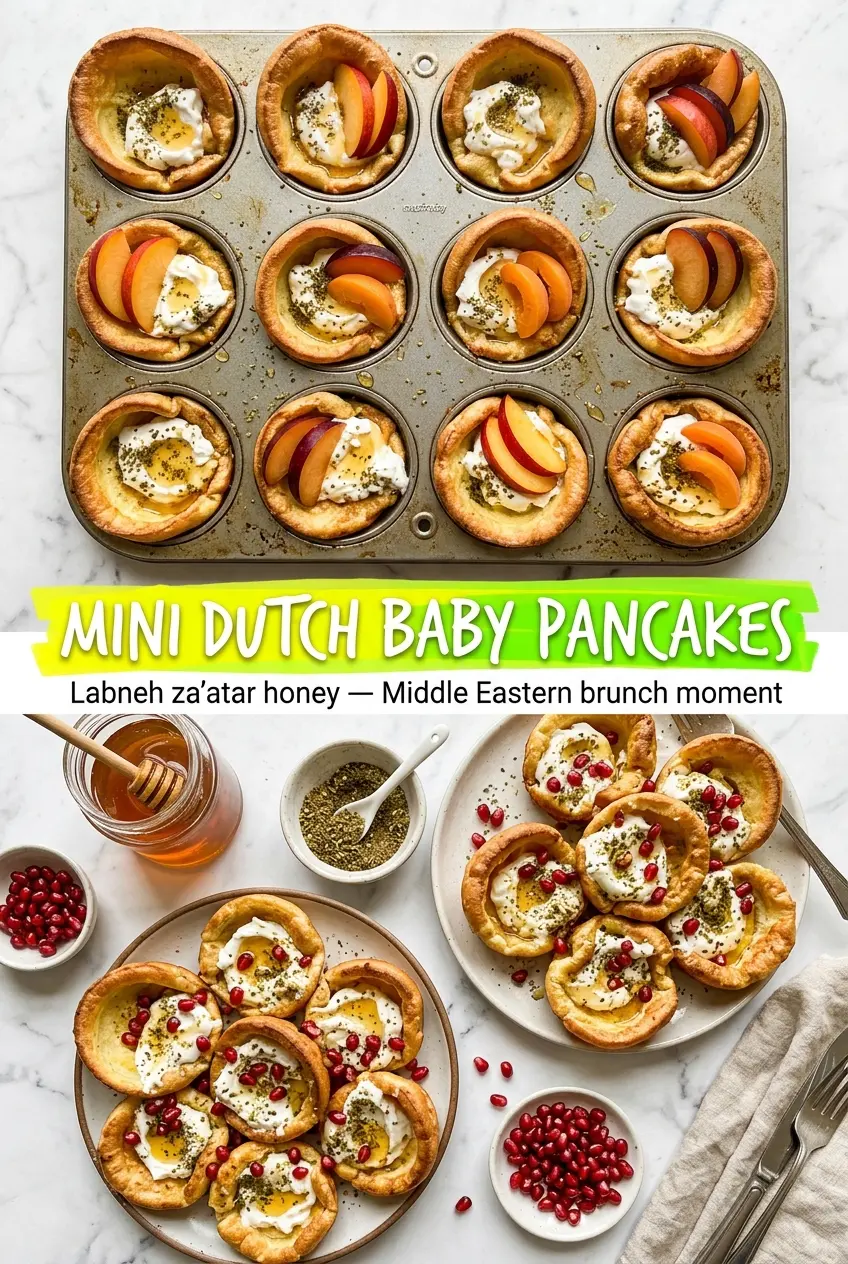
Use sliced peaches, nectarines, or plums when they’re in season and spoon them over the warm pancakes with honey. The fruit adds juice and acidity, which cuts through the richness of the eggs and butter. Leave the skins on for color and a little grip.
Berry and Citrus Version
Swap the stone fruit for fresh berries and add a little orange zest to the labneh. You’ll get a brighter, more tart finish that still works with the cardamom. This version is less rich, which is helpful if you’re serving the pancakes as part of a bigger brunch spread.
Dairy-Free Pancakes
Use unsweetened oat milk in the batter and serve with a thick dairy-free yogurt instead of labneh. The pancakes still puff well, though the interior is a touch less rich. Stick with a full-fat yogurt-style topping so the honey and za’atar have something creamy to sit on.
How to Serve Them for a Crowd
Bake the pancakes in batches, then set up the toppings in separate bowls so people can finish their own plate. These are best straight from the oven, but the toppings can be ready ahead. If you need to hold the first batch, keep them on a wire rack in a 200°F oven for a few minutes so the bottoms don’t steam soft.
Storage and Reheating
- Refrigerator: Store leftovers without toppings for up to 2 days. The puff will soften, but the flavor holds.
- Freezer: Freeze the baked pancakes in a single layer, then move them to a bag for up to 1 month. They won’t be as airy after thawing, but they reheat better than you’d think.
- Reheating: Warm in a 375°F oven for 5 to 8 minutes so the edges crisp again. The microwave makes them rubbery and damp, which is the fastest way to lose the texture you worked for.
Answers to the Questions Worth Asking
Mini Dutch Baby Pancakes
Ingredients
Equipment
Method
- Preheat the oven to 425°F and place a muffin tin on a sheet pan to heat through for 10 minutes.
- Remove the hot tin from the oven and add butter to each cup, swirling to coat the sides.
- In a blender, blend eggs, milk, flour, sugar, vanilla, cardamom, and salt for 30 seconds until smooth.
- Fill each muffin cup halfway with batter.
- Bake for 12-15 minutes at 425°F until the mini dutch babies are puffed and golden.
- Serve immediately, topping each mini with labneh, honey, za’atar, sliced stone fruit, and pomegranate seeds.