
Maple cinnamon roasted butternut squash comes out with edges that turn deep, burnished orange and centers that stay tender enough to yield to a fork without collapsing. The maple glaze clings to every cube and settles into the pan in little caramelized spots, which is exactly what keeps this side dish from tasting flat or steamed. A handful of toasted pecans at the end adds the last thing it needs: crunch against all that soft, sticky sweetness.
The trick is keeping the squash in a single layer and giving it enough heat to brown before the syrup has a chance to turn watery. Olive oil helps the surface roast cleanly, while the maple syrup and cinnamon form a thin glaze that thickens in the oven instead of sliding off. Add the pecans after roasting, not before, or they’ll lose their crisp edge and taste muted.
Below, I’ve included the timing cues that matter most so you know exactly when the squash is done, plus a few smart swaps if you need to work with what’s already in the pantry.
The squash got those caramelized edges I never seem to get at home, and adding the pecans at the end kept them crunchy. I’ve already made it twice with dinner.
Save this maple cinnamon butternut squash for the nights when you want a caramelized side dish with almost no hands-on work.
The Difference Between Roasted and Steamed Squash
Butternut squash only tastes full and sweet when it has room to brown. If the pan is crowded, the cubes release steam, the maple syrup loosens, and you end up with soft squash that tastes cooked but not roasted. A hot oven and enough surface contact are what create those browned edges and the slightly sticky finish that makes this dish stand out.
Cut size matters too. Pieces that are close in size roast evenly, while random chunks leave you with some squash collapsing before the rest is tender. Flip once halfway through so the cut sides get time against the pan, and don’t worry if a few edges look a little darker than the rest. That’s where the flavor lives.
What the Maple, Cinnamon, and Pecans Are Actually Doing
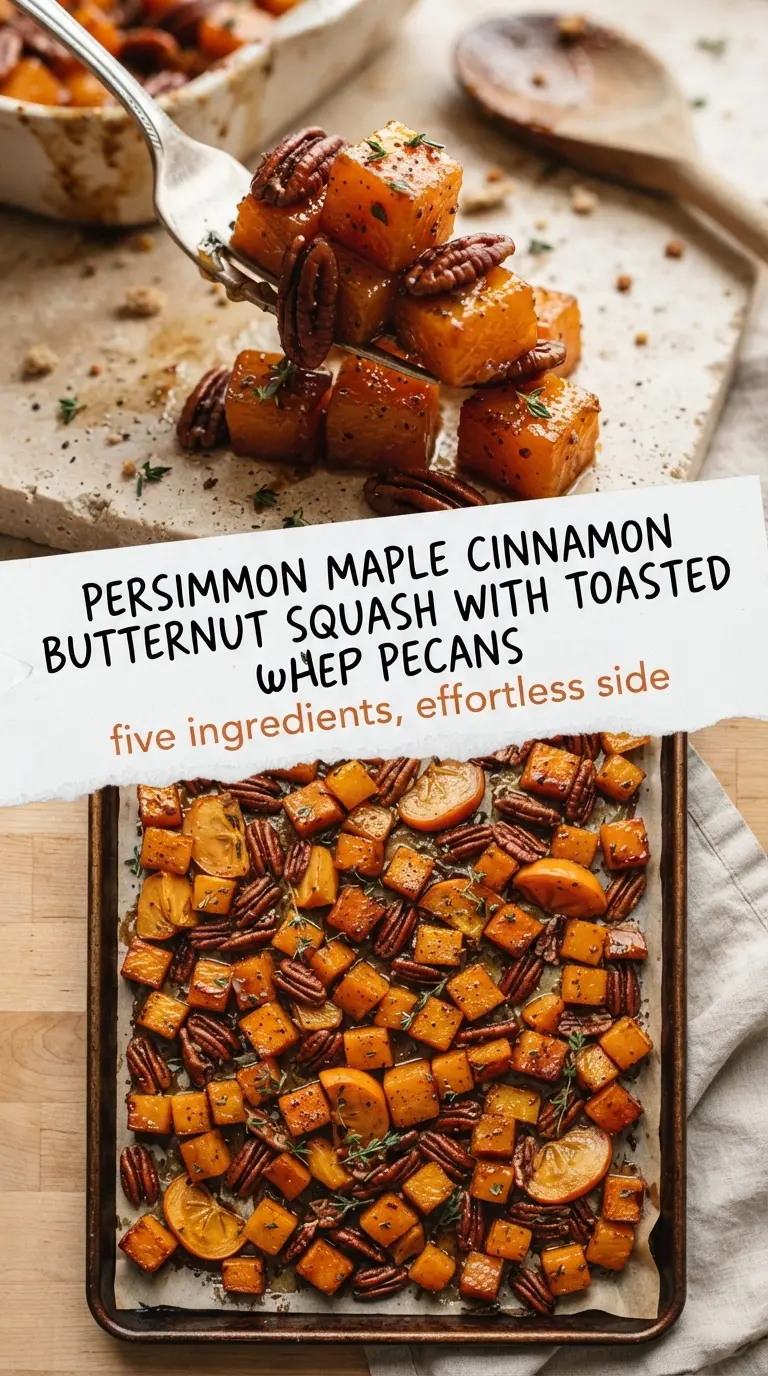
- Butternut squash — This is the base that turns sweet and creamy in the oven. Look for a squash with firm flesh and a deep tan skin; if you buy pre-cut cubes, keep the pieces roughly the same size so they roast at the same pace.
- Maple syrup — Real maple syrup gives the glaze its clean sweetness and helps the surface caramelize. Pancake syrup won’t behave the same way; it tends to taste flatter and can leave a tackier coating rather than a lacquered finish.
- Cinnamon — Cinnamon does more than add warmth. It rounds out the squash’s natural sweetness and makes the maple taste deeper, not just sweeter. Fresh spice matters here because old cinnamon can taste dusty instead of fragrant.
- Olive oil — The oil keeps the squash from drying out and helps the glaze cling before it bakes onto the surface. You can swap in avocado oil or melted butter if that’s what you have, but olive oil gives the cleanest, least heavy finish.
- Pecans — They bring crunch and a toasted nuttiness that breaks up all the soft texture. Toast them first if they’re raw, then scatter them on after roasting so they stay crisp.
How to Get Deep Caramelization Without Burning the Glaze
Coating the Squash Evenly
Toss the cubed squash with the oil, maple syrup, cinnamon, and salt until every piece is lightly glossy. You want a thin coating, not a pooling sauce in the bowl, because too much liquid in the pan slows browning. If the squash sits in a puddle, it will steam before it caramelizes.
Roasting for Color, Not Just Softness
Spread the squash across a baking sheet in a single layer with a little space between pieces. Roast at 425°F until the undersides are browned and the edges look sticky and darkened, then flip the pieces so the other side can catch some heat. If the pan is crowded, use two pans instead of forcing everything onto one sheet.
Finishing for Crunch
Once the squash is tender and caramelized, pull it from the oven and add the toasted pecans right away. That keeps the nuts crisp and lets the heat from the squash bring out their aroma without softening them. Serve it hot, when the glaze is still shiny and the edges are at their best.
How to Adapt This for Different Tables and Diets
Dairy-Free as Written
This recipe already skips dairy, so it fits a dairy-free table without any changes. The olive oil gives enough richness that you don’t miss butter, and the maple glaze still clings well. If you want a more buttery finish, add a small pat of dairy-free butter after roasting.
Nut-Free Version
Leave out the pecans and finish with toasted pumpkin seeds instead if you still want crunch. The flavor shifts a little less rich and more earthy, but the texture contrast stays in place. You can also skip the topping entirely and serve the squash as a softer, simpler side.
Less Sweet, More Savory
Cut the maple syrup back to 2 tablespoons and add a pinch of black pepper or a little rosemary. That keeps the squash caramelized but shifts the dish toward a more savory side that works beside roasted chicken or pork. The glaze will be thinner, so watch for browning rather than thickness.
Storage and Reheating
- Refrigerator: Store in an airtight container for up to 4 days. The squash softens a bit as it sits, but the flavor stays good.
- Freezer: It freezes, though the texture gets softer after thawing. Freeze in a single layer first, then move to a container so the cubes don’t clump together.
- Reheating: Rewarm on a sheet pan at 375°F until hot. The oven brings back some of the roasted edges; the microwave just turns everything soft.
Answers to the Questions Worth Asking
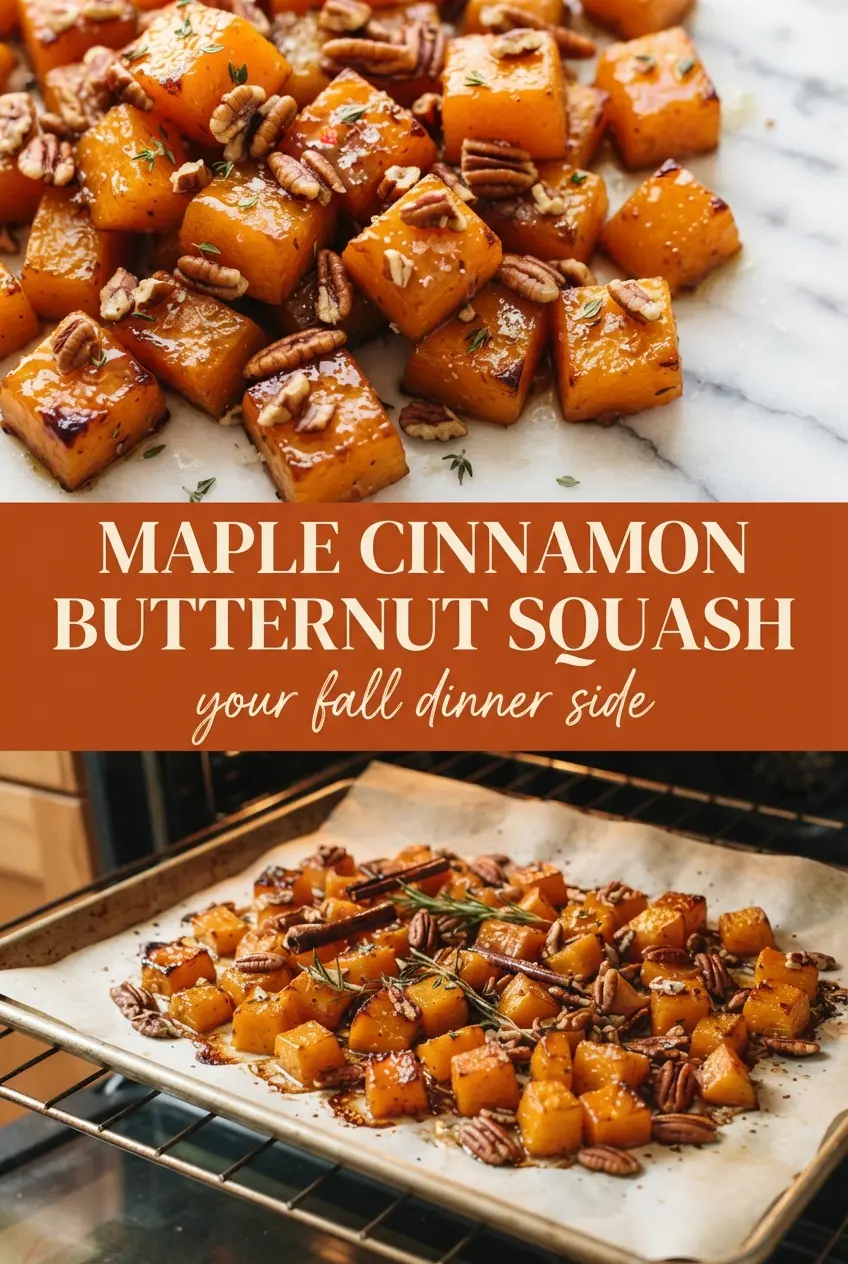
Maple Cinnamon Roasted Butternut Squash
Ingredients
Equipment
Method
- Toss butternut squash cubes with olive oil, maple syrup, cinnamon, and salt until evenly coated and glossy.
- Spread the squash in a single layer on a sheet pan so cut sides have room to roast rather than steam.
- Roast at 425°F for 25-30 minutes, flipping halfway, until caramelized on the edges and tender when pierced.
- Scatter toasted pecans over the roasted squash before serving for a crisp, nutty crunch.