
Limoncello tiramisu lands with that rare mix of airy, boozy, and bright that makes a dessert disappear fast. The ladyfingers soften just enough to turn spoon-tender without collapsing, and the mascarpone filling stays plush instead of heavy. A little lemon zest on top changes the whole mood of the dish; it cuts through the richness and keeps every bite lively.
What makes this version work is balance. Limoncello brings sweetness and perfume, while fresh lemon juice keeps the soak from tasting flat. The filling also matters: yolks and sugar get warmed until thick before the mascarpone goes in, which gives the cream more body and a smoother finish than a quick stir ever will. Fold the whipped cream in at the end and you keep that light, mousse-like texture people go back for.
Below, I’ve included the part that saves this dessert from turning soggy, plus the small timing detail that makes the flavor better after a long chill. If you’ve ever wanted a tiramisu that tastes like lemon bars met a classic Italian dessert in the best way, this one earns its spot.
The lemon flavor came through without making the filling runny, and the ladyfingers stayed soft but not mushy even after chilling overnight. My husband kept going back for “just one more spoonful.”
Love the bright lemon filling and pillowy mascarpone layers? Save this limoncello tiramisu for your next make-ahead dessert night.
The Mistake That Makes Limoncello Tiramisu Watery
The biggest problem with a citrus tiramisu is giving the ladyfingers too much time in the soak. Limoncello mixture looks harmless, but the cookies absorb liquid fast, and once they cross that line there’s no fixing the texture. You want a brief dip, not a soak. The cookie should still feel a little firm when it goes into the dish, because the filling and chill time finish the job.
The second place this dessert goes sideways is in the cream. If the egg yolks and sugar never get warmed together, the filling can taste thin and a little flat. Heating them over a double boiler gives the mixture body and takes the raw edge off the yolks, which matters in a dessert where the filling is doing most of the work. Once the mascarpone goes in, stop mixing as soon as it turns smooth. Overworking it can loosen the texture.
What Each Ingredient Is Actually Doing in This Dessert

- Ladyfingers — These are the structure of the dessert. They need to be dry enough to absorb flavor without turning to mush, which is why the quick dip matters so much. If you can only find one style, use the crisp, dry kind rather than soft sponge cake-style ladyfingers.
- Limoncello — This is where the dessert gets its signature lemon-citrus edge. A decent bottle is worth using because the liqueur isn’t hidden here; it’s front and center in both aroma and taste.
- Fresh lemon juice — Limoncello alone can taste sweet and one-note. Fresh juice sharpens the soak and keeps the dessert from feeling cloying. Bottled lemon juice tastes dull here and changes the finish.
- Egg yolks and sugar — Warming them over a double boiler builds a thicker base that helps the filling hold its shape. If you skip that step, the mascarpone mixture can taste looser and less refined. Cook them until pale, thick, and slightly ribboned.
- Mascarpone — This is the creamy backbone. There isn’t a perfect substitute if you want the same lush texture, though well-drained cream cheese can work in a pinch with a tangier, firmer result.
- Whipped cream — This lightens the mascarpone mixture so the dessert stays airy instead of dense. Fold it in gently and stop as soon as the filling looks uniform, or you’ll lose the lift.
- Lemon zest — The zest on top is not decoration. It gives the dessert a fresh, perfumed finish that makes the lemon flavor pop right before the first bite.
Building the Layers Without Crushing the Ladyfingers
Whisking the Soak
Stir the limoncello and lemon juice together first so the flavor is even from the start. The mixture should smell sharp and sweet at the same time. If it tastes harsh on its own, it will mellow once the cream and ladyfingers come in. Keep it in a shallow bowl so you can dip quickly without fighting the liquid.
Cooking the Yolks to a Thicker Base
Set the yolks and sugar over a double boiler and whisk until the mixture turns pale, thick, and slightly glossy. You’re looking for a texture that falls from the whisk in a ribbon, not a loose stream. If the bowl gets too hot, pull it off the steam for a minute and keep whisking. That control keeps the eggs from scrambling and gives the filling its body.
Folding in the Mascarpone and Cream
Add the mascarpone to the cooled yolk mixture and stir just until smooth. A few tiny lumps are better than overmixing into a loose paste. Fold in the whipped cream with a spatula in broad strokes, scraping from the bottom so you don’t leave heavy pockets behind. The finished filling should look fluffy and hold soft peaks.
Layering and Chilling
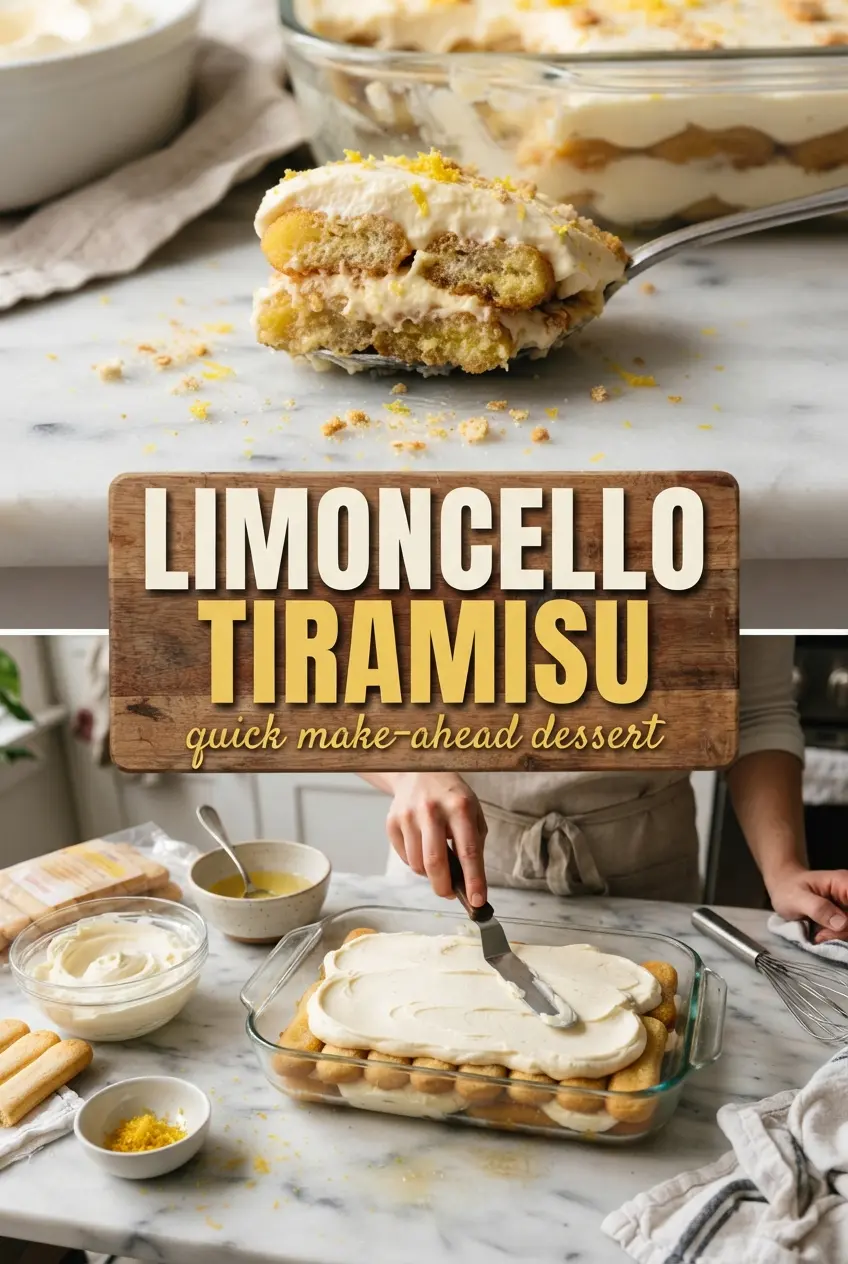
Dip each ladyfinger quickly, one side then the other, and lay it in the dish right away. Spread half the cream over the first layer, then repeat. The top should look smooth but not overworked. Chill for at least four hours, though overnight gives you cleaner slices and a deeper lemon flavor.
Three Ways to Adjust the Flavor Without Losing the Texture
Dairy-Free Version
Use a thick dairy-free whipping cream and a vegan mascarpone-style cheese if you can find one. The texture will be a little softer and the flavor less rich, but the dessert still sets well if you chill it overnight. Don’t use a thin coconut milk substitute here; it won’t hold the layer structure.
Alcohol-Free Lemon Tiramisu
Swap the limoncello for a simple syrup made with lemon juice, sugar, and a little water. You’ll lose the boozy finish, but the dessert keeps its bright citrus character and works well for kids or anyone avoiding alcohol. Add a touch more zest so the flavor still feels bold.
Gluten-Free Version
Use gluten-free ladyfingers with the same quick-dip method. The main thing to watch is texture, since some gluten-free versions soften faster than standard ones. If they seem fragile, dip one side only and let the filling do more of the soaking.
Make It Ahead for a Crowd
Assemble it the day before you need it and add the lemon zest right before serving. The texture improves with time, and the layers slice more cleanly after a full chill. If you’re scaling up, use a wider dish instead of stacking the layers too thick, which can make the center heavy.
Storage and Reheating
- Refrigerator: Keep covered for up to 3 days. The ladyfingers soften more each day, but the flavor deepens.
- Freezer: It can be frozen, though the texture of the mascarpone filling becomes a little less silky after thawing. Freeze in a tightly wrapped dish, then thaw overnight in the fridge.
- Reheating: No reheating needed. Serve it cold straight from the fridge. Letting it sit out for 10 to 15 minutes takes the edge off the chill without loosening the filling.
Answers to the Questions Worth Asking
Limoncello Tiramisu
Ingredients
Equipment
Method
- Whisk together limoncello and fresh lemon juice until combined, then set aside for dipping.
- Quickly dip each ladyfinger into the limoncello mixture, 1 to 2 seconds per side, so it stays firm.
- Whisk egg yolks and granulated sugar over a double boiler until pale and thickened, 6 to 8 minutes.
- Remove the bowl and cool the egg mixture to room temperature, 10 to 15 minutes.
- Fold the mascarpone into the cooled egg mixture until smooth and creamy.
- Gently fold in the whipped heavy cream until no streaks remain.
- Layer the dipped ladyfingers in a dish, arranging them snugly in an even layer.
- Spread half the mascarpone cream over the ladyfingers, then add a second layer of dipped ladyfingers.
- Spread the remaining mascarpone cream on top, smoothing the surface.
- Chill for at least 4 hours, then top with lemon zest just before serving.