
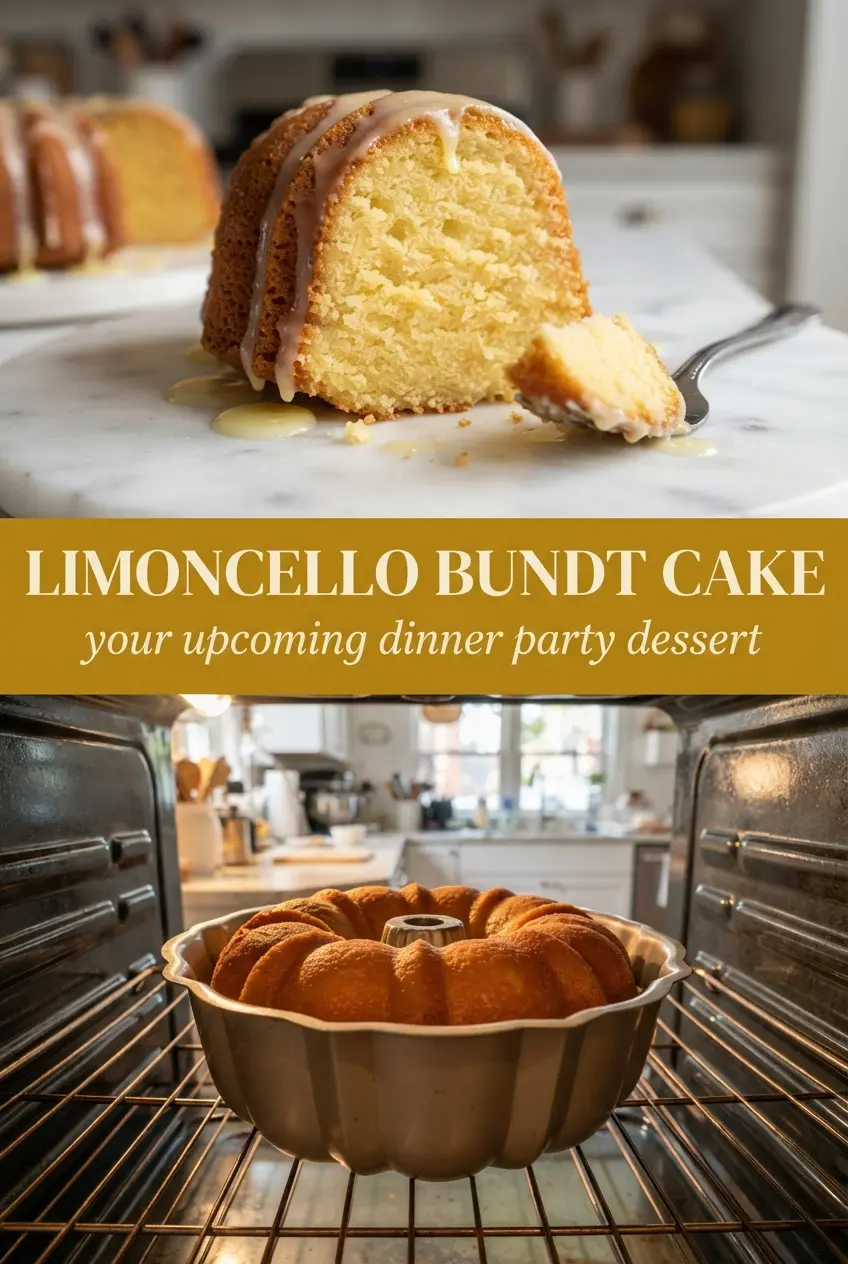
A limoncello bundt cake should slice cleanly, hold its shape, and still taste like a bright lemon dessert rather than a boozy loaf with icing on top. This version does that by leaning on real lemon zest for sharpness and limoncello for a softer citrus note that bakes into the crumb instead of sitting on the surface. The result is a cake with a deep golden crust, a tender middle, and a glaze that settles into every ridge of the pan.
The batter follows a simple butter cake method, but the details matter. Creaming the butter and sugar until pale and fluffy gives the cake its lift, and alternating the dry ingredients with the milk keeps the crumb fine instead of dense. The limoncello goes in with the zest near the end so its flavor stays clear. If you rush the cooling stage, the glaze will melt and slide off before it can form those glossy ribbons.
Below, you’ll find the little things that keep a bundt cake from sticking, plus a few useful ways to adapt it if you want a different finish or need to bake it ahead.
The cake came out of the bundt pan in one piece, and the glaze set into those pretty lemony drips instead of disappearing into the cake. I used the limoncello and extra zest, and the crumb stayed soft for two days.
This limoncello bundt cake bakes up soft and citrusy with that glossy lemon glaze tucked into every ridge.
The Reason Bundt Cakes Stick in the Pan
A bundt cake fails long before it goes into the oven. If the pan isn’t greased into every curve, the cake can tear at the release no matter how good the batter is. Butter alone leaves gaps, so use a generous coating of soft butter or baking spray that reaches the center tube, the fluted sides, and the sharp edges of the design.
The other common problem is overmixing once the flour goes in. That turns a tender butter cake into something tight and dry. Stop as soon as the batter looks smooth and the streaks disappear, then move it to the pan and bake while the leavening is still active.
What the Lemon, Limoncello, and Butter Each Bring to the Cake

- All-purpose flour — Gives the cake its structure without making it heavy. Cake flour would make it softer, but all-purpose holds up better in a bundt pan and gives cleaner slices.
- Baking powder — This is the lift here. Since the cake depends on a classic creaming method, fresh baking powder matters; old baking powder leaves the crumb flat and a little damp in the center.
- Butter — Use softened butter, not melted. Soft butter traps air when beaten with sugar, and that air is part of what gives the cake its light texture.
- Limoncello — This brings the gentle lemon liqueur note that sets the cake apart from a standard citrus bundt. It doesn’t need to be expensive, but it should taste clean and bright; a harsh liqueur will show up in the bake.
- Lemon zest — The zest gives the cake its sharpest lemon flavor. Don’t skip it or replace it with juice alone; juice brings acidity, but zest carries the essential oils that make the cake smell and taste fresh.
- Milk — Keeps the batter smooth and the crumb tender. Whole milk is ideal, but 2% works if that’s what you have. Avoid replacing it with something watery unless you want a thinner crumb.
- Powdered sugar and fresh lemon juice — This glaze needs both. The sugar gives it body, and the lemon juice keeps it tangy enough to balance the rich cake underneath.
Building the Batter Without Losing the Tender Crumb
Creaming the Butter and Sugar
Beat the butter and sugar until the mixture turns pale, fluffy, and a little billowy around the edges of the bowl. That takes a few minutes, not a few seconds. If it still looks grainy and dense, the cake will bake up tighter than it should. Scrape the bowl once or twice so the butter underneath gets worked in evenly.
Adding the Eggs One at a Time
Drop in each egg separately and let it disappear before the next one goes in. If the batter looks slightly curdled after an egg, keep going; it usually smooths out once the dry ingredients and milk are added. The real mistake is adding the eggs too fast, which can cause the mixture to look broken and uneven before it ever hits the flour.
Finishing the Batter and Filling the Pan
Alternate the dry ingredients with the milk and stop mixing as soon as the batter comes together. Stir in the limoncello and lemon zest at the end so the citrus stays bright. Pour the batter into the prepared bundt pan and tap it once on the counter to release large air pockets, but don’t bang it hard or you’ll knock out the structure you’ve just built.
Baking and Cooling for a Clean Release
Bake until the top is deeply golden and a toothpick comes out clean from the thickest part of the cake. Start checking at the lower end of the bake time, because an overbaked bundt gets dry fast. Let it cool in the pan before turning it out, then cool it completely on a rack before glazing. If you glaze while it’s warm, the icing slips right off instead of clinging to the ridges.
How to Adapt This Limoncello Bundt Cake for Different Tables
Gluten-Free Version
Use a 1:1 gluten-free baking flour that includes xanthan gum. The cake will still rise and slice well, but the crumb will be slightly more delicate, so let it cool completely before unmolding. A coarse, rustic gluten-free blend can make the texture sandy, so choose a finely milled mix if you can.
Dairy-Free Swap
Replace the butter with a plant-based baking butter and use an unsweetened dairy-free milk with some body, like oat milk. The flavor stays rich, but the crumb can lose a little of that classic buttery finish, so don’t skip the lemon zest. That’s what keeps the cake from tasting flat.
Orange or Meyer Lemon Variation
Swap the lemon zest for orange zest or Meyer lemon zest and use the same amount of limoncello. Orange makes the cake rounder and sweeter, while Meyer lemon gives it a softer, less sharp citrus note. The glaze should match the fruit you’ve chosen so the finish doesn’t fight the crumb.
Storage and Reheating
- Refrigerator: Store covered for up to 4 days. The glaze stays set, though the crumb firms up a little in the fridge.
- Freezer: Freeze the unglazed cake tightly wrapped for up to 2 months. Thaw at room temperature, then glaze after it has fully thawed so the icing stays glossy.
- Reheating: This cake is best served at room temperature. If you want to take the chill off a refrigerated slice, let it sit out for 20 to 30 minutes. Microwave heat makes the glaze sticky and can dry out the edges.
Answers to the Questions Worth Asking
Limoncello Bundt Cake
Ingredients
Equipment
Method
- Whisk together all-purpose flour, baking powder, and salt in a mixing bowl until evenly combined, with no visible lumps. This dry base helps the cake rise evenly.
- Cream butter and granulated sugar until light and fluffy, using steady mixing until the mixture looks pale and holds some air. Then beat in large eggs one at a time, fully incorporating each before adding the next.
- Alternate adding the dry ingredients and milk to the batter, mixing until just combined after each addition. Stop as soon as the flour disappears to keep the crumb tender.
- Stir in limoncello and the lemon zest until evenly distributed through the batter. The batter should look glossy and bright.
- Pour the batter into a greased bundt pan, ensuring it’s level in the center. Bake at 350°F for 50-55 minutes, until a toothpick comes out clean.
- Cool the cake completely in the pan before removing it, so the glaze doesn’t melt off. Then whisk powdered sugar with fresh lemon juice (for glaze) until smooth, and drizzle the glaze over the top so it ribbons into the ridges.