
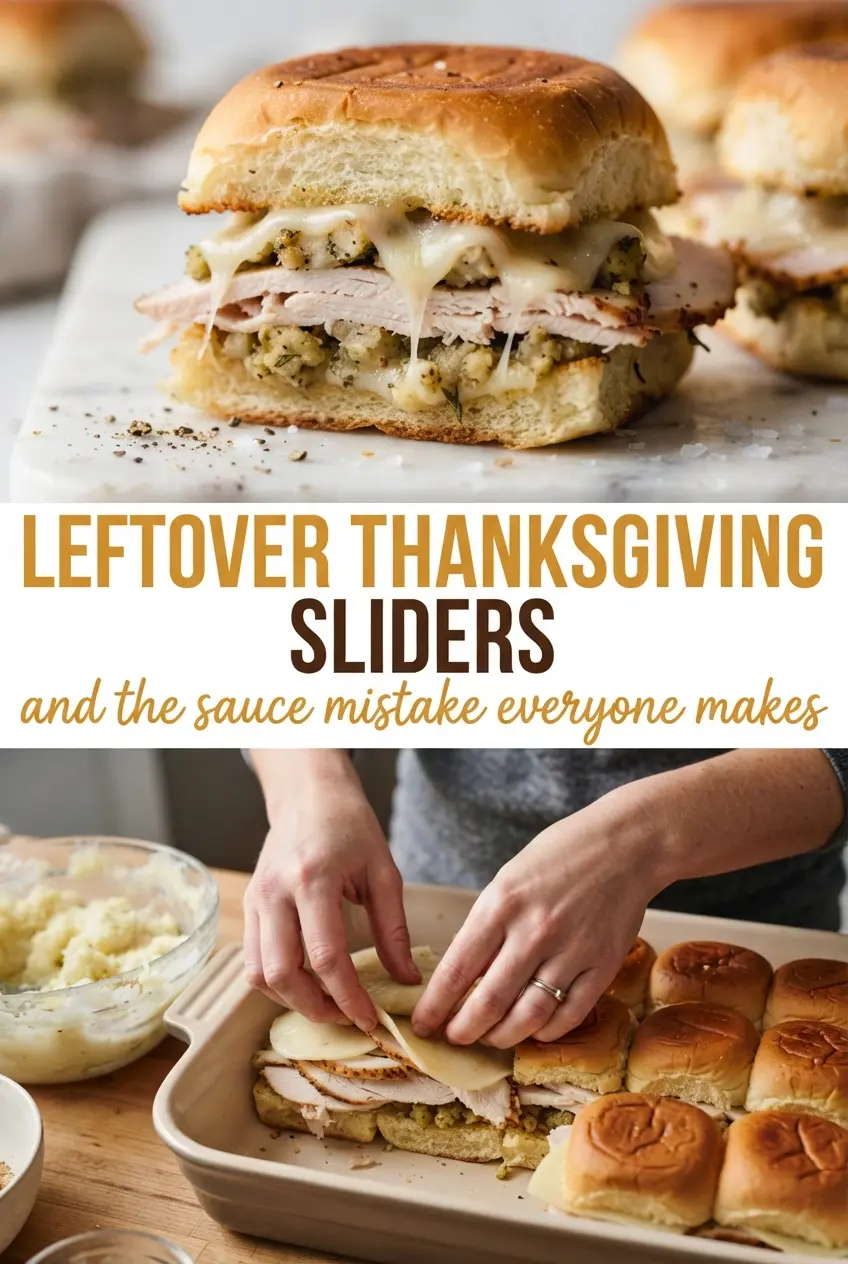
Soft slider rolls tucked around turkey, stuffing, mashed potatoes, and cranberry sauce turn leftovers into the kind of hot sandwich people reach for before the pan even hits the table. The tops bake up glossy and golden, the cheese melts into the turkey, and the cranberry gives each bite a little sweet-tart lift that keeps the whole thing from feeling heavy.
What makes these work is the layering. The stuffing and mashed potatoes act like a sturdy, cozy filling, but the cranberry has to stay thin or it seeps into the rolls and softens the bottoms too much. A quick brush of melted butter with garlic powder and parsley gives the tops a savory finish that tastes intentional, not like leftovers dressed up at the last minute.
Below, I’ll show you the order that keeps the sliders from sliding apart, the one cranberry mistake that leads to soggy bread, and a few easy ways to stretch the pan for a bigger crowd.
The cranberry layer stayed right where it should and the bottoms didn’t get soggy. I loved how the mashed potatoes made the sliders creamy without making them fall apart, and the tops baked up beautifully golden.
These leftover Thanksgiving sliders are the fastest way to turn turkey, stuffing, and mashed potatoes into a baked sandwich everyone wants first.
The Cranberry Layer That Can Ruin the Bottom Bun
Most slider recipes fail for one simple reason: the filling is too wet for the bread. With leftover Thanksgiving ingredients, the risk goes up fast because mashed potatoes and cranberry sauce both bring moisture. The fix is to build a balanced stack and keep the cranberry in a thin layer on the top half of the rolls, where it can flavor the sandwich without soaking into the bottom.
The other trick is using the cheese as a buffer. Swiss melts smoothly and helps hold the turkey and stuffing together, which matters when the rolls get sliced after baking. If you skip that layer or pile the cranberry directly against the bread, the sliders still taste good, but they lose the clean pull-apart texture that makes them work.
- Turkey — Shredded leftover turkey works best because it spreads evenly and reheats without turning stringy. If your turkey is on the drier side, a little gravy between the turkey and stuffing helps, but use it sparingly.
- Stuffing — This gives the sliders their Thanksgiving character and some structure. Loose, buttery stuffing is ideal; very wet stuffing makes the bread collapse faster.
- Mashed potatoes — These add creaminess and help the filling feel substantial. Cold mashed potatoes are fine because they soften in the oven, but don’t pile them on thick or the sliders get heavy.
- Cranberry sauce — This is the ingredient that needs the most restraint. A thin layer brings the brightness you want without making the bottoms soggy.
- Swiss cheese — It melts cleanly and binds the layers together. Provolone works if that’s what you have, but it’s milder and won’t give quite the same savory edge.
Building the Pan So the Rolls Stay Intact
Set the bottoms before the filling goes in
Slice the rolls cleanly and place the bottoms in the baking dish in one tight layer. A snug fit helps the sliders steam and melt together instead of drying out around the edges. If the rolls are too loose in the pan, the filling shifts and you lose that pull-apart effect.
Layer from sturdy to soft
Start with cheese, then turkey, stuffing, and mashed potatoes. That order matters because the cheese catches the heat first and helps the filling stay together while the other ingredients warm through. Keep the cranberry sauce on the top halves of the rolls, spread thinly, so the bottom buns stay crisp enough to hold.
Butter the tops before baking
Mix the melted butter with garlic powder and parsley, then brush it over the tops before the pan goes into the oven. The butter soaks into the rolls and turns the surface deep golden, while the garlic powder gives the bread a savory finish. Covering the pan for the first part of baking melts everything evenly; uncovering it at the end dries the tops just enough to keep them from going soft.
Three Ways to Use What You’ve Got Left
Make them with different leftover meat
If you don’t have turkey, shredded chicken or sliced ham both work. Chicken tastes the closest to turkey in this format, while ham makes the sliders saltier and a little sweeter, especially with the cranberry sauce. Keep the rest of the method the same so the bread doesn’t get overloaded.
Make them gluten-free
Use your favorite gluten-free slider rolls and check that the stuffing is also gluten-free. Gluten-free rolls can brown faster and dry out more quickly, so keep the pan covered for most of the bake and only uncover it at the end for a light top crust.
Swap the cheese for a sharper finish
Swiss is smooth and mild, but sharp white cheddar gives the sliders a bigger bite. The texture will be a little less stretchy and a little more assertive, which works well if your leftovers are already rich and buttery.
Storage and Reheating
- Refrigerator: Store covered for up to 3 days. The rolls soften a little as they sit, but the flavor holds well.
- Freezer: These freeze best after baking. Wrap individual sliders tightly and freeze for up to 2 months, then thaw before reheating so the centers warm through evenly.
- Reheating: Warm in a 325°F oven, covered with foil, until heated through. The common mistake is blasting them in the microwave, which turns the bread chewy and the filling unevenly hot.
Answers to the Questions Worth Asking
Leftover Thanksgiving Sliders
Ingredients
Equipment
Method
- Heat the oven to 350°F. Slice the slider rolls in half and place the bottoms in a baking dish.
- Layer the cheese, shredded turkey, stuffing, and mashed potatoes over the roll bottoms. Spread the cranberry sauce on the cut top halves, then place them on to form sliders.
- Mix the melted butter, garlic powder, and chopped parsley, then brush the mixture over the tops. Cover the dish and bake for 15 minutes at 350°F until hot through and starting to soften.
- Uncover the sliders and bake for 5 minutes at 350°F to set the filling and lightly toast the tops. Let them cool for 2 minutes before serving to firm up the layers.