
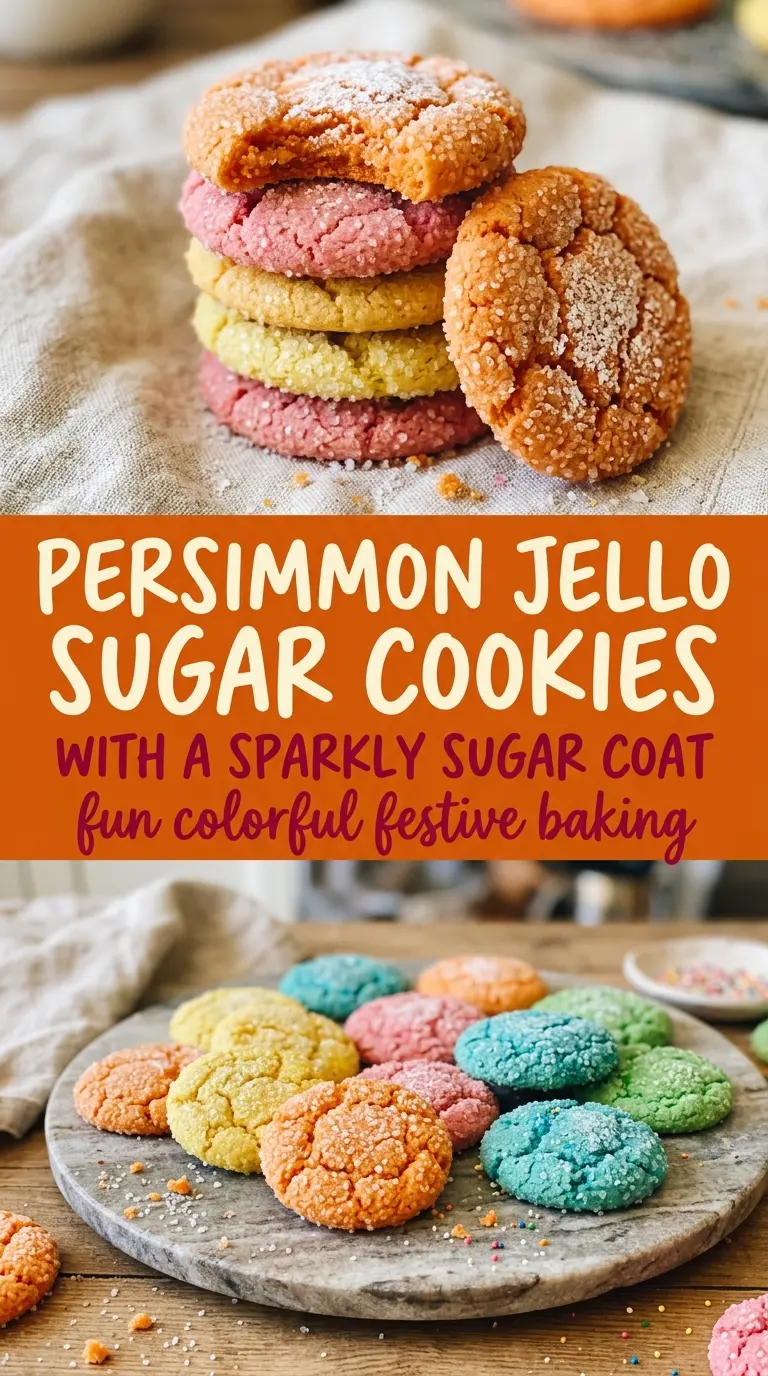
Jello sugar cookies bake up with soft centers, lightly crisp edges, and a bright fruity flavor that lands somewhere between a classic sugar cookie and a carnival treat. The dough stays buttery and tender, but the Jello powder gives each batch its own color and flavor, which makes these cookies a little more playful than the usual roll-and-bake version.
The trick is keeping the base dough plain until the end, then kneading the Jello powder in by hand so the color stays bold instead of getting lost in the bowl. Cream of tartar matters here too, because it keeps the cookies soft and gives them that gentle chew instead of a dry, sandy bite. Rolling the dough in extra sugar, or even a little more Jello powder, adds sparkle and helps the tops crack just enough in the oven.
Below you’ll find the part that makes these cookies reliable: how to divide the dough cleanly for different flavors, how to keep the texture soft, and what to do if your dough feels sticky before baking.
The dough came together fast, and the cookies stayed soft for days. I loved how the strawberry Jello gave them a pretty pink color without making them taste artificial.
These Jello sugar cookies turn out soft, colorful, and extra fun to mix by flavor, so they’re the ones to keep in mind when you want a cheerful cookie tray.
The Reason These Cookies Stay Soft Instead of Spreading Thin
Most flavored sugar cookies fail in one of two ways: the dough gets too wet once the mix-in goes in, or the cookies spread into pale puddles because the structure isn’t strong enough to hold them. Jello powder can make both problems worse if you dump it into the whole bowl at once. The dough gets streaky first, then overworked second, and that’s how you end up with uneven color and a tougher bite.
Here the Jello is kneaded into divided portions after the base dough is mixed. That keeps the buttery dough balanced before the flavoring goes in, which matters because the Jello is carrying both sugar and powder. A short bake at 350°F keeps the centers soft while the edges set just enough to hold their shape. Pull them when the tops look dry and the bottoms are just turning golden.
What the Jello Powder Is Really Doing Here
- Jello powder — This is the ingredient that gives the cookies their color and fruity flavor in one shot. Different flavors create different batches, and that’s part of the fun. Gelatin dessert mix is what works here, not unsweetened gelatin, because you need the sugar and flavoring built into the powder.
- Unsalted butter — Butter carries the flavor and gives the cookies their soft, rich crumb. It needs to be softened, not melted, or the dough will spread too much in the oven. If your kitchen is warm, chill the shaped dough for 15 minutes before baking.
- Cream of tartar — This is what keeps the texture tender and slightly chewy. It adds the same gentle lift people expect in a soft sugar cookie. If you don’t have it, the closest swap is 1 teaspoon of lemon juice, though the texture won’t be quite as plush.
- All-purpose flour — This gives the cookies enough structure to hold the Jello without turning cakey. Too much flour will make them dry, so spoon and level if you can. If the dough feels sticky after mixing, chill it instead of adding a lot more flour.
Building the Dough So the Color Stays Bright
Creaming the Butter and Sugar
Beat the softened butter and granulated sugar until the mixture looks pale and fluffy, not greasy. That step traps air and gives the cookies a lighter texture once they bake. If the butter is too soft, the mixture will look shiny and loose instead of creamy, and the cookies will spread faster than you want.
Adding the Dry Ingredients
Whisk the flour, baking powder, baking soda, and cream of tartar together first, then add them gradually. That keeps the leaveners from clumping and helps the dough come together evenly. Stop mixing as soon as the flour disappears; overmixing here makes the cookies tough before they even hit the oven.
Kneading in the Jello
Divide the dough into sections and work 2 tablespoons of Jello powder into each one by hand. This is where the color gets intense, and hand-kneading keeps you from overmixing the whole batch. If the dough starts to crumble, keep kneading; the warmth of your hands usually brings it back together. If it gets sticky, a brief chill fixes it without dulling the color.
Rolling and Baking
Roll the dough into 1-inch balls, coat them in sugar or extra Jello powder, then flatten them slightly before baking. The coating gives the cookies their sparkle and helps create that crackled top. Bake until the edges are set and the centers still look a little soft; they finish on the pan, and that last carryover heat is what keeps them tender.
How to Change the Flavor, Color, or Batch Size
Make a Mixed-Flavor Cookie Tray
Divide the dough into equal portions and knead a different Jello flavor into each one. Strawberry, orange, lime, and cherry all hold their color well and give you a brighter tray with almost no extra work. The base dough stays the same, so the cookies still bake evenly even when the colors change.
Gluten-Free Version
Use a 1:1 gluten-free baking flour that includes xanthan gum. The texture will be a little more delicate, so chill the dough before baking and watch the cookies closely near the end of the bake time. They should still look soft in the center when they come out.
Less Sweet Coating
Roll the dough in plain granulated sugar instead of extra Jello powder if you want the fruity flavor to stay gentler. You’ll lose some of the bright outer color, but the cookie itself still carries the flavor. That version also keeps the tops a little cleaner if you’re stacking the cookies for a platter.
Storage and Reheating
- Refrigerator: Store in an airtight container for up to 5 days. The cookies stay soft, though the sugar coating softens a little after the first day.
- Freezer: These freeze well. Freeze the baked cookies in a single layer first, then move them to a container with parchment between layers for up to 2 months.
- Reheating: Let frozen cookies thaw at room temperature. If you want that just-baked feel, warm them in a 275°F oven for 3 to 4 minutes. Don’t microwave them; it softens the coating and makes the centers chewy in the wrong way.
Answers to the Questions Worth Asking

Jello Sugar Cookies
Ingredients
Equipment
Method
- Preheat the oven to 350°F and line a sheet pan for easy baking.
- Cream the softened butter and 1 cup granulated sugar until smooth, then mix in the egg and vanilla until fully combined.
- In a separate bowl, whisk together the all-purpose flour, baking powder, baking soda, and cream of tartar until evenly distributed.
- Gradually mix the dry ingredients into the wet ingredients until a dough forms and no dry pockets remain.
- Divide the dough into sections and knead 2 tablespoons of Jello powder into each section until fully combined, creating distinct bold colors.
- Roll the dough into 1-inch balls, then coat in extra sugar or Jello powder for a sparkly finish.
- Place the balls 2 inches apart on the prepared sheet pan, flatten slightly, and bake for 8 to 10 minutes at 350°F, until set and lightly golden at the edges.