
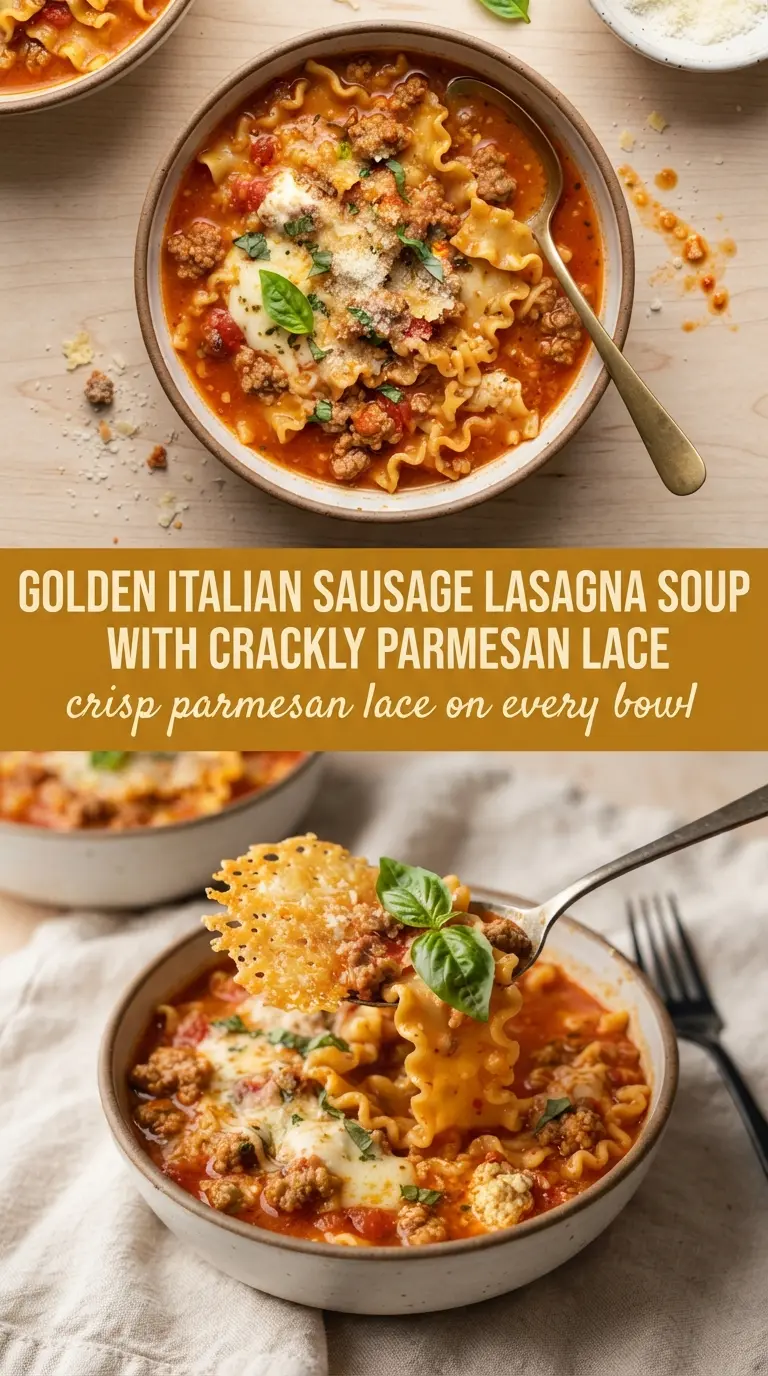
Italian sausage lasagna soup lands in that sweet spot between comforting and practical: thick tomato broth, tender noodles, and enough richness from the sausage and ricotta to feel like dinner has some weight to it. The Parmesan lace on top brings the one thing soup usually can’t give you on its own — a crisp, salty shard that breaks over the spoon and makes the whole bowl feel finished.
The part that matters most here is timing the noodles. Broken lasagna sheets go in near the end so they soften without turning pasty, and the soup stays brothy instead of collapsing into starch. Browning the sausage with the onion first builds the base in a way plain simmering never will, and that little bit of color carries the whole pot.
Below you’ll find the exact moment to add the pasta, why the Parmesan lace works, and a few swaps that keep the soup hearty without losing the texture that makes it good.
The noodles stayed tender instead of falling apart, and that Parmesan lace on top was such a great touch — it got crunchy again even after sitting for a few minutes.
Keep this Italian Sausage Lasagna Soup handy for nights when you want the lasagna flavor without the layering work.
The Noodle Timing That Keeps This Soup from Turning Gloppy
Lasagna soup can go wrong fast when the pasta gets a head start. Broken noodles keep drinking broth as they sit, and by the time dinner hits the table you end up with a pot that eats like pasta salad in tomato sauce instead of soup. The fix is simple: cook the noodles only after the broth is seasoned and simmering, then serve the pot right away.
The other trap is overcooking the noodles once they’re in. Lasagna sheets vary a lot in thickness, so start checking at the 8-minute mark. You want them tender with a little bite in the center, because they’ll keep softening in the hot broth even off the heat. If the soup looks too thick near the end, that’s normal — the noodles are stealing some of the liquid, and a splash of broth at the table brings it right back.
What Each Ingredient Is Actually Doing in This Bowl
- Italian sausage — This is the backbone of the soup. It brings fat, seasoning, and enough depth that you don’t need a long ingredient list to get a full-flavored pot. Mild or hot both work; hot sausage gives the broth more bite, while mild keeps the finish softer. If you use turkey sausage, add a little extra olive oil so the onion has something to cook in.
- Yellow onion and garlic — These build the savory base once the sausage browns. The onion needs time to soften and pick up some color before the garlic goes in; if you add the garlic too early, it can scorch and turn bitter under the tomato. Mince the garlic finely so it melts into the broth instead of floating around in sharp little bits.
- Crushed tomatoes — Crushed tomatoes give you body without making the soup as heavy as a full marinara. If all you have are whole canned tomatoes, crush them with your hands before they go in. That keeps the texture rustic and helps the broth thicken naturally as it simmers.
- Lasagna noodles — Broken sheets are the point here. They give you the chewy, layered feel of lasagna without any of the assembly. Use them broken into uneven pieces so the bowl eats like a real soup instead of looking too neat. If you only have regular pasta, mafaldine or bowties can work, but you’ll lose some of that lasagna character.
- Ricotta and Parmesan — Ricotta softens each bowl and gives you the creamy finish that makes the soup taste like lasagna. Parmesan does two jobs here: it seasons the broth and makes the crisp lace on top. Freshly grated Parmesan melts and browns better than the shelf-stable kind, which is important for the lace.
- Baby spinach — Spinach doesn’t change the character of the soup, but it brightens the bowl and keeps the final bite from feeling too heavy. Stir it in at the very end so it wilts without turning swampy. If you’re using sturdier greens like kale, give them a few extra minutes in the broth before serving.
Building the Pot in the Right Order
Browning the Sausage and Onion First
Cook the sausage with the diced onion over medium heat until the sausage is no longer pink and the onion looks soft and slightly golden at the edges. That browning is where the flavor starts; if the pan looks dry, let the sausage render a little more before adding anything else. Once the garlic goes in, stir it only for a minute. Garlic burns fast, and once it turns dark, the whole pot tastes harsh.
Making the Tomato Broth Taste Cooked, Not Raw
When the tomatoes, broth, and Italian seasoning go in, bring everything to a real boil, then settle it into a steady simmer. That first boil wakes up the seasoning and gives the tomatoes a chance to lose their canned edge. If the broth tastes flat at this point, it usually needs salt more than more herbs. Salt is what makes the sausage, tomato, and Parmesan read as one dish instead of three separate things.
Cooking the Noodles at the End
Add the broken lasagna noodles only after the broth is ready and the soup is simmering. Stir them a few times so they don’t stick to the bottom, then watch for tenderness at the 8-minute mark. The most common mistake here is walking away and letting them go past soft — once they’re mushy, there’s no fixing the texture. Pull the pot from the heat as soon as the noodles are just tender.
Finishing with Spinach, Ricotta, and Parmesan Lace
Stir the spinach in last so it wilts from the heat of the soup instead of boiling into mush. Ladle the soup into bowls, then add a spoonful of ricotta and a piece of Parmesan lace on top. The lace should be crisp and deeply golden around the edges; if it’s pale, give it another minute in the oven. That final contrast — creamy ricotta, chewy noodles, and a brittle cheese topping — is what makes the bowl feel complete.
Three Ways to Adapt This Without Losing the Good Part
Dairy-Free Version That Still Tastes Rich
Skip the ricotta and Parmesan lace, then finish each bowl with a drizzle of olive oil and a handful of chopped basil if you have it. You’ll lose the creamy, salty finish, but the sausage broth still carries the dish. For extra body, let the soup reduce a little longer before adding the noodles.
Gluten-Free with the Same Hearty Feel
Use a sturdy gluten-free lasagna noodle or a short gluten-free pasta that holds its shape in broth. Cook it just until tender and expect a little more thickening from the starch. Some gluten-free pastas break down faster than wheat pasta, so serve the soup as soon as the noodles are done.
Lighter Version with Turkey Sausage
Turkey sausage works well if you want a leaner pot, but it needs help in the pan. Add a tablespoon of olive oil before browning so the onion doesn’t stick, and season a little more aggressively at the end. The soup will be slightly less rich, but still satisfying if you keep the ricotta and Parmesan lace.
Storage and Reheating
- Refrigerator: Store the soup for up to 4 days. The noodles will keep absorbing broth, so expect the texture to thicken overnight.
- Freezer: Freeze the broth and sausage without the noodles if you can. Pasta gets soft after thawing, so cook fresh noodles when you reheat for the best texture.
- Reheating: Warm gently on the stove over medium-low heat with a splash of broth or water. Don’t boil it hard, or the noodles will break apart and the ricotta topping won’t sit as nicely.
Answers to the Questions Worth Asking

Italian Sausage Lasagna Soup
Ingredients
Equipment
Method
- Preheat the oven to 400°F and line a sheet pan with parchment. Bake small mounds of grated Parmesan for 5 minutes until golden and visibly lacy.
- In a Dutch oven over medium-high heat, cook the Italian sausage with the diced onion for 8 minutes. Stir in the minced garlic and cook for 1 minute until fragrant.
- Add the crushed tomatoes, chicken broth, and Italian seasoning, then bring the mixture to a boil. Keep the boil active so the soup stays vigorously bubbling.
- Stir in the broken lasagna noodles and cook for 8 to 10 minutes until just tender. Avoid longer cooking to prevent mushy noodles and watch for the noodles to soften while still holding their shape.
- Fold in the baby spinach and cook until wilted, about 1 to 2 minutes. Season with salt and black pepper to taste.
- Ladle into bowls and top each with ricotta and Parmesan lace right away. Serve immediately so the noodles stay tender and the Parmesan remains crisp.