
All the comfort of baked lasagna shows up here in a spoonable bowl, but without the layering, the pan, or the long oven time. The broth turns rich and tomato-red, the sausage brings enough savory depth to carry the whole pot, and the broken noodles cook right into that thick, clingy finish that makes each bite feel like a cross between soup and pasta.
The trick with this version is letting the Instant Pot do the heavy lifting without turning the noodles mushy. Browning the sausage and onion first builds the base, and adding the noodles on top of the broth instead of stirring them in helps them cook evenly without sinking and sticking to the bottom. The ricotta gets mixed with basil at the end, so it stays cool, creamy, and bright against the hot soup instead of disappearing into it.
Below, you’ll find the timing that keeps the noodles tender, the little step that makes the broth taste round and full, and a few smart swaps if you want to lighten it up or stretch it a little farther.
The noodles came out tender but not soggy, and the ricotta with basil on top made it taste like actual lasagna in soup form. I was worried about the Instant Pot timing, but the broth was perfect after the quick release.
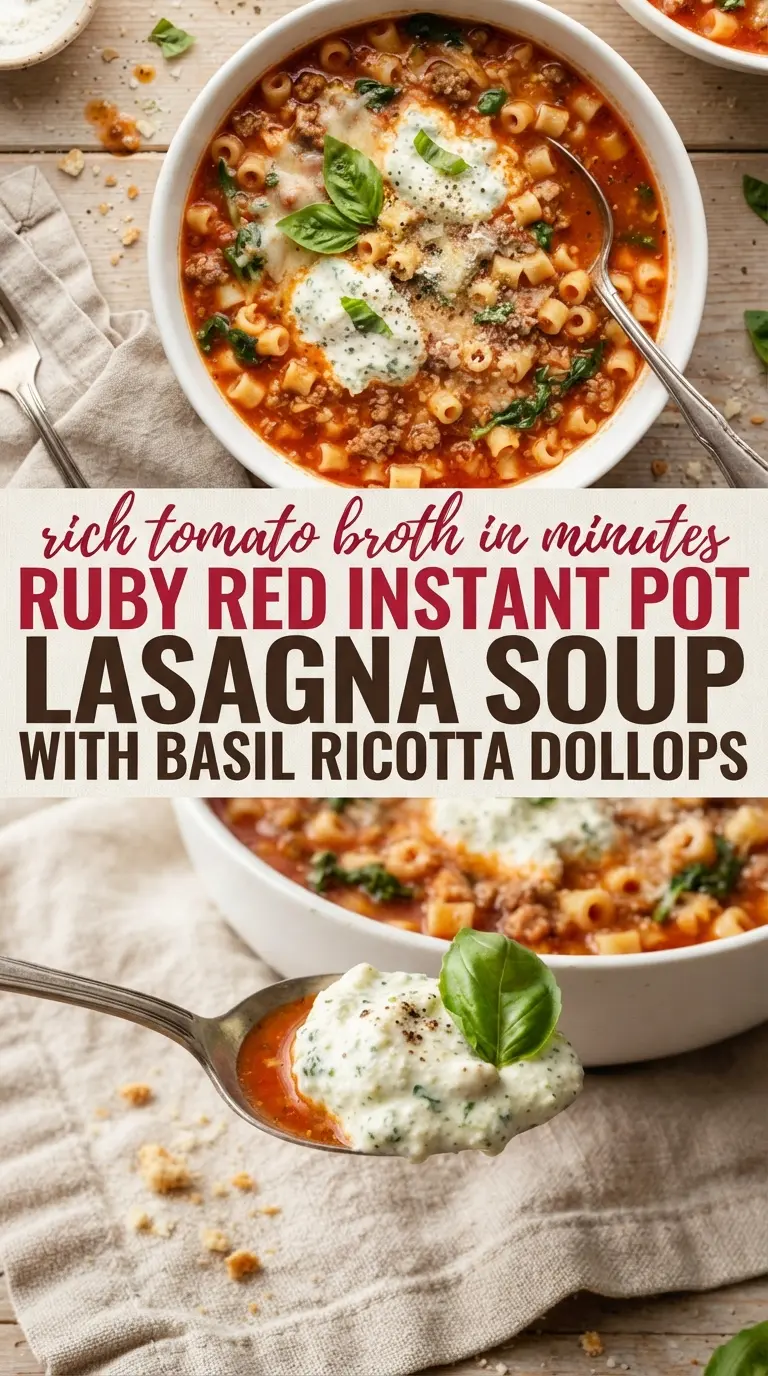
Instant Pot Lasagna Soup with sausage, basil ricotta, and tender noodles is the kind of one-pot dinner that disappears fast.
The Step That Keeps the Noodles Tender Instead of Broken
The pressure cooker is fast enough to turn lasagna soup into a weeknight dinner, but speed is also what can ruin it. If the noodles get stirred into the liquid too early, they sink, clump, and start sticking to the bottom of the pot before the pressure even builds. Leaving them on top is what keeps them intact and helps the soup cook evenly.
The other place people run into trouble is the quick release. Once the cook time is done, release the pressure right away so the noodles stop cooking at the same moment the timer stops. Letting them sit in the hot broth too long can push them past tender and into soft, swollen territory.
- Browning first matters. The sausage and onion create the savory base, and that browned fond at the bottom gives the broth its deep, lasagna-like backbone.
- Do not stir after adding the noodles. Layer them over the liquid so they steam and cook without sticking.
- Quick release keeps the texture right. Waiting adds carryover cooking that softens the noodles too much.
What Each Ingredient Is Actually Doing in This Bowl
- Italian sausage — This does the heavy lifting for flavor. Mild or hot both work; hot gives the broth a little edge, while mild keeps it classic. If you swap in ground beef, add a pinch of fennel and extra Italian seasoning to bring back some of that lasagna feel.
- Crushed tomatoes — These give the soup body without making it chunky in an awkward way. I like crushed tomatoes here because they melt into the broth and thicken it naturally. Diced tomatoes stay more separate and make the soup looser.
- Lasagna noodles — Regular dried noodles broken into pieces are the right choice. No-boil noodles can go overly soft under pressure, and fresh pasta cooks too fast for this timing. Break them into rough bite-size pieces so the soup eats like lasagna, not a tangled pot of pasta.
- Ricotta, basil, and mozzarella — Ricotta gives the creamy top layer, basil wakes it up, and mozzarella melts through the soup for that familiar cheesy finish. Stir the mozzarella in after pressure cooking so it melts smoothly without turning stringy or clumpy. The ricotta topping should stay a little cool and soft; that contrast is part of what makes the bowl taste special.
Building the Soup Base in the Right Order
Browning the sausage and onion
Start with the oil, sausage, and onion in sauté mode and cook until the sausage loses its pink color and the onions are soft and translucent with browned edges. That first 7-minute cook gives you flavor that plain simmering can’t match. If there’s a little browning stuck to the pot, that’s good. If the meat is crowded and steaming, it won’t develop the same depth, so break it up as it cooks and let it actually brown.
Adding the broth without losing the fond
Stir in the garlic briefly, then add the tomatoes and broth. Scrape the bottom of the pot well so nothing burned is left behind to trigger a burn warning. The liquid should look loose and fully mixed before the noodles go in. Once the broth is in place, the pot can pressure cook evenly instead of trying to fight with a sticky bottom.
Layering the noodles for pressure cooking
Lay the broken noodles on top of the broth and leave them there. Don’t stir. That top layer lets the pasta soften under steam and pressure without sinking into the hot base and sticking. If some noodle ends stick up above the liquid, that’s fine; they’ll still cook through once the pot seals.
Finishing with cheese and basil
After the quick release, stir in the mozzarella until it melts into the broth and turns it slightly creamy. Then mix the ricotta with basil and spoon it over each bowl. If you add the ricotta straight into the pot, it disappears and the soup loses that lasagna-like layered effect. A spoonful on top gives you a cool, creamy bite against the hot soup every time.
How to Adapt This for a Lighter Bowl or a Bigger Batch
Make it lighter without losing the lasagna feel
Use ground turkey instead of sausage and add an extra teaspoon of Italian seasoning plus a pinch of red pepper flakes if you want more backbone. You’ll lose some richness, so the broth will taste a little cleaner, but the ricotta topping still gives it enough creaminess to feel satisfying.
Make it gluten-free without changing the flavor much
Swap in your favorite gluten-free lasagna noodles, but watch them closely because they can break down faster than wheat noodles under pressure. If the brand you use tends to soften quickly, reduce the pressure cook time by 1 minute and let the quick release happen immediately.
Stretch it for a larger crowd
You can add another cup of broth and a few more broken noodles if your pot has room, but don’t pack it past the max fill line. The soup thickens as it sits, so a little extra liquid is better than starting too dense. Serve with extra ricotta on the side so everyone can add as much as they want.
Storage and Reheating
- Refrigerator: Store for up to 4 days. The noodles will absorb broth as it sits, so expect the soup to thicken.
- Freezer: It freezes best without the noodles and ricotta topping. Freeze the broth and sausage base, then cook fresh noodles when you reheat it.
- Reheating: Warm it gently on the stove or in the microwave with a splash of broth or water. High heat can turn the noodles soft and make the cheese separate.
Answers to the Questions Worth Asking

Instant Pot Lasagna Soup
Ingredients
Equipment
Method
- Set the Instant Pot to sauté and heat the olive oil until shimmering, then add the Italian sausage and diced yellow onion. Cook for 7 minutes, stirring occasionally, until the sausage is browned and the onion looks softened.
- Add the minced garlic and cook for about 30 seconds, stirring, until fragrant and lightly golden, with no browning on the garlic.
- Pour in the crushed tomatoes and chicken broth, then add the broken lasagna noodles on top without stirring so the noodles settle as a layer.
- Seal the Instant Pot and cook on high pressure for 5 minutes; the display should indicate pressure cooking time counting down.
- Quick release the pressure to stop the cook immediately, then open the lid when the pin drops fully.
- Stir in the shredded mozzarella so it melts into the broth and gives the soup a creamy, stretchy texture.
- Mix the ricotta with the chopped fresh basil, then dollop it on top for bright herb flecks and a layered lasagna-soup look.