
Dried elderberries simmering with cinnamon, cloves, and ginger turn into a deep, glossy syrup that tastes bold, spiced, and just sweet enough to take straight by the spoonful or stir into tea. The long simmer pulls the color and flavor out of the berries without needing any fancy equipment, and the final honey gets added at the end so the syrup stays smooth instead of tasting flat or cooked down. It’s one of those pantry projects that pays off fast once the weather turns and you want something comforting ready in the fridge.
The key is patience with the simmer. Let the liquid reduce uncovered until it’s concentrated and aromatic, then mash the softened berries before straining so you get every bit of color and body. Waiting for the liquid to cool before adding the honey matters, too. Hot syrup can dull the honey’s flavor and leave you with a thinner, less polished finish. If you’ve ever made elderberry syrup that tasted watery or muddy, this method fixes both problems.
Below, you’ll find the exact timing that gives the syrup a rich texture, plus the small handling details that keep it clean-tasting and shelf-friendly in the fridge. The little things matter here, and once you’ve made it this way, it’s hard to go back.
I liked that the syrup reduced by half exactly like you said, and straining after mashing the berries gave it a thicker, deeper color. I stirred it into hot tea and it had that strong cinnamon-ginger finish without tasting overly sweet.
Save this homemade elderberry syrup for the days when you want a spiced, concentrated syrup ready for tea, a spoonful, or the fridge door.
The Part Most Elderberry Syrups Get Wrong: Weak Reduction
The biggest mistake with elderberry syrup is stopping the simmer too soon. If the liquid still tastes thin and the color looks washed out, the syrup will taste flat no matter how much honey you stir in later. Reducing it by about half concentrates the berry juice and the spices at the same time, which is what gives the finished syrup that dark, almost jammy edge.
Mashing the softened berries before straining is the other step people skip. The berries hold onto a lot of liquid even after simmering, and pressing them through a fine mesh sieve gives you a fuller, richer syrup. Skip that part and you leave a surprising amount of flavor behind in the sieve.
What Each Ingredient Is Actually Doing in This Syrup
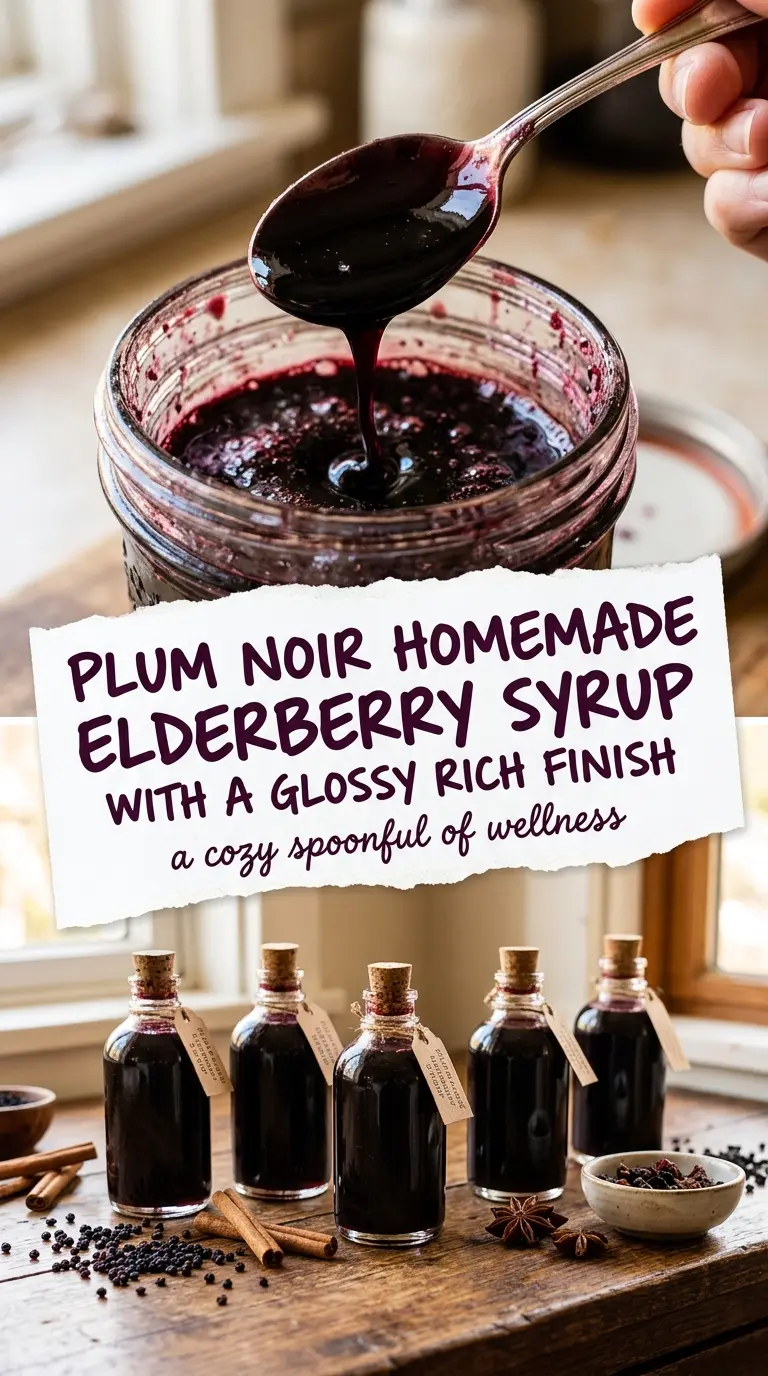
- Dried elderberries — These are the backbone of the syrup. They bring the deep purple color and tart, slightly tannic fruit flavor that makes the syrup taste like elderberry syrup instead of spiced honey water. Use dried berries rather than fresh for reliable concentration and easier storage.
- Cinnamon stick — A whole stick infuses warmth without turning the syrup dusty or bitter the way ground cinnamon can. If all you have is ground cinnamon, use a small pinch, but expect a cloudy syrup and a softer spice note.
- Whole cloves — Cloves add a sharp, aromatic finish that stands up to the berries. Too many cloves can take over fast, so keep them whole and restrained.
- Fresh ginger — Sliced ginger brings a clean heat that keeps the syrup from tasting one-note. Powdered ginger works in a pinch, but fresh ginger gives a brighter, less muddy finish.
- Raw honey — Honey sweetens and rounds out the tartness, but it also gives the syrup body. Add it only after the liquid cools to lukewarm so it stays fragrant and blends smoothly instead of tasting cooked.
Building the Syrup So It Stays Bold, Not Watery
Start with a full uncovered simmer
Combine the elderberries, water, cinnamon stick, cloves, and ginger in a saucepan, then bring it to a boil before lowering the heat. The first boil wakes up the spices and gets the extraction moving quickly, but the real work happens during the uncovered simmer. You want steady bubbling, not a hard rolling boil that throws liquid around and gives you less reduction than you need.
Reduce until the volume cuts in half
Let the pot simmer for about 45 minutes, or until the liquid has reduced by half and smells deep, spiced, and fruity. If it still looks too pale or thin, keep going; the final syrup should coat a spoon lightly, not run off like tea. A too-short simmer is the main reason elderberry syrup tastes weak after it’s sweetened.
Mash, strain, and cool before adding honey
Take the pan off the heat and let it cool just enough to handle safely. Mash the softened berries to release the last bit of juice, then press everything through a fine mesh sieve. Stir in the honey only once the strained liquid is lukewarm; if you add it while the syrup is hot, the flavor turns flatter and the finish can taste harsh.
How to Adapt This for Different Needs
Make It Honey-Free
If you need to avoid honey, swap in maple syrup after the liquid cools to lukewarm. The syrup will still be smooth and spoonable, but it’ll taste a little rounder and less floral than the honey version. Add it gradually and taste as you go because maple is less sweet by volume.
Use It as a Tea Syrup
For stirring into tea, keep the consistency as written. If you want a lighter pour, add a splash more water at the end before the honey goes in. That gives you a thinner syrup that mixes more easily, though it won’t feel as concentrated on the spoon.
Make the Spice Softer
If you prefer a gentler spice note, cut the cloves to 2 and shorten the ginger slightly. The elderberries will still give you a rich base, but the syrup will lean fruitier and less warming. Don’t remove the cinnamon completely; it helps the whole batch taste cohesive.
Storage and Reheating
- Refrigerator: Store in a clean glass bottle in the fridge for up to 3 months. It may thicken slightly as it chills, which is normal.
- Freezer: It freezes well in small portions, especially in silicone ice cube trays. Thaw only what you need and keep the rest frozen so the honey stays fresh.
- Reheating: Warm a small amount gently if you want it looser for tea. Don’t boil it after the honey is added; high heat changes the texture and dulls the finished flavor.
Answers to the Questions Worth Asking
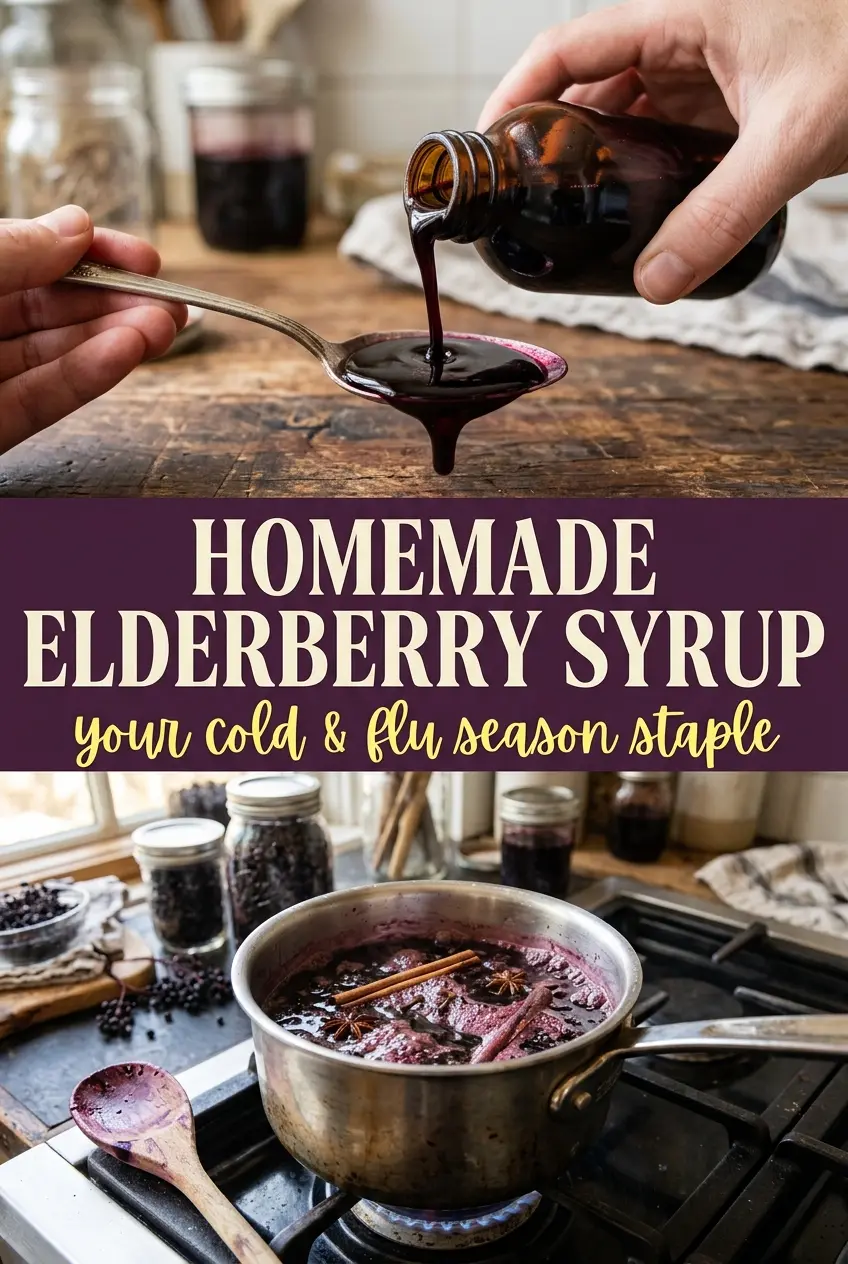
Homemade Elderberry Syrup
Ingredients
Equipment
Method
- Combine the dried elderberries, water, cinnamon stick, cloves, and sliced fresh ginger in a saucepan. Bring to a boil over medium-high heat, watching for bubbles around the edges.
- Reduce the heat to maintain an uncovered simmer. Simmer for 45 minutes, until the liquid reduces by about half and looks darker and more syrupy.
- Remove from heat and let the mixture cool slightly, until it is warm but not hot to the touch. This prevents harsh flavors and prepares it for straining.
- Mash the softened berries in the saucepan to release more juice. Continue to work through the solids so the final syrup tastes full-bodied.
- Strain the mixture through a fine-mesh sieve, pressing firmly to extract all liquid. Discard the solids and keep only the strained syrup.
- Let the strained liquid cool to lukewarm. It should feel comfortably warm, not steaming.
- Stir in the raw honey until fully dissolved. Keep stirring until the syrup looks smooth and uniform with no honey streaks.
- Pour the syrup into a clean glass bottle and refrigerate. Chill until cold before using for the best texture.