
Silky tomato soup gets a lot of its appeal from the way it coats the spoon, but the version that keeps you full has to do more than taste nice. This high protein tomato soup stays plush and comforting without leaning on cream, and the result is a bowl that eats like dinner, not just a starter. The texture lands somewhere between classic bisque and a blended pantry soup: smooth, rich, and just thick enough to feel satisfying.
The trick is in the order of operations. Onion softens first so it melts into the base instead of staying sharp, tomato paste gets a chance to deepen in the pot, and the soup simmers long enough for the canned tomatoes to lose that tinny edge. Cottage cheese is blended separately until completely smooth, then stirred in off the heat so it gives body without turning grainy. That extra step matters. If you dump it straight into a boiling pot, you can end up with tiny curds instead of a velvety finish.
Below you’ll find the exact points where this soup earns its texture, plus a few smart swaps and the one reheating note that keeps it smooth the next day.
The cottage cheese blended in so smoothly that my kids never guessed it was in there, and the soup stayed thick and creamy even after reheating for lunch the next day.
Save this high protein tomato soup for a creamy, blender-smooth dinner that gets its body from cottage cheese instead of cream.
The Step That Keeps Tomato Soup From Tasting Flat
Most tomato soups lean on cream to hide weak flavor, but that only works if the tomato base already tastes like something. Here, the onion gets cooked until soft and translucent, the tomato paste goes in long enough to darken a shade, and the soup simmers before blending so the canned tomatoes lose their raw edge. That small amount of patience changes the whole pot.
The other thing that matters is heat control after blending. Once the cottage cheese goes in, the soup should warm gently, not boil. High heat can make the texture grainy and dull the clean tomato flavor. Keep it low and steady, and the soup stays smooth.
- Tomato paste — This is where the depth comes from. Let it cook with the onions and tomatoes for a minute or two so it loses that sharp, raw paste taste and turns a little darker.
- Crushed tomatoes — Use a good canned brand if you can. Since this soup is built on tomatoes, a sweet, balanced can makes a noticeable difference.
- Chicken bone broth — It adds body and a little savory backbone. Vegetable broth works, but the soup will taste lighter and less rounded.
- Cottage cheese — This is the protein and creaminess engine. Blend it until completely smooth before adding it, or you’ll taste the curds.
What Each Ingredient Is Doing in This Soup
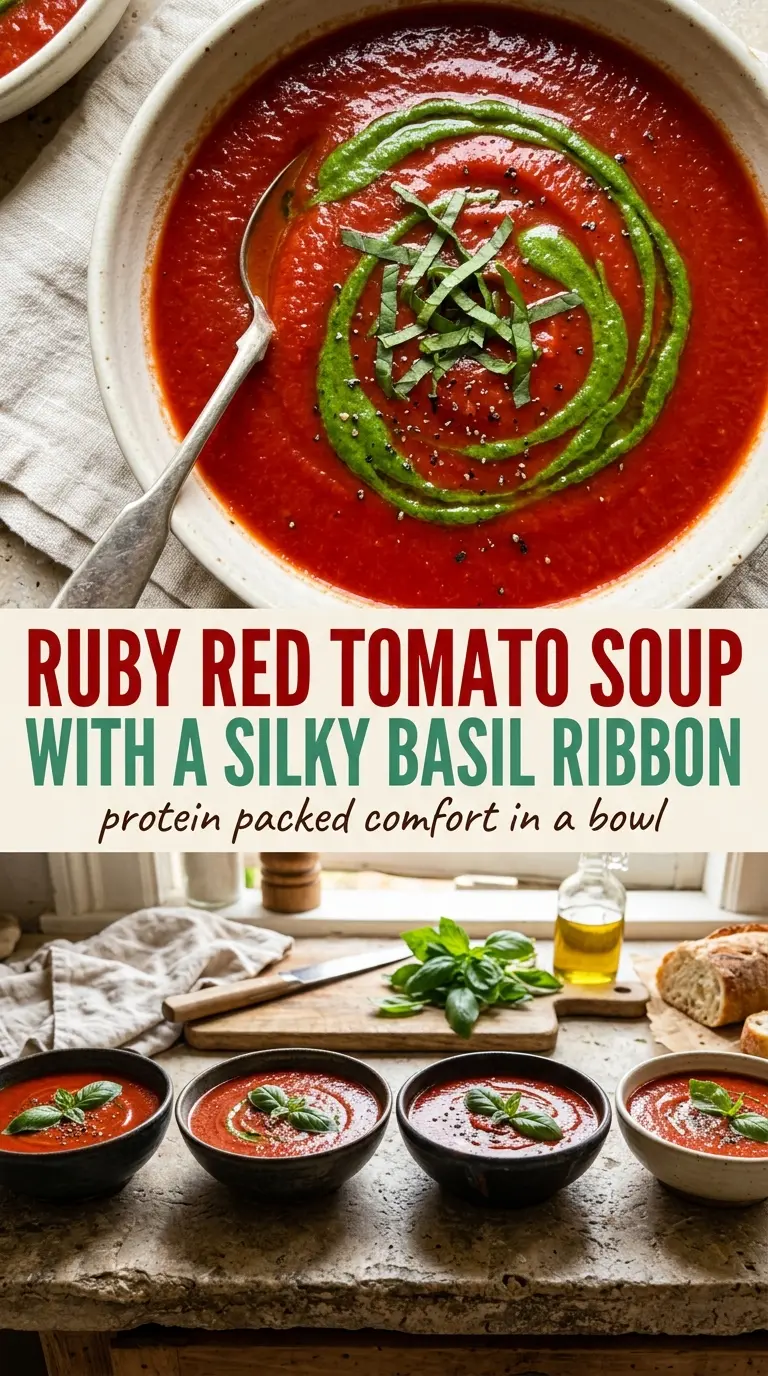
- Olive oil — Just enough to soften the onion and help the tomato paste cook evenly. You don’t need much here, but skipping it leaves the base a little thin and dry.
- Onion and garlic — Onion gives the soup sweetness, while garlic keeps it from tasting one-note. If you want a softer flavor, cook the garlic only for the last 30 seconds so it doesn’t burn.
- Fresh basil — Basil brightens the tomato and keeps the soup from tasting heavy. Dried basil works in a pinch, but use less because it comes on stronger and less fresh.
- Cottage cheese — Full-fat or low-fat both work as long as you blend it smooth. If your blender struggles, add a spoonful or two of warm soup to the cottage cheese first, then blend until silky before stirring it back in.
The 20 Minutes That Actually Matter
Softening the Onion First
Heat the olive oil over medium and cook the onion until it’s soft and just starting to turn translucent, about 5 minutes. You’re looking for sweetness, not color. If the onion browns too hard, the soup picks up a stronger, almost toasted note that fights the clean tomato flavor.
Building the Tomato Base
Stir in the crushed tomatoes, tomato paste, basil, salt, pepper, and broth. Let the pot come up to a gentle simmer, then keep it there for 10 to 15 minutes. You want the soup to smell less sharp and more rounded by the end of this stage. If it boils hard, the tomato flavor can turn harsh instead of mellow.
Blending for a Smooth Finish
Turn off the heat before blending the soup base. An immersion blender works best for speed, but a countertop blender gives the smoothest result if you work in batches and vent the lid carefully. Blend until the soup looks completely even and there are no visible tomato skins or onion bits left.
Adding the Cottage Cheese Without Graininess
Blend the cottage cheese separately until totally smooth, then stir it into the hot soup base. Warm it over low heat only until heated through. If the soup starts to bubble after the cottage cheese goes in, pull it off the burner right away; that extra heat is what can make the texture split or turn sandy.
Three Ways to Make This Soup Fit What You Need
Dairy-Free Version
Swap the cottage cheese for unsweetened silken tofu or a plain dairy-free cream alternative. Silken tofu keeps the protein boost close to the original and blends smoothly, while coconut-based cream will taste richer but adds a little sweetness.
Vegetarian Version
Use vegetable broth instead of chicken bone broth. The soup will still be smooth and comforting, but it loses a little savory depth, so a pinch more salt or a spoonful of nutritional yeast can help bring it back.
Higher-Protein Bowl
Stir in an extra half cup of blended cottage cheese or top each bowl with chopped rotisserie chicken. The soup gets thicker and more filling, but keep the heat low so the extra dairy stays silky.
Storage and Reheating
- Refrigerator: Store in an airtight container for up to 4 days. It thickens a little as it chills, which is normal.
- Freezer: It freezes well, but the texture is best if you freeze it before adding the cottage cheese. Blend in the cottage cheese after reheating for the smoothest result.
- Reheating: Warm it slowly on the stove over low heat, stirring often. Don’t let it boil, or the dairy can separate and the soup can turn grainy.
Answers to the Questions Worth Asking

High Protein Tomato Soup
Ingredients
Equipment
Method
- Heat the olive oil in a large pot over medium heat, then add the chopped onion and cook for 5 minutes, stirring occasionally, until softened and glossy.
- Add the minced garlic and cook for 30 to 60 seconds, just until fragrant, without browning.
- Stir in the crushed tomatoes, tomato paste, chopped basil, salt, and pepper, then mix until the tomato paste looks fully incorporated.
- Pour in the chicken bone broth and stir to combine, scraping the bottom of the pot so nothing sticks.
- Simmer the soup for 10 to 15 minutes over medium-low heat, until slightly thickened and the flavors taste well blended.
- Turn off the heat, then carefully blend the soup base with an immersion blender until smooth and ruby-red.
- Blend the cottage cheese separately until smooth, then stir it into the blended soup base until no curds remain visible.
- Warm the soup gently over low heat for 2 to 3 minutes, stirring until hot but not boiling.
- Serve immediately with an extra basil ribbon on top for a fresh green finish.