
Big, stacked salads earn their place when every bite hits something different: crisp romaine, salty bacon, creamy avocado, sweet roasted potato, tart apple, and those little bursts of pomegranate that wake everything up. This harvest cobb salad does that in a way that feels substantial enough to count as dinner, not just a side dish pretending to be lunch. The neat rows aren’t just for looks either. They keep the toppings distinct until the dressing goes on, so you get contrast instead of one muddled bowl.
The trick here is balancing the heavier ingredients with enough brightness to keep the salad from eating flat. Roasted sweet potato adds warmth and sweetness, while the maple-Dijon dressing pulls the bacon, blue cheese, and apple into the same lane without turning sugary. I like to slice the avocado and egg right before serving so they stay clean and fresh on the platter.
Below you’ll find the small details that make this salad work at the table: how to keep the toppings from sliding, what to swap if you don’t love blue cheese, and the best way to build it ahead without losing the crisp bite.
The maple-Dijon dressing was perfect with the bacon and blue cheese, and the sweet potato stayed tender without making the greens soggy. I served it on a platter for company and everyone kept commenting on how pretty it looked.
Save this harvest cobb salad for the nights when you want a filling meal salad with bacon, avocado, and maple-Dijon dressing.
The Difference Between a Salad That Sits Pretty and One That Eats Like Dinner
Harvest cobb salads can go wrong when every topping is soft, sweet, and beige. You end up with a bowl that looks abundant but eats flat. The fix is contrast. You need crisp greens under everything, a creamy element, a salty element, something tart, and one warm component that keeps the whole salad from feeling like a pile of leftovers.
The other place people lose this salad is in the dressing. A maple vinaigrette should taste balanced, not candy-sweet. The Dijon matters because it sharpens the maple and helps the dressing cling to the greens instead of sliding to the bottom of the platter. If the dressing tastes dull, the salad will too, no matter how nice the toppings are.
- Romaine — Use cold, well-dried romaine. Wet lettuce makes the dressing dilute and the platter turn sloppy fast.
- Bacon — Cook it until crisp, not chewy. It needs to stay snappy against the soft avocado and egg.
- Roasted sweet potato — Roast it until the edges brown. Pale cubes taste steamed, not caramelized.
- Blue cheese — This is one place where the good stuff matters. A sharper blue cheese gives the salad backbone; a mild one can get lost.
What Each Topping Is Doing in the Bowl
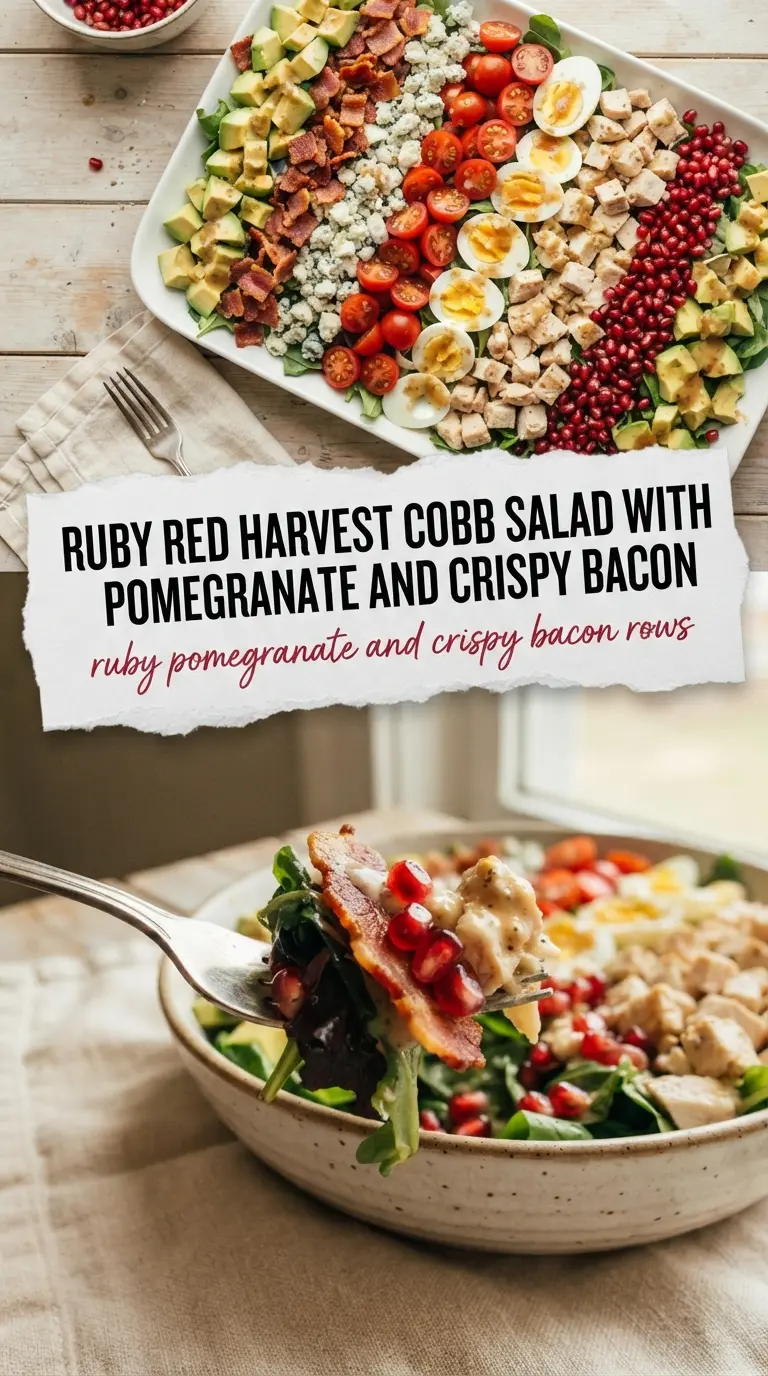
The romaine is the foundation. It has to be dry and cold so it stays crisp under the heavier toppings. The sweet potato adds body and a little sweetness, which is what makes this salad feel complete instead of like a side dish with extra steps. If you roast the cubes too close together, they steam; spread them out so they actually brown.
The bacon, blue cheese, and egg bring the savory side of the salad. Bacon gives salt and crunch, egg adds richness, and blue cheese gives that sharp, creamy bite that cuts through the sweet elements. The avocado should be ripe but still firm enough to slice cleanly. The apple and pomegranate are there for acidity and snap, so don’t skip them unless you’re replacing them with something equally bright.
The dressing is a simple emulsified vinaigrette, but the balance matters. Olive oil brings richness, maple syrup softens the vinegar, and Dijon helps the whole thing hold together. If it tastes sharp on its own, that’s fine. Once it hits the salad, the salty and creamy toppings round it out.
Building the Salad So Every Bite Stays Distinct
Whisk the Dressing First
Start with the dressing so the flavors have time to settle while you assemble everything else. Whisk until the mixture looks slightly thickened and glossy, not separated and oily. If the Dijon is clumping at the bottom, keep whisking before you add it to the salad. A broken dressing won’t ruin the dish, but it will pool in the platter and make the last bites taste uneven.
Lay Down the Greens
Spread the romaine across a wide platter or shallow bowl. This salad works best when the greens aren’t buried under the toppings, because you want each section visible and easy to serve. If the lettuce is wet, stop and dry it now. That extra moisture is what turns the bottom layer limp before everyone gets to the table.
Arrange the Toppings in Rows
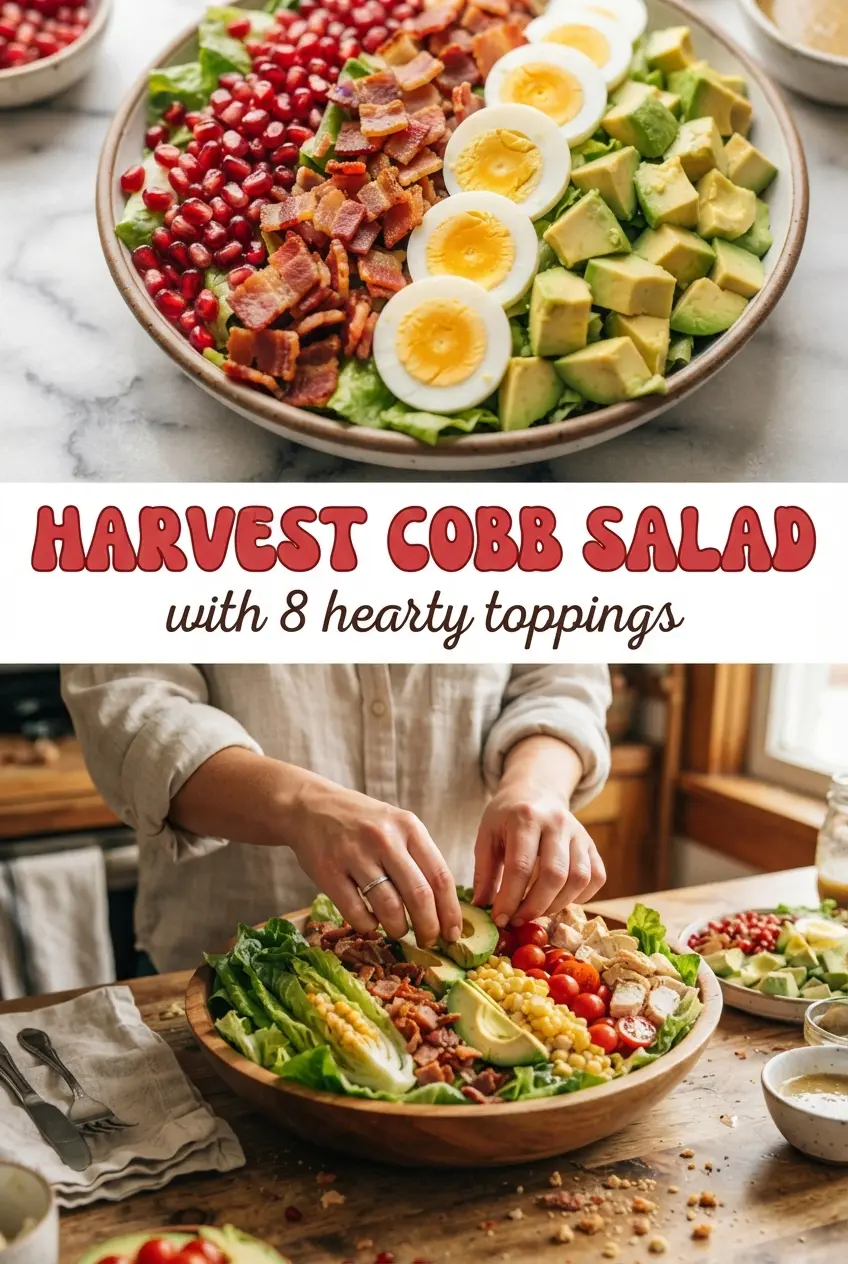
Place each ingredient in its own neat row or section over the greens. Start with the sturdier items like sweet potato, bacon, and egg, then add the softer pieces like avocado at the end so they don’t get smashed. The visual separation matters here because it keeps flavors layered instead of blended too early. If you want the platter to hold its shape longer, keep the dressing off until the very last minute.
Finish With the Dressing
Drizzle the dressing over the salad right before serving, or serve it on the side if you want the toppings to stay extra crisp. Use enough to lightly coat the greens, not flood them. The bacon and blue cheese already bring plenty of salt, so the goal is balance, not heaviness. Once the dressing hits, serve immediately while the lettuce is still crisp and the sweet potato is warm or just slightly cooled.
How to Adapt This for Smaller Dinners or Dietary Swaps
Make it vegetarian without losing the harvest feel
Skip the bacon and add toasted pecans or walnuts for crunch and a little richness. You lose the smoky-salty note, so add a pinch of flaky salt to the sweet potato or a few extra crumbles of blue cheese to keep the salad from tasting one-note.
Make it dairy-free
Leave out the blue cheese and lean harder on the apple, pomegranate, and Dijon for brightness. If you want back some creaminess, add a few more avocado slices or a spoonful of dairy-free ranch-style dressing on the side, but don’t add too much or the salad loses its clean cobb-style structure.
Swap the fruit based on what you have
Pear works in place of apple, and dried cherries can stand in for pomegranate seeds in a pinch. The tradeoff is texture: pears are softer, and dried fruit is sweeter and less juicy. If you use either swap, keep the dressing a little more tart so the salad still tastes balanced.
Storage and Reheating
- Refrigerator: Store the components separately for up to 3 days. The romaine stays crisp, but avocado and apple will brown once cut.
- Freezer: This salad doesn’t freeze well. The lettuce, avocado, and dressing all break down after thawing.
- Reheating: Don’t reheat the assembled salad. Warm the sweet potato separately if needed, then rebuild the platter with cold greens and toppings so the textures stay distinct.
Answers to the Questions Worth Asking
Harvest Cobb Salad
Ingredients
Method
- Whisk olive oil, maple syrup, apple cider vinegar, and Dijon mustard until fully combined and glossy.
- Arrange chopped romaine on a platter in an even layer so it stays visible under the toppings.
- Place bacon, hard-boiled eggs, avocado, pomegranate seeds, blue cheese, roasted sweet potato cubes, and apple slices in neat rows over the greens.
- Drizzle the dressing over the salad right before serving so the romaine stays crisp.