
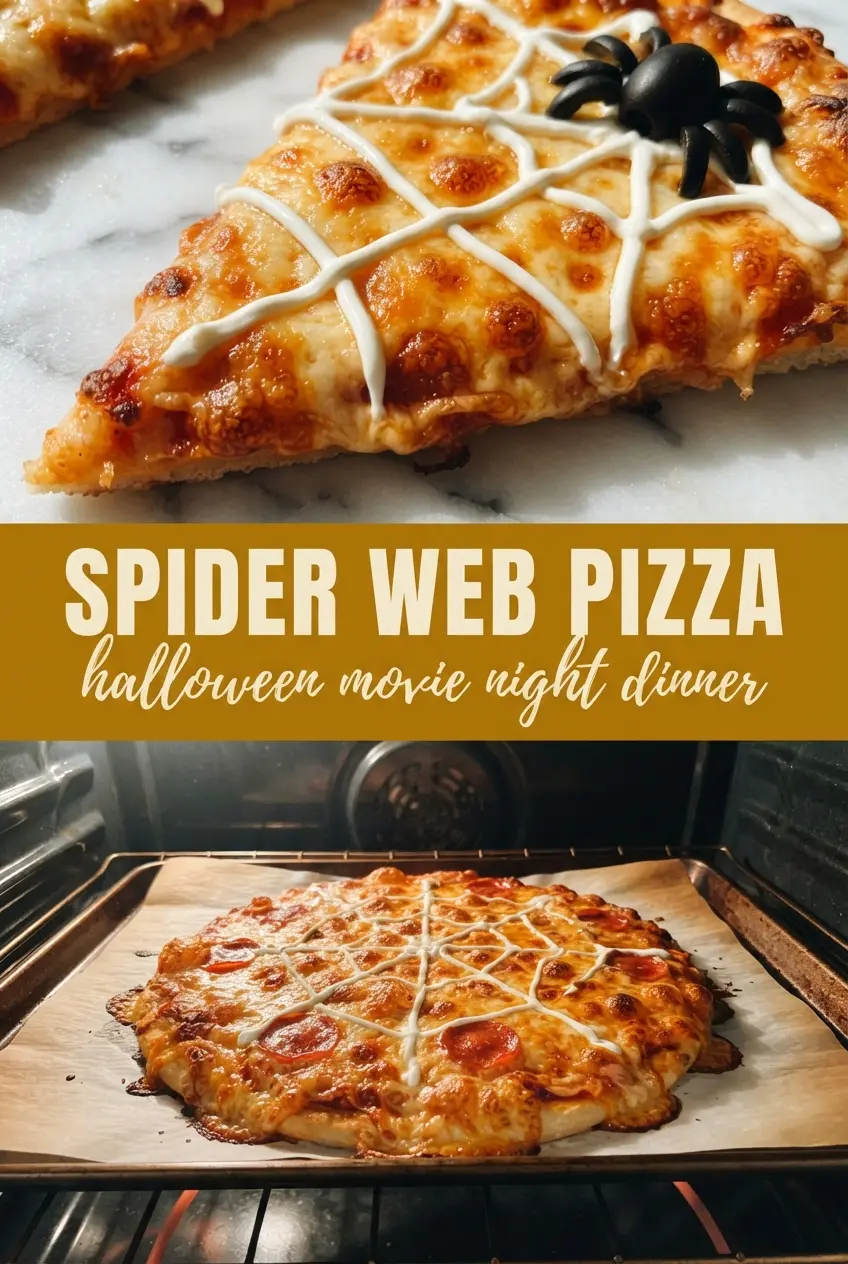
Golden crust, bubbling mozzarella, and that dramatic spider web pattern on top turn a simple pizza into something that gets a grin before the first slice is even cut. The trick is that it still eats like real pizza, not a gimmick. You get a crisp edge, stretchy cheese underneath, and a cool, tangy sour cream web that stands out without making the whole pie heavy.
What makes this version work is the timing. The pizza bakes first until the cheese is fully melted and tacky, then the web goes on while the surface is still warm enough for the design to sit neatly instead of sinking in. Thinning the sour cream just enough matters too — too thick and it clogs the piping tip, too thin and the lines spread into pale puddles.
Below, I’m sharing the small details that keep the web clean, plus the easiest way to build a spider that looks sharp even if you’re not aiming for perfection. It’s the kind of playful dinner that works because the technique is simple and the payoff is instant.
The sour cream web stayed sharp because I thinned it just enough, and the toothpick lines made the spiderweb look clean instead of messy. My kids thought it was the best Halloween dinner ever, and the crust came out crisp on the bottom.
Make this Spider Web Pizza when you want a spooky dinner that still bakes up crisp, cheesy, and fun to slice.
Why the Web Goes on After Baking, Not Before
Pizza toppings can look neat in the oven and then blur into each other before the crust is done. That’s not a Halloween problem. That’s a moisture and heat problem. If you try to pipe the sour cream web before baking, it melts, loses definition, and turns into pale streaks instead of a clean pattern.
The other thing that matters here is the surface texture of the cheese. You want the pizza hot enough that the mozzarella is melted and a little tacky, but not so blistered that the web slides around. A warm, glossy cheese layer gives the sour cream just enough grip so the circles stay visible when you drag the toothpick through them.
- Pizza dough — A sturdy dough with a little chew holds the web design best. Thin crust works too, but it needs to be baked until the bottom has some structure or the center can soften under the sauce.
- Pizza sauce — Use a smooth sauce rather than a chunky one. Big pieces of tomato make the cheese layer uneven, and that makes the web harder to draw cleanly.
- Mozzarella — Low-moisture shredded mozzarella melts into the best base here. Fresh mozzarella releases more water, which can make the top slippery and weaken the web pattern.
- Sour cream — This is what gives you the bright white web. Full-fat sour cream pipes with the cleanest lines; low-fat versions can be thinner and a little loose after you add milk.
- Milk — Add just enough to make the sour cream flow from a piping bag or squeeze bottle. If it runs off the spoon like heavy cream, it’s too thin for sharp lines.
- Black olives — These are for the spider, and they’re worth using because their color and shape read instantly on the finished pizza. Slice them cleanly so the spider legs look deliberate, not chunky.
Building the Web While the Cheese Is Still Warm
Baking the Pizza Base
Roll the dough out on a baking sheet and spread the sauce in an even layer, leaving a small border for the crust. The mozzarella goes on generously so it melts into one smooth surface instead of patchy spots. Bake at 450°F until the crust is golden and the cheese is bubbling across the top, usually 12 to 15 minutes. If the top looks pale and slack, the web won’t sit well, because the surface needs that just-melted tackiness.
Mixing the Web Sauce
Stir the sour cream with the milk until it moves easily through a piping bag or squeeze bottle, but stop before it turns runny. You’re aiming for a texture that holds a line for a second before settling. If it drips straight off the spoon, it will spread on the pizza and blur the pattern. A squeeze bottle gives the cleanest control, but a small bag with the tip snipped works fine.
Drawing the Spider Web
Pipe concentric circles over the hot pizza, starting near the center and working outward. Then drag a toothpick or skewer from the center to the edge, wiping it clean between passes if needed. The first few lines matter most, because they establish the web shape before the sour cream starts to set. Work quickly while the cheese is still warm and glossy so the lines stay distinct.
Adding the Spider
Cut the olives into pieces and arrange them in one corner as a spider. One larger piece can serve as the body, with thin strips or smaller slices making the legs. Place it after the web is finished so you don’t disturb the lines. Basil can go on at the end for a fresh note, but keep it light or it will distract from the design.
Three Ways to Change It Without Losing the Effect
Dairy-Free Spider Web Pizza
Use your favorite dairy-free mozzarella and swap the sour cream for a thick unsweetened plant-based yogurt. The web will look slightly softer than the dairy version, but it still pipes cleanly if the texture is thick enough to hold a line. Skip watery substitutes or the design will spread before you get the toothpick through it.
Gluten-Free Crust
Use a gluten-free pizza crust that bakes up firm enough to move or slice without cracking. Some gluten-free doughs brown faster on the edges, so watch the bottom and pull it when the cheese is fully melted and the crust is set. The topping method stays the same, but a sturdy crust matters more because the web goes on after baking and doesn’t hide a weak base.
Extra-Cheesy Version
Add a little extra mozzarella if you want a thicker, gooier top under the web. The tradeoff is that the cheese layer will be looser and may need an extra minute or two in the oven to set properly. That’s worth it if you want those long cheese pulls when you lift a slice.
Storage and Reheating
- Refrigerator: Store leftovers for up to 3 days. The web will soften, but the pizza still holds up well once sliced.
- Freezer: Freeze baked slices without the sour cream web if you want the best texture. The web doesn’t freeze neatly and can turn blotchy after thawing.
- Reheating: Reheat slices on a baking sheet in a 375°F oven until the crust crisps again and the cheese loosens, about 8 to 10 minutes. The common mistake is microwaving it, which makes the crust limp and the topping rubbery.
Answers to the Questions Worth Asking
Halloween Spider Web Pizza
Ingredients
Equipment
Method
- Roll out the pizza dough onto a sheet pan-lined baking sheet.
- Spread the pizza sauce evenly over the dough, leaving the edges lightly covered so the crust bakes up golden.
- Top generously with shredded mozzarella cheese to cover the surface for maximum cheese pull.
- Bake at 450°F for 12-15 minutes, until the crust is golden and the cheese is bubbly.
- Thin the sour cream with milk and transfer to a piping bag.
- Pipe concentric circles over the pizza, then drag a toothpick from the center outward to create a web pattern with visible spokes.
- Add olive pieces to form a spider in one corner before serving, then finish with fresh basil for garnish.