
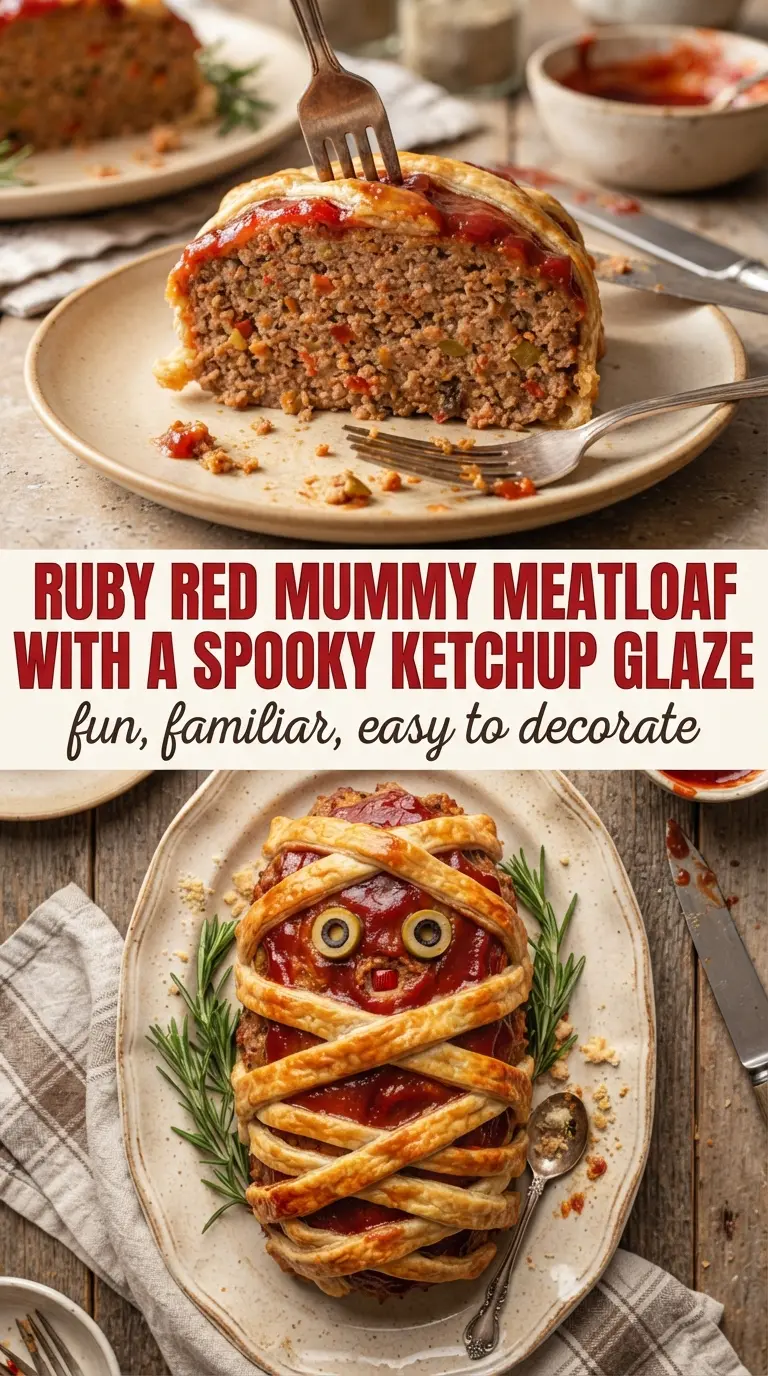
Halloween Mummy Meatloaf lands on the table looking playful, but the payoff is all comfort: a juicy, savory loaf with a tangy ketchup glaze and a soft potato “bandage” finish that holds its shape without turning gummy. The mash wraps give it the mummy look, but they also add a creamy layer that keeps the whole dish from feeling heavy or one-note. It’s the kind of dinner that gets a reaction before anyone takes a bite, then disappears fast once people realize it’s classic meatloaf underneath the costume.
What makes this version work is the order of operations. The meat mixture stays tender because the breadcrumbs and egg bind it without packing it tight, and the ketchup gets split between the mix and the top so the flavor runs through the loaf instead of sitting only on the surface. The potato strips go on after the meatloaf is cooked through, which keeps them neat and intact instead of melting into the glaze during the bake.
Below, I’m walking through the small details that keep the mummy wrap looking clean, plus the best way to pipe the potatoes if you want those bandages to hold their shape. There’s also a note on what to do if your mashed potatoes are too loose to decorate cleanly.
The mashed potato strips held their shape better than I expected, and the ketchup glaze underneath kept the meatloaf moist all the way through. My kids thought the olive eyes were hilarious.
Save this Halloween Mummy Meatloaf for a spooky dinner that bakes juicy, slices cleanly, and turns mashed potatoes into the best part of the decoration.
The Trick to Keeping the Mummy Wrap from Sliding Off
The biggest mistake with a decorated meatloaf is treating the topping like it can go on at the same time as the bake. It can’t. Mashed potatoes need structure, and structure comes from heat setting the loaf first. If you pipe the “bandages” onto raw meatloaf, the strips slump, blend together, and lose the stitched-up look that makes this dish fun in the first place.
This recipe also avoids a common problem with glazed meatloaf: the top dries out before the center finishes cooking. Brushing ketchup on early gives the loaf a protective, tangy layer, while the potato wrapping happens only in the final stretch. That keeps the glaze glossy and the decoration intact.
- The meat mixture should feel cohesive, not paste-like. If you overmix, the finished loaf turns dense and slices like a brick.
- The loaf shape matters. A flatter, even oval cooks more reliably than a tall mound and gives you a better surface for the potato strips.
- Mashed potatoes need to be thick. Loose, buttery mash looks nice in the bowl and fails immediately as a wrapper.
- Let the baked loaf rest before slicing. That pause keeps the juices in the meat instead of running across the platter and softening the potato bands.
What the Potatoes and Ketchup Are Really Doing Here
The image block is omitted because the prompt requested no image replacement beyond the supplied verbatim structure. The recipe itself still depends on a few ingredients doing specific jobs. Here’s what matters most:
- Ground beef — An 80/20 blend gives you enough fat to keep the loaf juicy without leaving a greasy puddle on the pan. Leaner beef works, but the texture gets drier unless you watch the bake time closely.
- Breadcrumbs and egg — These are the structure team. Breadcrumbs hold onto moisture, while the egg binds the loaf so it slices cleanly instead of crumbling when you cut into it.
- Ketchup — Half goes into the mixture and half goes on top, and that split matters. Inside the loaf it seasons and adds moisture; on top it turns into the glossy red glaze that peeks through the mummy wrapping.
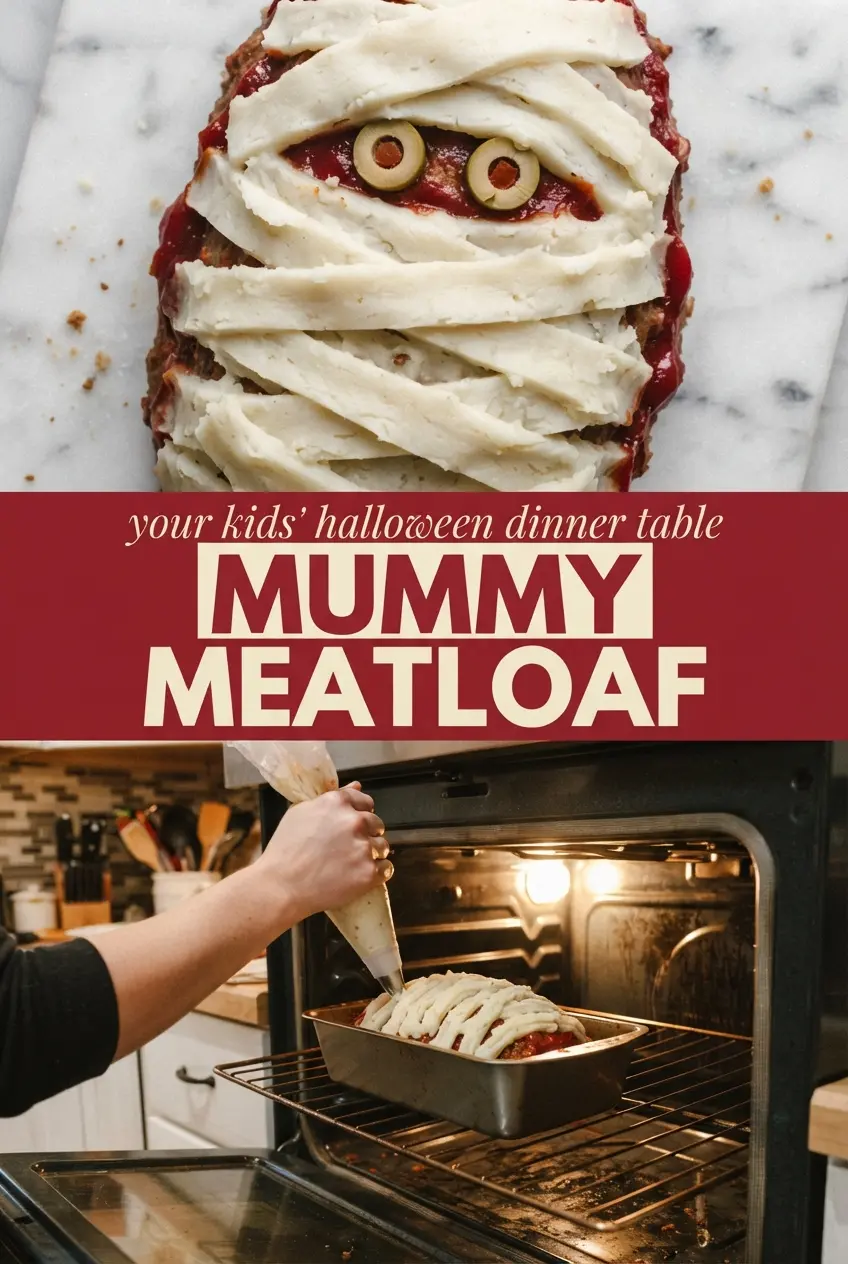
- Mashed potatoes — Use leftovers that are thick and cool, or make them slightly firmer than you normally would. If they’re loose, they’ll flatten during piping. A piping bag gives the cleanest bandage effect, but a spoon works if you keep the strips narrow.
- Black olives — These are for the eyes, and they’re worth using whole or sliced thick so they read clearly against the pale potatoes. Thin olive slivers tend to disappear once the loaf goes back into the oven.
Building the Loaf, Then Adding the Costume
Mix the Meat Without Compacting It
Combine the beef, breadcrumbs, egg, half the ketchup, onion, garlic powder, salt, and pepper until everything is evenly distributed, then stop. The mixture should hold together when pressed, but it shouldn’t feel mashed into a paste. If you keep working it after it comes together, the loaf turns tight and loses that tender, sliceable texture.
Shape an Even Loaf on the Baking Sheet
Form the mixture into a loaf on a sheet pan instead of packing it into a deep pan. The exposed sides brown better, and the shape is easier to decorate later. A loaf that’s too tall takes longer to cook in the middle and gives the top more chance to dry out before the center is done.
Bake Until the Center Is Fully Cooked
Brush the remaining ketchup over the top and bake at 350°F until the loaf is cooked through, about 55 to 60 minutes. You’re looking for a firm top, sizzling edges, and juices that run clear rather than pink. If the loaf looks pale and loose in the center, it needs more time; if the top starts to darken too fast, tent it loosely with foil.
Add the Bandages and Finish the Eyes
Pipe or spread thin strips of mashed potatoes across the hot loaf, leaving a gap where the eyes will go. Keep the strips narrow and uneven on purpose so they look like wrapped cloth instead of a smooth frosting layer. Add the olive slices into the gap and return the loaf to the oven just long enough to set the potatoes, about 5 minutes, so they stay distinct when you slice.
Three Ways to Adjust This Without Losing the Mummy Effect
Dairy-Free Version
Use dairy-free mashed potatoes made with olive oil or a plant-based butter. The topping still pipes and sets, but it may be a little less rich and slightly softer, so chill it briefly if it feels too loose to hold its shape.
Gluten-Free Swap
Replace the breadcrumbs with certified gluten-free breadcrumbs or crushed gluten-free crackers. The texture stays close to the original, but avoid using too much or the loaf can turn dry and mealy.
Turkey Meatloaf Version
Ground turkey works if you want a lighter loaf, but it needs a little extra care because it dries out faster than beef. Pull it as soon as the center is cooked through and don’t skip the ketchup glaze, since that added moisture matters more with lean meat.
Make It Ahead for a Party
You can shape and season the loaf earlier in the day, then bake it when you’re ready. Hold the potato decoration until after baking so it stays crisp-looking instead of melting into the top while the meatloaf reheats.
Storage and Reheating
- Refrigerator: Store leftovers for up to 4 days. The mashed potato bandages soften a little, but the flavor stays just as good.
- Freezer: The meatloaf freezes well without the potato topping. Freeze sliced or whole, tightly wrapped, then add fresh potatoes after reheating if you want the mummy look back.
- Reheating: Warm slices covered in the oven at 325°F until heated through. The common mistake is blasting it in the microwave, which toughens the meat and turns the potato topping sticky instead of neat.
Answers to the Questions Worth Asking
Halloween Mummy Meatloaf
Ingredients
Equipment
Method
- In a large bowl, mix ground beef, breadcrumbs, egg, half the ketchup, diced onion, garlic powder, salt, and pepper until evenly combined.
- Transfer the mixture to a loaf shape and place it on a baking sheet, keeping the top smooth so the glaze adheres.
- Brush the top of the meatloaf with the remaining ketchup to form a thick red layer.
- Bake at 350°F for 55-60 minutes, until the center is cooked through and the glaze looks set around the edges.
- Across the meatloaf, pipe or spread thin strips of mashed potatoes, leaving a small gap for the eyes so the filling looks like mummy wraps.
- Place black olive slices in the gap and return to the oven for 5 minutes to set the potato strips.
- Let the meatloaf rest 10 minutes before slicing, then serve warm.