
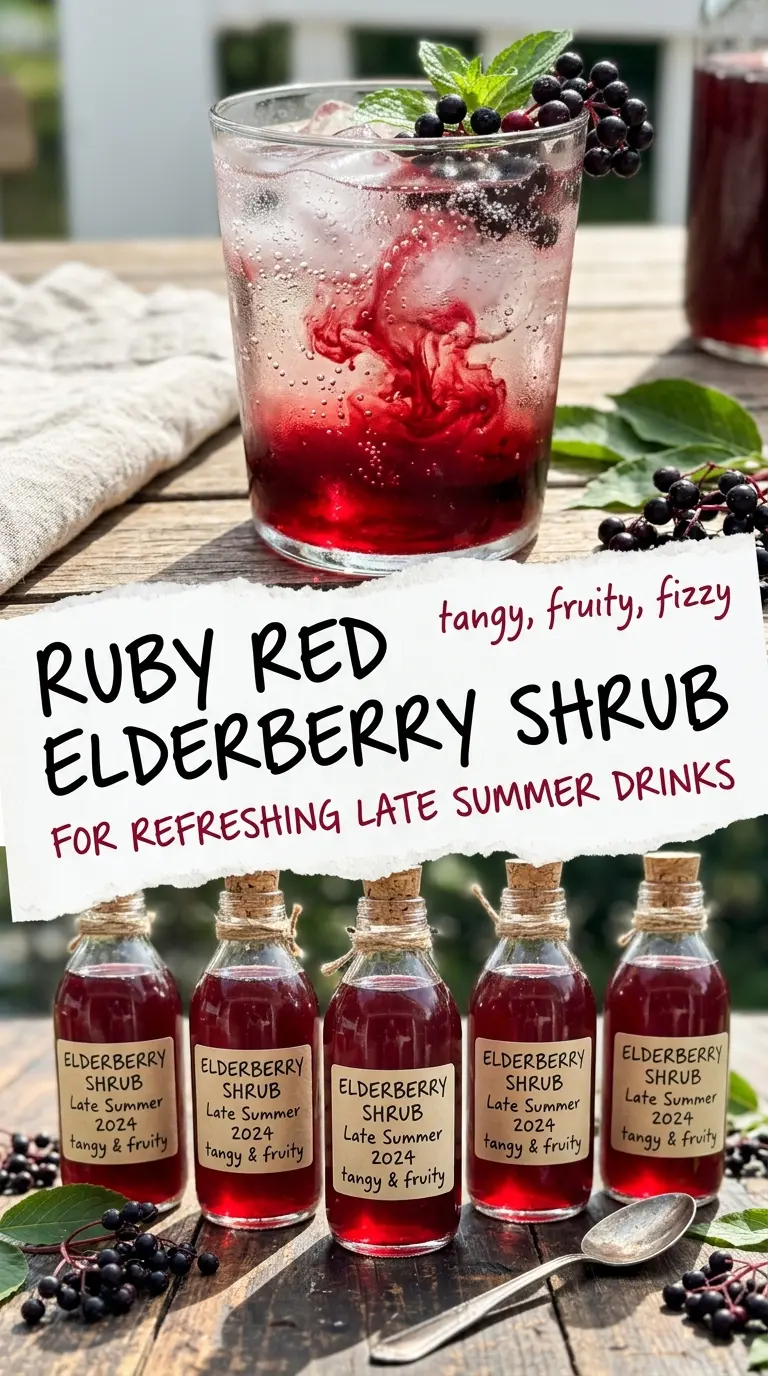
Deep ruby and sharply bright, elderberry shrub hits that sweet-tart middle ground that makes a glass of sparkling water feel a lot more intentional. It’s concentrated without being syrupy, fruity without tasting cooked, and the vinegar gives it a clean edge that keeps every sip lively instead of flat. A little goes a long way, which is exactly why I keep a bottle of it tucked in the fridge once elderberries are around.
The method is simple, but the order matters. First the berries sit with sugar so they give up their juices, then the vinegar goes in after straining so the finished shrub stays clear and balanced instead of muddy. Raw apple cider vinegar brings a softer, rounder acidity than plain distilled vinegar, and it plays nicely with the berries instead of bulldozing them. If you’ve only had shrub from a bottle before, this homemade version tastes fresher and more layered, with actual fruit character behind the tang.
Below, I’ll show you the steeping cue that tells you the berries are ready, how to strain without wasting the good syrup, and a few ways to serve it beyond the usual splash of soda water.
The sugar pulled out so much juice, and after two days the vinegar rounded it out perfectly. I mixed it with sparkling water over ice and it tasted like something from a fancy cafe, not a homemade syrup.
Save this elderberry shrub for sparkling water, cocktails, and any time you want a tangy homemade mixer with real berry depth.
The Reason Shrub Tastes Flat Unless You Let the Berries Work First
The biggest mistake with shrub is rushing the acid in too early. If you dump vinegar over whole berries right away, you lock in the fruit before the sugar has time to draw out the juices, and the finished drink tastes thin instead of concentrated. Letting the elderberries sit with sugar first gives you a deeper, rounder base before the sharpness goes in.
That rest also helps the color and flavor move into the syrup instead of staying trapped in the berries. You’ll know it’s ready when the sugar looks damp and the berries are sitting in a glossy pool of dark juice. Stirring once a day keeps everything moving so the top doesn’t dry out and the flavor develops evenly.
What Each Ingredient Is Actually Doing in This Shrub
- Fresh or frozen elderberries — These bring the color, fruitiness, and deep berry flavor that make the shrub taste like more than sweet vinegar. Frozen berries work just as well as fresh, and they often release juice even faster once mixed with sugar.
- Granulated sugar — Sugar is pulling double duty here: it draws juice from the berries and balances the vinegar later. Don’t swap in a strongly flavored sweetener unless you want that flavor in the finished shrub, because the clean sweetness of white sugar lets the elderberry shine.
- Raw apple cider vinegar — This is the backbone of the drink. It softens the edge of the shrub better than plain white vinegar and adds a faint apple note that fits the berries. If you substitute another vinegar, use one that tastes mellow, not harsh.
- Sparkling water or soda — Sparkling water gives the shrub a bright, refreshing finish, while soda makes it feel sweeter and more dessert-like. Add the shrub slowly and taste as you go, because the right ratio depends on how tart your batch turned out.
How to Build the Shrub So It Stays Bright Instead of Muddy
Muddle Just Enough to Start the Juice
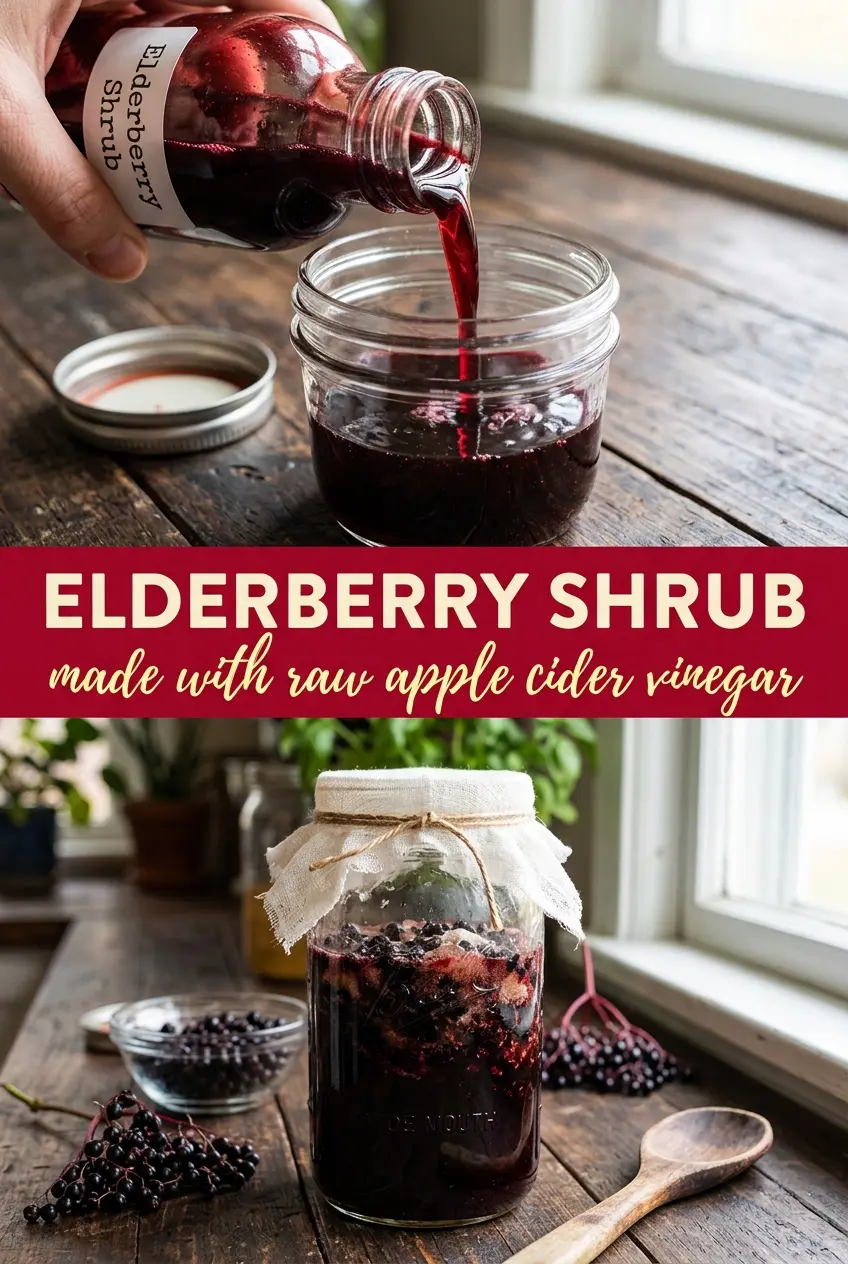
Combine the elderberries and sugar in a glass jar and press them gently with a muddler or spoon. You’re not trying to mash them into a purée; you just want to break some skins so the sugar can start drawing out liquid. If you crush them too aggressively, the syrup can turn cloudy and the texture gets harder to strain cleanly later.
Let the Fruit Steep Without Rushing It
Cover the jar and refrigerate it for 2 to 3 days, stirring or shaking once a day. By the second day, the berries should look softened and glossy, with a dark syrup collecting at the bottom. If the mixture still looks dry after 24 hours, give it another stir and a little more time instead of adding vinegar early.
Strain for a Clean, Concentrated Syrup
Pour the mixture through a fine mesh sieve and press firmly on the solids to squeeze out the last bit of juice. That pressing step matters, because most of the flavor is still trapped in the berries at this point. Once the liquid is strained, discard the solids; leaving them in the jar only makes the shrub taste bitter as it sits.
Add the Vinegar After Straining
Stir in the raw apple cider vinegar until the syrup looks even and glossy. Adding it after straining keeps the final shrub smoother and lets you taste the balance clearly before bottling. Transfer it to a clean bottle and refrigerate it; the flavor settles into itself after another day in the fridge.
How to Adapt This for Different Tastes and Lifestyles
Make it with frozen elderberries
Frozen elderberries work beautifully here and often release juice even faster than fresh. Don’t thaw them first; mix them straight with the sugar so they soften gradually in the jar and give you the same concentrated syrup.
Use honey for a deeper, rounder sweetness
You can replace part of the sugar with honey if you want a more floral finish, but the shrub will taste fuller and a little less crisp. Start with half sugar and half honey by volume, then taste after the vinegar goes in and adjust with more syrup if needed.
Keep it vegan and naturally gluten-free
This recipe already fits both, as long as your sparkling water or soda is something simple and unsweetened. That makes it an easy mixer for guests who need a drink that doesn’t rely on dairy, gluten, or complicated ingredients.
Make a smaller or larger batch without changing the ratio
The formula matters more than the yield here: equal parts fruit, sugar, and vinegar by volume gives you the right balance. Scale it up for a crowd or down for a test batch, and keep the proportions the same so the shrub still tastes bright instead of aggressively sour.
Storage and Reheating
- Refrigerator: Store in a clean bottle in the fridge for up to 2 months. The flavor deepens after the first day and stays bright as long as the bottle is sealed.
- Freezer: It doesn’t need freezing, and I don’t recommend it. Freezing can dull the fresh fruit character, and this keeps perfectly well in the refrigerator.
- Reheating: No reheating needed. For serving, stir 1 to 2 tablespoons into cold sparkling water or soda over ice; if it tastes too sharp, add more soda instead of more shrub.
Questions I Get Asked About This Recipe
Elderberry Shrub
Ingredients
Equipment
Method
- Combine elderberries and granulated sugar in a glass jar and muddle slightly to release juices.
- Cover and refrigerate for 2-3 days, stirring or shaking once a day, until the mixture looks ruby-red and syrupy.
- Strain the syrup through a fine mesh sieve, pressing to extract all liquid, and discard the solids.
- Stir raw apple cider vinegar into the strained syrup until fully combined.
- Transfer to a clean bottle and refrigerate until ready to serve.
- To serve, mix 1-2 tablespoons of shrub with a glass of sparkling water or soda over ice.