
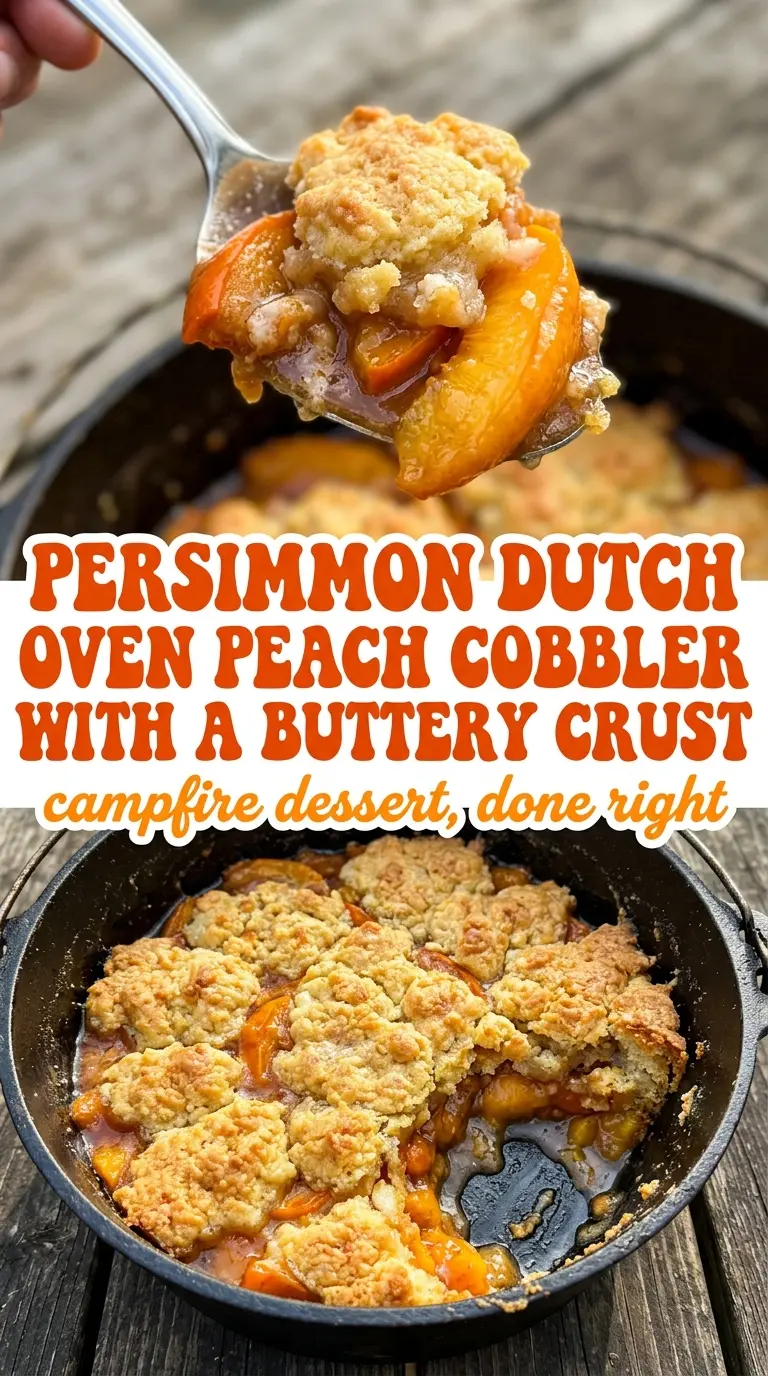
Golden cake mix, syrupy peaches, and a buttery crust are what make dutch oven peach cobbler the kind of campfire dessert people remember. The fruit turns jammy underneath while the top bakes into a crisp, crumbly lid with just enough soft spots to soak up the juices. It tastes like you worked harder than you did, which is exactly why it keeps showing up at campouts and backyard fires.
The trick is in the layering. The peaches need to sit in a little sugar and cinnamon first so they can release enough juice to form that saucy base, and the dry cake mix stays on top so it can absorb just enough moisture without turning heavy. Butter scattered over the surface does the rest, melting into pockets that bake the topping into something closer to cobbler than dump cake. If you’ve only had cobbler from an oven, this version brings the same comfort with a little smoky edge from the fire.
Below, you’ll find the detail that matters most for campfire baking: how many coals to use and what the top should look like when it’s ready. There’s also a few smart swaps for using canned peaches or making the crust extra crisp.
The peaches got perfectly bubbly underneath and the top was golden and crisp, not soggy at all. I used canned peaches like you suggested and it still tasted like a proper cobbler over the fire.
Campfire Dutch oven peach cobbler with that crisp buttery top
The Campfire Trick That Keeps the Bottom from Going Mushy
With dutch oven cobbler, the biggest failure point is a topping that turns damp before the peaches finish bubbling. That happens when the fruit is too wet or the heat is too low on top. The dry cake mix needs hot air and steady heat above it so it can bake into crumbs instead of sinking into the juice.
Coals on the lid matter more than people think. The lid heat drives the browning and helps set the top before the fruit underneath overcooks. If the cobbler is getting pale after 20 minutes, it needs more heat above, not just a longer wait. You’re looking for a top that feels set when gently tapped and edges that are caramelized where the peaches meet the crust.
What Each Ingredient Is Doing in This Campfire Dessert
- Peaches — Fresh peaches give you the best syrupy filling when they’re ripe and fragrant. If you use canned peaches, drain them well so the filling doesn’t turn watery and keep the cobbler from setting.
- Granulated sugar — Half goes with the peaches to draw out juices and build that glossy base, and the rest helps the top brown as the butter melts through it. If your peaches are very sweet, you can pull back a little, but don’t skip the sugar entirely or the filling tastes flat.
- Cinnamon — This is the background warmth that makes the peaches taste deeper and more cooked, especially over a fire. It doesn’t need to dominate; it just needs to round out the fruit.
- Yellow cake mix — This is the shortcut that gives you structure without mixing a batter. It bakes up best when it stays dry on top of the peaches, so resist the urge to stir it in.
- Butter — The butter pieces melt unevenly, which is what you want. They create crisp, browned patches on the top instead of a uniform soft layer.
- Vanilla extract — Vanilla deepens the peach flavor and makes the filling smell like a real cobbler instead of just sweet fruit. It’s a small addition, but it gives the dessert its finish.
Building the Layers So the Cobbler Bakes, Not Simmers
Season the peaches first
Toss the sliced peaches with half the sugar, cinnamon, and vanilla before they go into the dutch oven. That first rest gives the fruit time to release juice, which turns into the sauce under the crust. If you skip this, the peaches can taste a little raw and the filling won’t have that syrupy spoonable texture.
Keep the cake mix dry on top
Sprinkle the cake mix evenly over the fruit and leave it alone. Stirring creates dense pockets that never bake through, and once the dry mix is buried in juice it turns pasty instead of crumbly. A loose, even layer gives you the best contrast between soft fruit and crisp topping.
Use the butter as the browning engine
Dot the butter over the surface so it melts in scattered patches as the cobbler cooks. Those pockets of fat are what help the topping turn golden and crisp in spots. If the top looks dry halfway through baking, the butter was probably too cold and too far apart; the finished crust should have browned crags, not a floury look.
Cook with heat above and below
Set the dutch oven over campfire coals and pile more coals on the lid. That top heat is what gives you a browned crust instead of a pale steamed topping. Around 30 minutes in, lift the lid and check for bubbling at the edges and a deep golden top; if it’s still powdery, give it more time and keep the lid hot.
Three Ways to Make It Work at Camp or at Home
Using canned peaches without a soggy filling
Drain the peaches well and pat off extra syrup before mixing them with the sugar and cinnamon. Canned fruit gives you convenience and steady sweetness, but it also brings extra liquid, so the draining step keeps the crust from turning heavy.
Making it dairy-free
Swap the butter for a plant-based butter stick with a similar fat content, not a soft tub spread. You’ll still get browning and richness, though the top may be a little less crisp than with dairy butter.
Adding a little extra texture
A handful of chopped pecans scattered over the butter gives the topping a toasted crunch and works especially well over a campfire. The nuts brown fast, so keep an eye on the lid heat if you add them.
Storage and Reheating
- Refrigerator: Store leftovers covered for up to 3 days. The topping softens as it sits, but the flavor stays good.
- Freezer: It freezes, but the crust loses some of its texture. Freeze in portions once cooled, tightly wrapped, for up to 2 months.
- Reheating: Warm it in a 325°F oven until hot at the center. The microwave makes the topping chewy and the fruit loose, which is the fastest way to lose the crisp edge.
Questions I Get Asked About This Recipe

Dutch Oven Peach Cobbler
Ingredients
Equipment
Method
- Toss the sliced peaches with half the sugar, cinnamon, and vanilla, then spread in the bottom of the dutch oven in an even layer.
- Sprinkle the dry cake mix evenly over the peaches so it covers the surface without large gaps.
- Dot the top with butter pieces and sprinkle with the remaining sugar to encourage golden, bubbling edges.
- Cover and place the dutch oven over campfire coals with additional coals on the lid for 30-40 minutes, until the top is golden and bubbling.
- Let cool slightly for 5-10 minutes before serving warm so the filling thickens and the crust sets.