
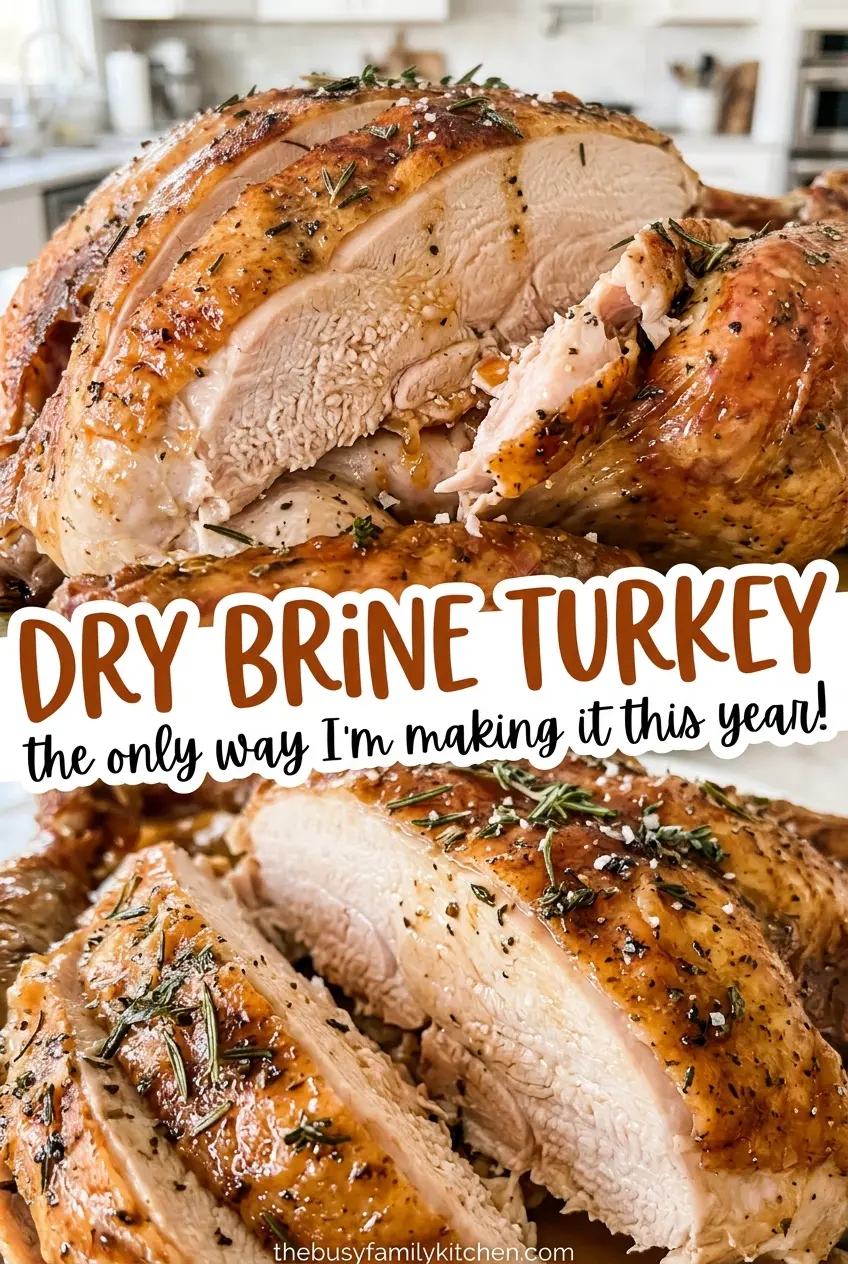
The first thing I notice when I lift the roasting pan from the refrigerator is the turkey skin: matte and dry instead of slick. That’s exactly what I want before the bird goes into the oven. This dry brine turkey is a straightforward way to season a whole bird without mixing a liquid brine or finding room for a bucket in the fridge.
I work the salt and herbs beneath the skin over the breasts and thighs, then spread the rest over the skin and inside the cavity. That direct contact seasons the meat, not just the outside. A little planning is the only real catch: the turkey needs time in the refrigerator before roasting, and the finished bird needs a proper rest before carving. The result is a well-seasoned roast with skin ready to brown.
Kitchen Note
Don’t rinse the turkey in the sink; splashing can spread raw poultry juices, and rinsing doesn’t make it safer. Patting it dry with paper towels is the useful part.
Save this dry brine turkey for a generously seasoned roast with skin that gets a full uncovered rest in the fridge before roasting.
Why the Uncovered Fridge Rest Is Doing More Than Seasoning the Turkey
Salt needs time to move beyond the surface. As the turkey rests, the salt draws out a little moisture, dissolves into it, and seasons the meat as that salty moisture works back across the surface. That slow contact is why a dry brine isn’t just a last-minute sprinkle before roasting. The seasoning gets time to reach the meat beneath the skin, where it can’t be added once the bird is already in the oven.
Leaving the turkey uncovered gives the skin a separate benefit: the cool refrigerator air helps its surface dry. Wet skin has to lose moisture before it can brown, while a drier surface is better positioned to color in the oven. The 24- to 48-hour window gives you flexibility without asking you to change the seasoning blend. Use a pan large enough to hold the turkey on its rack, and keep the bird uncovered for the full rest so air can reach the skin.
Why Kosher Salt Brand Matters More Than the Herb Blend
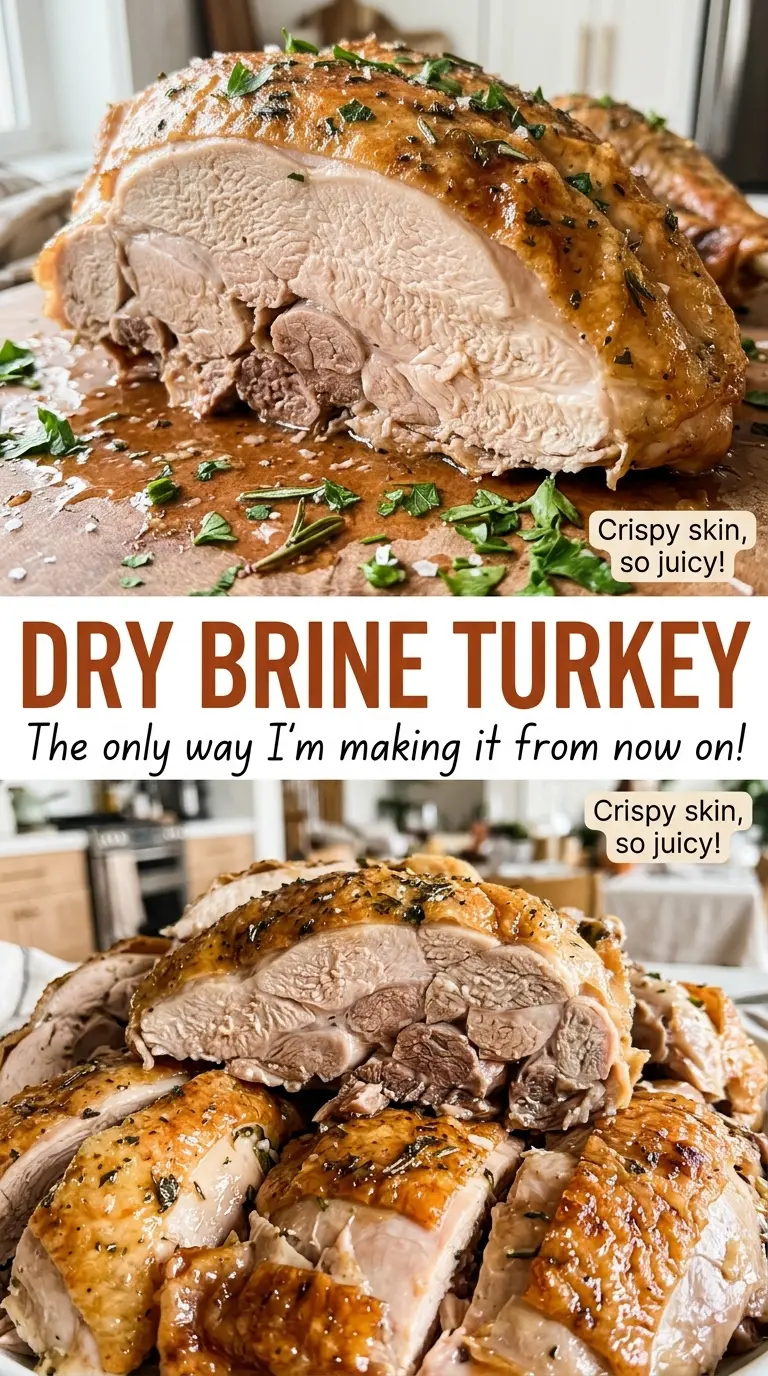
- Whole turkey — Start with a fully thawed bird that hasn’t been brined or injected. A turkey that has already been salted needs a different approach; this seasoning amount is meant for an unbrined bird. The 12- to 14-pound range also fits the roasting time and pan setup here.
- Kosher salt — Diamond Crystal and Morton kosher salt have different crystal sizes, so the same spoonful doesn’t deliver the same amount of salt. Use the matching measure for the brand you have rather than swapping equal volumes. The salt is doing the bulk of the seasoning work, so this isn’t the place to guess.
- Black pepper, dried thyme, and rubbed sage — These give the salt a savory, herbal character without adding a wet coating to the skin. Dried herbs are convenient here and don’t need to be chopped or softened first. Keep the thyme dried and the sage rubbed, as specified; fresh herbs have different moisture and volume.
- Neutral oil — A thin coat helps the skin take on color as the turkey roasts. There’s no need for an expensive oil; use a neutral one that brushes easily over the surface. Keep the coating light rather than pooling oil in the roasting pan.
From Under-Skin Rub to a 30-Minute Rest
Set Up the Bird in Its Roasting Pan
Remove the neck and giblets, then pat the turkey dry with paper towels. Set it breast side up on a rack in a 16-inch roasting pan, keeping the bird stable on the rack. The rack lets the turkey sit above the bottom of the pan rather than resting directly in it. Take a moment to check that the pan will fit comfortably in your refrigerator before seasoning.
Season Beneath the Skin
Stir the salt, black pepper, dried thyme, and rubbed sage together until the mixture looks evenly combined. Gently loosen the skin over the breasts and thighs with your fingers, taking care not to tear it. Rub about half the seasoning directly onto the meat beneath the skin, then distribute the rest over the outside and inside the cavity. If the skin slips back into place, smooth it gently rather than trying to force it.
Give the Turkey Its Refrigerator Rest
Place the turkey, still breast side up in its pan, in the refrigerator uncovered for 24 to 48 hours. Keep it on a shelf where the pan can sit level and won’t be bumped. The skin should look drier by the time you’re ready to roast; don’t cover the pan during this stage. This is also the point to plan your oven timing around the full roast and resting period.
Roast Until Both Temperature Checks Are Ready
Position an oven rack in the lower third and heat the oven to 325°F. Tuck the wing tips underneath, tie the legs together with kitchen twine, and brush the skin with neutral oil before roasting. Roast for 3 to 3 3/4 hours, checking the thickest part of the breast and the innermost part of the thigh with a thermometer; both should read 165°F. If the skin gets too dark before the turkey is ready, tent it loosely with foil.
Rest Before Carving
Move the turkey to a carving board and tent it loosely with foil. Let it rest for 30 minutes before carving so the juices have time to settle instead of running across the board as soon as you cut. Keep the foil tent loose; a tight cover traps steam against the skin.
How to Adjust the Salt and Fridge Timing Without Guesswork
Choose the Morton Measure if That’s Your Kosher Salt
The salt options are not interchangeable spoon for spoon: use 3 tablespoons of Diamond Crystal kosher salt or 2 tablespoons of Morton kosher salt. Matching the brand to its measure keeps the seasoning from becoming too heavy or too light. The turkey and herb mixture stay the same.
Use the Longer Rest When Your Schedule Allows
The refrigerator rest can run from 24 to 48 hours. A full 48 hours gives the salt and herbs more time in contact with the turkey and gives the uncovered skin longer to dry; the 24-hour end of the window works when you’re planning closer to roast day. Keep the bird in its roasting pan for either timing.
Storage and Reheating
- Refrigerator: Carve leftover meat from the turkey and refrigerate it in covered containers within 2 hours. Use the leftovers within 3 to 4 days; the skin won’t stay crisp once it’s stored.
- Freezer: Freeze carved portions in airtight packaging for 2 to 6 months for best quality. Thaw frozen portions in the refrigerator before reheating.
- Reheating: Warm only the amount you plan to serve, covered in the microwave or in the oven, until hot throughout. Repeatedly reheating the whole batch dries the meat and makes leftovers less pleasant.
Questions That Come Up Before the Turkey Goes in the Oven
Dry Brine Turkey
Ingredients
Equipment
Method
- Remove the neck and giblets from the turkey.
- Pat the turkey dry with paper towels and place it breast side up on a rack in a 16-inch roasting pan; do not rinse the turkey.
- Combine the salt, pepper, thyme, and sage.
- Loosen the skin over the breasts and thighs.
- Rub about half the mixture directly onto the meat, then rub the rest over the skin and inside the cavity.
- Refrigerate the turkey uncovered in the pan for 24 to 48 hours.
- Position an oven rack in the lower third of the oven and heat the oven to 325°F.
- Tuck the wing tips under the turkey and tie the legs together with kitchen twine.
- Brush the skin with the oil.
- Roast for 3 to 3 3/4 hours, until a thermometer in the thickest part of the breast and the innermost part of the thigh reads 165°F.
- Tent loosely with foil if the skin gets too dark.
- Transfer the turkey to a carving board and tent it loosely with foil.
- Rest for 30 minutes before carving.