
Roasted tomato soup earns its place in the rotation when the bowl is silky, deeply savory, and bright without tasting sharp. Roasting the tomatoes until their edges caramelize changes everything. The flavor turns mellow and concentrated, and the garlic softens into something sweet enough to blend right into the broth.
This version leans on a whole head of roasted garlic and a generous amount of oven time, which gives the soup a slow-cooked depth without needing a long stovetop simmer. The cream goes in at the end, after the soup is blended smooth, so it rounds out the acidity instead of muting the tomato flavor. That balance is what keeps each spoonful tasting clean and rich at the same time.
Below you’ll find the small details that matter most: how dark to roast the vegetables, why the garlic gets its own little treatment, and the best way to finish the soup so it stays velvety instead of grainy. If you’ve ever had tomato soup that tasted flat, this method fixes that at the source.
The roasted garlic made the soup taste like it simmered all day, and the cream stayed smooth instead of turning grainy. Even my picky eater asked for a second bowl with extra bread for dipping.
Save this roasted garlic tomato soup for a night when you want a velvety bowl with deep caramelized flavor and almost no hands-on work.
The Roast That Keeps Tomato Soup from Tasting Thin
Tomato soup goes flat when the tomatoes never get a chance to concentrate. A stovetop simmer alone can soften them, but it won’t pull out the same sweetness or give you those browned edges that carry the whole bowl. Roasting fixes that before the soup even hits the pot.
The other thing that matters here is the garlic. Whole cloves roast inside their skins until they turn soft and spreadable, which means they melt into the soup instead of reading as sharp or raw. If your tomato soup has ever tasted acidic even after cream went in, the problem wasn’t the cream. It was the base.
What Each Ingredient Is Actually Doing in This Soup

- Tomatoes — Use ripe tomatoes if you can, because they roast down into a sweeter, fuller soup. If your tomatoes are a little underwhelming, roast them a few extra minutes until the juices on the pan look syrupy and the skins have taken on some dark spots.
- Garlic — The whole head is not decorative here. Roasting it mellowes the bite and gives the soup a soft, almost buttery backbone that minced garlic can’t replace. Squeeze the cloves out after roasting and add every bit of that paste to the pot.
- Onion — Quartered onion adds body and a subtle savory edge. It doesn’t need to be chopped small because it gets blended later, and larger pieces roast better without drying out.
- Vegetable broth — This thins the roasted puree into soup and adds enough salt and structure to carry the tomatoes. Use a broth you actually like drinking; a watery one will leave the finished soup bland even after seasoning.
- Heavy cream — Stir it in at the end, off direct heat if the soup is bubbling hard, so it stays smooth. Half-and-half works in a pinch, but the soup will be a little less lush and more prone to a thin finish.
- Fresh basil — Add it at the very end so it stays bright. Dried basil won’t give the same fresh lift, so this is one place where the fresh herb earns its spot.
The 20 Minutes After Roasting That Matter Most
Getting the vegetables deeply caramelized
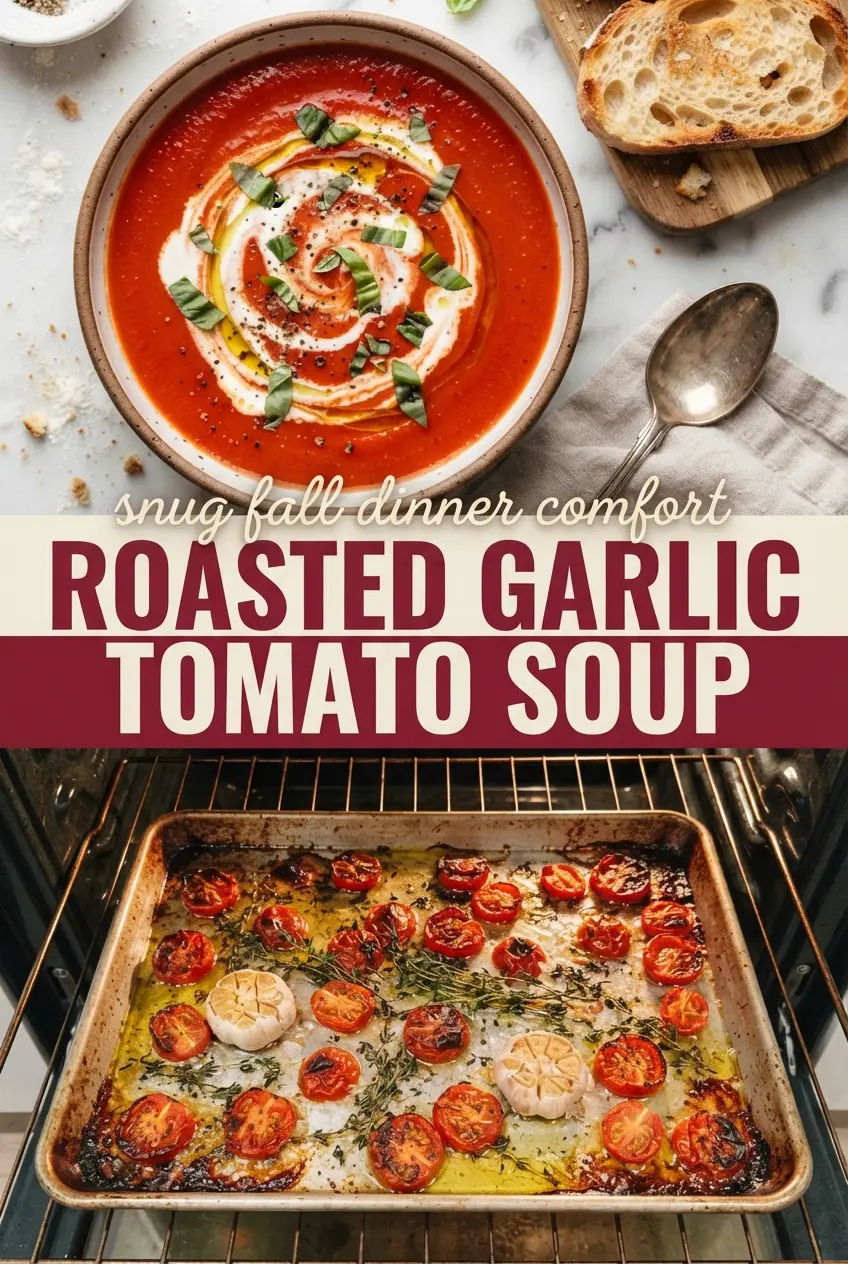
Toss the tomatoes and onion with olive oil, and coat the garlic head with oil before it goes into the oven. Roast at 400°F until the tomatoes collapse and the edges pick up dark, jammy spots, not just softness. If the pan looks dry halfway through, that’s fine; the tomatoes will release juice as they finish. Pale vegetables make a pale soup, so let them color.
Pulling the garlic and building the pot
Once everything comes out of the oven, squeeze the garlic cloves from their skins and add them to a pot with the tomatoes and onion. Scrape in any juices from the pan because that concentrated liquid carries a lot of the flavor. Add the broth and simmer just long enough to bring the roasted ingredients together. A long boil here doesn’t help; the roasting already did the heavy lifting.
Blending it smooth and finishing with cream
Blend until the soup is completely smooth. An immersion blender works straight in the pot, but a countertop blender gives the silkiest result if you work in batches and vent the lid carefully. Stir in the cream after blending, then season with salt and pepper until the soup tastes rounded, not flat. If the soup tastes sharp, it usually needs a little more salt more than it needs more cream.
Make it dairy-free without losing the velvety texture
Swap the heavy cream for full-fat coconut milk or an unsweetened cashew cream. Coconut milk gives the soup a richer body, while cashew cream keeps the flavor closer to classic tomato soup. Both work best when stirred in at the end, after blending, so they don’t split.
Use canned tomatoes when fresh ones aren’t worth roasting
If fresh tomatoes are out of season or disappointingly bland, use two large cans of whole peeled tomatoes and roast them with the onion and garlic anyway. They won’t caramelize in quite the same way, but the oven still concentrates the flavor and gives you a deeper soup than a straight stovetop simmer.
Make it vegan without changing the method
The soup is already built on vegetable broth, so the only swap you need is the cream. Use a plant-based cream with some fat in it, not a thin milk alternative, or the final bowl will lose body. The texture stays close to the original if you blend thoroughly and season aggressively enough at the end.
Storage and Reheating
- Refrigerator: Store for up to 4 days. The soup thickens a bit as it chills, which is normal.
- Freezer: Freezes well for up to 3 months, but freeze it before adding the cream if you want the smoothest result. Stir in the cream after reheating.
- Reheating: Warm it gently on the stove over medium-low heat, stirring often. High heat can make the cream separate and can scorch the thicker tomato base on the bottom of the pot.
Answers to the Questions Worth Asking
Creamy Roasted Garlic Tomato Soup
Ingredients
Equipment
Method
- Toss the tomatoes and onion with olive oil, and drizzle the garlic head with oil.
- Roast at 400°F for 35-40 minutes until deeply caramelized, with browned edges on the tomatoes and softened onion.
- Squeeze the roasted garlic cloves from their skins into a pot with the tomatoes and onion.
- Add vegetable broth and simmer for 10 minutes to meld the flavors.
- Blend until completely smooth using an immersion blender, scraping down any thicker bits to fully puree.
- Stir in heavy cream, salt, and pepper until the soup turns silky and evenly colored.
- Garnish with fresh basil and serve hot with crusty bread for dipping.