
Creamy pumpkin pasta with Italian sausage lands on the plate with the kind of rich, savory sauce that clings to every ridge of rigatoni. The pumpkin doesn’t make it taste like dessert; it gives the sauce body, a velvety texture, and a gentle sweetness that plays perfectly against browned sausage, garlic, sage, and Parmesan. What you get is a skillet dinner that feels comforting without being heavy.
The trick is treating the pumpkin puree like a sauce base, not a shortcut. Once the sausage is browned and the onion has softened, the broth loosens the pumpkin just enough to turn it silky, and the cream rounds everything out without letting the sauce go flat. A little reserved pasta water at the end matters more than most people think — it helps the sauce grab onto the pasta instead of sitting underneath it.
Below, I’ve included the details that keep this dish from turning thick or pasty, plus the swaps that still give you a good bowl of pasta if you’re working with what you have.
The sauce stayed silky and coated the rigatoni perfectly, and the sage with the sausage made it taste like it had been simmering all afternoon.
Save this creamy pumpkin pasta with sausage for the nights when you want a fast skillet dinner with a velvety sage-Parmesan sauce.
The Reason Pumpkin Sauce Turns Thick Instead of Silky
Pumpkin puree is dense, and if it goes straight into the pan without enough liquid, it can taste heavy and paste-like instead of creamy. The broth gives it room to move, the cream smooths out the edges, and the Parmesan brings the sauce back into savory territory. That balance matters here because the sausage already brings salt, fat, and spice, so the sauce needs structure more than it needs extra richness.
The other thing people run into is heat. If the sauce boils hard after the cream and cheese go in, it can break or tighten up on the spot. Keep it at a low boil when you first combine everything, then pull it back once the Parmesan melts and the sauce has thickened enough to coat a spoon.
What Each Ingredient Is Actually Doing in This Dish
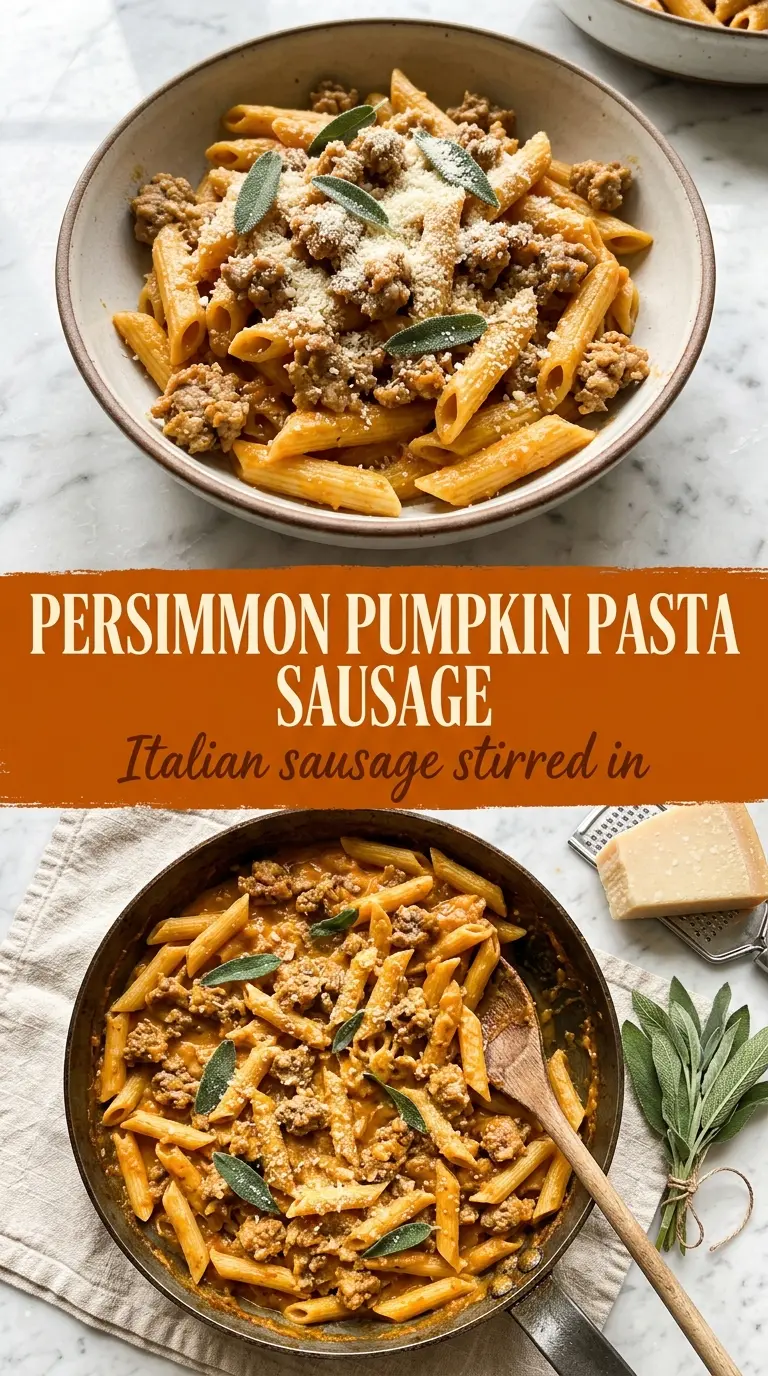
- Rigatoni — The ridges hold onto the sauce better than smooth pasta would. Penne works too, but you’ll lose some of that creamy coating that makes each bite feel complete.
- Italian sausage — This is the backbone of the dish. Sweet or hot both work, but use a sausage with good seasoning; lean sausage tastes flatter here and needs more help from the sage and Parmesan.
- Pumpkin puree — Use plain pumpkin puree, not pumpkin pie filling. The canned version is perfect here because you want a smooth, neutral base that thickens the sauce without adding spice or sugar.
- Heavy cream — This softens the pumpkin and gives the sauce its velvet finish. Half-and-half can work in a pinch, but it makes the sauce a little thinner and less stable.
- Fresh sage — Fresh sage gives the dish its unmistakable autumn edge. Dried sage is stronger and more rustic, so use less if that’s what you have, and add it early so it has time to bloom in the pan.
- Parmesan — Freshly grated Parmesan melts smoother than the shelf-stable kind. If you use pre-shredded cheese, expect a slightly grainier sauce and stir it in off the heat to reduce the chance of clumping.
Building the Sauce in the Same Pan You Brown the Sausage In
Browning the Sausage Until It Leaves Real Flavor Behind
Start the sausage in a wide skillet over medium heat and break it into crumbles as it cooks. You want deep brown edges on the meat, not pale little bits that steam in their own juices. If the pan looks crowded, the sausage will soften instead of browning, so give it space and let the moisture cook off before you move on.
Softening the Onion and Blooming the Sage
Once the sausage is cooked through, add the onion and let it go until it turns translucent and sweet around the edges. Stir in the garlic for just a minute, then add the sage so it can hit the hot fat and release its aroma. If the garlic starts to brown fast, the heat is too high and it can turn bitter, so lower the burner before it scorches.
Bringing the Pumpkin Sauce Together
Pour in the broth first, then the pumpkin puree and cream. Stir until the sauce looks smooth and glossy, with no streaks of pumpkin left at the bottom of the pan. Let it come up to a gentle low boil, then reduce the heat so it thickens without splattering or tightening too quickly.
Finishing with Cheese and Pasta Water
Add the Parmesan after the sauce has had a chance to thicken a little. If the pan is screaming hot when the cheese goes in, it can seize and turn grainy, so take the edge off the heat if needed. Toss in the pasta, then splash in reserved pasta water a little at a time until the sauce coats the rigatoni in a smooth, clingy layer.
How to Adapt This for a Lighter Dinner or a Different Pantry
Make It Gluten-Free Without Losing the Sauce
Swap in your favorite gluten-free rigatoni or penne and cook it just to al dente. Gluten-free pasta can get soft fast once it sits in sauce, so pull it a minute early and toss immediately. The sauce itself is naturally gluten-free as long as your broth and sausage are checked.
Dairy-Free Version That Still Feels Creamy
Use unsweetened oat cream or coconut cream in place of heavy cream, and leave out the Parmesan or use a dairy-free alternative that melts well. Oat cream keeps the flavor closest to the original; coconut cream adds a faint sweetness, which works best if you lean on extra sage and pepper to keep the dish savory.
Swap the Sausage for a Vegetarian Dinner
Use browned mushrooms, a plant-based sausage, or a mix of both in place of the Italian sausage. Mushrooms give you that savory, browned depth the sausage would normally bring, but you’ll want to season more assertively and add a little extra Parmesan or a splash of soy sauce if the sauce tastes flat.
Storage and Reheating
- Refrigerator: Store leftovers for up to 4 days. The sauce will thicken as it chills, and the pasta will keep absorbing it.
- Freezer: It freezes, but the cream sauce can separate a little after thawing. For the best texture, freeze the sauce and pasta separately if you can.
- Reheating: Warm it gently on the stove over low heat with a splash of broth or water. High heat is what turns creamy sauces grainy, so go slow and stir often until the sauce loosens again.
The Things That Trip People Up With This Dish
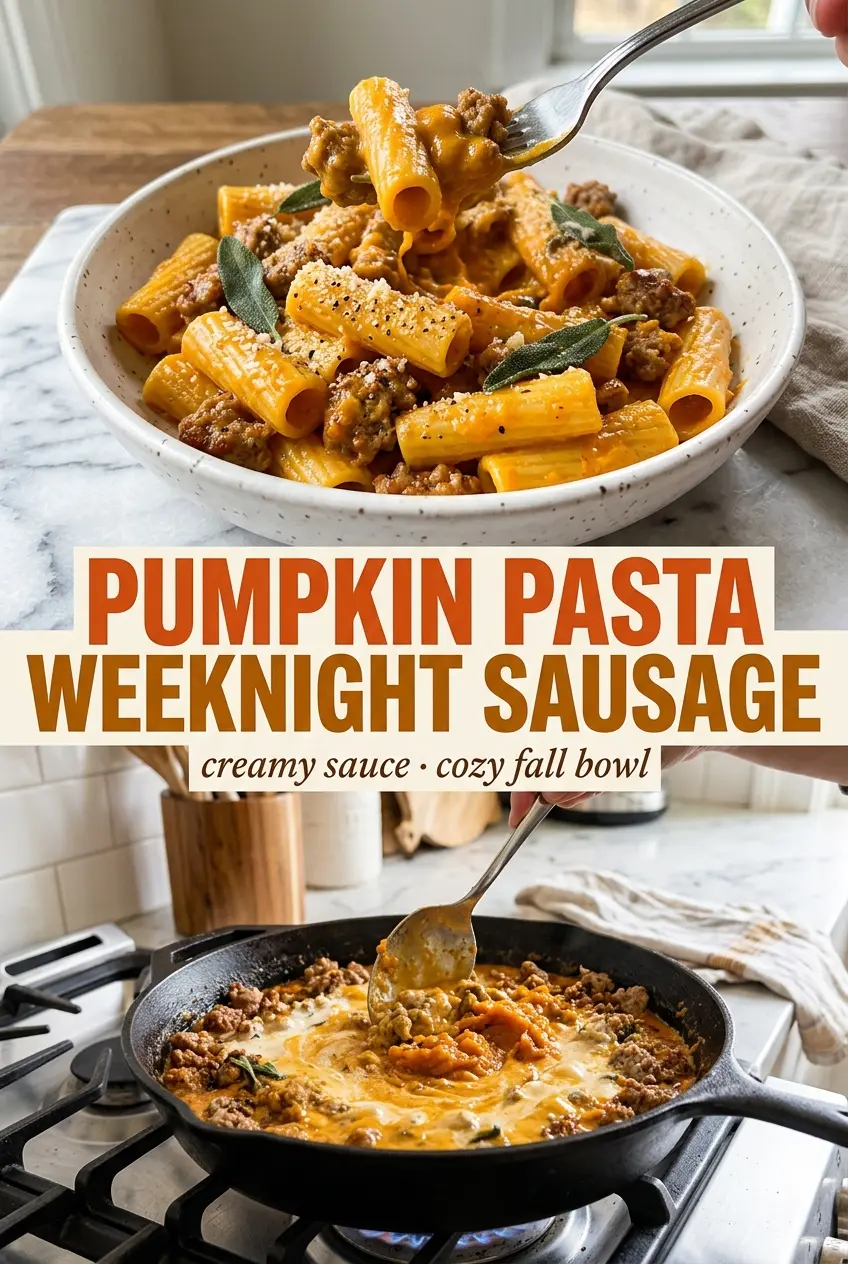
Creamy Pumpkin Pasta With Italian Sausage
Ingredients
Equipment
Method
- Bring a large pot of salted water to a boil and cook the rigatoni until al dente, then drain, reserving some pasta water. The pasta should still have a firm center when you bite it.
- Heat the olive oil in a large skillet over medium heat and cook the Italian sausage, breaking it up, until browned. Look for crispy browned bits on the meat.
- Add the onion and garlic and sauté until softened, about 3-4 minutes, then stir in the sage. The onion should turn translucent and the garlic should smell fragrant.
- Pour in the chicken broth, pumpkin puree, and heavy cream, add the salt, pepper, and red pepper flakes, and bring everything to a low boil. Stop just as small bubbles start to appear around the edges.
- Stir in the Parmesan cheese and cook for about 3 minutes until thickened, then remove from heat. The sauce should look velvety and coat the back of a spoon.
- Toss the cooked rigatoni into the sauce, adding reserved pasta water as needed to loosen. Mix until the pasta is evenly coated and glossy.
- Season with additional salt and pepper as needed and serve hot with extra Parmesan. Garnish so the top layer looks speckled and inviting.