
Creamy pasta salad doesn’t need a heavy mayo dressing to feel satisfying. This version turns out cool, tangy, and full of texture, with Greek yogurt giving the dressing body and a clean richness that coats every curve of the pasta. The cucumbers stay crisp, the tomatoes add little bursts of juice, and the herbs keep the whole bowl tasting fresh instead of flat.
What makes it work is balance. Greek yogurt brings thickness and protein, but it needs olive oil and lemon juice to loosen it into something that clings without tasting chalky. Cooling the pasta completely matters too, because warm pasta will thin the dressing and dull the herbs. Once it chills, the flavors settle in and the salad tastes even better than it does right after mixing.
Below, you’ll find the small details that make this pasta salad hold up in the fridge, plus a few smart swaps if you want to change the vegetables or make it dairy-free.
The dressing turned out thick and creamy without being heavy, and the dill with lemon gave it that fresh, bright bite I was hoping for. I made it in the morning and it still tasted great at dinner after the pasta had time to soak it up.
Creamy Greek yogurt pasta salad with crisp cucumbers, fresh herbs, and a tangy lemon dressing worth saving for meal prep.
The Dressing Needs More Than Yogurt to Taste Finished
Greek yogurt on its own can taste sharp and a little one-note in pasta salad. The olive oil softens that edge and helps the dressing spread more evenly, while lemon juice wakes up the whole bowl so it tastes bright instead of heavy. If the dressing seems too thick when you whisk it, that’s the point where people usually add too much liquid and end up with a watery salad. Start with the yogurt, oil, and lemon, then let the pasta and vegetables bring in the rest of the moisture as it chills.
Cooling the pasta completely matters just as much. Warm noodles drink up dressing too fast and can leave the salad dry by the time it reaches the table. Cold pasta holds the coating on the surface, which gives you that creamy, lightly dressed texture instead of a gluey bowl of noodles.
What Each Ingredient Is Actually Doing in This Dish
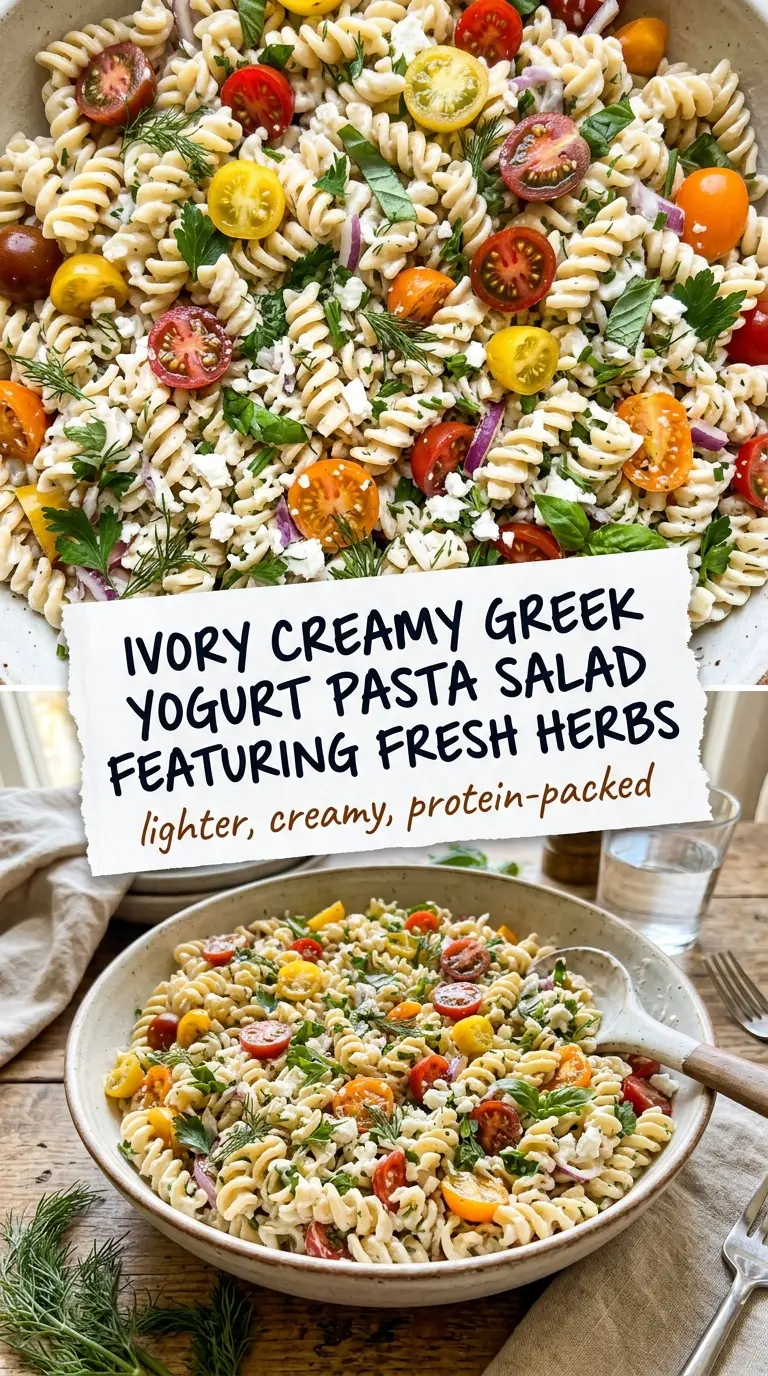
- Greek yogurt — This is the base of the dressing, and full-fat yogurt gives the best texture because it stays creamy instead of tasting thin or chalky. If you only have low-fat yogurt, it still works, but the dressing will be a little sharper. Strain regular yogurt for 20 to 30 minutes if that’s what you’re using.
- Olive oil — A little oil rounds out the yogurt and helps it cling to the pasta. You don’t need a fancy bottle, but a good-tasting olive oil matters because there’s nowhere to hide here.
- Fresh lemon juice — This keeps the dressing bright and balances the dairy. Bottled lemon juice will work in a pinch, though fresh juice tastes cleaner and less flat.
- Short pasta — Rotini and penne both catch the dressing in their ridges and curves. Cook it until just tender, not soft, because the pasta keeps absorbing moisture after it’s dressed.
- Cucumber, tomatoes, and red onion — These give the salad crunch, juiciness, and a little bite. Dice the cucumber small enough that it mixes through the bowl instead of falling to the bottom. If red onion tastes too sharp to you, soak it in cold water for 10 minutes and drain well.
- Fresh dill and parsley — These herbs are what keep the salad tasting fresh after chilling. Dried herbs won’t give the same clean finish, so this is one spot where fresh matters.
Building the Bowl So the Dressing Stays Creamy
Cooking the pasta past the edge of al dente
Boil the pasta in well-salted water until it’s just tender with a little bite left in the center. If you stop too early, the pasta stays chewy after chilling; if you take it too far, it turns soft and the salad loses its texture. Drain it, then cool it completely before it touches the dressing. Rinsing under cold water is fine here because you want to stop the cooking fast and bring the temperature down.
Whisking the dressing until it looks smooth, not fluffy
Stir the Greek yogurt, olive oil, and lemon juice together until the mixture is glossy and even. If it looks broken or grainy, keep whisking for another few seconds before adding anything else. The dressing should be thick enough to coat a spoon, but loose enough that it can spread when tossed with the pasta. This is the moment to taste it and add salt and pepper, because once the salad chills, the seasoning settles in.
Tossing while the pasta is fully cold
Combine the cooled pasta, cucumber, tomatoes, and red onion in a large bowl, then add the dressing and toss until every piece is coated. If you add the herbs too early and toss hard, they bruise and darken faster, so fold them in at the end. Let the salad chill for at least 20 minutes before serving. That resting time lets the dressing thicken slightly and helps the pasta absorb the lemony tang.
How to Adapt This for Different Tables and Diets
Make it dairy-free
Use an unsweetened plain dairy-free yogurt with a thick texture, then add the lemon juice a little at a time. Coconut-based yogurt can work, but it brings its own flavor, so an almond- or cashew-based version usually tastes closer to the original. The salad will be a touch less tangy, so seasoning matters more.
Make it gluten-free
Swap in your favorite gluten-free short pasta and cook it just to the lower end of the package range. Gluten-free pasta softens a little more in the fridge, so chilling the salad for the full 20 minutes is enough; don’t let it sit for hours before serving unless you want a softer texture.
Add more protein without changing the flavor much
Fold in chopped rotisserie chicken, chickpeas, or diced salami after the dressing is mixed in. Chickpeas keep it vegetarian and add a nutty bite, while chicken makes the salad work as lunch instead of just a side dish. Add protein only after the pasta is coated so the dressing doesn’t get dragged to the bottom of the bowl.
Storage and Reheating
- Refrigerator: Store covered for up to 3 days. The pasta will absorb some of the dressing, so the salad gets thicker and a little less glossy by day two.
- Freezer: Don’t freeze this one. Greek yogurt splits after thawing, and the cucumbers and tomatoes turn watery.
- Reheating: This salad is meant to be served cold. If it tightens up in the fridge, stir in a spoonful of yogurt or a splash of olive oil to loosen it before serving. Don’t warm it in the microwave, or the dressing will lose its creamy texture.
Questions I Get Asked About This Recipe
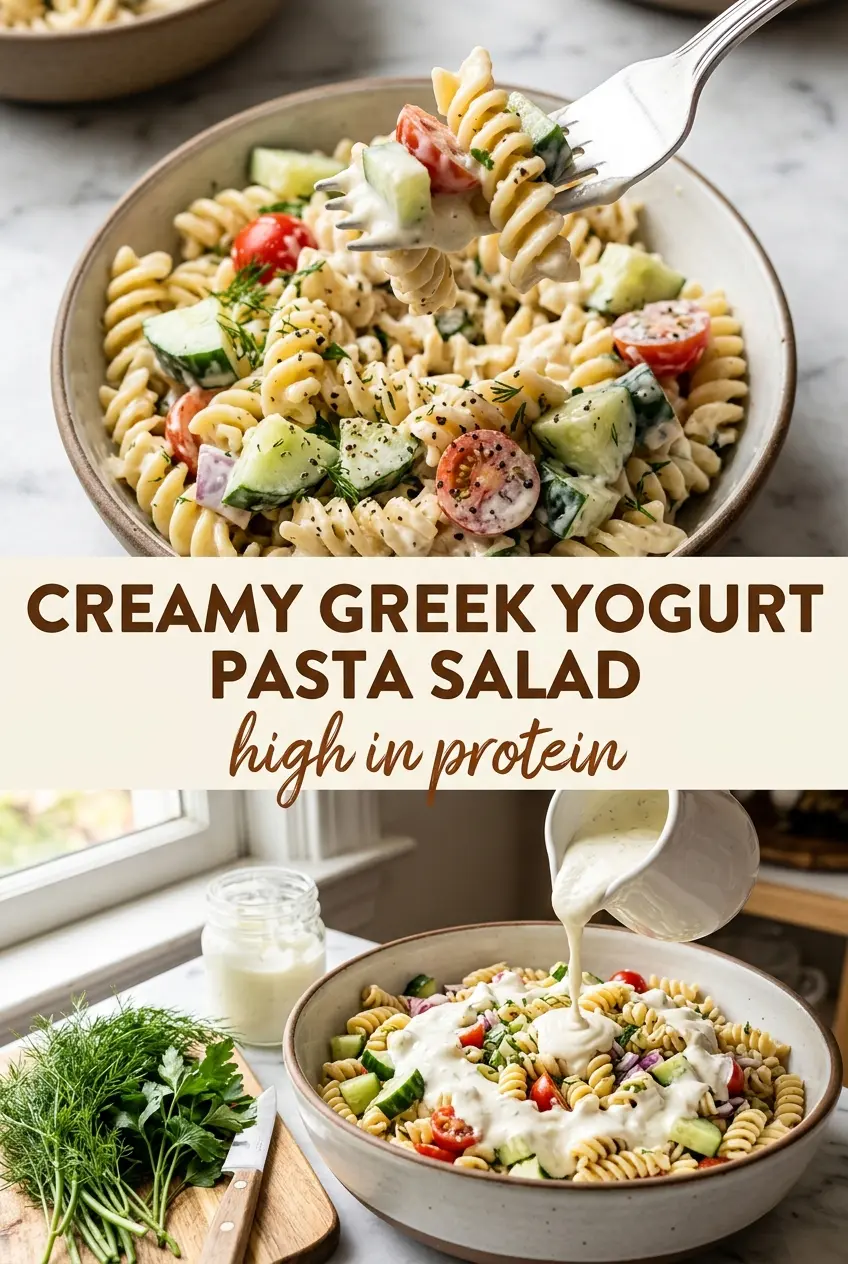
Creamy Greek Yogurt Pasta Salad
Ingredients
Method
- Cook the short pasta according to package directions, then drain and cool completely.
- Let the pasta cool fully so the yogurt dressing stays creamy instead of loosening.
- Whisk together the Greek yogurt, olive oil, and lemon juice until smooth.
- Taste and adjust the lemon-forward tang if needed, then set the dressing aside.
- In a large bowl, combine the cooled pasta, cucumber, cherry tomatoes, and red onion.
- Pour the yogurt dressing over the salad and toss to coat evenly.
- Stir in the fresh dill and parsley to distribute herbs throughout.
- Season with salt and pepper and toss again to ensure even flavor.
- Chill the pasta salad for at least 20 minutes before serving for best flavor and texture.