
Cracker Barrel-style meatloaf bakes up with a tender, sliceable crumb and that unmistakable sweet-tangy glaze that caramelizes right on top. The texture is the part people remember: soft enough to cut with a fork, but still sturdy enough to hold a thick slice on the plate without crumbling apart.
The trick is in the mix. Ritz crackers bring a buttery, almost rich finish that breadcrumbs never quite match, and the cheese melts into the loaf so every slice stays moist. The onion and bell pepper add the same diner-style savory backbone you get in the restaurant version, while the balsamic in the glaze keeps the ketchup from tasting flat.
Below you’ll find the exact timing that keeps the loaf juicy, plus the small details that stop it from turning dense or greasy. If you’ve had meatloaf go dry at the edges before the center is done, this version handles that problem cleanly.
The Ritz crackers and cheese made the loaf stay so tender, and the glaze thickened up beautifully without running off the pan. I baked it right at 30 minutes before glazing, and the slices held together perfectly.
Save this Cracker Barrel copycat meatloaf for the nights when you want a tender beef loaf with that glossy ketchup-balsamic glaze on top.
The Reason This Meatloaf Stays Tender Instead of Turning Dense
Most meatloaf turns heavy because the mixture gets worked like bread dough. That tightens the beef and squeezes out the moisture before it even hits the oven. Here, the crackers and milk do the softening work, and the loaf only gets mixed until the ingredients are just combined. That small restraint changes the whole texture.
Baking it on a sheet pan instead of packing it into a loaf pan helps too. The edges can brown instead of steaming in their own juices, so you get a better crust and a cleaner slice. If your meatloaf usually ends up sitting in a pool of grease, this method fixes a lot of that without any fancy steps.
What Each Ingredient Is Actually Doing in This Dish
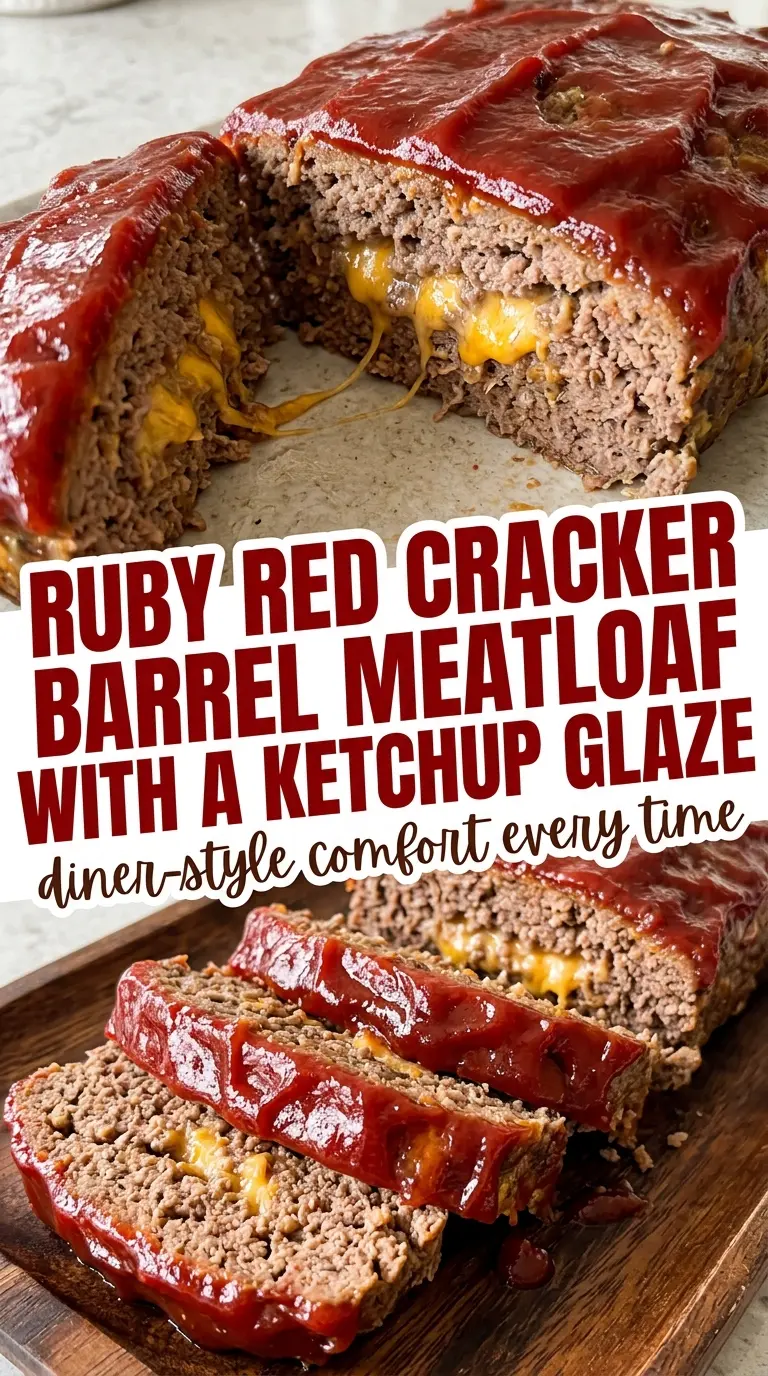
- Ground beef — Use an 80/20 blend if you can. Leaner beef dries out faster, and meatloaf needs enough fat to stay soft after the second bake under the glaze.
- Ritz crackers — These do more than bind. They carry butter and seasoning into the loaf, which is why the finished meatloaf tastes richer than one made with plain breadcrumbs.
- Milk — This hydrates the cracker crumbs so they turn into a soft panade. That’s what keeps the loaf from eating like compacted meat.
- Cheddar cheese — The cheese melts into little pockets of moisture and helps the loaf slice cleanly. Mild or sharp both work, but pre-shredded cheese is fine here.
- Onion and bell pepper — Dice them small so they soften evenly in the bake. If you leave the pieces too large, they can stay crunchy and make the loaf fall apart at the edges.
- Glaze ingredients — The ketchup gives body, the brown sugar rounds out the tang, the mustard adds bite, and the balsamic keeps the topping from tasting one-note. That combination is what gives it the Cracker Barrel-style finish.
How to Build the Loaf So It Bakes Evenly and Glazes Cleanly
Mix the Binder Before the Beef Goes In
Combine the eggs, crushed crackers, milk, cheese, onion, bell pepper, salt, and pepper first. You want those ingredients evenly distributed before the beef enters the bowl, because once the meat goes in, every extra stir starts tightening the texture. The mixture should look evenly moistened and a little shaggy, not soupy. If the crumbs still look dry in spots, give it another short fold before adding the beef.
Fold the Beef In Without Overworking It
Add the ground beef and use clean hands to fold it just until the mixture holds together. Stop as soon as you no longer see streaks of plain meat. If you keep squeezing, the loaf turns compact and bouncy instead of tender. The goal is a mixture that looks cohesive but still loose enough to shape without pressing hard.
Bake Halfway Before the Glaze
Shape the loaf on parchment and bake it for 30 minutes before adding the glaze. That first bake sets the structure, which keeps the topping from sliding off into the pan. If you glaze too early, the sugars can scorch before the center cooks through. After the first bake, spread the glaze all the way to the edges so it bakes into a shiny, sticky cap.
Finish at 160°F and Let It Rest
Keep baking until the center reaches 160°F on an instant-read thermometer. The middle should be fully cooked but still juicy, and the glaze should look dark and glossy around the edges. Pull it from the oven and let it sit for about 10 minutes before slicing. That rest gives the juices time to settle so the slices don’t collapse the second you cut in.
What to Change When You Want a Different Kind of Meatloaf
Gluten-Free Version
Swap the Ritz crackers for certified gluten-free crackers or gluten-free breadcrumbs. You’ll still get the binder you need, though the flavor will be a little less buttery than the original. If your substitute is drier than Ritz, add an extra tablespoon or two of milk so the mixture stays soft.
Dairy-Free Version
Use an unsweetened dairy-free milk and leave out the cheddar. The loaf will still hold together, but it won’t have quite the same rich, melting interior. If you want to replace some of that body, add a tablespoon of olive oil to the binder.
Make It Ahead for Busy Nights
Shape the loaf, cover it tightly, and refrigerate it uncooked for up to 24 hours. You can also mix the glaze ahead and keep it in the fridge separately. Bring the meatloaf closer to room temperature while the oven preheats so the center doesn’t need extra time and the outside doesn’t overbake.
Leftover Meatloaf Sandwiches
Slice leftovers cold for the cleanest sandwich cuts, then warm them gently in a skillet or microwave before stacking. The glaze gets even better the next day, and the cheese gives the slices enough richness to stand up to bread and pickles without drying out.
Storage and Reheating
- Refrigerator: Store sliced meatloaf in an airtight container for up to 4 days. The glaze firms up a bit, but the slices stay moist if you keep them covered.
- Freezer: This freezes well. Wrap individual slices or the whole cooled loaf tightly and freeze for up to 3 months. Thaw in the fridge overnight before reheating.
- Reheating: Reheat slices covered in the oven at 325°F with a splash of water or beef broth in the pan, or warm them gently in the microwave at medium power. High heat dries out the edges before the center is hot.
Answers to the Questions Worth Asking
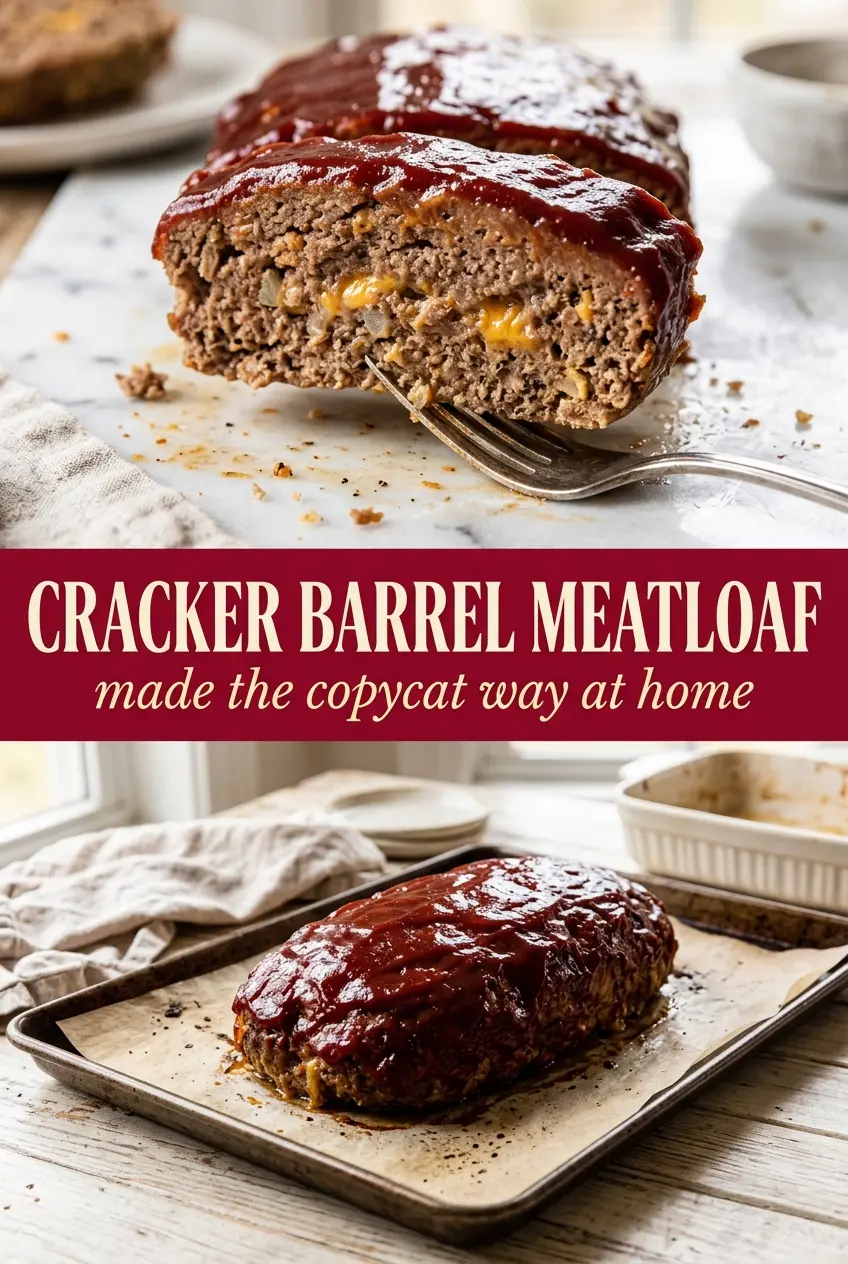
Cracker Barrel Copycat Meatloaf
Ingredients
Equipment
Method
- Preheat the oven to 350°F and set out a parchment-lined sheet pan.
- In a large bowl, combine the eggs, crushed Ritz crackers, milk, cheddar cheese, diced onion, diced bell pepper, salt, and black pepper, mixing until thoroughly combined.
- Add the ground beef and mix gently with clean hands until just incorporated, avoiding overmixing.
- Shape the mixture into a loaf on the parchment-lined baking sheet.
- Bake for 30 minutes at 350°F, until the loaf is partially set.
- Whisk together the ketchup, balsamic vinegar, brown sugar, and mustard, then spread the glaze evenly over the partially baked meatloaf.
- Continue baking for 30 to 40 minutes at 350°F, until the internal temperature reaches 160°F.