
Golden chicken, a silky coconut sauce, and fluffy rice make this bowl the kind of dinner that disappears fast. The chicken gets a hard sear first, which gives you real browning instead of pale, steamed pieces floating in sauce. Then the coconut milk simmers with tomato paste, garlic, and ginger until it turns glossy and lightly thickened, so every spoonful coats the rice instead of pooling underneath it.
What makes this version work is the way the layers are built. Smoked paprika and dried herbs season the chicken before it ever hits the pan, so the meat tastes seasoned all the way through. A little broth loosens the browned bits after the chicken comes out, and that’s where a lot of the flavor lives. Light coconut milk keeps the sauce creamy without turning it heavy, and the tomato paste gives it just enough body and depth to balance the sweetness.
Below, I’ve included the small details that matter most: how to keep the chicken juicy, what to do if your sauce looks thin, and a few swaps that still keep the bowl balanced and satisfying.
The coconut sauce thickened up beautifully and didn’t split at all. I served it over basmati rice and my husband went back for seconds before I’d even sat down.
Save this Coconut Chicken Rice Bowl for the nights when you want creamy, seared chicken and a coconut sauce that comes together fast.
The Sear Is Doing More Work Than the Sauce
With a dish like this, the biggest mistake is treating the chicken and the sauce like separate jobs. They’re not. The brown crust on the chicken becomes the base of the sauce once you add the broth, and if you crowd the pan or keep the heat too low, you lose that flavor before the coconut milk even goes in. You want the chicken browned in an even layer, then removed so the pan can stay hot enough to pull up the good stuff without overcooking the meat.
The other trap is rushing the sauce. Coconut milk can look thin right after it hits the pan, but it tightens as it simmers with the tomato paste and a little reduction. If it starts boiling hard, the sauce can separate or turn greasy around the edges. Keep the simmer gentle and you’ll get a smooth, creamy coating instead of something broken.
What Each Ingredient Is Actually Doing in This Bowl

- Chicken breast — Dice it into even pieces so it browns at the same pace. Thighs also work if you want more richness and a little more forgiveness, but breast gives you that clean, light bite that pairs well with the coconut sauce.
- Smoked paprika and dried herbs — These season the chicken before it hits the skillet, which is where the deeper flavor starts. Smoked paprika matters here because it adds warmth and color without making the bowl taste spicy.
- Onion, garlic, and ginger — This is the aromatic base that keeps the sauce from tasting flat. Fresh ginger gives the dish a bright edge; powdered ginger won’t give the same lift, so use fresh if you can.
- Chicken broth — A small splash deglazes the pan and carries the browned bits into the sauce. Water will work in a pinch, but broth gives you more depth for almost no extra effort.
- Tomato paste — This is the ingredient that gives the coconut milk some backbone. It adds color, a little acidity, and enough body to help the sauce cling to the rice instead of sliding right off.
- Light coconut milk — Use canned coconut milk, not the boxed drink. Light coconut milk keeps the sauce creamy without making the bowl heavy; full-fat coconut milk will make it richer and a little thicker.
- Jasmine or basmati rice — Either one gives you a fluffy base that doesn’t fight the sauce. Day-old rice is fine if you’re reheating, but warm rice absorbs the coconut sauce better and makes the bowl feel finished.
- Cilantro — Don’t skip it if you like cilantro. That fresh, green finish cuts through the creamy sauce and keeps the bowl from tasting one-note.
Building the Coconut Sauce Without Breaking It
Season and Brown the Chicken First
Start with dry chicken pieces that are all roughly the same size, then coat them with salt, smoked paprika, and dried herbs before they ever touch the pan. A hot skillet with a light coating of oil gives you browning in 3 to 5 minutes, but only if the chicken sits in an even layer. If the pan looks crowded, cook it in two batches; otherwise the chicken releases moisture and steams instead of searing.
Use the Fond Before You Add the Coconut Milk
Once the chicken comes out, add the onion, garlic, and ginger to the same pan and cook them just until fragrant. The broth goes in next to loosen the browned bits, and those bits are what make the sauce taste cooked instead of canned. Let the broth simmer for a minute before the tomato paste and coconut milk go in, or you’ll miss the chance to build a deeper base.
Let the Sauce Tighten Gently
After the coconut milk goes in, keep the heat at a steady simmer instead of a boil. You’re looking for a sauce that starts to look glossy and lightly thickened, not reduced to a paste. When the chicken goes back in with its juices, give it just a few minutes on medium heat so it finishes cooking without drying out.
How to Adapt This for Different Kitchens and Diets
Make It Dairy-Free Without Changing a Thing
This recipe is already dairy-free as written, which is part of why it works so well for a quick weeknight bowl. Just check that your broth is dairy-free if you’re using a packaged version, then keep the coconut milk as the creamy base.
Swap in Chicken Thighs for a Richer Bowl
Boneless thighs give you more moisture and a slightly deeper chicken flavor. They’ll take about the same time to cook if diced small, but they’re less likely to dry out if the pan runs a little hot or the sauce simmers a minute too long.
Use Brown Rice or Cauliflower Rice
Brown rice brings a nuttier bite and holds up well under the sauce, but it needs a longer cook time. Cauliflower rice works if you want a lighter bowl or lower-carb option, though it won’t soak up the coconut sauce the same way, so serve it with a little extra spooned over the top.
Storage and Reheating
- Refrigerator: Store leftovers for up to 4 days. The sauce thickens as it sits, which actually helps the flavor, but the rice will dry out a little.
- Freezer: The chicken and sauce freeze well for up to 2 months. Freeze the rice separately if you can, because it reheats with a better texture that way.
- Reheating: Warm gently on the stove over low heat with a splash of broth or water to loosen the sauce. Microwaving on high can make the chicken tough and the coconut sauce split, so go slow and stir partway through.
Answers to the Questions Worth Asking
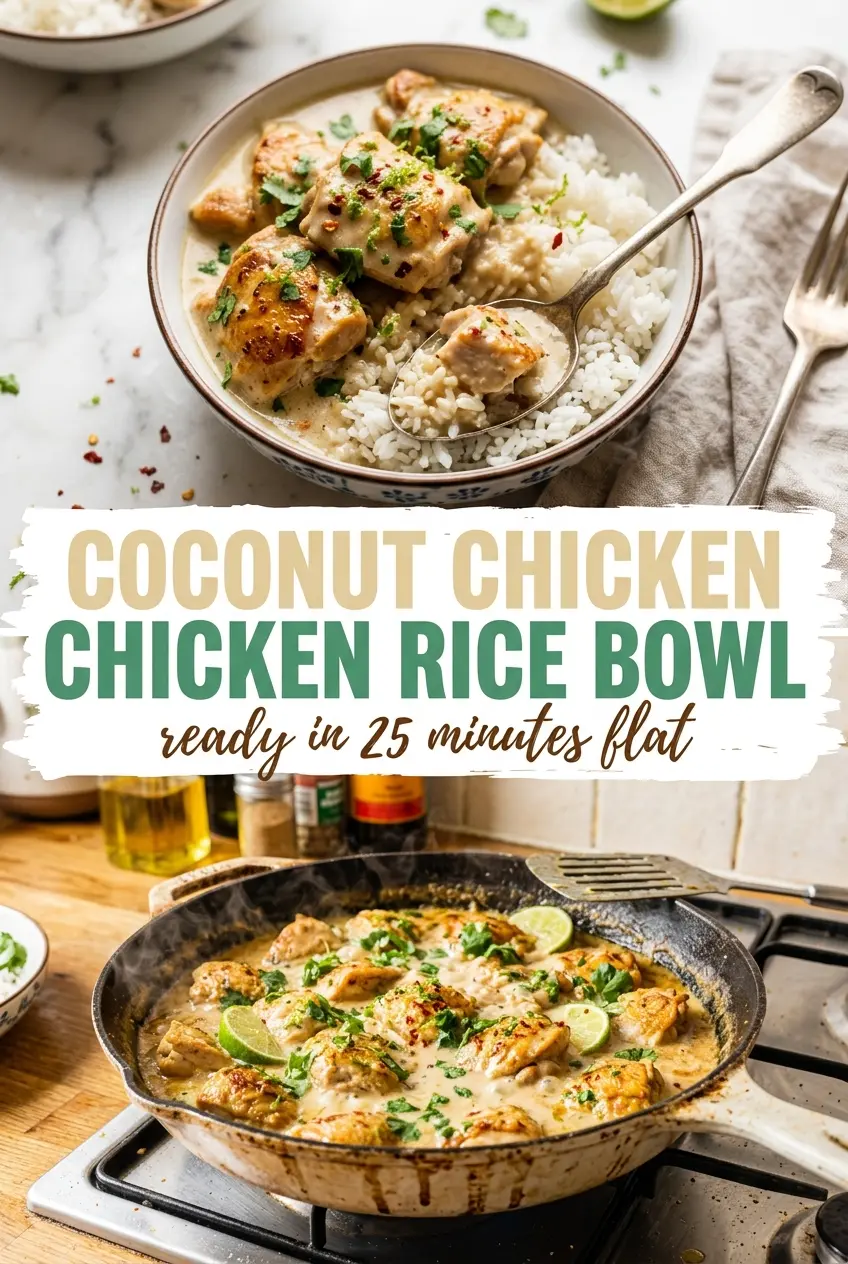
Coconut Chicken Rice Bowl
Ingredients
Equipment
Method
- Season the diced chicken with 1 teaspoon kosher salt, smoked paprika, and dried herbs.
- Preheat a large skillet over high heat, spray with oil, then brown the chicken in an even layer for 3 to 5 minutes until golden; remove and set aside.
- Reduce the heat to medium-high, spray with more oil, then cook the onion, garlic, and ginger for 1 minute, stirring until fragrant and softened.
- Add the chicken broth to the pan and deglaze, scraping up browned bits, and simmer for 1 minute.
- Stir in the tomato paste and 1/2 teaspoon salt, then add the coconut milk and simmer for a few minutes until thickened and silky.
- Return the chicken and any juices to the skillet and cook on medium heat for 3 to 4 minutes until cooked through and coated in sauce.
- Serve over the cooked jasmine or basmati rice, garnished with fresh cilantro and a drizzle of coconut milk if desired.