
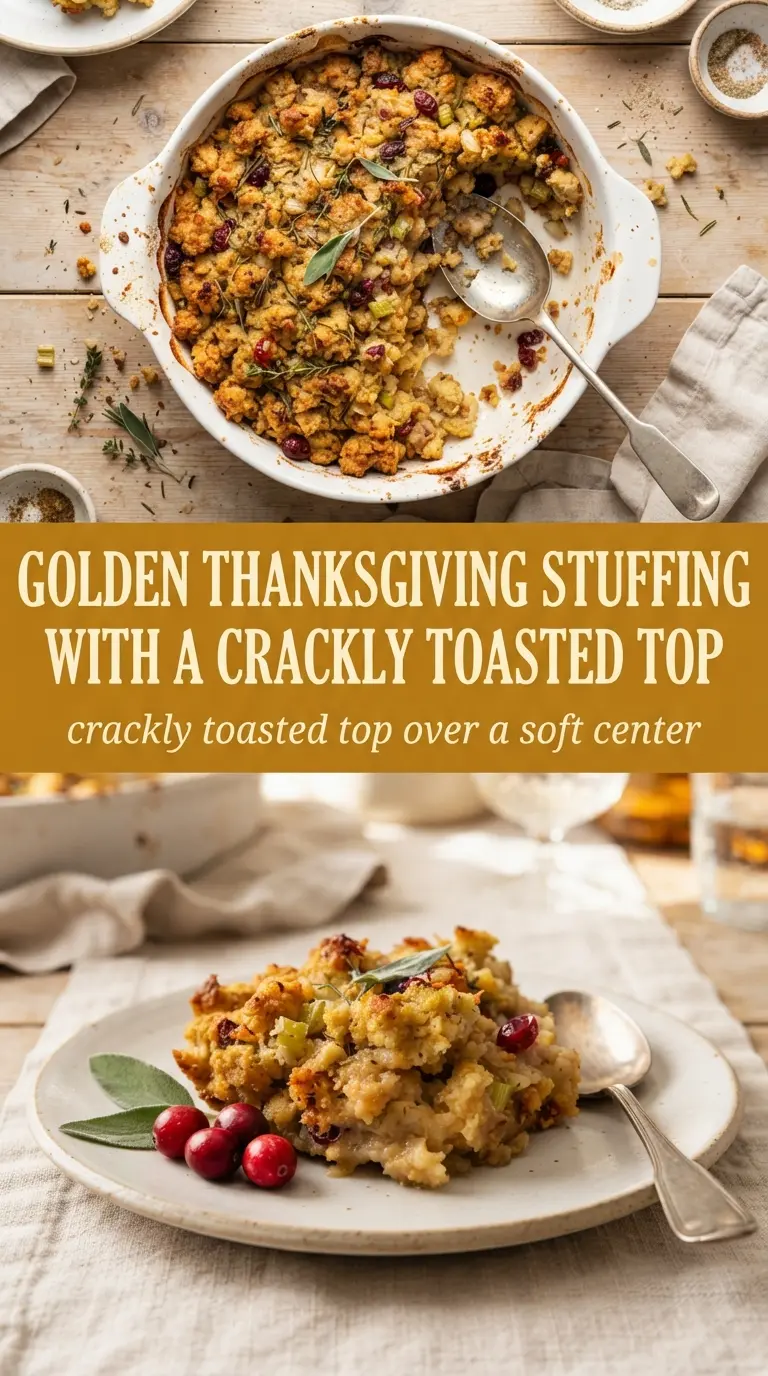
Crackly on top, soft in the center, and packed with the kind of sage-and-onion flavor that tastes like the holiday table, classic Thanksgiving stuffing earns its place next to turkey every single year. The best version is never soggy and never dry. It holds together when you scoop it, but the inside stays tender enough to soak up gravy without collapsing into mush.
The trick is starting with bread that has actually dried out, not just stale bread sitting on the counter. That dry bread acts like a sponge for the broth and eggs, so the stuffing bakes up with structure instead of turning into a heavy casserole. Cooking the onion, celery, garlic, and herbs in butter first builds the flavor right into the base, which matters because stuffing doesn’t have many ingredients to hide behind.
Below, I’ll walk you through the part that changes everything: how to keep the top crisp while the center stays soft. I also cover the make-ahead step, because this is one of the few holiday dishes that gets better when you do the work early.
The bread held its shape, the middle stayed soft, and the top got those crisp buttery edges I never seem to get right. I made it the night before and baked it off while the turkey rested.
Save this classic Thanksgiving stuffing for the night-before make-ahead method and that crisp, buttery top.
The Reason Stuffing Turns Mushy Before It Ever Gets Crispy
Stuffing fails for one of two reasons: the bread was too soft going in, or the pan was crowded with too much liquid. Drying the bread in the oven is not optional here. It gives every cube enough structure to drink up the broth without dissolving, which is what separates a spoonable stuffing from a wet bread pudding.
The other key is the balance between broth and eggs. The broth hydrates the bread, while the eggs help the whole mixture set just enough in the oven. If your stuffing seems loose when it goes into the dish, that can be fine. It should look damp, not soupy. The bread will continue to absorb liquid as it rests before baking, especially if you refrigerate it overnight.
- Dry bread cubes — These are the backbone of the dish. If your bread is fresh, the cubes will collapse before the center can bake through.
- Butter-cooked onion and celery — This softens their bite and builds flavor into the fat, which coats the bread evenly.
- Broth — Use a good-tasting broth here because it carries most of the seasoning. Low-sodium is smart if your bird or broth is already salted.
- Eggs — They don’t make the stuffing taste eggy. They help it slice and hold together once baked.
What Each Ingredient Is Actually Doing in This Dish
- Sturdy white bread — A basic bakery-style white loaf works well because it soaks up flavor without fighting it. Brioche or challah will make a richer stuffing, but it will also soften faster, so the texture changes.
- Butter — This is where the depth starts. If you swap in oil, the stuffing still works, but it loses that classic holiday taste.
- Sage and thyme — Fresh herbs give the stuffing a cleaner, brighter finish. Dried herbs can stand in, but use less; dried sage especially can take over fast.
- Chicken broth — This is the moisture and most of the seasoning. If you need a vegetarian version, use a rich vegetable broth, but choose one with real body so the stuffing doesn’t taste flat.
- Eggs — Beat them before adding so they disappear into the mixture. If you pour them in whole, they clump and leave streaks instead of binding evenly.
Getting the Crisp Top Without Drying Out the Center
Drying the Bread Properly
Spread the bread cubes in a single layer and dry them in a 250°F oven until they feel firm and light, not toasted dark. You want dry edges and a dry interior, because bread that still feels soft will collapse once the broth goes in. If the cubes are even a little damp in the middle, the stuffing can bake up dense instead of airy.
Building the Flavor Base
Cook the onion and celery in butter until they turn translucent and smell sweet, about 8 minutes. That step softens the vegetables so they melt into the stuffing instead of crunching in the final dish. Add the garlic and herbs at the end so they stay fragrant; if they go in too early, the garlic can burn and the sage can taste bitter.
Mixing and Resting the Pan
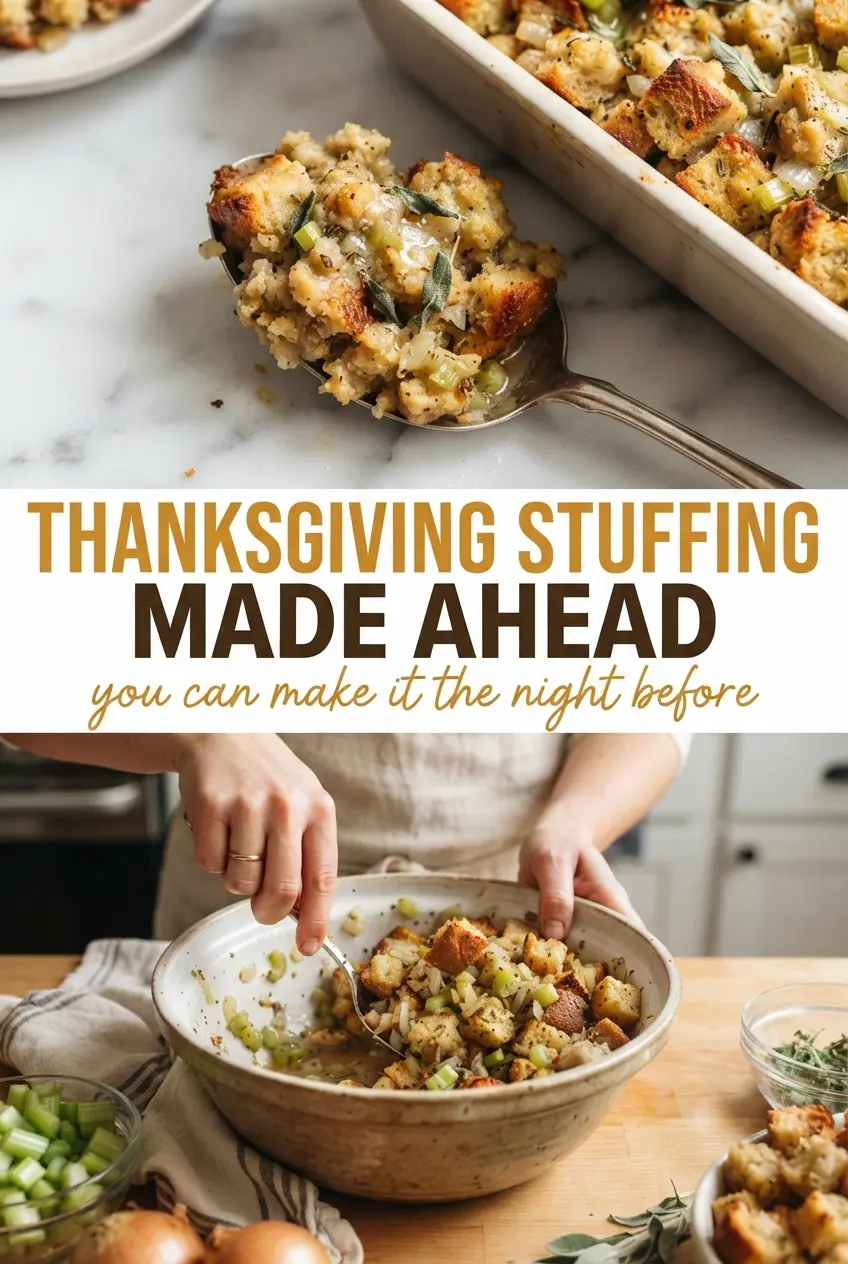
Toss the bread with the vegetable mixture, then add the broth and eggs gradually so you can stop when the cubes are evenly moistened. The mix should look plush and damp, with no liquid pooling at the bottom. If you’re making it ahead, press it into the buttered dish and refrigerate overnight so the bread fully absorbs the seasoning before baking.
Baking in Two Stages
Bake covered first so the center heats through without drying out. Then uncover it for the last 20 minutes so the top can turn deeply golden and crisp at the edges. If you uncover it too early, the top dries before the middle sets. If you leave it covered the whole time, you lose the crust that makes stuffing worth serving.
How to Adapt This for a Bigger Table or a Different Diet
Make it vegetarian
Swap the chicken broth for a full-flavored vegetable broth. Choose one with enough body to taste savory on its own, because thin broth makes the stuffing taste hollow after baking.
Use cornbread for a sweeter, softer stuffing
Replace part or all of the white bread with dried cornbread for a more tender, slightly sweet result. Cornbread breaks down more easily, so keep a close eye on the broth amount and stop as soon as the mixture looks evenly moistened.
Add sausage for a heartier side
Brown 1 pound of breakfast sausage first, then mix it in with the vegetables. You’ll get a richer, more savory stuffing with less of a pure herb-forward flavor, and the extra fat means you may need slightly less butter in the pan.
Storage and Reheating
- Refrigerator: Store leftovers covered for up to 4 days. The top softens as it sits, but the flavor stays strong.
- Freezer: It freezes well after baking. Cool completely, wrap tightly, and freeze for up to 2 months.
- Reheating: Reheat covered at 350°F until hot, then uncover for the last few minutes to bring back some crispness. The common mistake is blasting it uncovered the whole time, which dries out the edges before the middle warms through.
Answers to the Questions Worth Asking
Classic Thanksgiving Stuffing
Ingredients
Equipment
Method
- Preheat the oven to 250°F and spread the bread cubes on a sheet pan in an even layer, then bake for 45 minutes until dry and firm. Let cool slightly so the cubes absorb broth without turning mushy.
- Melt the butter in a baking dish over medium heat, then cook the onion and celery for 8 minutes until softened. Stir in the garlic and herbs and cook for 1 minute, just until fragrant, keeping the mixture from browning too much.
- Toss the dried bread with the vegetable mixture, chicken broth, and beaten eggs until evenly moistened. Season with salt and black pepper to taste, then mix until no dry pockets remain.
- Spoon the stuffing into a buttered baking dish, cover, and refrigerate overnight to set the texture. If not making ahead, proceed directly to baking after mixing and seasoning.
- Bake the stuffing covered at 350°F for 30 minutes to heat through and soften the center. Uncover and bake for 20 minutes at 350°F until the top is browned and crisp at the edges.