
Tender meatloaf with a glossy ketchup glaze earns its place in the rotation when it slices cleanly, stays juicy, and tastes like comfort without falling apart on the plate. The best versions don’t dry out or turn dense. They bake into a soft, savory loaf with enough structure to hold together and just enough sweetness on top to make each slice feel finished.
The trick is balance. Breadcrumbs and milk keep the texture light, while the egg binds everything without turning it rubbery. The other detail that matters is the glaze: half goes on before baking so it can sink in and build flavor, then the rest gets brushed on near the end so it turns sticky and caramelized instead of disappearing into the loaf.
Below, I’ll walk through the small things that keep meatloaf from turning heavy, plus a few smart swaps if you need to work with what’s already in the pantry.
The glaze thickened up beautifully and the loaf stayed moist all the way through. I used the full bake time, let it rest, and the slices held together perfectly.
Save this glazed meatloaf for the nights when you want a tender, sliceable dinner with a sticky ketchup-brown sugar finish.
The Reason Meatloaf Turns Dense Before It Turns Tender
Meatloaf usually goes wrong in one of two ways: it gets packed too tightly, or it loses all its moisture before the center finishes cooking. Both problems come from treating it like a loaf of bread instead of a loose beef mixture that needs room to breathe. When you mix until the ingredients are just combined, the breadcrumbs and milk do their job without squeezing the meat into a brick.
The pan matters too. A loaf pan gives you neat edges and a classic shape, but it also holds onto some moisture, which helps this version stay tender. The real mistake is overbaking because the top looks done before the center is ready. Pull it when the thermometer reads 160°F, then let it rest. That rest time is what keeps the juices from running out the second you cut into it.
What Each Ingredient Is Actually Doing in This Meatloaf
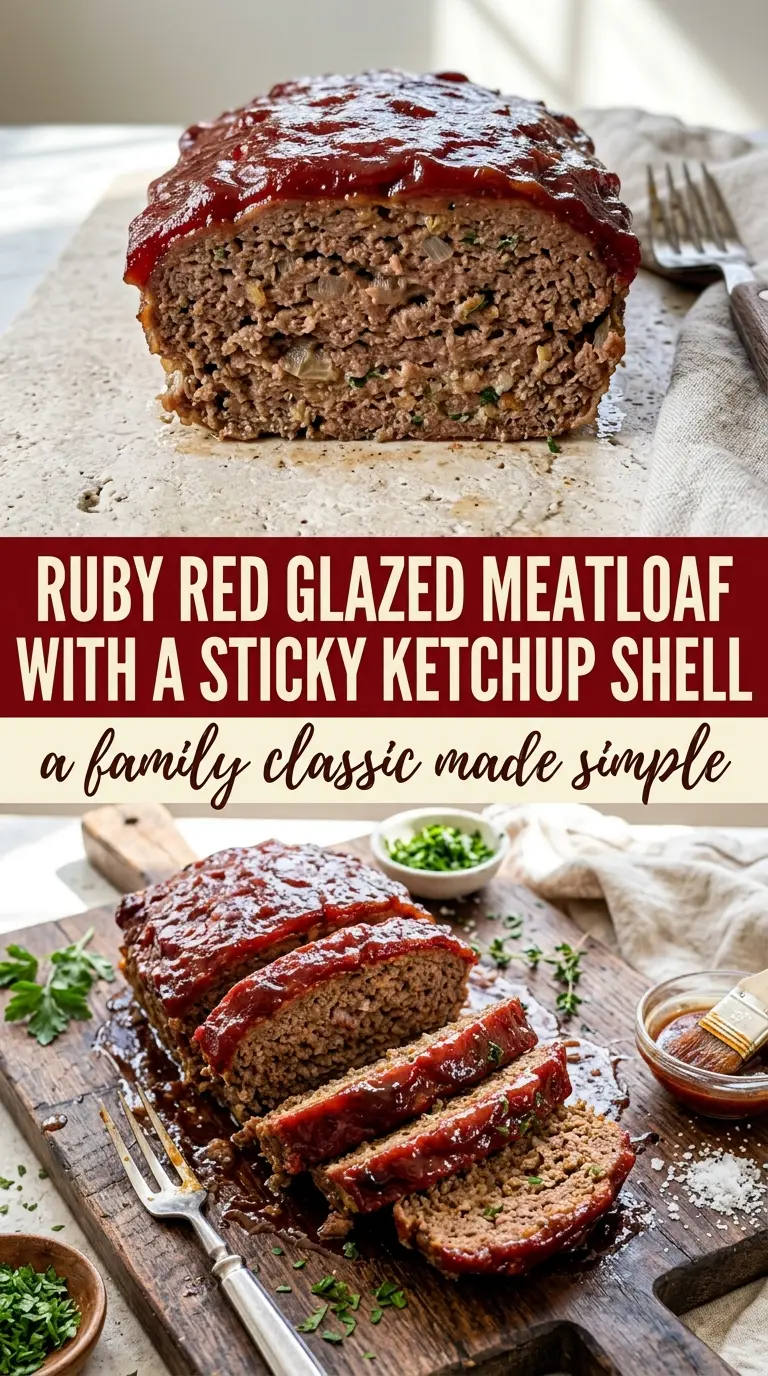
- Ground beef — This is the backbone of the dish, and the fat matters. An 80/20 blend gives you a meatloaf that tastes rich and stays juicy; go much leaner and you’ll lose that soft, sliceable texture.
- Breadcrumbs and milk — Together they form the panade, which keeps the meatloaf tender instead of dense. If you need a substitute, crushed saltines or oats can work, but the texture will be a little different and less plush.
- Onion — Finely chopped onion adds sweetness and moisture without leaving big crunchy pieces in the loaf. If you want a smoother texture, sauté it first; raw onion gives a sharper bite and still works fine here because the bake time is long enough to soften it.
- Ketchup, Worcestershire, parsley, garlic powder, and pepper — These build the savory base and keep the flavor from tasting flat. Worcestershire brings depth, parsley adds freshness, and garlic powder gives you even seasoning without the risk of raw garlic overpowering the loaf.
- Egg — The egg binds everything so the slices hold together after resting. One egg is enough; adding more can make the texture bouncy instead of tender.
- Glaze ingredients — Ketchup gives the glaze its body, brown sugar adds stickiness and color, vinegar wakes it up, and Worcestershire keeps it from tasting like straight sweetness. That balance is what makes the top caramelize instead of just drying into a crust.
How to Build the Loaf So It Stays Juicy and Slices Cleanly
Mix the Panade First
Start by combining the breadcrumbs and milk before you add the meat. Let them sit for a minute so the crumbs absorb the liquid and soften; that’s what gives the loaf a tender crumb instead of a gritty one. Once the beef goes in, mix with your hands just until the ingredients stop looking separate. If you keep going after that, the texture gets tight fast.
Shape It Without Packing It Down
Press the mixture into the loaf pan firmly enough to remove big air pockets, but don’t smash it flat. You want an even loaf, not a compressed one. A packed loaf steams into a dense block, while a gently shaped one bakes up with a better bite. Smooth the top so the glaze can spread evenly and doesn’t slide off in patches.
Glaze Twice for a Better Finish
Whisk the glaze until the brown sugar mostly dissolves, then brush on half before the loaf goes into the oven. That first layer bakes into the meatloaf and builds flavor. Save the second half for the last 10 minutes so it stays glossy and sticky instead of burning. If you add all of it at the beginning, the sugars darken too fast and the top can turn bitter.
Rest Before You Slice
Pull the meatloaf when the center reaches 160°F and let it sit for 10 minutes. That pause gives the juices time to settle back into the meat instead of running out onto the cutting board. If you slice too soon, even a well-made meatloaf can look dry. Use a sharp knife and cut in clean strokes for the neatest slices.
How to Adapt This for a Smaller Kitchen, a Different Pantry, or a Lighter Plate
Gluten-Free Meatloaf
Swap the breadcrumbs for certified gluten-free breadcrumbs or finely crushed gluten-free crackers. You still need that starchy binder to keep the loaf tender, so don’t leave it out entirely. The texture stays close to the original as long as the crumbs are fine and evenly mixed.
Dairy-Free Version
Use an unsweetened plain non-dairy milk in place of regular milk. The job here is moisture, not flavor, so oat or soy milk works well. Skip anything sweetened or strongly flavored, since it can throw off the savory balance.
Turn It Into Muffin-Pan Meatloaves
Divide the mixture into a greased muffin tin for faster cooking and easier portioning. The glaze still works, but you’ll brush it on after the first part of baking so it doesn’t slide off the smaller shapes. These finish faster than a full loaf, so start checking early with a thermometer.
Make It Ahead for a Busy Week
You can mix and shape the loaf up to a day ahead, then cover and refrigerate it until you’re ready to bake. The flavor benefits from the rest, and the texture stays just as good. Add the glaze right before baking so it stays fresh and doesn’t thin out from sitting on the meat.
Storage and Reheating
- Refrigerator: Store slices in an airtight container for up to 4 days. The loaf stays moist, though the glaze will soften a little.
- Freezer: Meatloaf freezes well. Wrap individual slices tightly and freeze for up to 3 months, or freeze the whole baked loaf wrapped in two layers.
- Reheating: Warm slices covered in a 300°F oven with a splash of broth or water for about 10 to 15 minutes. The common mistake is blasting it in the microwave until the edges turn rubbery while the center dries out.
Answers to the Questions Worth Asking
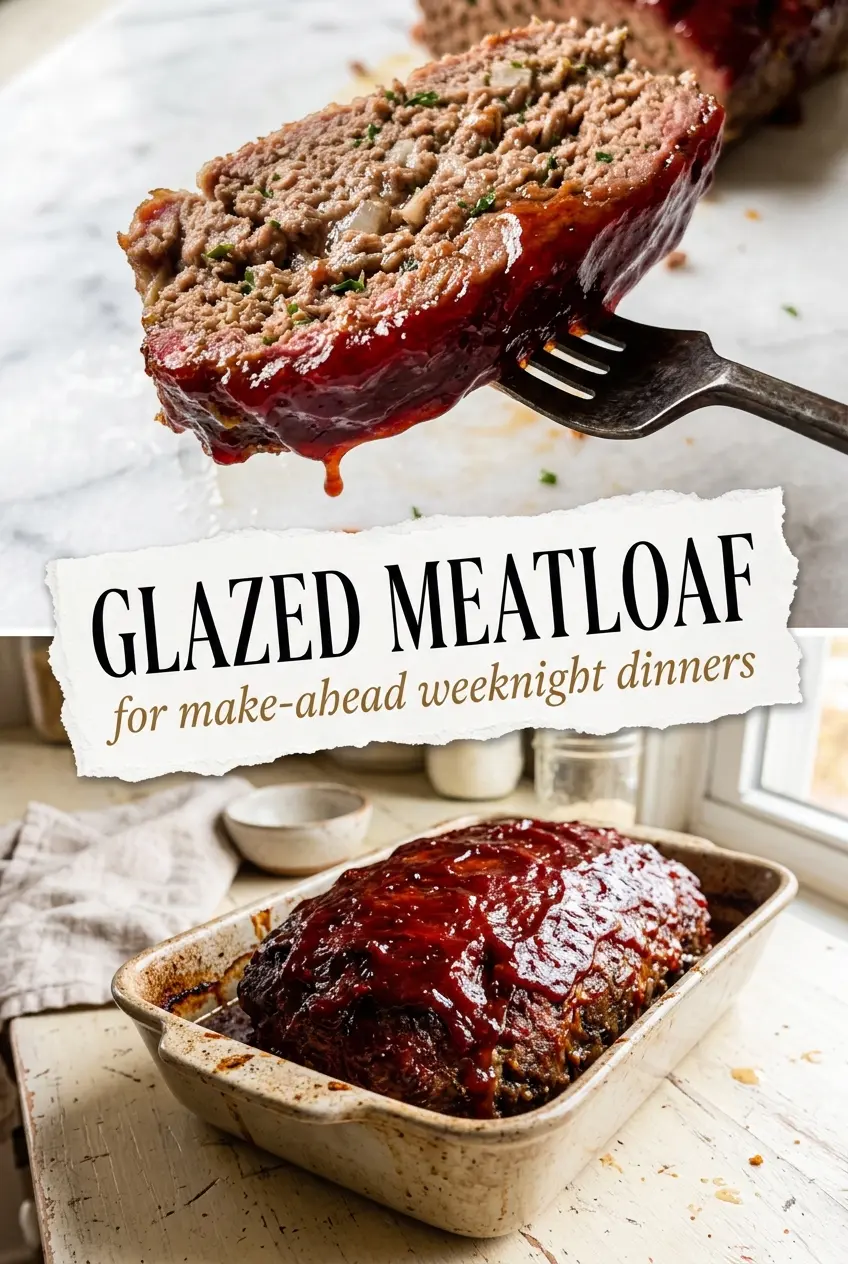
Classic Glazed Meatloaf
Ingredients
Equipment
Method
- Preheat the oven to 350°F and place a sheet pan inside to heat slightly for better browning (about 5 minutes).
- In a large bowl, combine the ground beef, breadcrumbs, finely chopped onion, milk, large egg, ketchup, Worcestershire sauce, chopped parsley, salt, garlic powder, and black pepper; mix with your hands until just combined.
- Press the mixture into a loaf pan and shape the top evenly so it bakes uniformly.
- Whisk together the glaze ingredients (ketchup, brown sugar, vinegar, and Worcestershire sauce) until smooth.
- Spread half of the glaze over the meatloaf so the surface begins caramelizing right away.
- Bake at 350°F for 50 minutes, then brush on the remaining glaze during the last 10 minutes until a thermometer reads 160°F.
- Let the meatloaf rest for 10 minutes before slicing so the juices redistribute.