
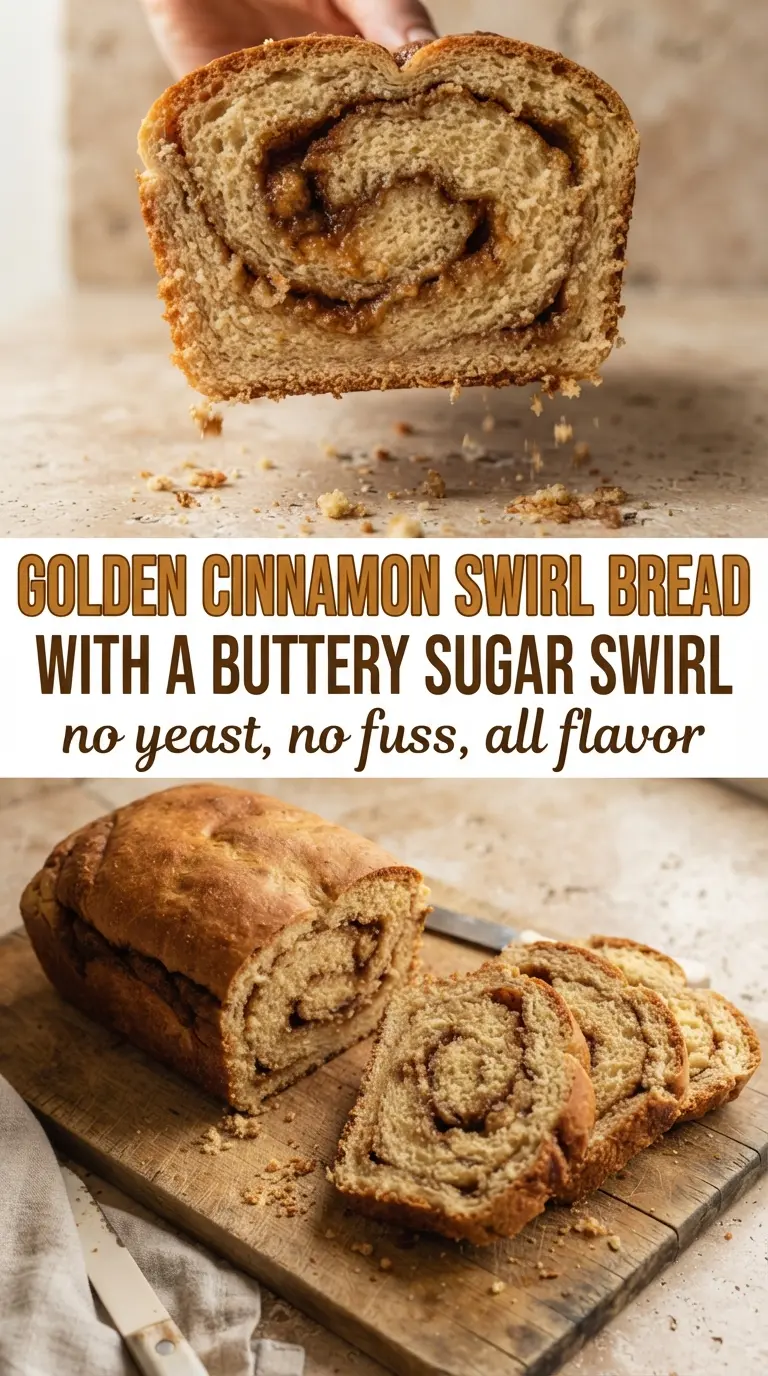
Warm cinnamon ribbons running through a tender loaf are what make this quick bread disappear slice by slice. The crumb stays soft and light, the top bakes into a golden shell, and that brown sugar swirl turns just a little sticky at the edges where it meets the pan. It tastes like something that took far more effort than it did, which is exactly why it earns a permanent spot in the kitchen rotation.
The trick is keeping the batter gently mixed and the swirl layer loose enough to marble without sinking into one muddy streak. Melted butter helps the cinnamon and brown sugar spread into a paste that stays visible after baking, while the oil keeps the crumb moist for days. There’s no yeast, no rising, and no waiting around for dough to behave.
Below, you’ll find the small details that keep the loaf tender instead of dense, plus the one mistake that can wipe out the cinnamon ribbon entirely. If you’ve ever wanted a loaf that smells like a bakery and slices cleanly after cooling, this one is worth learning.
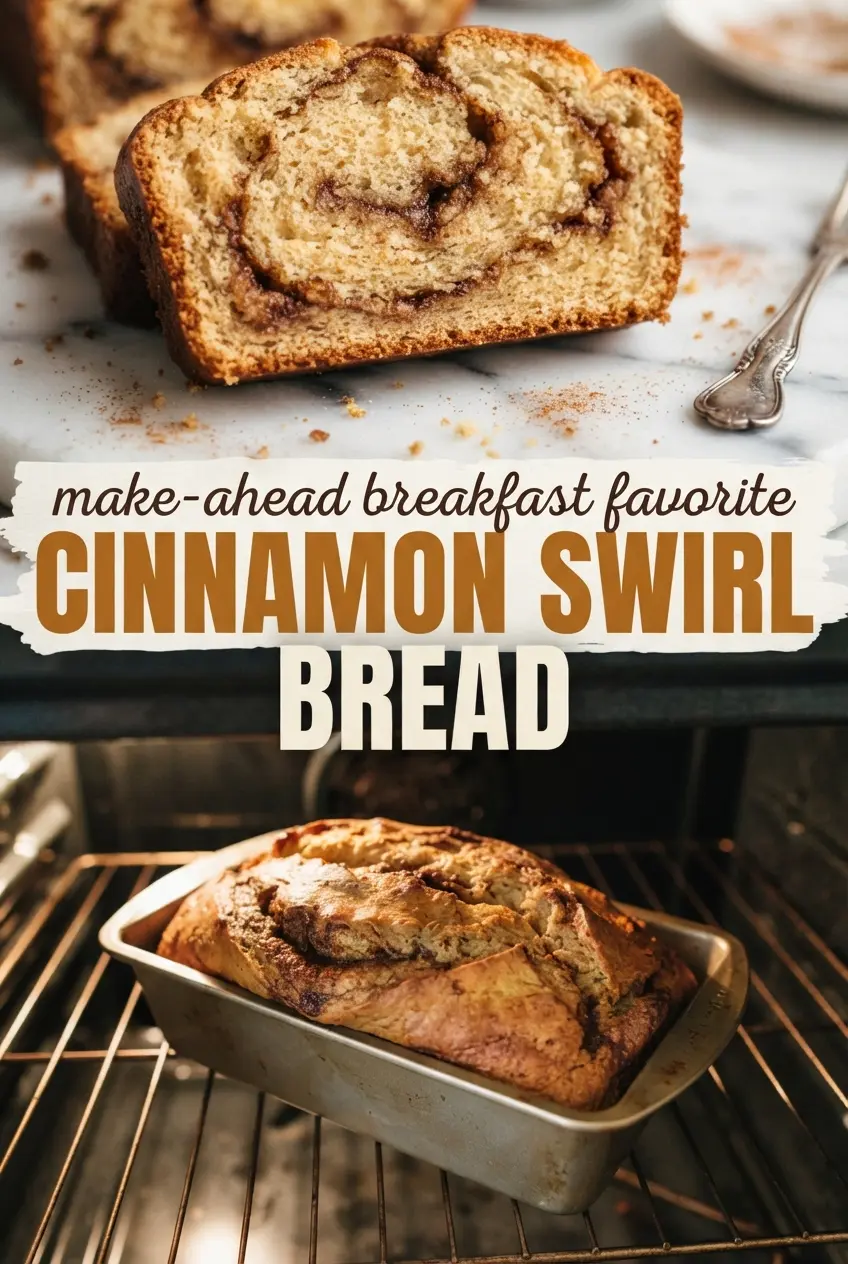
The swirl stayed defined all the way through, and the top baked up with those crisp cinnamon edges I was hoping for. I covered it with foil for the last 15 minutes and the loaf came out perfectly done without drying out.
Save this Cinnamon Swirl Quick Bread for the mornings when you want a soft loaf with a caramelized cinnamon ribbon and no yeast to wait on.
The Swirl That Stays Visible After Baking
Most cinnamon quick breads lose their pattern because the swirl gets overmixed into the batter or sinks to the bottom in one heavy layer. This loaf avoids that by using a thick enough cinnamon mixture to stay where you place it, then a very light swirl with a knife just to pull the layers together. You want ribbons, not a complete marbling.
The other thing that matters is the batter itself. Quick bread batter should look a little rough when it goes into the pan. If you stir until it’s smooth, the gluten tightens up and the loaf bakes dense instead of tender. Stop as soon as the dry streaks disappear and let the oven finish the job.
- The cinnamon mixture should be spreadable, not runny. Melted butter plus brown sugar makes the filling cling to the batter instead of dissolving into it.
- Half batter, half swirl, repeat. That layering gives you a clear cinnamon stripe through the middle and keeps the top from turning into a sugar crust only.
- Swirl once or twice through the pan. More than that and you lose the contrast that makes each slice look marbled.
What Each Ingredient Is Doing in This Loaf
- All-purpose flour — This gives the loaf its structure without making it heavy. Bread flour would make it chewier than you want, and cake flour would be too delicate for the swirl layers.
- Baking powder — This is the lift in a loaf that doesn’t use yeast. It gives the bread a soft rise and helps the crumb open up instead of baking up flat and gummy.
- Granulated sugar — Some of it sweetens the batter, but it also helps the crust brown. That clean sweetness keeps the loaf from tasting too molasses-heavy once the brown sugar swirl melts in.
- Eggs, milk, and oil — The eggs bind everything, the milk loosens the batter, and the oil keeps the crumb moist long after the loaf cools. Butter can work in the batter, but oil gives a softer, more dependable texture here.
- Brown sugar, cinnamon, and melted butter — This is the swirl. Brown sugar brings the caramel note, cinnamon brings the heat, and butter helps it spread into a paste that stays defined after baking.
- Vanilla — It rounds out the cinnamon and keeps the loaf from tasting flat. You won’t notice it as a separate flavor, but you would miss it if it weren’t there.
The 20 Minutes That Actually Matter
Mixing the Batter Without Toughening It
Whisk the dry ingredients first so the baking powder and salt are evenly distributed, then add the wet ingredients and stir only until you stop seeing flour. The batter should look a little lumpy and loose, not whipped. If you keep mixing past that point, the loaf gets tight and loses the soft crumb that makes quick bread worth baking.
Building the Cinnamon Ribbon
Stir the brown sugar, cinnamon, and melted butter together until it looks like a thick, grainy paste. That texture matters because it sits on the batter instead of disappearing into it. If the mixture looks oily and thin, it will slide downward and you’ll lose the swirl pattern.
Layering and Swirling the Loaf
Pour half the batter into the pan, scatter half the cinnamon mixture over it, then repeat with the rest. Run a knife through the batter once or twice in loose figure-eights. The goal is to drag the filling through the loaf, not blend it completely. Over-swirl it and the bread bakes with a vague cinnamon tint instead of a clear ribbon.
Knowing When It’s Done
Bake until a toothpick comes out clean or with a few moist crumbs, and the top springs back lightly when touched. If the loaf is browning too quickly before the center is set, lay foil loosely over the top for the last stretch of baking. Pull it too early and the middle sinks; pull it too late and the crumb dries out around the edges.
How to Change It Without Losing the Loaf
Make it dairy-free
Use an unsweetened non-dairy milk and keep the melted butter in the swirl, or swap in plant-based butter if you need the whole loaf dairy-free. The loaf still bakes tender because the oil carries most of the moisture. What changes most is the swirl flavor, which becomes a little less rich but still caramelized.
Turn it into muffins
Scoop the batter into lined muffin cups, add a little cinnamon filling to each one, and swirl lightly with a toothpick. The bake time drops a lot, so start checking early. You’ll get more surface area, which means more crisp cinnamon edges and less of the soft loaf texture.
Use a gluten-free flour blend
A good 1:1 gluten-free baking blend works here better than most yeasted breads because the structure comes from baking powder and eggs, not gluten development. The crumb will be a little more delicate, so let the loaf cool fully before slicing. Cutting it early can make it crumble at the swirl.
Storage and Reheating
- Refrigerator: Keep the loaf wrapped or in an airtight container for up to 4 days. The crumb stays moist, but the swirl layer firms up a little in the fridge.
- Freezer: It freezes well. Wrap slices individually, then store them in a freezer bag for up to 2 months so you can toast one piece at a time.
- Reheating: Warm slices in a toaster oven or microwave just until heated through. Don’t overdo it or the cinnamon sugar edges can turn hard and dry.
Answers to the Questions Worth Asking
Cinnamon Swirl Quick Bread
Ingredients
Equipment
Method
- Whisk together all-purpose flour, baking powder, salt, and granulated sugar until evenly combined, then set aside.
- Whisk together large eggs, milk, vegetable oil, and vanilla extract in a separate bowl until smooth and uniform.
- Fold the wet ingredients into the dry until just combined, stopping as soon as no dry flour streaks remain.
- Mix brown sugar, ground cinnamon, and butter, melted until it forms a thick, spreadable cinnamon mixture.
- Grease a loaf pan, pour in half the batter, and spread it into an even layer.
- Sprinkle half the cinnamon mixture over the batter layer.
- Pour the remaining batter over the cinnamon layer and spread to the edges.
- Sprinkle the remaining cinnamon mixture on top, then swirl gently with a knife to marble the layers.
- Bake at 350°F for 50-55 minutes, until a toothpick comes out clean.