
Cinnamon roll focaccia lands in that perfect middle ground between dessert bread and breakfast treat: pillowy in the center, crisp at the edges, and sticky with melted cinnamon sugar in all the right places. The dough bakes up with the same airy chew you want from focaccia, but the butter, brown sugar, and glaze turn it into something that tastes a lot more indulgent than the ingredient list suggests.
What makes this version work is the contrast. Olive oil under the dough keeps the bottom from sticking and helps it fry into a deep golden crust, while the dimples give the cinnamon mixture somewhere to settle instead of sliding off the top. A warm glaze poured over the bread as soon as it comes out of the oven softens the surface just enough to seep into the cracks without turning the whole pan soggy.
If you’ve ever wanted cinnamon rolls without the shaping, rising, and fuss, this is the shortcut worth keeping. Below you’ll find the one stretching trick that saves the dough, plus the best way to keep the topping caramelized instead of burned.
The edges got caramelized and crisp while the middle stayed soft and fluffy, and the glaze soaked into every dimple. My kids kept picking off the sticky corners before I could even cut it into slices.
Sticky cinnamon roll focaccia with caramelized edges and a warm glaze
The Reason This Focaccia Tastes Like a Bakery Shortcut
The mistake most people make with sweet focaccia is treating it like a flat cinnamon roll. That leads to dense dough, scorched sugar, and a topping that sits on top instead of melting into the bread. Here, the dough stays in its focaccia lane: stretched gently, dimpled deeply, and baked hard enough around the edges to get that crisp, oily frame that makes every soft bite taste better.
The other key is timing. The cinnamon sugar goes on before baking so it can caramelize into the surface, but the glaze waits until the bread comes out hot. If you add the glaze too early, it can dissolve the topping and make the center gummy. If you wait too long, it just sits there instead of soaking in.
What Each Ingredient Is Actually Doing in This Dish
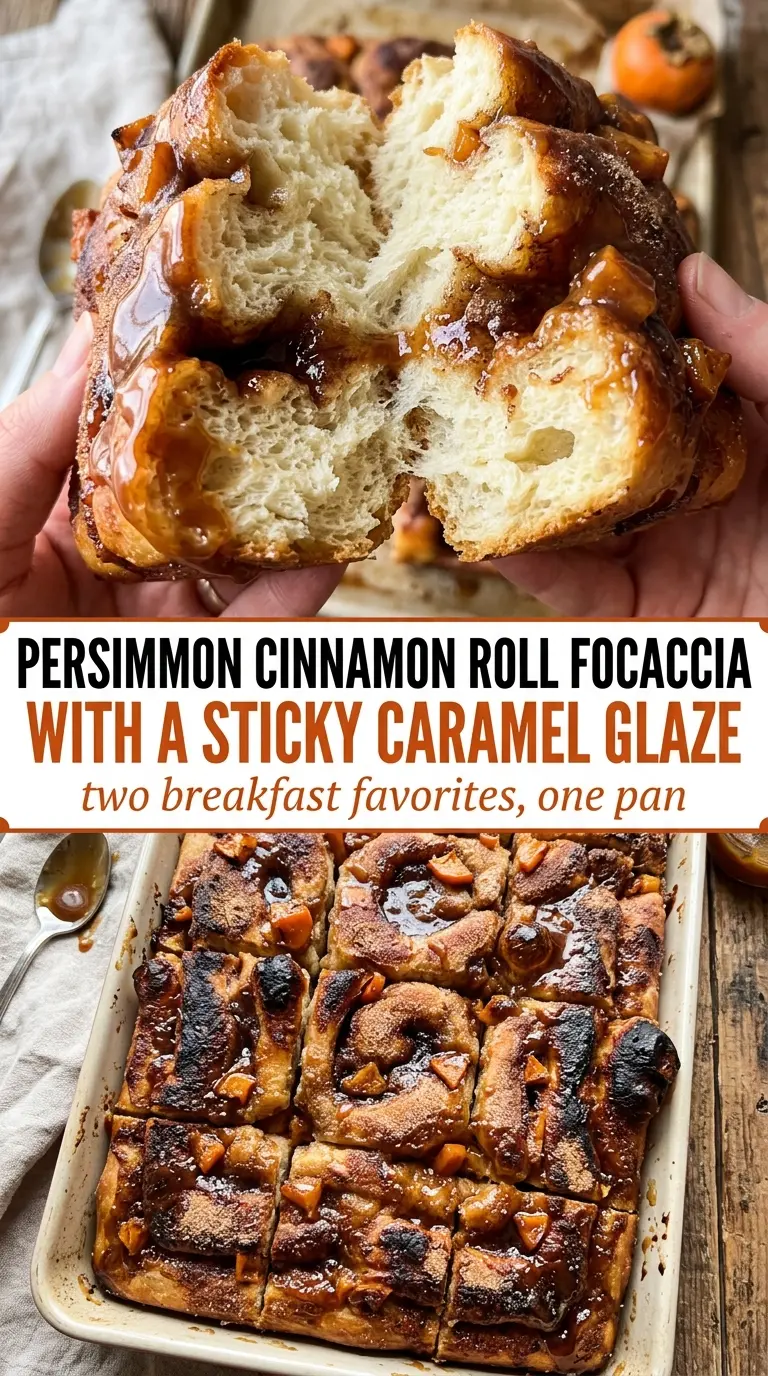
- Pizza or focaccia dough — This is the backbone of the recipe. Store-bought dough works fine as long as it has some elasticity and a little chill taken off before you stretch it. Cold dough fights back and tears; room-temperature dough spreads with much less drama.
- Olive oil — Don’t skimp here. The oil is what gives the bottom its crisp, almost fried edge and keeps the bread from feeling dry under the sweet topping. You want enough to coat the pan generously, not just a light slick.
- Brown sugar — This melts into a deeper, caramel-like layer than white sugar would. If you swap in white sugar, the topping will stay sweeter and more brittle, with less of that sticky pull.
- Cinnamon — Use a fresh jar if yours has been hanging around for a while. Stale cinnamon tastes flat and dusty in a recipe like this, where it carries most of the flavor.
- Melted butter — Butter helps the sugar cling to the dough and adds that classic cinnamon roll richness. Brushing it on before the sugar gives you a better melt than mixing everything together in one bowl.
- Powdered sugar and milk — These turn into the glaze that finishes the bread. Start with less milk than you think you need; a thick, pourable glaze gives you control, while a thin one runs off and disappears.
Getting the Dough, Topping, and Glaze to Work Together
Stretching the Dough Without Fighting It
Set the dough out until it loses the chill and relaxes enough to stretch without snapping back. Drizzle the olive oil over the sheet pan first, then press the dough outward from the center with your fingertips until it reaches the corners. If it keeps shrinking, let it rest for 5 to 10 minutes and try again; forcing it only tears the surface and makes uneven thick spots.
Building the Cinnamon Layer
Brush the melted butter over the dough in a thin, even layer, then mix the brown sugar and cinnamon and scatter it over the top. Press it lightly into the dimples so it settles into the dough instead of blowing off in the oven. The goal is a thick, even coating, not a snowstorm of sugar on top that burns before the bread bakes through.
Baking to Deep Gold
Bake until the edges are deep golden brown and the sugar has turned glossy and darker, with little bubbling pockets around the top. That usually takes 20 to 25 minutes, depending on how thick the dough is. If the top looks done but the edges are still pale, give it another few minutes; pale edges mean the bread won’t have that crisp contrast that makes the recipe work.
Finishing With the Glaze
Whisk the powdered sugar and milk until smooth, then drizzle it over the focaccia while it is still warm, not piping hot. Warm bread soaks the glaze into the surface without dissolving the cinnamon layer completely. If the glaze sits in a thick white sheet on top, it was too cold; if it vanishes instantly, it was too thin.
Three Ways to Make This Focaccia Fit the Night You Have
Dairy-Free Version
Swap the butter for melted coconut oil or a plant-based butter and use a non-dairy milk in the glaze. Coconut oil gives a faint coconut note and a slightly firmer finish, while vegan butter keeps the flavor closest to the original.
Make It Even More Like a Cinnamon Roll
Add a handful of finely chopped pecans or a thin layer of softened cream cheese after baking. The nuts add crunch and a little bitter balance, while cream cheese turns the glaze into something closer to frosting.
Gluten-Free Shortcut
Use a gluten-free pizza dough that is meant for stretching and baking on a sheet pan. It won’t have quite the same chew as standard dough, but the oil, sugar, and glaze still give you the same sticky, bakery-style finish.
Storage and Reheating
- Refrigerator: Keep leftovers in an airtight container for up to 3 days. The glaze will soak in and the edges will soften a bit, which is normal.
- Freezer: Freeze slices tightly wrapped for up to 1 month. Thaw at room temperature before reheating; freezing does dull the glaze slightly, but the bread still holds up well.
- Reheating: Warm slices in a 300°F oven for 8 to 10 minutes. The oven brings back the crisp edges better than the microwave, which tends to make the sugar coating sticky in a bad way.
Questions I Get Asked About This Recipe
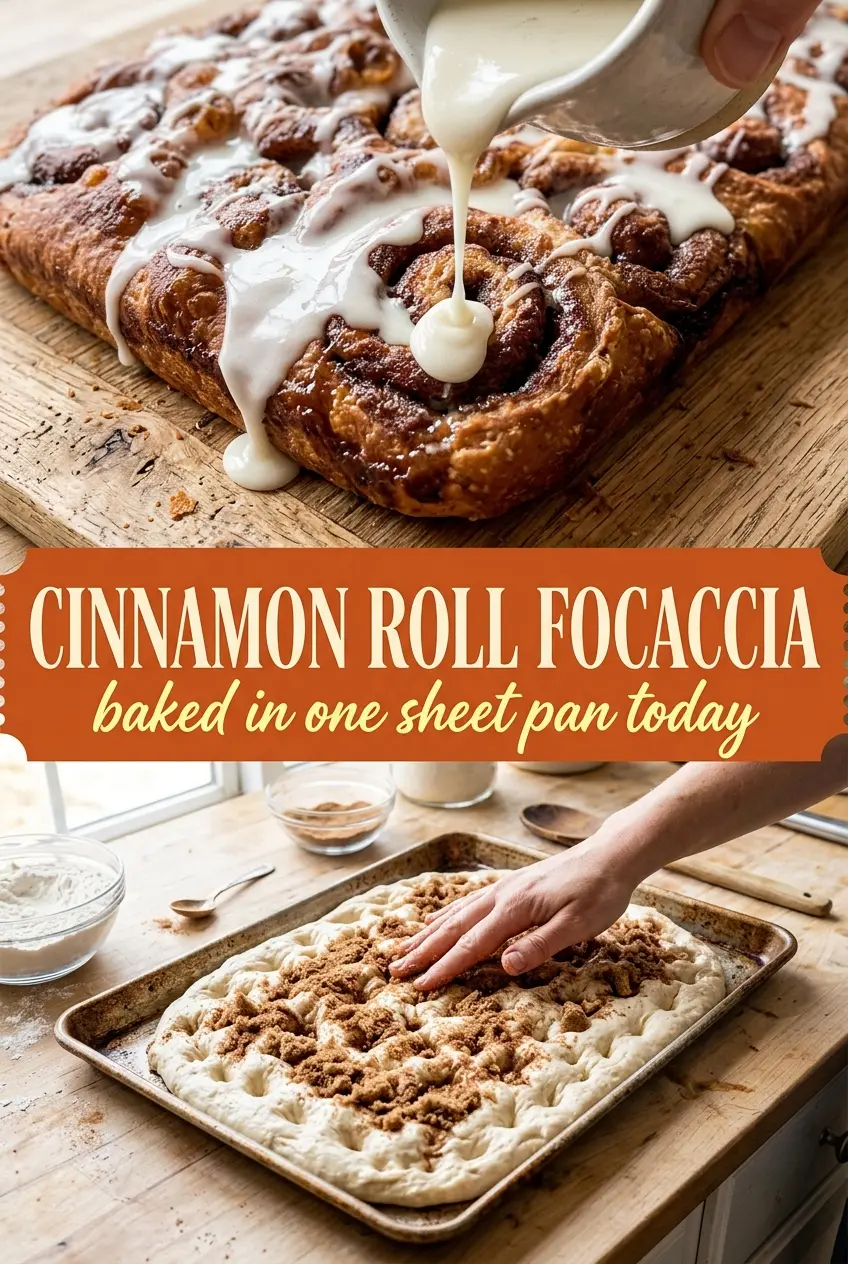
Cinnamon Roll Focaccia
Ingredients
Equipment
Method
- Preheat the oven to 425°F and drizzle olive oil generously over a sheet pan.
- Stretch the pizza or focaccia dough to fill the sheet pan, pressing dimples into the surface with your fingertips.
- Brush the melted butter over the dough.
- Mix the brown sugar and cinnamon, then sprinkle evenly over the dough and press it into the dimples.
- Bake for 20-25 minutes at 425°F, until deeply golden and caramelized at the edges.
- Whisk the powdered sugar and milk into a glaze and drizzle over the warm focaccia.