
Bright cilantro lime noodles hit the sweet spot between refreshing and satisfying. The sauce turns glossy and green, clings to every strand, and brings just enough heat and tang to keep each bite lively without tasting sharp or muddy. Warm noodles soak up the sauce fast, so you get a dish that feels tossed together at the last minute but still eats like something you planned.
The trick is balance. A handful of cilantro gives the sauce its color and herbaceous punch, while lime juice keeps it bright and soy sauce adds the salty backbone that makes the whole bowl taste complete. Honey softens the acidity just enough, and a little olive oil helps the sauce emulsify so it coats the noodles instead of sliding off.
Below you’ll find the small details that matter here, from when to toss the noodles to how to adjust the heat and add protein without losing the clean, zesty finish.
The sauce coated the noodles beautifully and stayed bright green even after tossing. I added the peanuts at the end like suggested, and the little bit of crunch made the whole bowl taste finished.
Save these cilantro lime noodles for a fast dinner with a bright green sauce that clings to every bite.
The Mistake That Makes Herb Noodles Taste Flat
Herb sauces lose their edge fast when they sit around on dry noodles or get diluted with too much cooking water. The fix is simple: blend the sauce until fully smooth, then toss it with warm noodles while they’re still a little steamy. That heat helps the sauce spread and cling, but it doesn’t cook the cilantro into a dull paste.
Another common failure is overloading the lime or skipping the fat. Lime brings the spark, but olive oil carries the flavor across the whole bowl. Without it, the sauce can taste thin and aggressive instead of balanced and round.
What Each Ingredient Is Actually Doing in This Dish
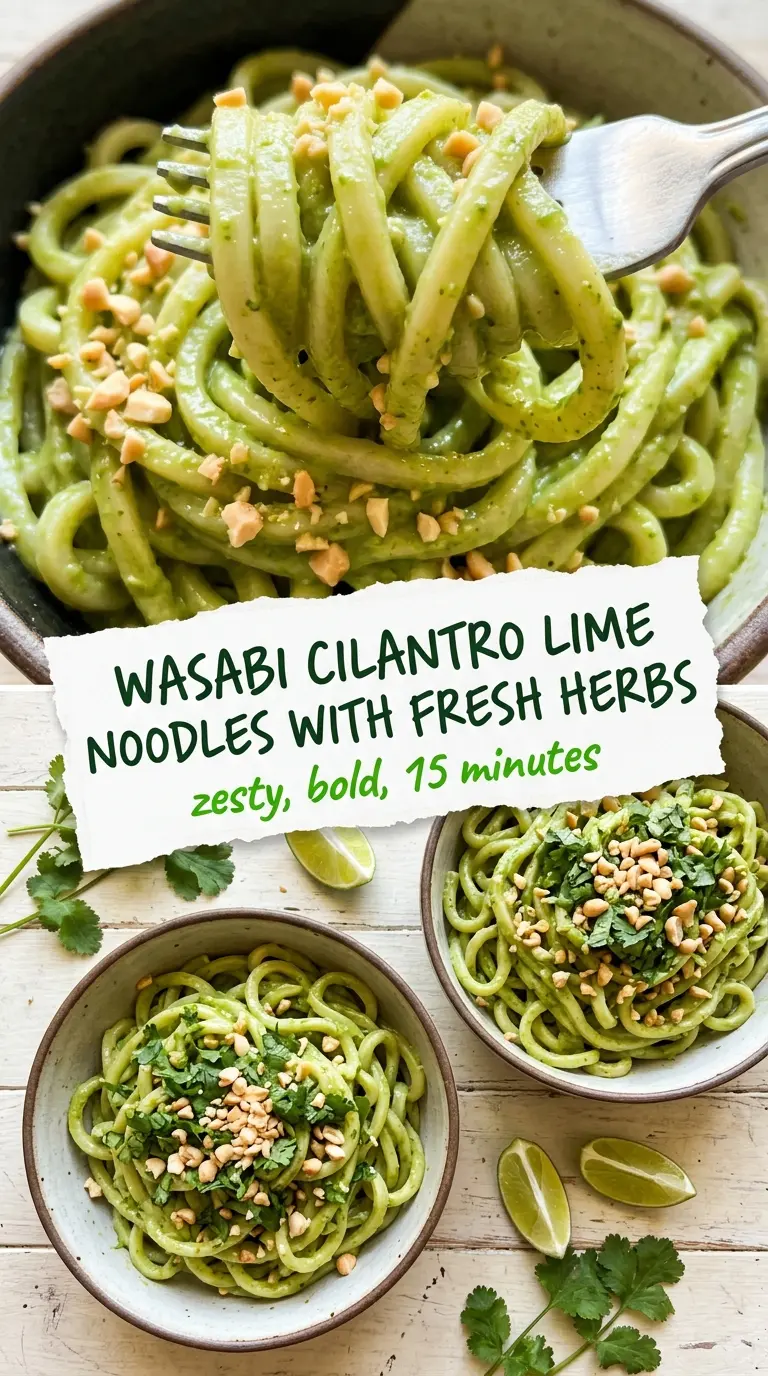
- Rice noodles or spaghetti — Rice noodles give you a soft, slippery bite that suits the sauce well, but spaghetti works if that’s what you have. If you use rice noodles, rinse them briefly after draining only if they threaten to stick together; otherwise, keep them warm so they drink in the sauce.
- Fresh cilantro — This is the whole point of the dish, so use a full packed cup and include the tender stems. The stems carry a lot of flavor and blend smoothly, while wilted leaves will make the sauce taste tired.
- Lime juice — Fresh juice matters here. Bottled lime juice can taste flat and metallic, and that shows up fast in a simple sauce like this.
- Olive oil — This turns the sauce from chopped herbs into something that coats. A mild oil is best; a peppery one can bully the cilantro.
- Soy sauce and honey — Soy sauce deepens the flavor and keeps the lime from reading one-note, while honey rounds off the sharp edges. If you need a vegan version, use your usual soy sauce; nothing changes there.
- Peanuts — They don’t just add crunch. They finish the bowl with a toasted, savory note that makes the noodles feel complete, and they stay crisp if you add them right before serving.
The 15 Minutes That Actually Matter
Cooking the Noodles to the Right Point
Boil the noodles until just tender, then drain them promptly. You’re aiming for supple, not soft enough to collapse under the sauce. Overcooked noodles turn mushy once the dressing goes on, especially if you plan to eat the dish chilled later.
Blending the Sauce Until It Turns Glossy
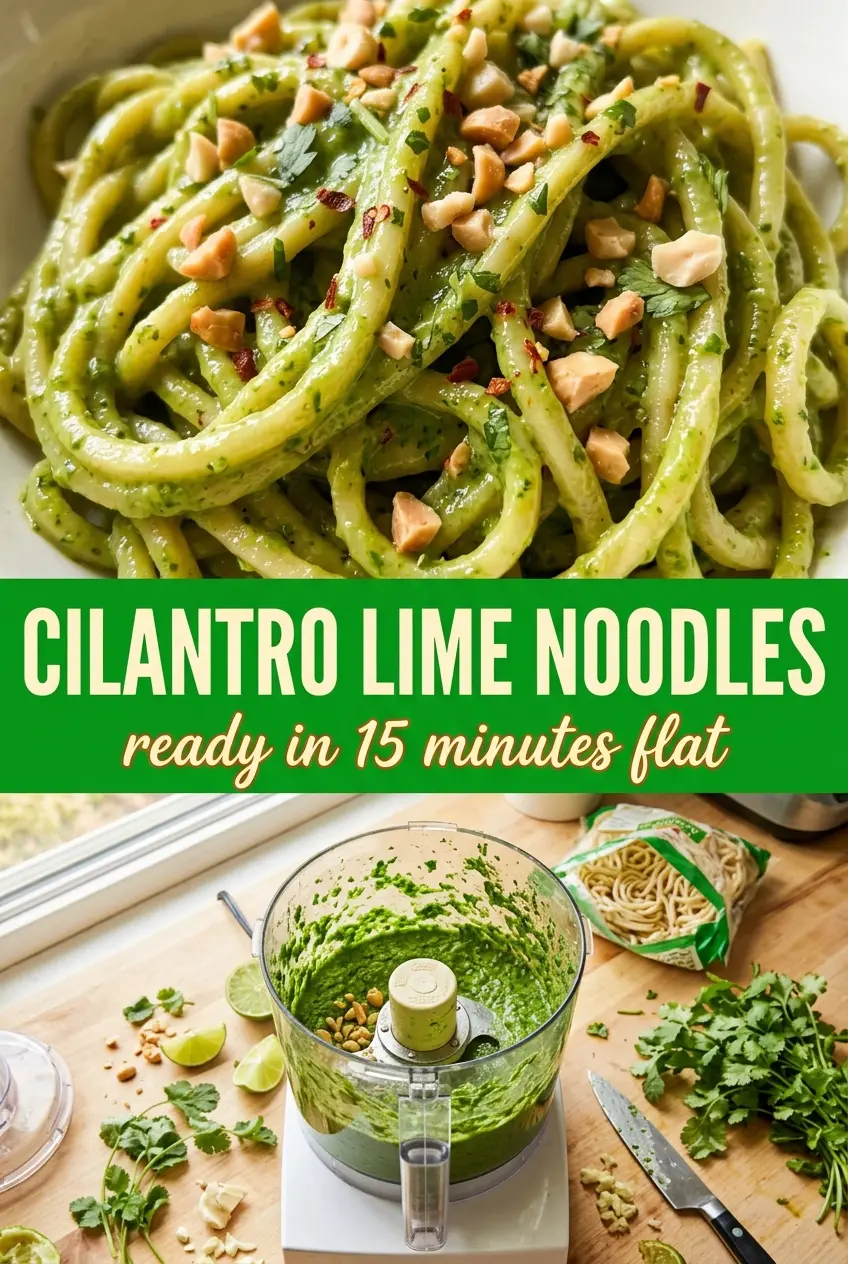
Blend the cilantro, garlic, lime juice, soy sauce, honey, red pepper flakes, and olive oil until the sauce looks smooth and uniform. Tiny flecks are fine, but you don’t want a chunky herb paste. If the sauce looks separated, keep blending for a few seconds longer; the oil should emulsify enough that it pours thickly.
Tossing While the Noodles Are Warm
Add the sauce right after draining so the noodles are still warm. That warmth helps them absorb flavor instead of sitting there slick and under-seasoned. If the bowl looks dry, add a teaspoon of water at a time, not a splash, because too much liquid can wash the sauce off the noodles.
Finishing With Crunch and Brightness
Top with chopped peanuts just before serving so they stay crisp. If you want the noodles warmer and more savory, add grilled shrimp or chicken on top, but keep the sauce separate until the last minute so the herbs stay vivid. This dish also works chilled, which makes it a good make-ahead lunch.
How to Adapt These Noodles for Different Nights
Gluten-Free Without Losing the Sauce
Use rice noodles and a gluten-free tamari in place of soy sauce. The texture stays light and silky, and tamari keeps the savory backbone without adding the wheat notes that can muddy a delicate herb sauce.
Make It Dairy-Free and Vegan
The base recipe already fits this well as written if you use a standard vegan soy sauce. Honey is the one ingredient to swap; maple syrup gives the same balancing sweetness and blends cleanly into the sauce.
Add Protein Without Weighing It Down
Grilled shrimp, sliced chicken, or tofu all work here, but keep the seasoning simple so the cilantro-lime sauce stays in front. If using tofu, sear it until the edges are crisp first; soft tofu turns the bowl watery and disappears into the noodles.
Storage and Reheating
- Refrigerator: Store in an airtight container for up to 3 days. The noodles will soften a little and the sauce may darken slightly, but the flavor holds.
- Freezer: I don’t recommend freezing this one. The herb sauce loses its fresh color and the noodles turn soft and muddy after thawing.
- Reheating: Eat it cold or warm it gently in short bursts with a teaspoon of water if needed. High heat dries out the noodles and dulls the lime, which is the fastest way to lose what makes this dish work.
Answers to the Questions Worth Asking
Cilantro Lime Noodles
Ingredients
Equipment
Method
- Cook the rice noodles or spaghetti according to package instructions, then drain. Keep a splash of hot cooking water reserved in case you need to loosen the sauce.
- Blend the fresh cilantro, garlic cloves, olive oil, lime juice, soy sauce, honey, and red pepper flakes until smooth. Pause and scrape as needed so the mixture is fully emulsified and bright green.
- Toss the warm rice noodles or spaghetti with the cilantro lime sauce until evenly coated. If the sauce looks too thick, add a small splash of reserved cooking water and toss again.
- Top with chopped peanuts, for topping before serving. Serve warm or chilled.