
Chicken salad lands in that sweet spot where it can be simple enough for lunch and polished enough for a plate of crackers, croissants, or crisp lettuce. The best versions don’t drown the chicken in dressing; they balance tender pieces of meat with enough creamy coating to hold everything together, plus a little crunch so each bite stays interesting.
What makes this version work is the contrast. The chicken should be fully cooled before mixing, or the dressing turns thin and loses its grip. A mix of celery, onion, and herbs keeps the salad from tasting flat, and a little acid — usually lemon juice or pickle brine — sharpens the whole bowl without making it taste sour. If you’ve only ever had chicken salad that felt heavy or one-note, the difference here is in restraint and texture.
Below you’ll find the small details that matter most: how to keep the chicken tender, how to keep the dressing from sliding off, and how to adjust the mix-ins so the salad still tastes balanced after a day in the fridge.
The chicken stayed juicy and the dressing clung to every piece without turning watery the next day. I used a little extra celery for crunch and my lunch wraps were perfect all week.
Save this chicken salad for the days when you want a creamy, crunchy lunch that stays fresh in the fridge.
The Difference Between Watery Chicken Salad and One That Holds Together
The fastest way to ruin chicken salad is to rush the mixing. Warm chicken releases moisture into the dressing, and that’s how you end up with a bowl that looks right for ten minutes and then turns loose and dull. Cool chicken gives the mayonnaise something to cling to, which is the whole job here.
Texture matters just as much as seasoning. If every bite is soft, the salad eats heavy and flat. Celery, onion, and any crunchy add-ins should be diced small enough to mix evenly but not so tiny they disappear. That balance is what keeps the bowl from feeling mushy after chilling.
- Chicken — Roasted, poached, or rotisserie chicken all work. The key is to cut or shred it into bite-size pieces after it’s cooled so the dressing coats it instead of sliding off.
- Mayonnaise — This is the base that carries everything. Use a good one if you can taste the dressing straight from the bowl; if you want a lighter result, replace part of it with Greek yogurt, but expect a sharper, tangier finish.
- Celery — This gives the salad its clean crunch. Fresh celery makes a bigger difference than fancy add-ins, so don’t skip it unless you’re replacing it with another crisp vegetable like diced cucumber or apple.
- Lemon juice or pickle brine — A small amount wakes up the whole salad. It keeps the dressing from tasting heavy and helps the chicken taste seasoned instead of just coated.
- Fresh herbs — Dill, parsley, or chives bring the salad to life. Dried herbs won’t give the same bright finish, so use dried only if that’s what you have and use less than you think.
Building the Bowl So Every Bite Stays Creamy and Crisp
Start With Fully Cooled Chicken
Mixing warm chicken into the dressing is the mistake that causes a watery bowl. Let the chicken cool all the way before you combine anything, even if it means waiting a little longer. The meat should feel cool to the touch, not just no longer steaming. If you rush this part, the mayonnaise loosens and the whole salad gets slippery.
Season the Dressing Before the Chicken Goes In
Stir the mayonnaise, acid, salt, pepper, and any dry seasonings together first. That gives you a dressing that tastes balanced before it hits the chicken, which matters because cold chicken dulls seasoning. Once the dressing tastes bright and seasoned, fold in the chicken and vegetables. If you season only at the end, the mix often tastes uneven because the salt never fully distributes.
Fold, Don’t Mash
Use a spatula or large spoon and fold the salad gently until everything is coated. Aggressive stirring breaks the chicken into shreds and crushes the crunchy pieces. Stop as soon as the mixture looks evenly dressed. A good chicken salad should look plush and creamy, not pasty.
Chill Long Enough for the Flavors to Settle
Chicken salad tastes better after it sits for a short while in the fridge. That rest gives the seasoning time to move through the dressing and lets the texture firm up. If it looks a little loose right after mixing, give it 15 to 30 minutes before judging it. If it still seems thin after chilling, the chicken probably held too much moisture or the dressing was too lean.
How to Adapt This for Lunchboxes, Lighter Dressing, or a Bigger Batch
Lighter Chicken Salad With Greek Yogurt
Swap half the mayonnaise for plain Greek yogurt if you want a sharper, lighter bowl. The texture will be less silky and a little tangier, but the salad still holds together well if the chicken is fully cooled first. A splash of lemon helps keep the yogurt from tasting flat.
Dairy-Free Chicken Salad
This recipe is naturally easy to keep dairy-free as long as your mayonnaise is dairy-free, which most standard brands are. The result stays creamy without changing the method at all. If you’re using a homemade dressing, check the ingredients because some versions include milk powder or sour cream.
Chicken Salad With Apples or Grapes
Add diced apple or halved grapes when you want a sweeter, juicier bite. Apples bring crunch, while grapes soften the texture and make the salad feel a little more classic deli-style. Pat the fruit dry first so it doesn’t thin the dressing.
Storage and Reheating
- Refrigerator: Store for 3 to 4 days in an airtight container. The celery will soften a little, but the flavor usually improves after the first day.
- Freezer: Don’t freeze it. Mayonnaise-based chicken salad separates when thawed, and the vegetables turn watery.
- Reheating: Serve it cold. If it has sat in the fridge long enough to look dry, stir in a spoonful of mayonnaise or a small splash of lemon juice before serving rather than heating it.
Answers to the Questions Worth Asking
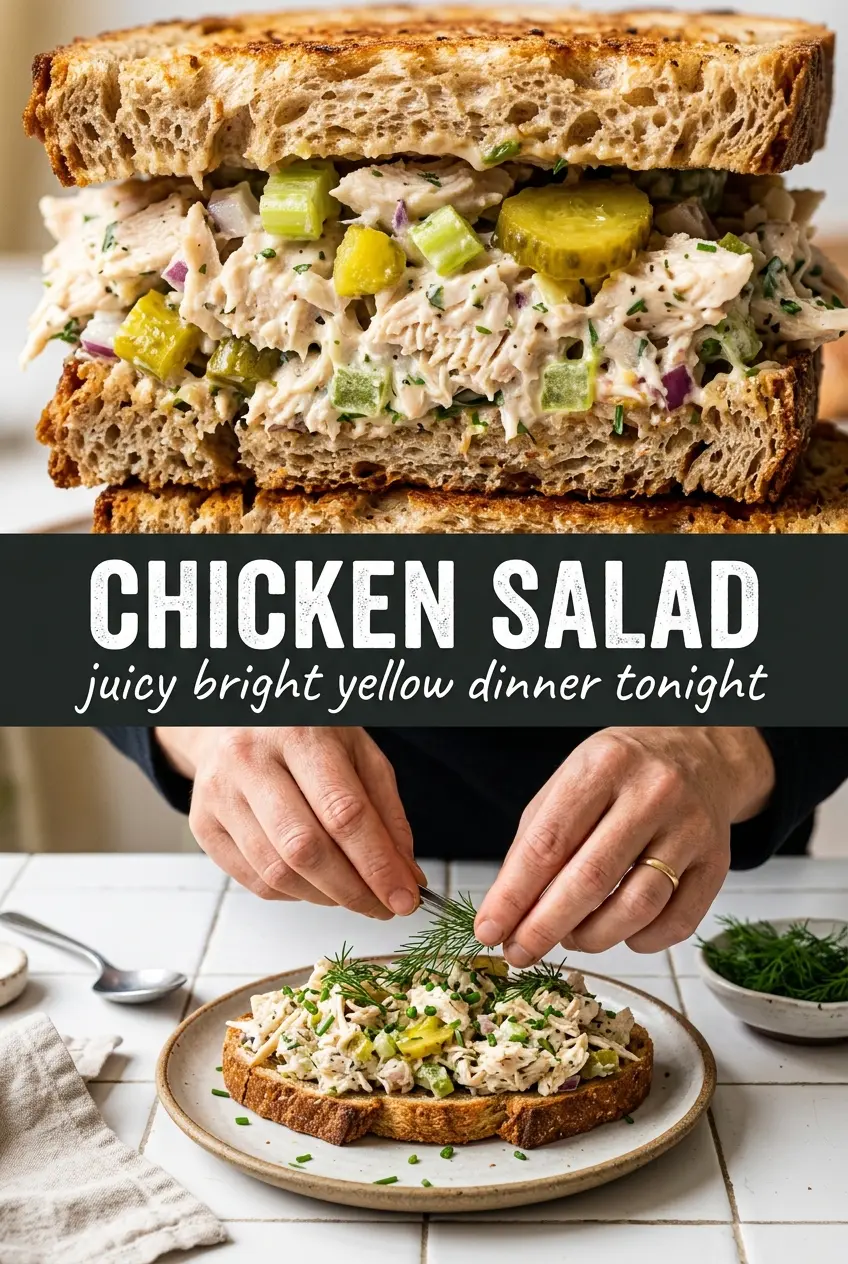
Chicken Salad
Ingredients
Equipment
Method
- Pat the chicken breast dry, then season all over with salt, black pepper, garlic powder, and dried oregano. Keep seasoning consistent so the caramelized edges form evenly.
- Heat a cast iron skillet over medium-high until it shimmers, then add the olive oil and swirl to coat. The pan should look glossy before the chicken touches down.
- Place the chicken in the skillet and cook 6-8 minutes without moving it, until deeply golden with crisp edges. Flip once and cook another 6-8 minutes until the center is just cooked through and juices run clear.
- Transfer chicken to a plate and rest 5 minutes, then slice into bite-size pieces with visible moist, tender interior. Resting helps keep the chicken juicy while you assemble the salad.
- Add romaine lettuce, cherry tomatoes, red onion, and cucumber to a large serving bowl. Toss gently so the vegetables are evenly distributed.
- Whisk mayonnaise, Dijon mustard, lemon juice, and apple cider vinegar until smooth and lightly thickened. Taste and adjust seasoning before combining.
- Add sliced chicken to the salad and drizzle dressing over the top, then toss until everything is coated. Stop tossing once the leaves look glossy and the chicken is evenly covered.
- Serve immediately so the lettuce stays crisp and the chicken edges remain caramelized. Add a final squeeze of lemon if you want a brighter bite.