
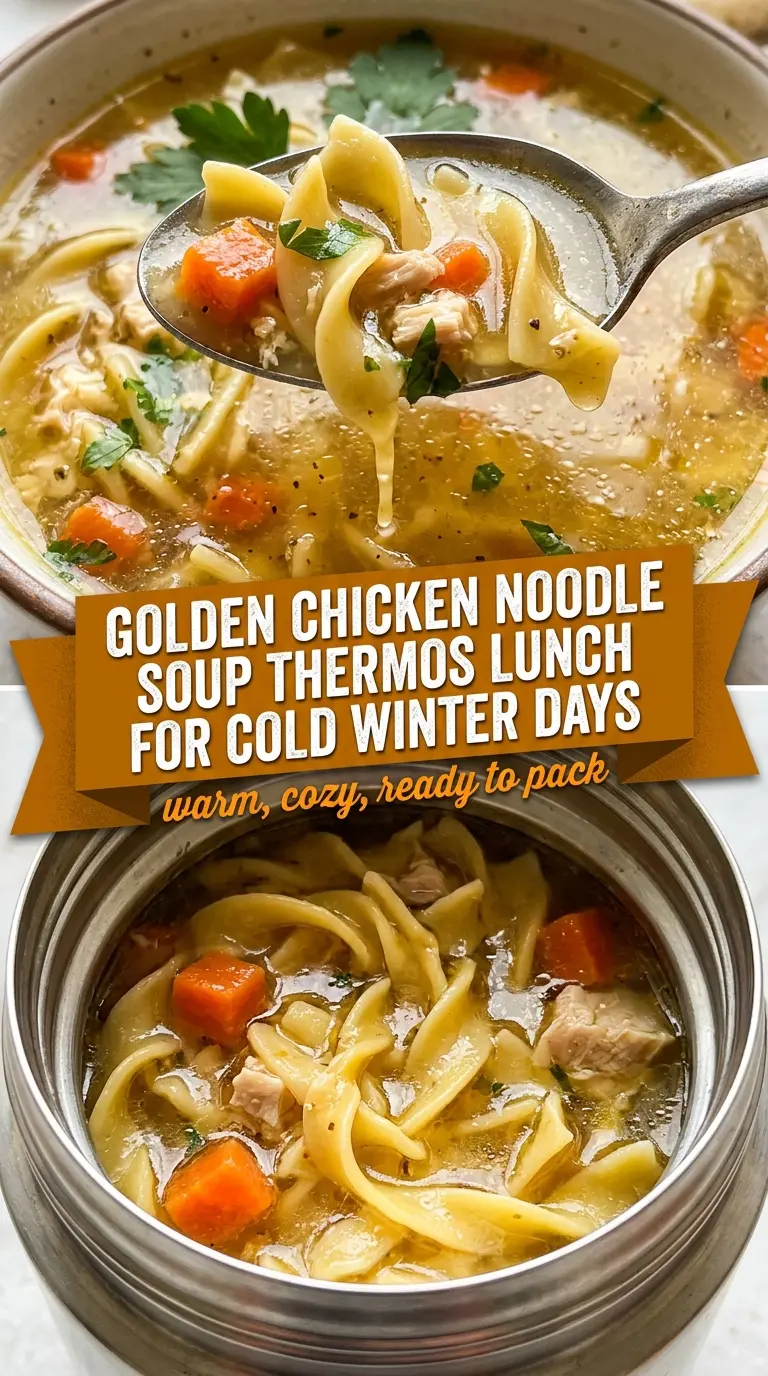
Tender chicken, soft egg noodles, and a clear golden broth make this the kind of lunch that still feels comforting hours after you packed it. The vegetables stay lightly sweet, the noodles soak up just enough broth without turning mushy, and the whole pot tastes clean and savory instead of heavy. It’s the kind of soup that earns a permanent spot in the lunch rotation because it holds up beautifully in a thermos and still tastes like actual dinner-quality food at noon.
What makes this version work is simple: the vegetables cook first so they build flavor in the pot, the noodles go in near the end so they stay tender, and the broth is seasoned only after everything has come together. That last part matters more than people think. Broth can seem flat right after the chicken and noodles go in, but a little salt at the end wakes up the carrots, celery, and thyme without making the soup taste overworked.
Below, I’ll walk through the few small details that keep the noodles from collapsing and the thermos from cooling your lunch too quickly. There’s also a note on how to pack it so the soup stays hot longer, plus a few easy swaps if you’re working with what you already have in the fridge.
The noodles stayed tender in my thermos and the broth was still hot at lunch. I preheated the thermos like you said and it made a huge difference.
Chicken Noodle Soup Thermos Lunch packs hot, stays brothy, and keeps the noodles from getting soggy when you preheat the thermos first.
The Small Mistake That Turns Thermos Soup Mushy
Chicken noodle soup goes wrong for lunch when the noodles sit in the broth too long before they ever reach the thermos. By the time you open it, they’ve swollen past the tender stage and the soup tastes thick in a dull, starchy way. The fix is to cook the noodles just until they’re barely done, then get the soup into a preheated thermos right away so they stop cooking as fast as possible.
The other trap is packing it lukewarm. A thermos can hold heat, but it can’t create it. If the soup starts hot and the container has been warmed with boiling water first, it stays in the safe, cozy zone much longer and the broth tastes brighter when you eat it.
What Each Ingredient Is Actually Doing in This Soup
- Olive oil — Just enough to coat the vegetables and help them soften without browning too hard. If you use butter instead, the soup gets a richer edge, but olive oil keeps the flavor cleaner for a lunch soup.
- Carrots, celery, and onion — This is the base flavor, and it matters more than the broth brand. Dice them small so they soften evenly and don’t feel chunky in a thermos-friendly soup.
- Garlic — One quick minute in the hot pot brings it forward without making it bitter. If garlic burns, the whole soup tastes sharp, so add it after the vegetables have softened and keep it brief.
- Chicken broth — A good broth gives the soup body and savory depth, especially since this recipe is simple. If your broth tastes weak, simmering it with the vegetables for a few minutes before adding the chicken helps build more flavor.
- Shredded cooked chicken — Rotisserie chicken works beautifully here because it’s already seasoned and tender. Chicken that’s too finely shredded can disappear; bigger shreds stay satisfying in the spoon.
- Egg noodles — These are the biggest texture risk, which is why they go in at the end. If you need a gluten-free swap, use a sturdy gluten-free noodle and check it a minute early, because those can go from tender to fragile fast.
- Dried thyme — Thyme gives the broth that classic chicken soup note without making it taste like stew. Fresh thyme works too, but use a little more and strip the leaves from the stems so you don’t end up fishing them out later.
Building the Soup So It Still Tastes Good at Noon
Soften the vegetables before anything else
Start with the olive oil and let the carrots, celery, and onion cook until the onion turns translucent and the vegetables lose their raw crunch. You’re not chasing color here. You’re building sweetness and body so the broth tastes rounded instead of thin. If the heat is too high, the onion browns before the carrots soften, and the soup ends up with uneven texture.
Bring the broth to life before the noodles go in
Once the garlic has cooked for about 30 seconds, add the broth and let it come to a steady simmer. This is the point where the soup starts smelling like lunch worth looking forward to. If you add the noodles too early, they’ll steal too much broth and turn the pot cloudy, so wait until the liquid is hot and the vegetables are already tender.
Add the noodles late and watch them closely
Stir in the chicken, thyme, and egg noodles and cook just until the noodles are tender, usually 8 to 10 minutes. Don’t walk away at this stage. Egg noodles go from perfect to bloated fast, and for thermos soup you want them just shy of falling apart so they can finish in the hot container without losing shape.
Season after the soup is assembled
Salt and pepper belong at the end because the broth, chicken, and noodles all change the way the soup tastes once they’re combined. Taste a spoonful before you pack it. If it seems flat, it usually needs salt more than anything else. A little extra pepper at the end gives the broth a sharper finish that holds up well after sitting for a few hours.
How to Adapt This for Different Lunches and Diets
Gluten-Free Noodle Swap
Use your favorite gluten-free egg-style noodle or a sturdy rice noodle, but cook it separately if it tends to cloud the broth or break apart. Gluten-free noodles are usually less forgiving than wheat noodles, so undercook them slightly and combine them with the soup right before packing.
Dairy-Free and Still Rich-Tasting
This recipe is naturally dairy-free as written, which is one reason it travels so well. If you want a little more richness, add a small pat of butter at the end only if dairy isn’t an issue; otherwise, a longer simmer with the vegetables gives you more body without changing the ingredient list.
Using Leftover Turkey Instead of Chicken
Leftover turkey works the same way and is a good way to stretch holiday leftovers into lunch. Add it at the end just to warm through, since turkey breast can dry out faster than chicken if it simmers too long.
Storage and Reheating
- Refrigerator: Store leftovers for up to 4 days. The noodles will absorb more broth as it sits, so expect the soup to thicken.
- Freezer: It freezes, but the noodles soften after thawing. For the best texture, freeze the broth, chicken, and vegetables without noodles, then cook fresh noodles when reheating.
- Reheating: Warm it gently over medium-low heat on the stove or in short microwave bursts, adding a splash of broth if needed. Boiling it hard will break the noodles and turn the chicken stringy.
The Questions That Come Up Before Packing This Soup

Chicken Noodle Soup Thermos Lunch
Ingredients
Equipment
Method
- Heat the olive oil in a large pot over medium heat and sauté the diced carrots, diced celery, and diced onion until softened, about 5 minutes, stirring often so the vegetables steam evenly.
- Add the garlic and cook for 30 seconds until fragrant, then keep it moving so it doesn’t brown.
- Pour in the chicken broth and bring it to a simmer over medium-high heat, with steady small bubbles at the edges.
- Add the shredded cooked chicken, egg noodles, and dried thyme, then simmer until the noodles are tender, about 8–10 minutes, stirring once or twice to prevent sticking.
- Season with salt and pepper to taste, then simmer 1 more minute so the seasoning disperses.
- Ladle the hot soup into a preheated thermos and seal tightly to keep it warm until lunchtime, filling to near the top for best heat retention.