
Sizzling chicken fajita foil packets hit the table with the kind of built-in drama that makes dinner feel bigger than the effort behind it. The chicken stays juicy, the peppers soften just enough to pick up smoky edges, and the onions turn sweet without needing a skillet. Best of all, everything cooks in its own little sealed pouch, so the flavor concentrates instead of wandering off into the grill grates or campfire ash.
The trick is slicing the chicken and vegetables evenly so they finish together. Thin, uniform strips cook fast and stay tender, while thick chunks leave you with either underdone chicken or limp peppers. The lime goes in at the end of the packet, where the steam can pull its perfume through the whole mix without bleaching the seasoning. That little bit of acid keeps the fajita filling tasting bright instead of flat.
Below, I’m walking through the part that matters most: how to seal the packets so they trap steam without leaking, what to look for when the chicken is cooked through, and a few smart ways to adapt this for the oven or for a meatless night.
The chicken stayed so juicy and the peppers had just the right bite. I was worried the lime would make everything watery, but the packets held all the flavor in and dinner was done in 25 minutes.
Love these smoky chicken fajita foil packets? Save them to Pinterest for an easy grill-night dinner with juicy chicken and zero cleanup.
The Packet Trick That Keeps the Chicken Juicy and the Peppers from Turning Limp
The biggest mistake with foil packet dinners is packing them like a storage container instead of a steam chamber. If the foil is wrapped too loosely, the juices evaporate and the chicken dries out. If it’s crimped too tightly against the ingredients, the vegetables can steam unevenly and you lose the little pockets of caramelization that make fajitas taste like fajitas.
What works here is a folded seal with a little air inside. That trapped space lets the chicken cook through gently while the peppers and onions soften in their own seasoned juices. You’re not trying to roast them hard. You’re letting the packet do the work of both the pan and the lid.
What Each Ingredient Is Actually Doing in This Dish
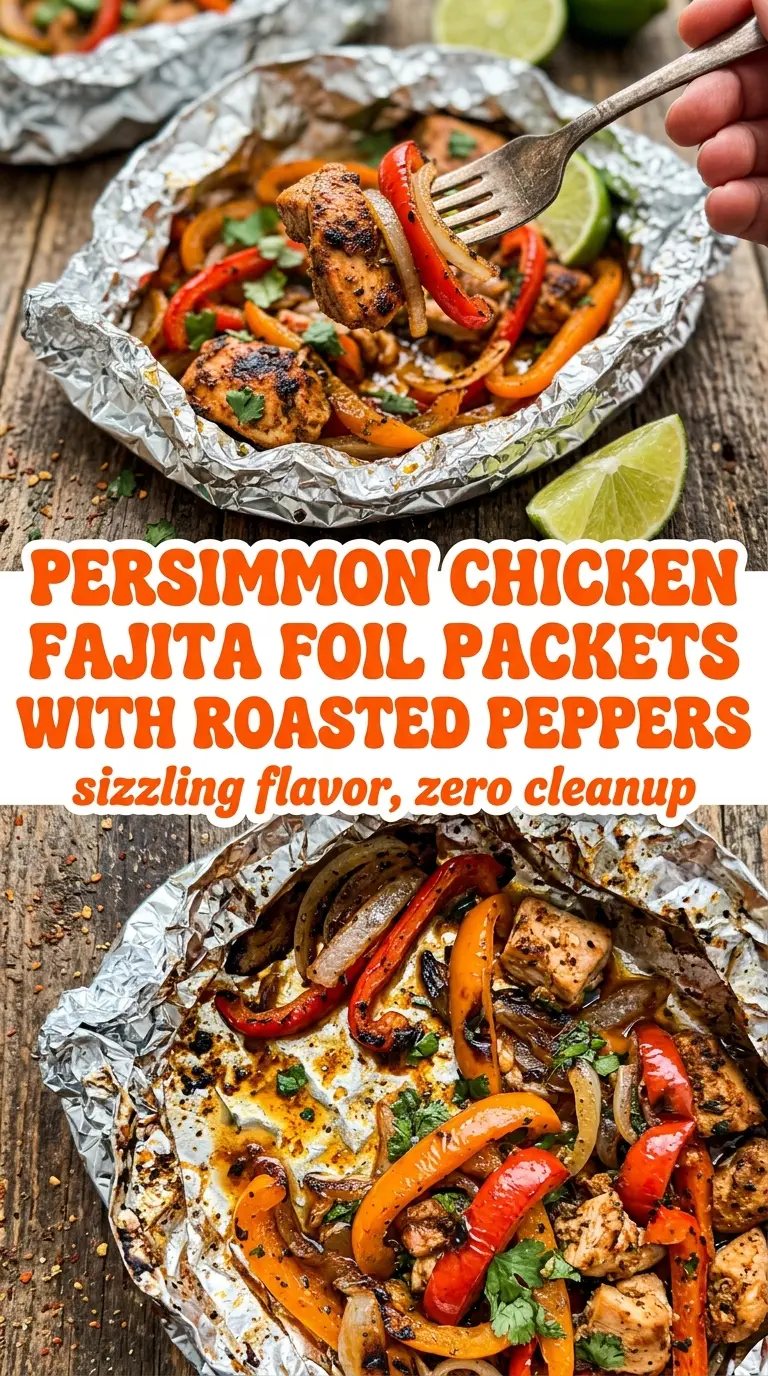
- Heavy-duty foil — Regular foil tears too easily once you start folding and moving the packets. Heavy-duty gives you a tighter seal and fewer leaks over the grill or coals.
- Chicken breasts — Boneless breasts cook fast and slice cleanly into strips. Thighs work too, but they need a little more time and will give you a richer, juicier result.
- Bell peppers — Use sturdy peppers that hold their shape. Red, orange, or yellow bring more sweetness than green, which helps balance the smoky seasoning.
- Fajita seasoning — This is where most of the flavor comes from, so use one you like. If your blend is salt-heavy, cut back on added salt until you taste the finished filling.
- Lime — The lime slices steam inside the packet and perfume the chicken without making it taste sharp. A squeeze after cooking works too, but the sliced lime gives you a softer, rounder citrus note.
How to Build the Packets So Everything Finishes at the Same Time
Cut Everything to the Same Thickness
Slice the chicken and vegetables into even strips before anything hits the foil. Thin ends of chicken dry out fast, and thick onion wedges stay crunchy long after the peppers have collapsed, so the goal is uniform pieces that cook at the same pace. If the chicken pieces are much thicker than the peppers, the chicken will still be safe by the time the vegetables are gone soft.
Season in the Foil, Not in a Bowl
Once the ingredients are divided among the foil sheets, drizzle on the olive oil and seasoning right in the packet. A gentle toss inside the foil keeps the juices from escaping and coats everything without dirtying an extra dish. The oil helps the seasoning cling and keeps the chicken from drying against the hot metal.
Seal for Steam, Not for Crushing
Fold the edges over twice so the packet closes tightly, but leave a little room inside. That small pocket of air is what turns the packet into a mini steamer and keeps the chicken tender. If you press the foil directly onto the food, the vegetables lose texture and the chicken can stick to the foil where it touches the hottest spots.
Cook Until the Chicken Is Done, Not Until the Foil Looks “Ready”
Grill over medium-high heat or over campfire coals for 20 to 25 minutes, depending on how thick the chicken strips are and how hot your fire runs. The packet should puff slightly, and when you open one corner, the chicken should be opaque all the way through with no pink at the center. If the vegetables look done but the chicken isn’t there yet, close the packet and give it a few more minutes instead of guessing.
Three Ways to Adapt These Foil Packets Without Losing the Point
Oven-Baked Fajita Packets
If you don’t have a grill, bake the sealed packets on a sheet pan at 400°F. You’ll lose the smoky edge you get from the grill, but the chicken stays juicy and the vegetables soften in the same concentrated steam. The packets will need a few extra minutes in the oven, especially if your chicken strips are on the thick side.
Dairy-Free and Naturally Gluten-Free
This version already works for both dairy-free and gluten-free eaters as written, which is part of why it’s such a dependable dinner. Just check your fajita seasoning blend if it came from a spice mix with hidden flour or dairy powder, then serve with corn tortillas or rice instead of flour tortillas if needed.
Swap in Chicken Thighs for a Richer Filling
Boneless thighs bring more richness and stay forgiving if your grill runs hot, but they take a little longer than breasts. The result is softer, juicier meat with a deeper chicken flavor, which works especially well if you’re serving the packets straight into tortillas.
Storage and Reheating
- Refrigerator: Store leftovers in an airtight container for up to 3 days. The peppers soften more after chilling, but the flavor stays good.
- Freezer: Freezing cooked foil packet fajitas isn’t ideal because the vegetables turn soft and watery when thawed. If you need to prep ahead, freeze the raw seasoned chicken and vegetables separately, then assemble and cook fresh.
- Reheating: Reheat gently in a skillet over medium-low heat or in a covered dish in the oven. High heat dries out the chicken fast and turns the peppers mushy, so warm just until the filling is hot through.
Answers to the Questions Worth Asking
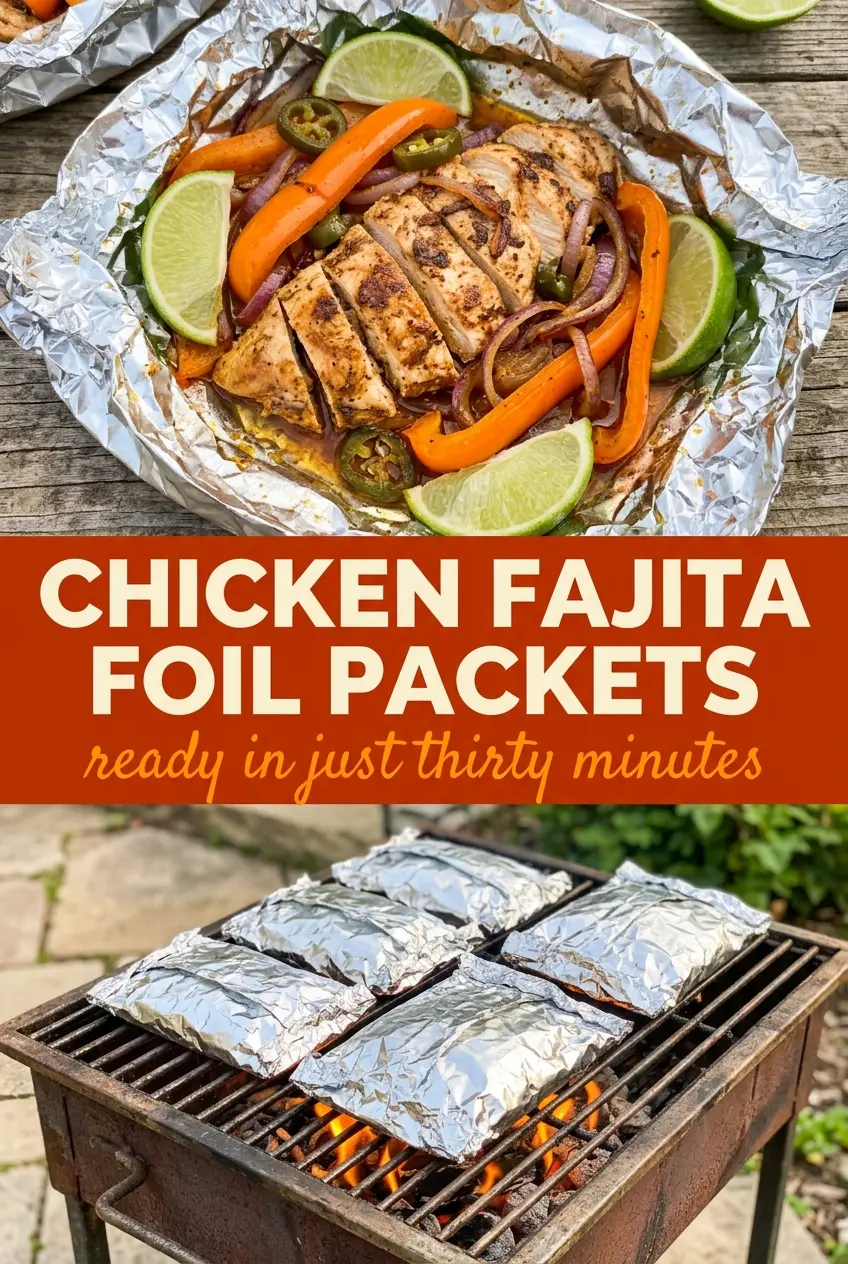
Chicken Fajita Foil Packets
Ingredients
Equipment
Method
- Lay out four large sheets of heavy-duty foil.
- Divide the sliced chicken, bell peppers, and onion evenly among the four foil sheets.
- Drizzle with olive oil and sprinkle with fajita seasoning, salt, and pepper, then toss gently within the foil.
- Top each packet with a few lime slices.
- Seal each foil packet tightly by folding the edges over twice, keeping the packet closed so steam stays inside.
- Grill the sealed packets over medium-high heat or campfire coals for 20-25 minutes, until the chicken is cooked through, with the foil starting to puff slightly.