
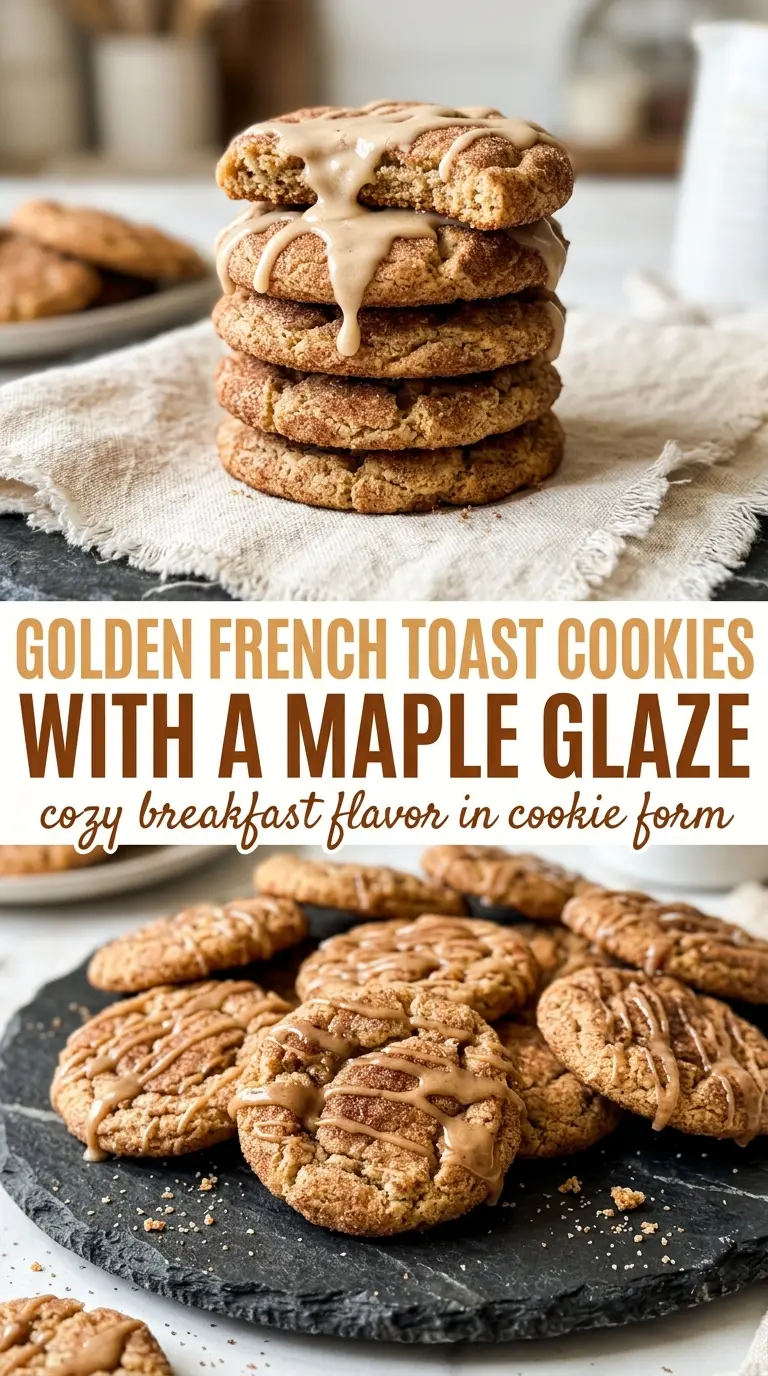
Chewy French toast cookies bake up with soft centers, lightly crisp edges, and that cinnamon-maple scent that makes the kitchen smell like a weekend breakfast. The sugar coating gives them a delicate crackle on top, and the corn syrup keeps the crumb tender long after they cool. They land somewhere between a snickerdoodle and a stack of buttery toast, which is exactly why they disappear fast.
The flavor works because the dough doesn’t try to do too much. Cinnamon and nutmeg bring the warm toast-like note, maple extract gives it that unmistakable French toast finish, and a single egg yolk keeps the texture rich without turning cakey. Light corn syrup may not sound glamorous, but it’s the ingredient that keeps these cookies pliable instead of dry and crumbly.
If you’ve ever wanted a cookie that tastes like breakfast without pretending to be a muffin, these are worth keeping around. Below, I’ll show you the small details that keep the centers soft, why the sugar roll matters, and how to change the flavor if you want them a little more maple-forward.
The sugar coating baked into a little crackly shell and the centers stayed soft for days. I used the maple extract and it made them taste exactly like French toast in cookie form.
Chewy French toast cookies with a sugar crackle are the kind of bake that disappears fast, so pin this one for the next cinnamon-sugar craving.
The Sugar Roll Is What Gives These Cookies That French Toast Finish
The sugar coating does more than look pretty. It sets up a thin, crisp shell that crackles as the cookies spread, and it helps lock in the soft center. Without it, you’d still have a good cookie, but you’d lose the sparkly, toast-like edge that makes these taste like a breakfast treat instead of a standard spice cookie.
The other thing that matters here is restraint. This dough is meant to be soft, so don’t overload it with flour when you roll it. If the dough feels sticky, chill it briefly rather than working in extra flour, because too much flour will dull the maple flavor and make the cookies dense.
What Each Ingredient Is Actually Doing in This Dish
- Unsalted butter — Softened butter whips with the sugar to create the light base that lets these cookies spread just enough. If you only have salted butter, use it and reduce the added salt a little.
- Light corn syrup — This is the chew maker. It keeps the cookies soft and pliable instead of dry and crumbly, and there isn’t a true one-to-one substitute for that texture. Honey works in a pinch, but it will taste stronger and bake a little darker.
- Maple extract — This gives the cookies their French toast character. Real maple syrup won’t hit the same way here because it adds moisture and a softer maple note; the extract is what delivers that concentrated flavor without throwing off the dough.
- Egg yolk — One yolk adds richness and tenderness without the extra water from a whole egg. A whole egg will still work, but the cookies will bake up more cake-like and less chewy.
- Cinnamon and nutmeg — These are the warm notes that make the cookies read like French toast instead of maple sugar cookies. Fresh cinnamon makes a noticeable difference, while nutmeg should stay in the background.
The Part of the Dough That Decides Whether These Stay Soft or Bake Up Dry
Building the Base
Beat the butter, granulated sugar, and brown sugar until the mixture turns pale and fluffy, about 2 to 3 minutes. That step traps air and gives the cookies a little lift, but stopping too soon leaves the dough heavy. If the butter looks greasy or slumped instead of creamy, it was too warm and the cookies may spread too much.
Adding the Wet Ingredients
Mix in the egg yolk, corn syrup, vanilla, and maple extract until the dough looks smooth and glossy. The dough may look slightly loose at this stage, which is normal; the flour will tighten it up. Don’t dump the dry ingredients in all at once and walk away, or you’ll end up with pockets of flour that bake into bitter streaks.
Keeping the Soft Texture
Stir in the flour, cinnamon, nutmeg, baking soda, and salt just until no dry patches remain. The dough should be soft and scoopable, not stiff like chilled pie dough. If it feels sticky, let it sit for 5 minutes before deciding to add anything else, because flour keeps hydrating after mixing.
Rolling and Baking for the Crackled Top
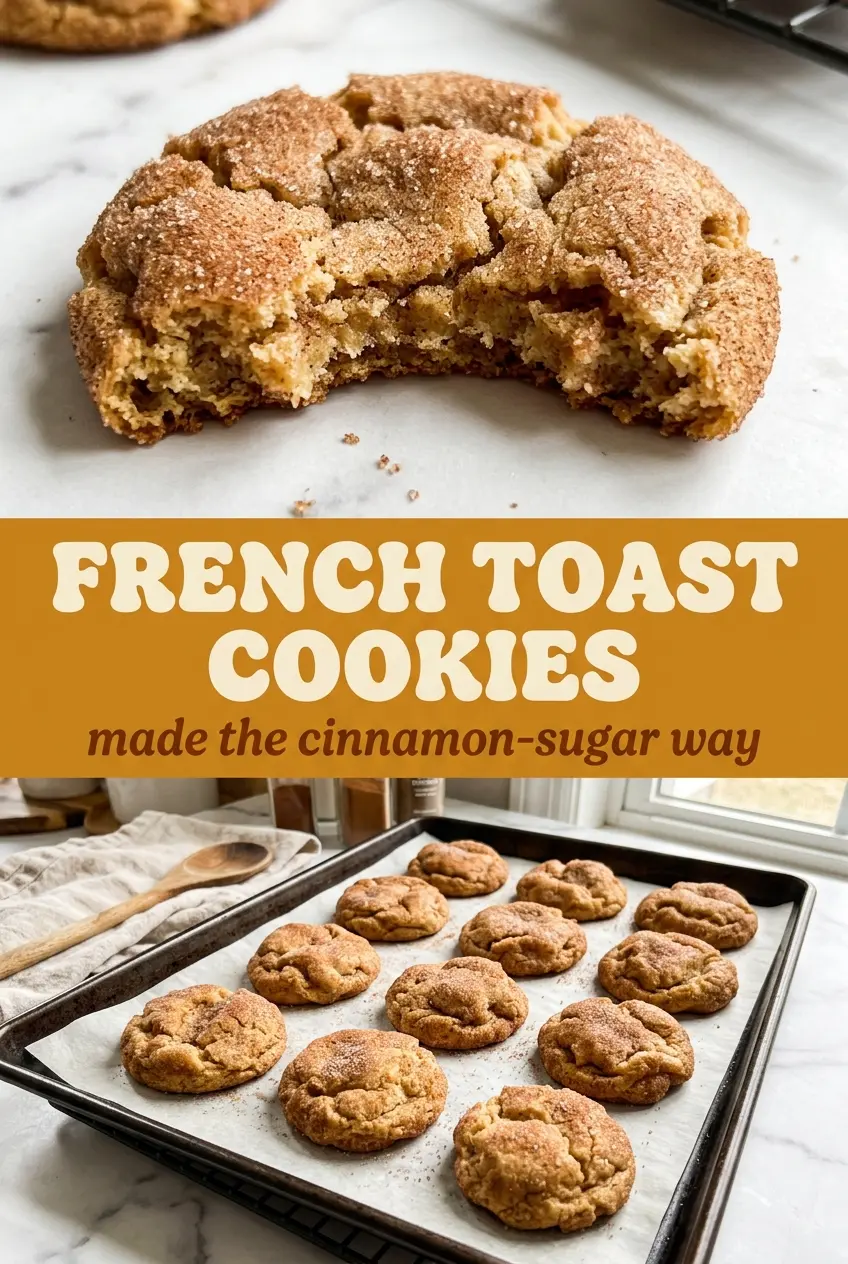
Roll the dough balls in the extra sugar, then space them 2 inches apart so they can spread without merging. Bake until the edges are set and the tops look crackled but still slightly soft in the center, which usually takes 10 to 12 minutes. Pull them early rather than late; the carryover heat finishes the center, and overbaking is what turns these from chewy to dry.
How to Change the Flavor Without Losing the Chewy Center
Extra Maple, Deeper Breakfast Flavor
Increase the maple extract by 1/4 teaspoon and keep everything else the same. That gives the cookies a stronger French toast note without changing the texture. Skip the temptation to add maple syrup on top of that, since extra liquid will soften the dough and make the cookies spread more.
Gluten-Free Version
Use a 1:1 gluten-free baking flour that includes xanthan gum. The cookies will still be chewy, but they may need an extra minute in the oven to set. Let them cool on the baking sheet for the full 2 minutes, because gluten-free dough is more fragile when it first comes out.
Dairy-Free Swap
Replace the butter with a plant-based stick butter, not a tub spread. Stick-style alternatives behave more like real butter and help the cookies hold their shape. The flavor will be a little less rich, but the chewy texture stays close to the original.
Storage and Reheating
- Refrigerator: Store in an airtight container for 5 days. The sugar coating softens a bit, but the centers stay chewy.
- Freezer: These freeze well baked or as dough balls. Freeze baked cookies in a single layer, then move them to a container; freeze dough balls on a tray and bake from frozen with an extra 1 to 2 minutes.
- Reheating: Warm a cookie in the microwave for 8 to 10 seconds or in a 300°F oven for a few minutes. Too much heat dries out the edges and steals the soft center.
Questions I Get Asked About This Recipe
Chewy French Toast Cookies
Ingredients
Equipment
Method
- Preheat the oven to 350°F and line two baking sheets with parchment paper, keeping spacing for 2-inch apart cookies.
- Beat the softened butter, granulated sugar, and light brown sugar until light and fluffy, about 2 to 3 minutes, scraping the bowl as needed.
- Mix in the large egg yolk, light corn syrup, vanilla extract, and maple extract until smooth and evenly combined.
- Whisk together all-purpose flour, ground cinnamon, ground nutmeg, baking soda, and salt, then add to the wet ingredients and mix just until the dough comes together.
- Roll the dough into 1.5-inch balls, then roll each ball in granulated sugar for a sparkly, crackled top.
- Place the cookies 2 inches apart on the prepared sheets and bake for 10 to 12 minutes, until the edges set and the tops look lightly crackled.
- Let the cookies rest on the sheets for 2 minutes, then transfer to a wire rack to finish setting while keeping the centers chewy.