
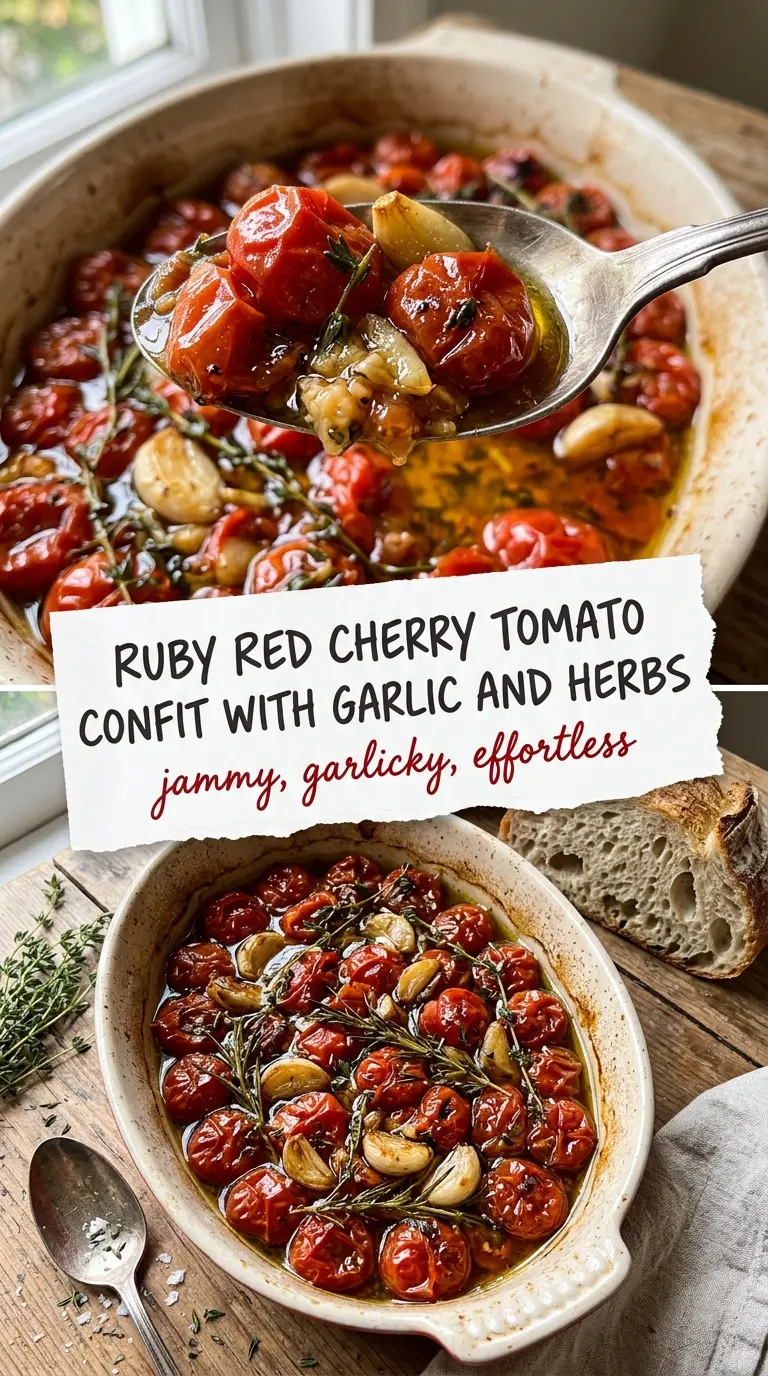
Cherry tomato confit turns a handful of tomatoes into something soft, glossy, and deeply savory, with edges that collapse into sweet little bursts and an oil that tastes like garlic, thyme, and slow-cooked summer. The low oven does the heavy lifting here. It coaxes out moisture without scorching the tomatoes, so you end up with jammy halves instead of shriveled skins or watery pan juices.
The key is plenty of olive oil and a gentle temperature. You want the tomatoes mostly submerged, not dry-roasted, because the oil protects them from the heat and catches all the flavor from the herbs and garlic. Halving the garlic keeps it mellow and fragrant instead of sharp. Fresh thyme and rosemary hold up well over a long roast, and the pinch of red pepper flakes keeps the finished confit from tasting flat.
Below, I’ve included the small details that matter most: how to know when the tomatoes are done, what to do with the infused oil, and a few practical ways to use or adapt the confit once it’s in your fridge.
The tomatoes came out perfectly jammy and the garlic mellowed out beautifully. I spooned the oil over toasted bread the next day and there wasn’t a drop left.
Save this cherry tomato confit for pasta nights, toast toppings, and easy dinners that need one spoonful of concentrated flavor.
The Slow Roast That Turns Cherry Tomatoes Jammy Instead of Dry
Most tomato confits go wrong because the heat is too high or the pan is too shallow. At a hard roast, the skins tighten before the centers soften, and you end up with wrinkled tomatoes that taste cooked but not concentrated. The low oven in this method gives the tomatoes time to collapse from the inside out. That’s what creates the silky, spoonable texture instead of a dried-out edge.
The oil matters just as much as the tomatoes. It shields the fruit from direct heat and carries the flavor of the garlic and herbs into every bite. If your tomatoes float a little instead of sitting fully submerged, that’s fine as long as most of them are coated. The goal is a gentle confit, not a fry.
What Each Ingredient Is Actually Doing in This Dish
- Cherry tomatoes — These are the whole point of the dish. Their natural sugar concentrates beautifully in a low oven, and their skins hold enough structure to keep the confit from turning to mush. Grape tomatoes work in a pinch, but they’re usually a little firmer and less juicy.
- Olive oil — Use a good olive oil here, because it becomes part of the finished dish. You don’t need the most expensive bottle in the pantry, but this isn’t the place for bland oil. The leftover oil is gold for bread, pasta, eggs, or salad dressing.
- Garlic — Halved cloves roast into soft, sweet pieces that taste mellow instead of sharp. Leave them whole if you want a gentler background note, or slice them if you want more garlic in the finished oil. Minced garlic can burn over a long roast and turn bitter.
- Fresh thyme and rosemary — These herbs stand up to the long cook better than delicate herbs would. Fresh is worth using because dried herbs can taste dusty in oil-heavy dishes. If you only have thyme, use it confidently and skip the rosemary rather than substituting dried rosemary.
- Red pepper flakes — This small amount keeps the confit from leaning too sweet. It doesn’t make the dish spicy in a loud way; it just gives the oil a little edge. Leave it out if you want the cleanest tomato-garlic flavor.
The Gentle Roast That Keeps the Garlic Sweet and the Oil Infused
Building the pan
Spread the tomatoes in a single layer so they can soften evenly. Scatter the garlic and herbs over the top, then pour in the olive oil until the tomatoes are mostly submerged. If the pan is crowded or the tomatoes are piled up, the ones in the middle steam while the outer ones roast, and the texture gets uneven.
Roasting low and slow
Slide the dish into a 300°F oven and let the tomatoes take their time. You’re looking for skins that have wrinkled, centers that have relaxed, and a pan that smells sweet, herbal, and savory all at once. If the oil starts to bubble aggressively, the oven is too hot. A confit should barely sigh in the heat, not fry.
Knowing when it’s done
At about 1 1/2 to 2 hours, the tomatoes should be collapsed and jammy, with a few still holding a little shape. The garlic should be soft enough to mash with a spoon. If the tomatoes still look firm in the center, give them more time; pulling them early leaves you with seasoned roasted tomatoes instead of confit.
How to Adapt This for Bread, Pasta, Dairy-Free Meals, or a Bigger Batch
Make it into a pasta sauce
Toss warm confit with hot pasta and a splash of starchy pasta water. The tomatoes break down into a glossy sauce without needing cream or cheese, and the infused oil helps it cling to the noodles. If you want a looser sauce, mash a few tomatoes with the back of a spoon before tossing.
Dairy-free and naturally vegetarian
This recipe is already dairy-free and vegetarian, which makes it an easy back-pocket topping for a lot of meals. Spoon it over beans, polenta, grilled vegetables, or crusty bread. The oil and herbs carry enough richness that you won’t miss anything.
Make a larger batch for the week
Double the tomatoes if you have a wide baking dish so they still sit in a single layer. Crowding adds water to the pan, which slows the concentration and leaves you with more liquid than confit. The timing may stretch a little, but the method stays the same.
Use the oil as part of the dish
Don’t pour off the oil. That’s where most of the flavor lives after the tomatoes are gone, and it’s excellent drizzled over grilled fish, eggs, or toasted sourdough. If you chill it, the oil will thicken in the fridge, then loosen again at room temperature.
Storage and Reheating
- Refrigerator: Store in an airtight container, fully covered in oil, for up to 2 weeks. The tomatoes will firm up a little when chilled, but the flavor deepens.
- Freezer: It freezes well if you portion it into small containers. Leave a little headspace, since the oil expands when frozen, and thaw overnight in the fridge.
- Reheating: Warm gently over low heat or let it come to room temperature. High heat can dull the herbs and make the tomatoes fall apart too quickly.