
Juicy chicken breasts turn into a full dinner upgrade once they’re cut with a careful pocket and stuffed with mozzarella and basil. The cheese melts inside the meat instead of running all over the pan, the basil stays bright, and the tomatoes around the skillet soften just enough to collapse into sweet little bursts beside each slice. A balsamic drizzle at the end pulls the whole plate together without making it heavy.
What makes this version work is the sequence. The chicken gets a quick sear first, which builds a golden crust and gives the oven a head start on flavor. Then the stuffed breasts finish gently in the oven, so the cheese melts before the chicken dries out. The garlic goes on the outside, where it can toast and perfume the pan, while the basil stays tucked inside and keeps its fresh edge.
Below, I’ve included the small details that keep the filling in place, the best way to handle the pocket cut, and a few swaps that still land you in the same bright, caprese-style territory.
The pockets held together better than I expected, and the mozzarella stayed inside instead of oozing everywhere. I seared them first like you said, and the chicken came out juicy with those blistered tomatoes soaking up the balsamic at the end.
Save this Caprese Stuffed Chicken for the night you want juicy chicken, melted mozzarella, and balsamic-drizzled tomatoes on one pan.
The pocket cut that keeps the cheese inside the chicken
The biggest mistake with stuffed chicken is cutting a pocket that goes too deep or stuffing it until the seam can barely close. That gives the cheese a direct escape route as soon as it melts. A shallow, side-entry pocket holds the filling in place while still leaving enough meat around the edges to seal and stay juicy.
The other detail that matters is the sear. That quick skillet time isn’t just for color. It firms up the outside so the chicken can finish in the oven without giving up all its juices, and it helps the garlic turn fragrant instead of raw.
What each ingredient is actually doing in this dish
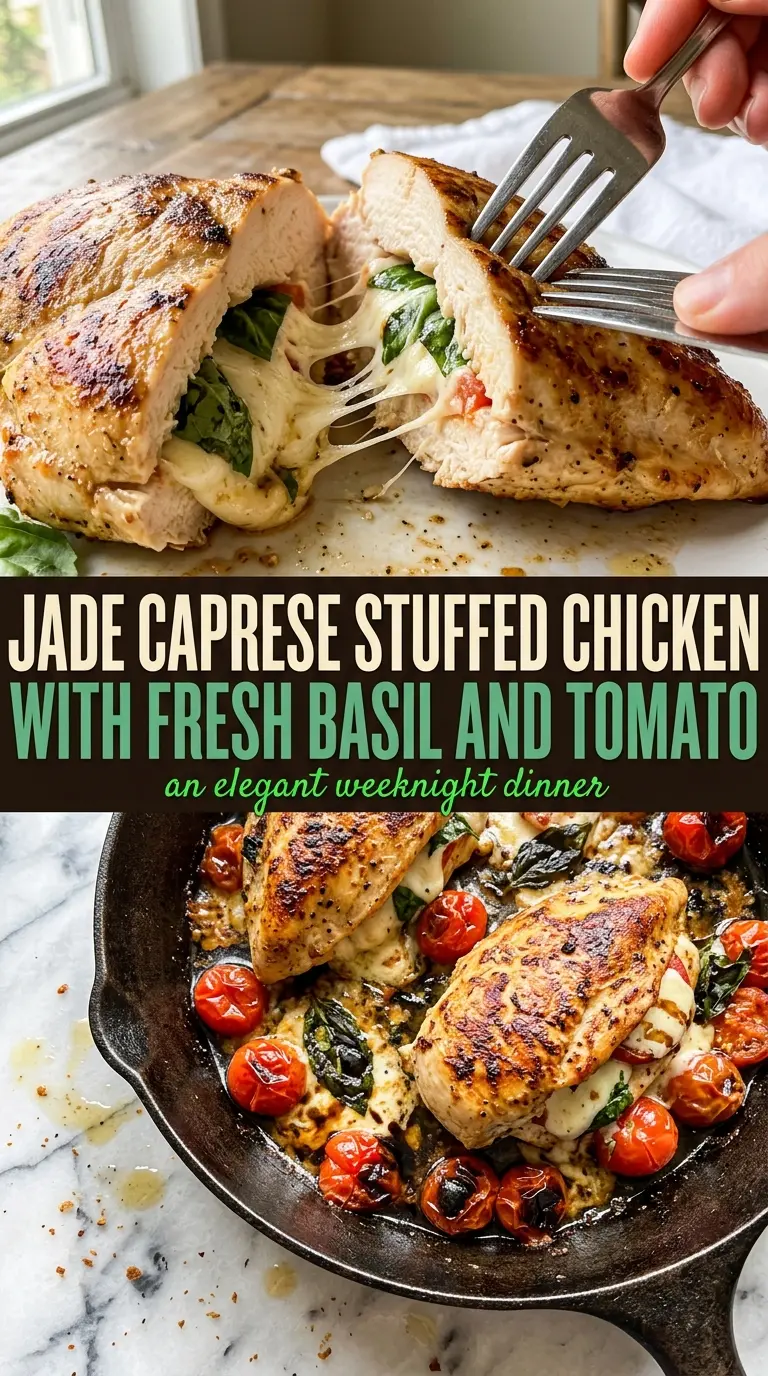
- Boneless chicken breasts — These need to be similar in size so they cook evenly. If one breast is much thicker, pound the thick end lightly before cutting the pocket. That keeps the outside from overcooking while the center finishes.
- Mozzarella — Shredded mozzarella melts smoothly and gives you that stretchy center without getting oily. Low-moisture mozzarella is the safest choice here. Fresh mozzarella can work, but it releases more liquid and leaks easier, so pat it dry and use a little less.
- Fresh basil — This is the bright caprese note that keeps the filling from tasting flat. Dried basil won’t give the same fresh finish. Chop it just before stuffing so it doesn’t darken or lose aroma.
- Cherry tomatoes — They roast fast and turn jammy without falling apart completely. Halving them helps them blister and release juices into the pan. Larger tomatoes will work, but they take longer and can water down the skillet.
- Balsamic glaze — This gives the dish its final sweet-tart finish. Use glaze, not straight vinegar, because it clings to the chicken instead of soaking into the pan. If you only have vinegar, reduce it first with a little sugar until it coats a spoon.
- Olive oil and garlic — The oil helps the chicken brown evenly, and the garlic perfumes the outside while it sears. Mince the garlic finely so it doesn’t burn in the hot pan. If it starts to brown too quickly, lower the heat before it turns bitter.
Getting the sear, bake, and finish in the right order
Cutting and stuffing the chicken
Lay each chicken breast flat and slice a pocket into the side, stopping before you cut through the other side or the top seam. You want a deep enough pocket to hold the filling, not a tunnel that gives it room to spill. Stuff each breast with mozzarella and basil, then press the opening closed with your fingers so the filling sits just inside the cut.
Building the crust in the skillet
Season the outside with salt, pepper, and garlic, then sear the chicken in hot olive oil for 3 to 4 minutes per side. The goal is a deep golden crust, not a fully cooked center. If the pan is crowded or the heat is too low, the chicken will steam instead of brown, and you’ll lose the flavor that makes this dish stand out.
Finishing in the oven
Scatter the tomatoes around the chicken and move the skillet to the oven. Bake until the chicken reaches doneness and the cheese has fully melted, usually 15 to 20 minutes depending on thickness. The best cue is a firm but not hard breast that gives a little when pressed and juices that run clear at the thickest part.
The final drizzle
Let the chicken rest for a couple of minutes, then drizzle with balsamic glaze. If you add it too early, it can slide off the hot surface instead of staying in a shiny stripe over the top. Spoon some of the pan tomatoes alongside each serving so every bite gets a little sweet acidity.
Three ways to adapt it without losing the point
Make it dairy-free
Use a dairy-free mozzarella-style shred that melts well, not a slice-and-pray substitute that turns rubbery. The texture won’t be quite as stretchy, but the basil and tomatoes still keep the same caprese-style feel. Look for one that softens cleanly under heat so it doesn’t turn greasy in the oven.
Make it gluten-free
This recipe is naturally gluten-free as written, so the main job is checking the balsamic glaze label if you’re using a store-bought version. Some brands add thickeners or flavorings you may want to avoid. The chicken, cheese, basil, and tomatoes don’t need any changes.
Swap in provolone or fontina
Provolone gives a sharper finish, while fontina melts a little silkier than mozzarella. Either one changes the flavor in a good way, but you lose the classic caprese simplicity. If you want the closest match, stick with mozzarella; if you want a deeper cheese note, provolone is the best move.
Make it for a crowd
Stuff and sear the chicken ahead of time, then keep it covered in the refrigerator until you’re ready to bake. The oven finish is the part that should happen just before serving so the cheese stays molten and the tomatoes still have some shape. A second pan can hold the same method easily if you don’t crowd the skillet.
Storage and Reheating
- Refrigerator: Store leftovers in an airtight container for up to 3 days. The chicken stays flavorful, though the cheese will set up once chilled.
- Freezer: It freezes, but the texture of the cheese changes a bit after thawing. Wrap portions tightly and freeze for up to 2 months if you don’t mind a softer, less stretchy filling.
- Reheating: Warm covered in a 325°F oven until heated through. Microwaving works in a pinch, but it can make the chicken rubbery and push the cheese out of the pocket.
Answers to the questions worth asking
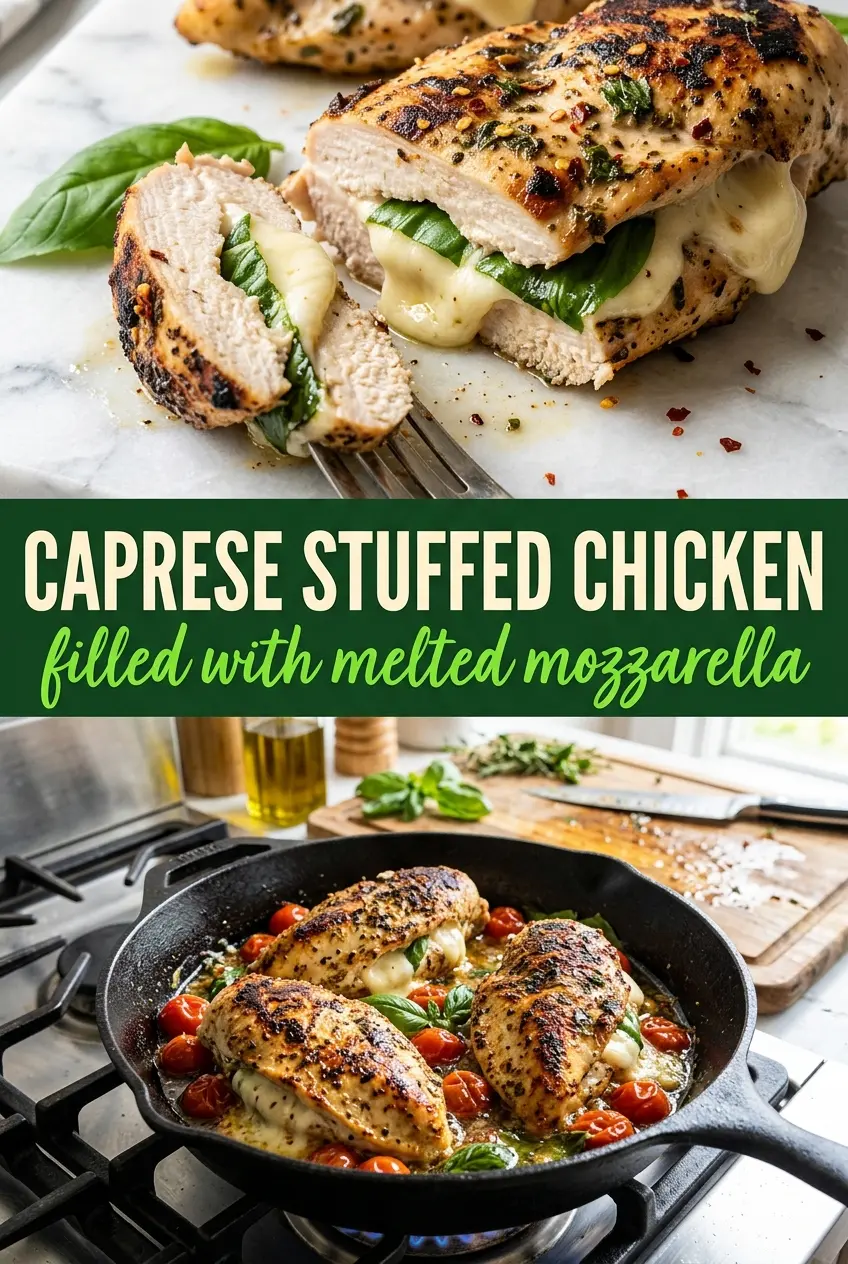
Caprese Stuffed Chicken
Ingredients
Equipment
Method
- Preheat the oven to 375°F.
- Cut a pocket into the side of each chicken breast, being careful not to slice all the way through.
- Stuff each pocket with shredded mozzarella and chopped basil.
- Season the outside with salt, pepper, and minced garlic.
- Heat olive oil in an oven-safe skillet and sear the chicken for 3-4 minutes per side.
- Scatter cherry tomatoes around the chicken and transfer the skillet to the oven.
- Bake for 15-20 minutes at 375°F, until the chicken is cooked through and the cheese is melted.
- Drizzle with balsamic glaze before serving.