
Campfire chili mac is the kind of one-pot dinner that earns a permanent place in the cooler because it comes out hearty, smoky, and clingy in all the right ways. The pasta cooks right in the chili base, so every elbow soaks up beefy tomato flavor instead of tasting like plain macaroni tossed in at the end. Finish it with cheddar and you get a pot that turns thick, saucy, and spoonable fast enough to feed a hungry group before anyone starts circling the fire for snacks.
The trick is keeping enough liquid in the pot for the pasta to cook without turning the whole thing soupy. Ground beef and onion build the base, then broth and tomatoes do double duty: they season the macaroni while also creating the sauce. Chili powder and cumin give it that campfire-friendly depth without needing a long simmer, and the cheese goes in off the heat so it melts smooth instead of turning grainy.
Below, I’ll walk through the one part that matters most: how to judge the simmer so the macaroni turns tender before the liquid cooks down too far. I also included a few smart swaps for making this work with different proteins, pans, and campsite realities.
The pasta stayed tender without getting mushy, and the cheddar melted into the sauce instead of clumping. I added a splash of broth at the end like you said and it was perfect over the campfire.
Campfire Chili Mac brings smoky beef, tender macaroni, and melted cheddar together in one pot for an easy campsite dinner worth saving.
The Part Where Chili Mac Turns from Brothy to Perfectly Clingy
The biggest mistake with chili mac is letting the pot run too dry before the macaroni is tender. If that happens, the pasta can taste undercooked in the center while the bottom starts catching on the pot. You want a steady simmer with enough liquid moving around the noodles that they can absorb broth evenly instead of steaming in a thick paste.
Ground beef adds richness, but it also leaves behind rendered fat and browned bits that help flavor the sauce. Don’t drain the pot completely unless there’s an obvious pool of grease; a little fat carries the chili powder and cumin through the whole dish. The liquid should look loose at first, then tighten into a saucy coating by the time the pasta is done.
What Each Ingredient Is Actually Doing in This Dish
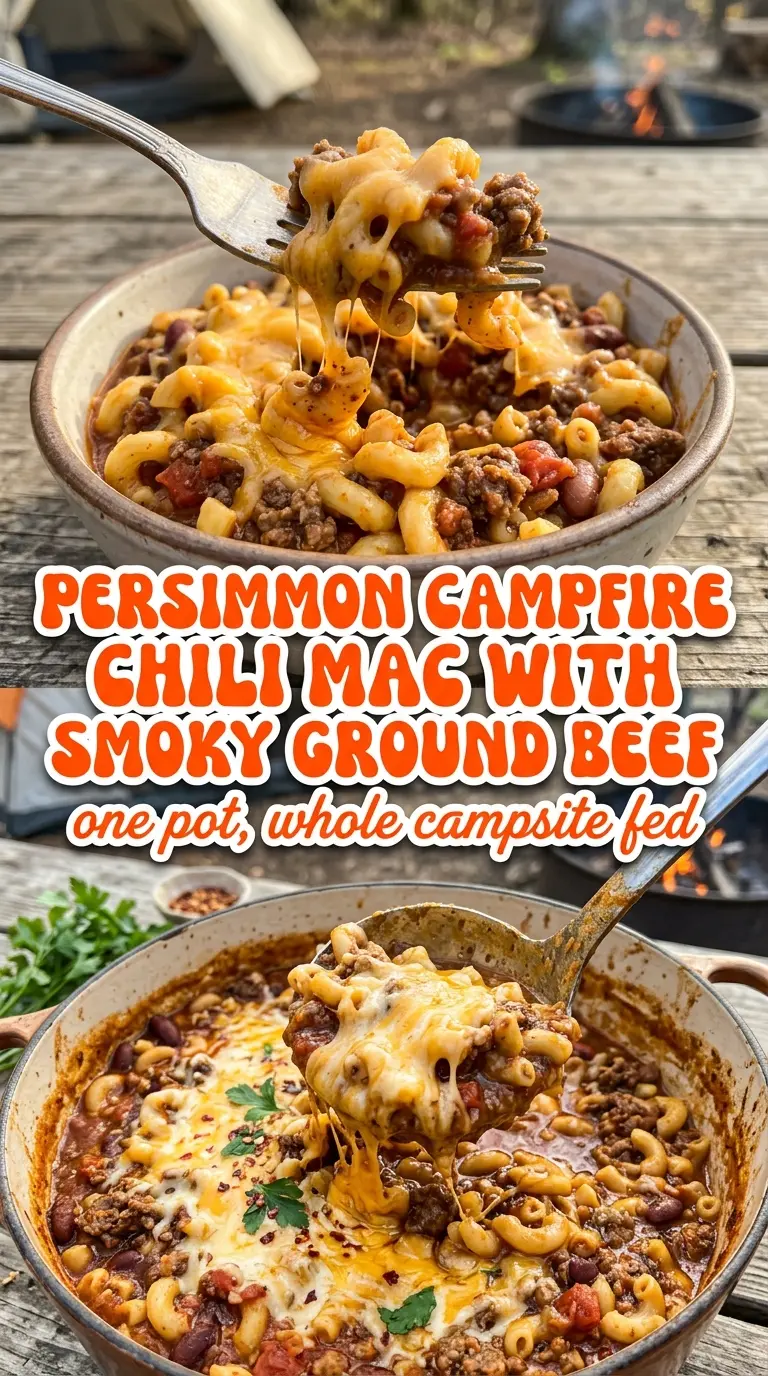
- Elbow macaroni — This shape holds the sauce in the curves and cooks at about the same pace as the simmering chili base. If you swap in another short pasta, pick one with a similar cook time so you don’t end up with broken noodles or a thin sauce.
- Beef broth — This is what lets the pasta cook in the pot without tasting flat. Water works in a pinch, but the finished dish loses depth, so use broth if you can.
- Cheddar cheese — Sharp cheddar gives the final bowl its salty, creamy finish. Shred it yourself if possible; pre-shredded cheese has anti-caking agents that can make the sauce less smooth.
- Chili powder and cumin — These do the heavy lifting on flavor without needing a long cook. Fresh spices matter here because the whole dish comes together fast, so stale chili powder will taste dusty instead of smoky.
How to Keep the Pasta Tender and the Cheese Smooth
Brown the Beef First, Not Last
Cook the ground beef with the onion until the meat has lost its pink color and you can smell the onion turning sweet at the edges. That browning gives the whole pot its base flavor, and it’s the part you can’t fake later. If the beef goes in pale and watery, the finished chili mac tastes thin no matter how much seasoning you add.
Build the Simmer Before the Pasta Goes In
Stir in the broth, tomatoes, chili powder, and cumin, then bring the pot to a true simmer before adding the macaroni. You want small, steady bubbles across the surface, not a hard boil that batters the pasta and evaporates the liquid too fast. If the mixture looks too thick at this stage, add a small splash of broth now; once the pasta starts cooking, it becomes harder to correct.
Cook the Macaroni in the Sauce
Add the macaroni and stir well so none of it sticks together or settles on the bottom of the pot. Cover and cook, stirring occasionally, until the noodles are tender and the sauce has thickened enough to coat a spoon. If the pot starts looking dry before the pasta is done, add broth a little at a time instead of all at once so you don’t wash away the seasoning.
Finish Off the Heat
Take the pot off the fire before you add the cheddar. Cheese melts cleanly when the heat is gentle; high heat can make it turn oily or grainy. Stir until the sauce looks glossy and the cheese disappears into the chili mac, then serve right away while it’s thick and steamy.
Three Ways to Make Campfire Chili Mac Work for Different Crowds
Make it dairy-free without losing body
Skip the cheddar and stir in a dairy-free shredded cheese that melts well, or leave the cheese out and finish with a spoonful of olive oil for richness. The dish will be less creamy, but the broth, beef, and tomatoes still give you a sturdy, satisfying bowl.
Swap in ground turkey or sausage
Ground turkey makes the dish lighter and a little cleaner-tasting, while sausage gives it a saltier, more seasoned edge. Turkey benefits from an extra pinch of salt or a little smoked paprika, since it doesn’t bring as much built-in flavor as beef.
Use gluten-free pasta with a tighter watch on timing
Gluten-free elbows work, but they can go from firm to soft fast, especially over campfire heat. Start checking a few minutes early and stir more often so the pasta doesn’t break down before the sauce thickens.
Stretch it for a bigger group
You can add an extra half-pound of beef and another cup of broth if you’re feeding a crowd. Keep the seasoning balanced as you scale, and watch the pot closely near the end because a larger batch can still thicken quickly once the pasta absorbs the liquid.
Storage and Reheating
- Refrigerator: Store leftovers in an airtight container for up to 4 days. The pasta will keep absorbing sauce, so it gets thicker by the next day.
- Freezer: It freezes, but the pasta softens after thawing. If you plan to freeze it, stop cooking the macaroni a minute early and cool it completely before packing it up.
- Reheating: Reheat gently on the stovetop or in the microwave with a splash of broth. High heat dries out the sauce and makes the cheese split, so warm it slowly and stir often.
Questions I Get Asked About This Recipe
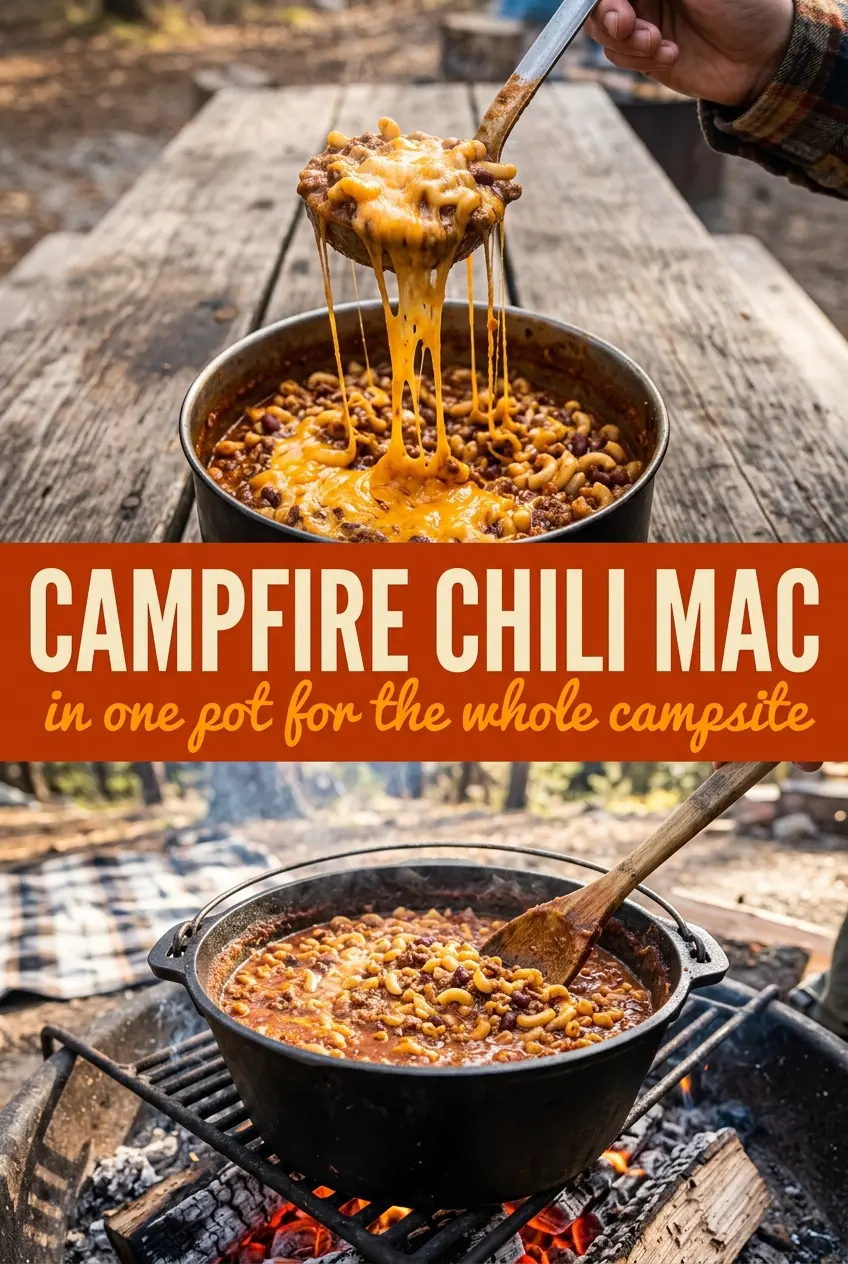
Campfire Chili Mac
Ingredients
Equipment
Method
- Heat a large Dutch oven over campfire coals, then brown the ground beef with the diced onion, stirring occasionally, until the beef is browned.
- Stir in the beef broth, diced tomatoes, chili powder, and cumin until the mixture is fully combined and bubbling at the edges.
- Add the elbow macaroni and bring the chili mixture to a simmer over the campfire coals.
- Cover and cook for 12-15 minutes, stirring occasionally, until the pasta is tender and the liquid has thickened to a chili-mac consistency.
- Stir in the shredded cheddar cheese and cook just until melted, then serve warm.