
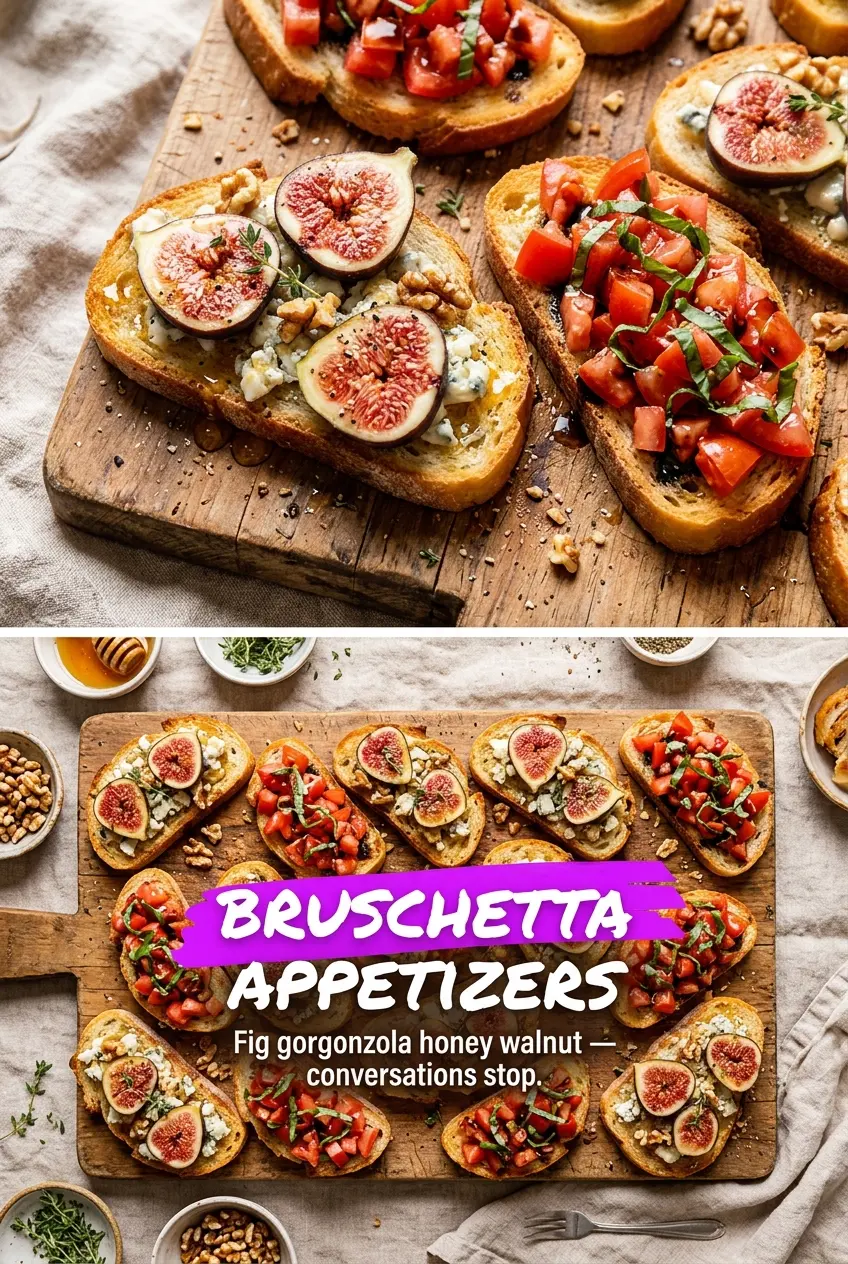
Bruschetta turns into a board worth gathering around when the toast stays crisp, the toppings stay bright, and each bite gives you a clean contrast instead of a soggy mess. The classic tomato version brings the sharp, juicy freshness everyone expects, but the fig and gorgonzola topping is the one that makes people pause for a second bite. Sweet figs, salty cheese, honey, and walnuts on garlic-rubbed bread hit every note at once.
What makes this version work is the way the bread is handled first. A quick olive-oil toast gives you a sturdy base, and rubbing the hot bread with garlic adds flavor without dumping raw garlic into the topping. That matters, because the fig bruschetta should taste lush and balanced, not sharp or muddy. The tomato mixture also benefits from a short rest, which pulls the juices together and keeps the topping from sliding off the toast.
Below, you’ll find the small details that keep both versions clean and crisp on the serving board, plus a few ways to adapt the toppings when you want to lean more savory, more sweet, or keep the whole platter moving fast.
The fig and gorgonzola combo was the first thing gone, and the honey kept it from tasting too salty. I also liked that the toast stayed crisp even after sitting on the board for a few minutes.
Save this bruschetta board for the next time you want one platter with juicy tomato, sweet figs, and salty gorgonzola on crisp garlic toast.
The Trick to Keeping Bruschetta Crisp Instead of Watery
The biggest mistake with bruschetta is building it like a salad and then acting surprised when the bread turns soft. Tomatoes need a little time with salt, basil, garlic, and olive oil so they can season themselves before they hit the toast, but that liquid has to stay in the bowl until the last minute. Spoon the topping on, serve right away, and the bread stays crunchy enough to support each bite.
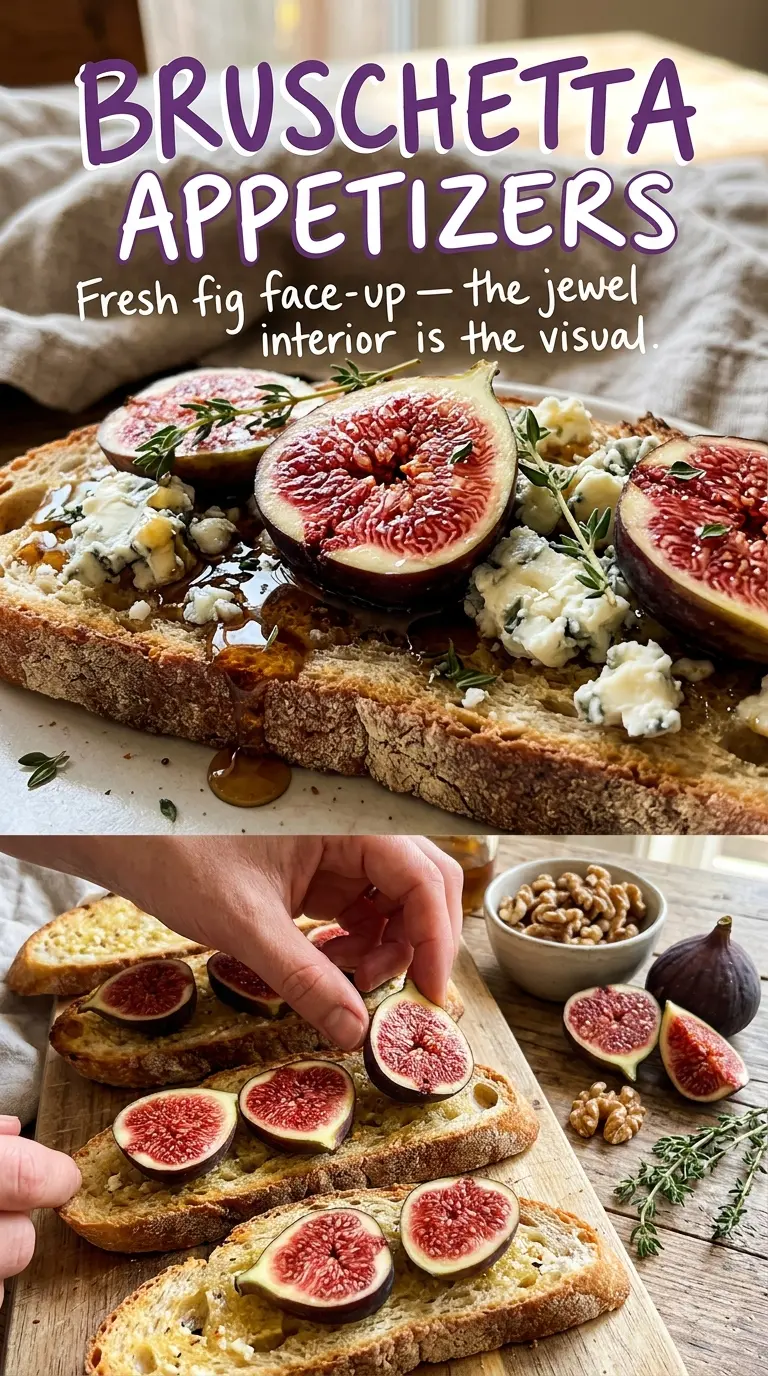
The fig version has the opposite problem. Fresh figs can go mushy if they sit around once they’re cut, so you want them halved, arranged cut side up, and topped close to serving time. The gorgonzola and honey bring enough richness that you don’t need much else. If the cheese is cold and crumbly and the figs are ripe but still intact, you get that soft-yet-clean bite that makes this topping stand out.
What Each Ingredient Is Actually Doing in This Bruschetta Board
- Baguette — A baguette gives you thin slices with enough structure to hold both toppings without collapsing. Cut it on a diagonal for more surface area and a better ratio of toast to topping.
- Olive oil — This is what helps the bread crisp in the oven instead of drying out. Use a decent one here because the flavor comes through on such a simple base.
- Garlic — Rubbing the hot toast with a cut clove gives you a gentler, more even garlic flavor than mixing raw garlic into the toppings. That step keeps the board fragrant instead of aggressive.
- Fresh figs — Ripe figs are worth using here because they bring a soft, jammy texture that pairs with the salty cheese. If figs aren’t in season, the fig topping loses a lot of what makes it special.
- Gorgonzola dolce — The dolce version is milder and creamier than a sharp, aged gorgonzola, which matters because you want balance with the honey and figs. Crumble it cold so it stays in little pockets instead of smearing.
- Honey and walnuts — Honey rounds out the salty edges, and walnuts add crunch that keeps the fig topping from feeling one-note. Toast the walnuts first if you have time; they taste deeper and more nutty.
- Tomatoes, basil, and balsamic — For the classic version, use ripe diced tomatoes and let them sit with the basil, garlic, olive oil, and a small splash of balsamic. The rest time lets the flavors mingle and keeps the topping from tasting flat.
Building the Board Without Losing the Crunch
Toast the bread until the edges are set
Brush the baguette slices with olive oil and toast them until the edges are lightly browned and the centers feel dry to the touch. You want enough structure that they can carry a juicy topping without bending in the middle. If the bread is pale and soft, it will go limp as soon as the tomatoes or figs hit it.
Rub in the garlic while the toast is hot
As soon as the bread comes out of the oven, rub each piece with a cut garlic clove. The heat melts the garlic just enough to perfume the toast without leaving harsh raw bits behind. If you wait too long, the bread cools and the garlic just drags across the surface instead of sinking in.
Let the tomato topping season itself
Toss the diced tomatoes with garlic, basil, olive oil, and balsamic, then let that mixture sit for about 15 minutes. The salt pulls out enough juice to coat every piece without flooding the bread, and the basil takes on a more rounded flavor. Spoon only the glossy top portion onto the toast so you don’t carry all that liquid with it.
Assemble the fig topping at the last minute
Place each fig half cut side up on the toast, then crumble the gorgonzola over the top. Drizzle with honey, scatter the walnuts, and finish with thyme. This topping looks best when the figs are still plump and the cheese stays in visible crumbles, not after it’s been sitting long enough to bleed together.
Three Ways to Make This Bruschetta Board Work for the Table You Have
Dairy-Free Bruschetta Without Losing the Contrast
Skip the gorgonzola and lean into the tomato version, or replace the cheese with a dairy-free herbed spread that has enough tang to stand up to the figs. You’ll lose the blue-cheese bite, but the honey, walnuts, and fresh thyme still give the fig toast enough depth.
Gluten-Free Version on a Sturdier Base
Use a gluten-free baguette or a sturdy gluten-free artisan loaf sliced into similar pieces. Toast it a little longer than you would wheat bread so it firms up enough to handle the toppings, since many gluten-free breads stay softer in the center.
Make It More Savory and Less Sweet
Cut the honey back to a light drizzle and add a little extra thyme or a few cracked black pepper flakes. That shift lets the gorgonzola come forward and turns the fig toast into something closer to a wine-bar appetizer than a dessert-leaning bite.
Storage and Reheating
- Refrigerator: Store the toppings separately for up to 2 days. The toast loses its crunch if you assemble ahead, so keep bread and toppings apart.
- Freezer: Don’t freeze the assembled bruschetta. The tomato mixture and figs both turn soft and watery after thawing, and the bread won’t recover.
- Reheating: Re-crisp the toast in a 350°F oven for a few minutes if needed, then top it fresh. Microwaving is the mistake here; it softens the bread and dulls the garlic flavor.
Answers to the Questions Worth Asking
Bruschetta Appetizers
Ingredients
Equipment
Method
- Brush the baguette slices with olive oil and place them on a sheet pan. Toast at 400°F for 3-4 minutes per side until golden, then remove to a heatproof surface.
- Rub the hot toasted bread with garlic immediately after removing from the oven. This lets the garlic flavor bloom on the warm crust.
- Toss diced tomatoes with garlic, basil, olive oil, and balsamic until evenly coated. Mix just before topping so the tomatoes stay bright.
- Rest the tomato mixture for 15 minutes at room temperature. This helps the flavors mingle before spooning onto toast.
- Spoon the rested tomato mixture onto the garlic-rubbed toast. Keep the toppings mound-like so each bite has a mix of tomato and herb.
- Place one fig half on each toast with the cut side facing up. Arrange them so the jewel-red interior is visible.
- Crumble gorgonzola dolce over the figs so it catches on the surface. Distribute lightly for salty-funky-sweet balance.
- Drizzle honey over the figs, then scatter walnuts and fresh thyme on top. Finish right before serving for the best crunch.
- Arrange both versions on a board in separate sections. Serve immediately so the toast stays crisp.