
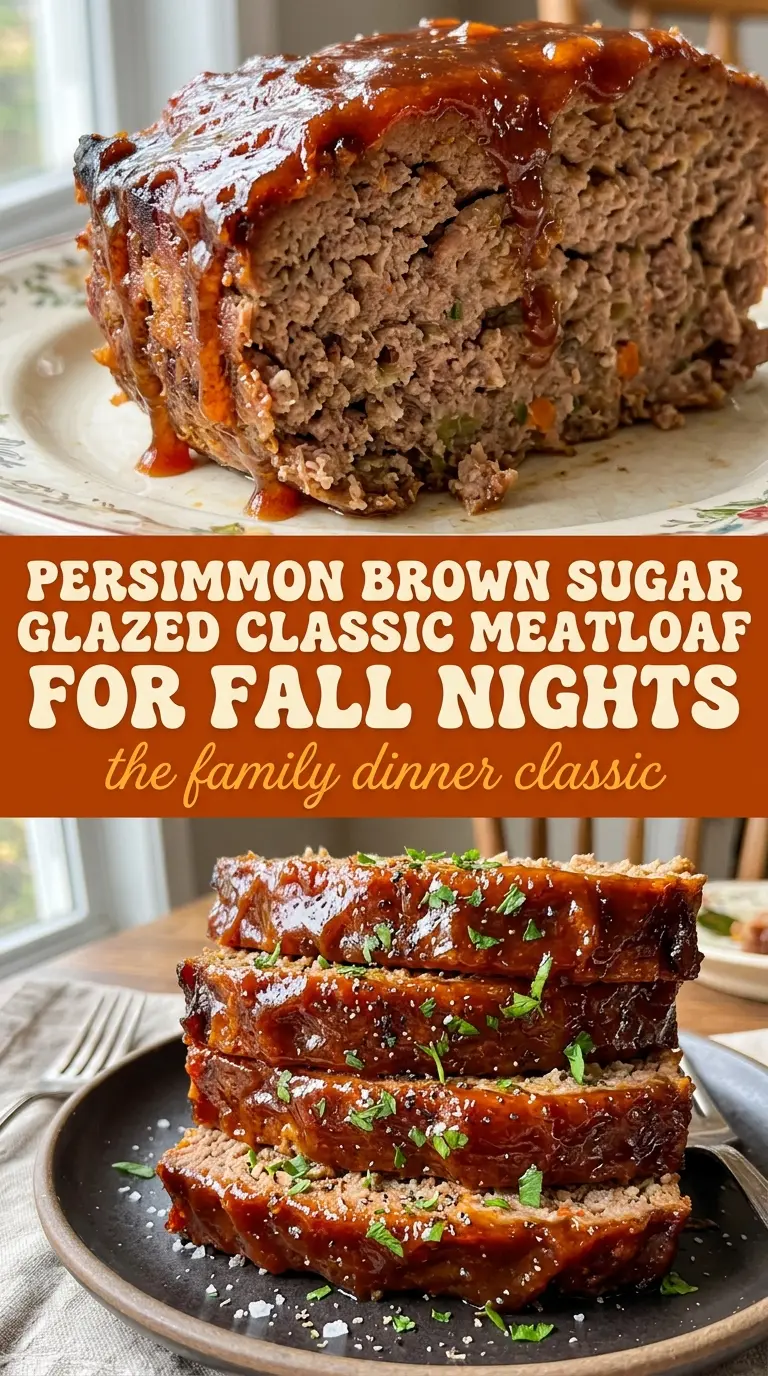
Brown sugar glazed meatloaf bakes into the kind of dinner that slices cleanly, stays juicy, and leaves behind a glossy crust that tastes like the best part of a Sunday supper. The glaze turns sticky and dark at the edges while the center stays tender instead of dense, which is exactly what you want from a classic meatloaf that earns repeat requests.
The trick is in the mix and the timing. Breadcrumbs and milk keep the loaf soft, but only if you stop mixing once everything comes together; working the beef too much turns it heavy and springy. The glaze gets brushed on in two stages so it has time to caramelize instead of sliding off into the pan, and that little bit of apple cider vinegar keeps the brown sugar from tasting flat.
Below you’ll find the one step that keeps meatloaf from crumbling on the cutting board, plus a few smart swaps if you need to work with what’s already in the pantry.
The loaf held together beautifully and the glaze got thick and sticky instead of watery. I baked it exactly as written and the center stayed juicy even after resting.
Brown Sugar Glazed Classic Meatloaf is the kind of sticky-topped dinner worth saving for a weeknight when you want leftovers that reheat well.
The Secret to Meatloaf That Slices Cleanly Instead of Falling Apart
Most meatloaf problems start before it ever hits the oven. If the mixture is overworked, the proteins tighten and the loaf turns dense. If it is under-mixed, the slices can break apart when you cut into them. The sweet spot is a mixture that looks evenly combined but still feels loose and a little shaggy when you shape it.
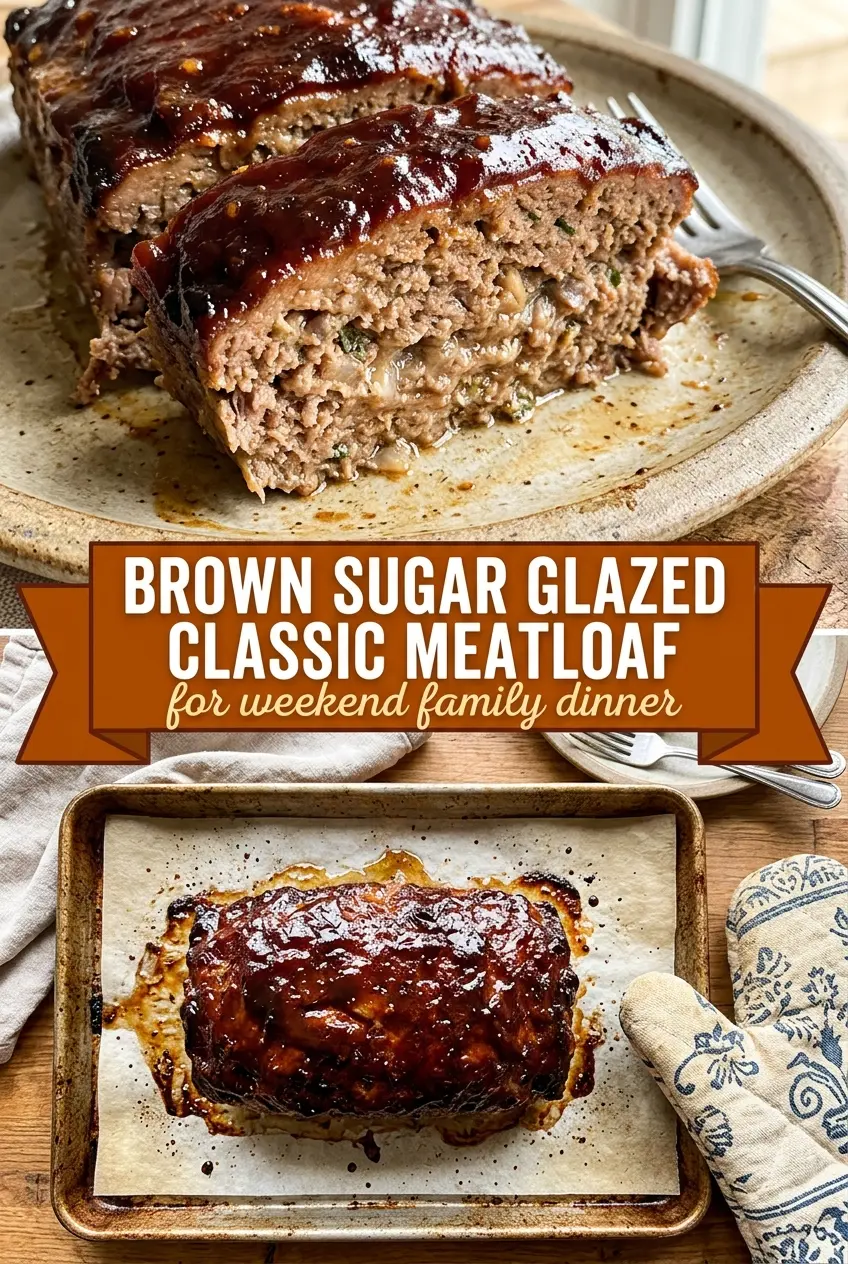
Baking it on a parchment-lined sheet instead of packing it into a loaf pan helps the sides brown and keeps the bottom from sitting in grease. That matters here because the brown sugar glaze needs a little surface drying to cling and caramelize. The rest time at the end is not optional; cut too early and the juices run out before the loaf has a chance to settle.
What Each Ingredient Is Actually Doing in This Dish
- Ground beef — An 80/20 blend gives you enough fat for a juicy slice without leaving the loaf greasy. Leaner beef can work, but the texture gets drier and more crumbly.
- Breadcrumbs and milk — This is the panade, and it is what keeps the meatloaf soft instead of compact. Plain breadcrumbs are fine; seasoned ones just add extra salt and herbs, so adjust the rest of the seasoning if you use them.
- Eggs — They bind the loaf so it holds together when sliced. If you skip them, the meatloaf is far more likely to break apart under a knife.
- Onion and garlic — These need to be diced and minced finely so they soften in the oven and melt into the loaf. Big pieces stay sharp and can throw off the texture.
- Worcestershire sauce — This adds the savory depth that keeps the loaf from tasting one-note. There is no perfect substitute, but soy sauce can stand in in a pinch; use a little less because it is saltier.
- Ketchup, brown sugar, and apple cider vinegar — This glaze is the whole point. Ketchup gives body, brown sugar turns sticky and lacquered, and vinegar keeps it from tasting cloying while helping it caramelize.
How to Build the Loaf So It Stays Tender Under That Glaze
Mix the base just until it comes together
Combine the beef, breadcrumbs, eggs, milk, onion, garlic, Worcestershire sauce, salt, and pepper in a large bowl and stop mixing as soon as you no longer see dry pockets. If you keep going, the beef tightens and the finished loaf turns heavy. Cold hands help here because they keep the fat from softening too fast while you work.
Shape it on a sheet, not in a tight pan
Form the mixture into a loaf shape on a parchment-lined baking sheet. A loaf pan traps steam, which softens the exterior instead of letting it brown. On a sheet pan, the glaze can cling to the top and the sides can firm up without becoming greasy.
Brush on the glaze in two rounds
Whisk the ketchup, brown sugar, and apple cider vinegar until smooth, then brush half over the loaf before it goes into the oven. The first layer sets up a base, and the second layer added near the end builds that dark, sticky finish. If you brush it all on at once, the sugar can slide around before it has a chance to caramelize.
Bake until the center is cooked but still supple
Bake for 45 minutes, brush on the remaining glaze, then bake another 15 to 20 minutes until the loaf is cooked through. The best cue is a browned, glossy top with juices that run clear around the edges. Let it rest for 10 minutes before slicing so the juices stay in the meat instead of pooling on the board.
How to Adapt This for Different Pans, Diets, and Leftovers
Gluten-Free Meatloaf
Swap the breadcrumbs for certified gluten-free breadcrumbs or crushed gluten-free crackers. The texture stays close to the original, though crackers can make the loaf a touch saltier, so season with a lighter hand.
Dairy-Free Version
Use unsweetened non-dairy milk in place of regular milk. The loaf still stays tender because the liquid is there to hydrate the breadcrumbs, not add a strong dairy flavor.
Turkey Meatloaf
Ground turkey works, but it needs the full amount of breadcrumb mixture and you should pull it as soon as it reaches temperature so it doesn’t dry out. The flavor is milder, so the glaze matters even more here.
Storage and Reheating
- Refrigerator: Store sliced or whole, covered, for up to 4 days. The glaze firms up a bit in the fridge, but the flavor deepens.
- Freezer: It freezes well. Wrap slices tightly or freeze the whole cooled loaf, then thaw in the refrigerator before reheating.
- Reheating: Reheat covered in a 300°F oven with a splash of water or broth in the pan until warmed through. High heat dries out the edges before the center gets hot.
Answers to the Questions Worth Asking
Brown Sugar Glazed Classic Meatloaf
Ingredients
Equipment
Method
- Preheat the oven to 350°F and line a baking sheet with parchment paper.
- Set the lined baking sheet near your mixing area so you can shape the loaf right away.
- In a large bowl, combine ground beef, breadcrumbs, eggs, milk, onion, garlic, Worcestershire sauce, salt and pepper, and mix until just combined.
- Shape the mixture into a loaf on the prepared baking sheet.
- Whisk together ketchup, brown sugar, and apple cider vinegar for the glaze, then brush half over the loaf.
- Bake at 350°F for 45 minutes, until the glaze looks set and slightly thickened.
- Brush with the remaining glaze and bake for another 15–20 minutes, until cooked through and the top is deeply caramelized.
- Let the meatloaf rest for 10 minutes before slicing so the juices settle.