
Brown butter gives pumpkin bread the kind of depth regular melted butter just can’t touch. The loaf still bakes up moist and tender, but the flavor lands with a toasted, nutty note that makes each slice taste a little more developed and a lot more worth baking. The crumb stays soft without turning gummy, and the top takes on a deep golden color that hints at what’s inside.
The key is letting the butter cool before it hits the sugar and pumpkin. If it’s still hot, it can scramble the eggs and throw off the texture before the batter even gets to the oven. A light-colored saucepan helps you see the butter change from foamy to amber brown, and that step matters because you want browned milk solids, not burned ones. The warm spices are restrained here on purpose; the browned butter does part of the work that heavy spice mixes usually try to cover.
Below, I’ve included the one stage most people rush, the ingredient notes that actually change the outcome, and a few ways to adapt the loaf without losing that toasty flavor.
The brown butter made this taste much richer than my usual pumpkin bread, and the center baked up perfectly moist without sinking. I also liked that the spice level was balanced instead of overpowering the pumpkin.
Brown butter pumpkin bread with a nutty crust and soft, spiced crumb is the one to pin for easy breakfasts or afternoon coffee.
The Reason Brown Butter Matters More Than Extra Spice
Pumpkin bread can taste flat when the base is all pumpkin and cinnamon. Brown butter fixes that problem by adding toasted milk solids and a little caramel edge, which gives the loaf a deeper, almost bakery-style flavor without making it taste like dessert cake. That matters because pumpkin puree brings moisture, not much flavor on its own. The butter does the heavy lifting here.
The other thing people miss is that brown butter changes the batter temperature. If you rush it and use it while it’s still hot, the sugar starts dissolving unevenly and the eggs can cook on contact. Letting it cool back to room temperature keeps the batter smooth and gives you a loaf that rises evenly instead of baking with dense streaks near the center.
What Each Ingredient Is Actually Doing in This Loaf
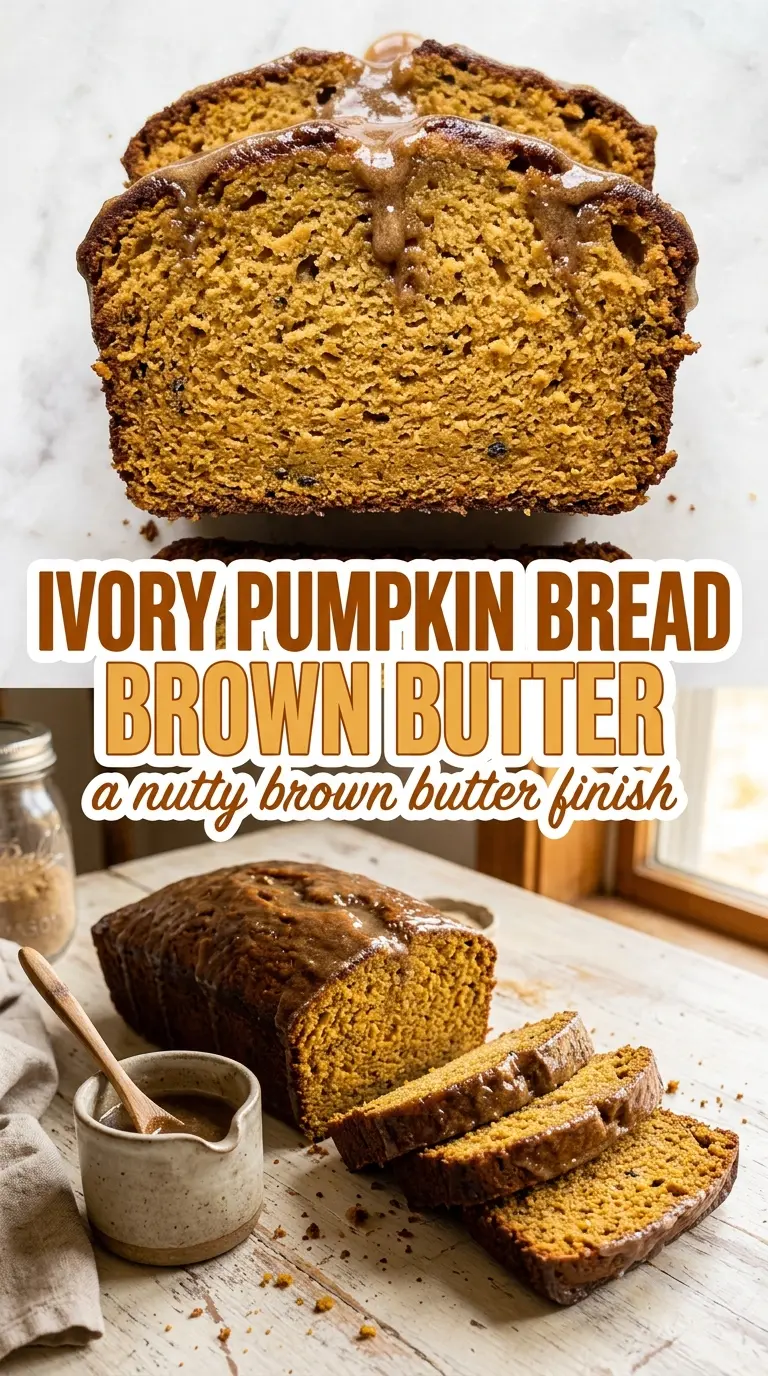
- Unsalted butter — This is where the flavor starts. Browning it concentrates the milk solids and adds that toasted, nutty note you can’t fake with vanilla or extra spice. Use unsalted so you control the salt level after browning.
- Pumpkin puree — Use plain pumpkin puree, not pumpkin pie filling. The puree brings moisture, body, and that earthy pumpkin flavor, but it needs the browned butter and spices to really come alive.
- All-purpose flour — This gives the loaf structure without making it heavy. If you swap in too much whole wheat flour, the bread gets denser and a little dry, so keep any whole grain swap small.
- Baking soda — It reacts with the acidic elements in the batter and helps the loaf rise. If your bread sinks in the middle, old baking soda is often the reason.
- Eggs — They bind everything and help the bread set with a tender crumb. Room-temperature eggs blend more smoothly with the cooled brown butter mixture.
- Sugar — The amount looks high, but it’s doing more than sweetening. It helps lock in moisture and gives the loaf that soft, sliceable texture that stays good for days.
- Cinnamon and nutmeg — These are the background players, not the headline. They support the pumpkin and browned butter without crowding them out.
- Water — It loosens the batter just enough to keep the crumb soft. You can replace it with milk for a slightly richer loaf, but the result won’t be quite as light.
The Part Where the Batter Comes Together Cleanly
Brown the butter slowly
Use a light-colored saucepan so you can see the milk solids change from pale foam to golden brown. Stir often and watch for a nutty smell; that’s your signal, not the clock. The butter can go from browned to burned in a matter of seconds once the solids darken, so pull it off the heat as soon as it reaches a deep amber color.
Cool before mixing anything else
Pour the browned butter into a heatproof bowl and let it come back to room temperature. If it’s warm enough to feel hot on your finger, it’s still too hot for the eggs and pumpkin. This cooling step keeps the batter smooth and prevents streaks of cooked egg or oily pockets in the finished loaf.
Fold, don’t beat
Once the wet ingredients are whisked together, add the dry ingredients and stir only until the flour disappears. Overmixing builds too much gluten and turns quick bread tough and tunnel-filled. A few small streaks of flour are better than a batter that’s been worked into a paste.
Bake until the center is just set
Divide the batter evenly between the pans and bake until a toothpick comes out mostly clean, with a few moist crumbs attached. That’s the sweet spot for pumpkin bread; a totally dry tester usually means the loaf went a little too far and will eat more crumbly the next day. If the tops brown before the centers are done, tent loosely with foil for the last stretch of baking.
Three Ways to Adapt This Without Losing the Good Part
Dairy-Free Brown Butter Style
True brown butter depends on dairy milk solids, so a direct dairy-free swap won’t taste exactly the same. For a close version, use a high-quality plant-based butter that browns well if yours does, or use melted vegan butter and add a teaspoon of maple syrup for a little toasted depth. The loaf will still be moist and spiced, but it won’t have quite the same nutty finish.
Gluten-Free Version
Use a cup-for-cup gluten-free flour blend that includes xanthan gum. The texture will be a touch more tender and a little less springy, but the browned butter flavor still comes through. Let the batter rest for 10 minutes before baking so the flour can hydrate and the crumb doesn’t turn gritty.
Add-ins for a More Bakery-Style Loaf
Fold in up to 1 cup of chopped toasted pecans or chocolate chips after the dry ingredients are almost fully mixed. Pecans echo the browned butter and make the loaf taste deeper and more toasted, while chocolate chips push it into dessert territory. Don’t add much more than a cup or the batter gets crowded and bakes unevenly.
Storage and Reheating
- Refrigerator: Store tightly wrapped for up to 5 days. The crumb stays moist, though the browned butter flavor gets a little more pronounced after a day.
- Freezer: This bread freezes well. Wrap individual slices or whole loaves tightly in plastic, then foil, and freeze for up to 3 months.
- Reheating: Warm slices in a 300F oven for 8 to 10 minutes or toast them lightly. The common mistake is microwaving too long, which makes the crumb rubbery instead of soft.
Answers to the Questions Worth Asking
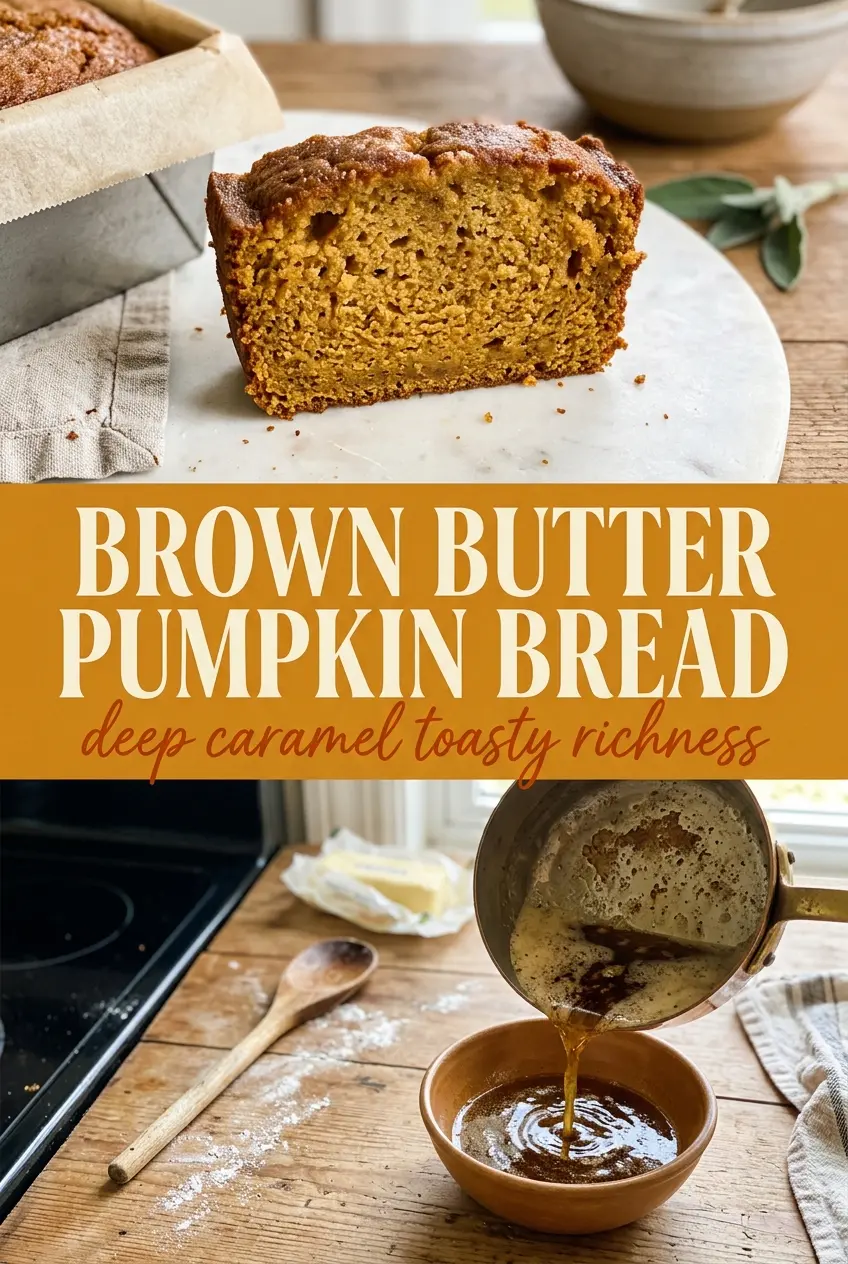
Brown Butter Pumpkin Bread
Ingredients
Equipment
Method
- Melt the butter in a light-colored saucepan over medium heat, stirring often, until it turns golden brown and smells nutty, about 6-8 minutes.
- Pour the brown butter into a heatproof bowl and let cool to room temperature, about 15 minutes.
- Preheat the oven to 350F and grease two 9x5-inch loaf pans.
- Whisk together the flour, nutmeg, baking soda, salt, and cinnamon in a bowl.
- Whisk the sugar and cooled brown butter together, then add the pumpkin puree, eggs, water, and vanilla.
- Fold the dry ingredients into the wet mixture until just combined.
- Divide the batter between the prepared pans and bake for 55-62 minutes, until a toothpick inserted comes out mostly clean.