
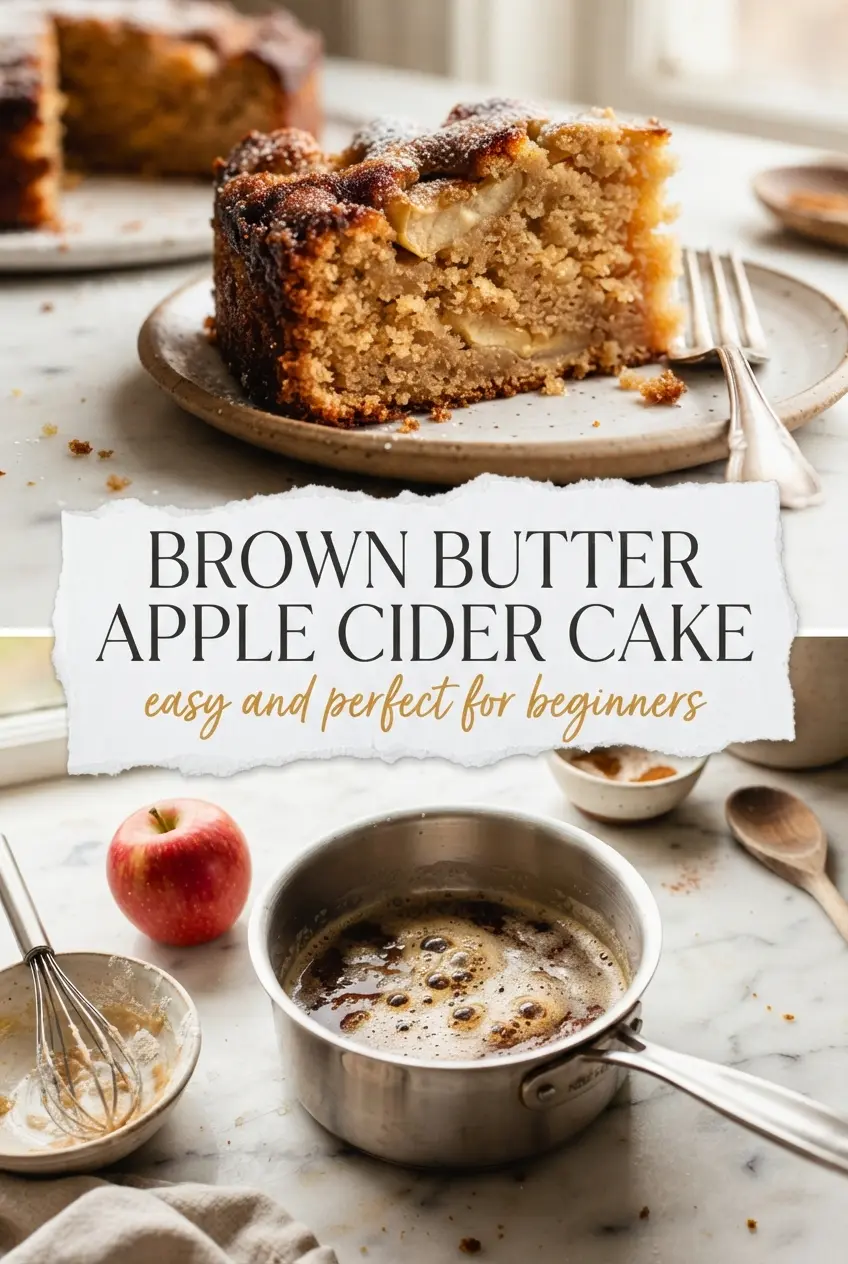
Brown butter and apple cider give this cake a deep, caramel-like flavor that tastes like it took far more effort than it did. The edges bake up crackly and golden, while the center stays soft and tender with just enough structure to slice cleanly. It’s the kind of cake that disappears one square at a time, then somehow keeps getting cut into until the pan is empty.
The trick here is reducing the cider before it goes into the batter. That concentrates the apple flavor without adding extra liquid, so the crumb stays balanced instead of turning loose or gummy. Browning the butter matters just as much. You’re not just melting it — you’re toasting the milk solids until they smell nutty and look amber, which gives the cake its warm depth.
Below, I’ve included the part that matters most: how to keep the brown butter from going too far, what the reduced cider should look like, and a few smart swaps if you need to work with what’s already in your kitchen.
The cider flavor came through beautifully, and the browned butter made the cake taste almost toffee-like. Mine baked up with those crackly edges exactly at 38 minutes, and the center stayed soft without sinking.
Save this brown butter apple cider cake for the days when you want crackly edges, a soft crumb, and a big hit of browned-butter flavor.
The Part Most Cakes Get Wrong: Building Flavor Before the Batter Does
With a cake this simple, every ingredient has a job, and the flavor is built before the pan ever goes into the oven. Browned butter gives you nutty depth, but it also cools down and firms up as it rests. If you rush it into the eggs while it’s still hot, you can scramble them or make the batter greasy.
Reducing the cider is the other piece people skip. Unreduced cider adds water, and water dilutes the flavor while making the crumb less tender and more spongy. You want the cider to taste concentrated and almost syrupy at the end, even if it still pours easily.
- Unsalted butter — Brown it for flavor, not color alone. Unsalted butter lets you control the salt in the batter, and the browning step gives you that toasted, nutty backbone you can’t fake with melted butter.
- Apple cider — Reduce it from 1½ cups to ¾ cup so the apple flavor stays bold after baking. Apple juice can work in a pinch, but the cake will taste flatter and less complex.
- Sour cream — This keeps the crumb moist and gives the cake a little tang, which balances the brown sugar and browned butter. Full-fat sour cream is best here; thinner dairy can make the batter too loose.
- Brown sugar — It adds moisture and a faint molasses note that fits the cider and butter. Light brown sugar is the right choice; dark brown sugar will push the cake deeper and sweeter, which can overpower the apple.
- All-purpose flour — It gives the cake enough structure to hold those crackly edges without turning dense. Cake flour makes the crumb softer, but it also loses some of the sturdy bite that works so well here.
The 20 Minutes That Matter Most in the Pan
Browning the Butter Without Burning It
Set the butter in a light-colored pan so you can watch the color change. It will foam first, then the milk solids will sink and turn golden, then amber with a nutty smell that tells you it’s ready. Pull it off the heat as soon as you see those browned bits, because the carryover heat can take it from nutty to burnt in a matter of seconds. Let it cool for about 10 minutes so it’s warm, not hot, when you mix it in.
Reducing the Cider to Concentrate the Flavor
Simmer the cider until you have ¾ cup left. It should taste more intense and a little syrupy, not boiled flat. If you start with the full amount and skip the reduction, the batter will be too wet and the apple flavor will fade during baking. Let it cool before it goes into the bowl so it doesn’t undo the work you just did with the butter.
Mixing the Batter Without Toughening It
Whisk the dry ingredients together first so the baking powder, baking soda, cinnamon, and salt distribute evenly. Then whisk the cooled brown butter with the sugar, eggs, reduced cider, sour cream, and vanilla until it looks smooth and glossy. Fold in the flour mixture just until the last streaks disappear. If you beat it hard at this stage, the cake can bake up tight instead of tender.
Baking for Crackly Edges and a Soft Center
Scrape the batter into a greased 9-inch cake pan and smooth the top. Bake at 350°F until the edges are crackly and a tester comes out with a few moist crumbs, usually 35 to 40 minutes. The center should spring back lightly when touched, but it shouldn’t feel dry. If the top browns too fast before the middle is set, your oven is running hot, so start checking a few minutes early next time.
How to Adapt This Cake Without Losing What Makes It Good
Dairy-Free Version With the Same Deep Flavor
Use a plant-based butter that browns well, then watch it carefully because some alternatives darken faster than dairy butter. Swap the sour cream for unsweetened dairy-free yogurt with a thick texture. The cake will still be rich and moist, though the browned-butter flavor will be a little softer.
Gluten-Free Option That Keeps the Crumb Tender
Use a cup-for-cup gluten-free flour blend that contains xanthan gum. The texture will be slightly more delicate, but the reduced cider and sour cream help keep it from turning sandy. Let the batter rest for 10 minutes before baking so the flour hydrates evenly.
Extra-Spiced Version for a Warmer Finish
Add a pinch of nutmeg or cardamom along with the cinnamon if you want a more spiced cake. Cardamom gives it a brighter edge, while nutmeg pushes it toward a more traditional apple-cake feel. Keep the additions light so they support the cider instead of covering it.
Storage and Reheating
- Refrigerator: Store covered for up to 4 days. The crumb stays moist, though the crackly top softens a bit by day two.
- Freezer: Freeze slices tightly wrapped for up to 2 months. Thaw at room temperature while still wrapped so condensation doesn’t make the top sticky.
- Reheating: Warm slices in a 300°F oven for 8 to 10 minutes or in short bursts in the microwave. High heat dries the edges before the center warms, so go low and slow.
Answers to the Questions Worth Asking
Brown Butter Apple Cider Cake
Ingredients
Equipment
Method
- Brown the butter in a pan for 5 minutes until amber and nutty, then cool for 10 minutes.
- Grease a 9-inch cake pan so it’s ready when the batter is mixed.
- Heat the oven to 350°F.
- Whisk the flour, baking powder, baking soda, cinnamon, and salt in a bowl.
- Whisk the brown butter, brown sugar, eggs, reduced cider, sour cream, and vanilla extract until smooth.
- Fold the dry mix into the wet mixture until just combined, keeping the batter thick.
- Bake for 35 to 40 minutes at 350°F until the edges are crackly and the cake is set.
- Cool the cake briefly in the pan, then transfer out to finish cooling before slicing.