
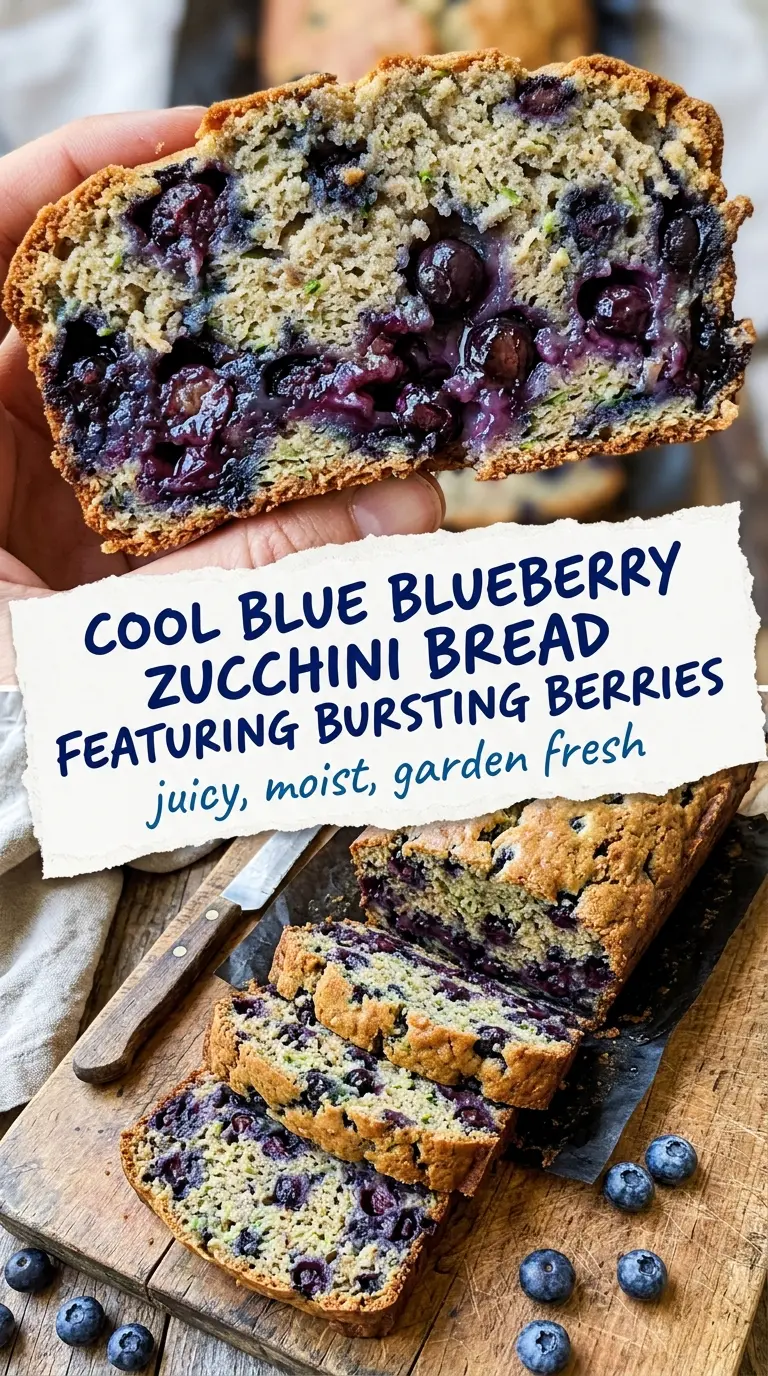
Blueberry zucchini bread bakes up with a tender, moist crumb and little bursts of juicy fruit in every slice. The zucchini disappears into the batter almost completely, but it leaves behind the kind of softness that keeps a loaf fresh for days. The blueberries add bright pockets of flavor and enough color to make each slice look as good as it tastes.
What makes this version work is the balance: just enough sugar to keep it in the quick-bread sweet spot, enough oil for a soft crumb, and zucchini that’s squeezed well so the loaf doesn’t turn heavy or gummy. The batter stays simple on purpose. Once the flour goes in, you want to stop mixing the moment it comes together, because overworking a quick bread is the fastest way to make it tough.
Below, I’ve included the small details that matter most, from keeping frozen blueberries from bleeding through the batter to the signs that tell you the loaf is actually done in the center, not just browned on top.
The loaf came out so moist and the blueberries stayed in little pockets instead of sinking to the bottom. I used frozen berries and the flour trick worked perfectly, plus it sliced cleanly after cooling.
Save this blueberry zucchini bread for the mornings when you want a tender loaf with juicy berry pockets and a no-fuss batter.
The Reason This Loaf Stays Moist Without Turning Heavy
Zucchini bread goes wrong when the batter carries too much water or gets overmixed after the flour goes in. Zucchini itself is mild and harmless, but it can dump a lot of liquid into the loaf if you skip the squeeze. That extra moisture doesn’t bake out cleanly; it turns the center dense and sometimes gives you a line of wet crumb near the bottom.
The other common mistake is treating this like cake batter and beating it smooth. Quick bread needs just enough mixing to disappear the dry streaks. Once flour is fully hydrated, stop. That keeps the loaf tender instead of tight and bready.
- Squeezed zucchini — This matters more than almost anything else in the loaf. After shredding, press it in a clean towel or paper towels until it feels damp, not wet.
- Fresh or frozen blueberries — Both work. Frozen berries hold their shape well, and you don’t need to thaw them first.
- Vegetable oil — Oil keeps the crumb soft even after the loaf cools. Melted butter gives more flavor, but it bakes a little firmer.
- All-purpose flour — The structure comes from plain all-purpose flour here. A 1:1 gluten-free blend can work, but the loaf may need a few extra minutes in the oven.
What Each Ingredient Is Actually Doing in This Loaf
Eggs give the batter its lift and help it set around the fruit. Two eggs are enough for a loaf that holds together without turning custardy.
Oil is the reason this bread stays soft on day two and day three. If you swap in butter, the crumb will taste richer but it won’t stay as plush.
Sugar does more than sweeten. It helps the crust brown and keeps the loaf from tasting flat against the mild zucchini.
Baking soda reacts with the moisture in the batter and gives the loaf its rise. If your baking soda is old, the bread can bake up squat, so use fresh soda if you want a good lift.
Blueberries bring the flavor contrast that makes each slice interesting. Tossing frozen berries with a little flour before folding them in helps stop them from bleeding through the batter.
Building the Batter Without Crushing the Berries
Whisk the wet base first
Start with the eggs, oil, and sugar and whisk until the mixture looks smooth and slightly glossy. You’re not trying to whip in much air here; you’re just dissolving the sugar enough that it blends evenly into the loaf. Once the shredded zucchini goes in, the batter will loosen a little and look a bit speckled. That’s exactly what you want.
Fold the dry ingredients just until they disappear
Add the flour and baking soda together, then stir only until the last dry streaks vanish. If you keep going, the batter tightens up and the loaf turns chewy instead of tender. Fold in the blueberries with a light hand at the end so they stay intact. A few streaks of purple are fine; smashed berries are what make the crumb muddy.
Bake until the center sets
Pour the batter into a greased loaf pan and bake at 350°F until the top is deeply golden and a toothpick comes out clean from the center. The middle should feel springy when you tap it gently, not wet or sloshy. If the top browns before the center is done, tent it loosely with foil for the last part of baking. Pull it too early and the middle will sink as it cools.
Cool before slicing
Let the loaf rest in the pan for 10 minutes, then move it to a wire rack. This gives the crumb time to set so the slices don’t collapse when you cut them. The hardest part is waiting, but a warm loaf slices poorly and releases steam that can make the crumb seem gummy. Once it’s just warm, not hot, you’ll get clean slices.
How to Adapt This for a Different Pantry or Diet
Make it gluten-free without losing the soft crumb
Use a cup-for-cup gluten-free flour blend that includes xanthan gum. The loaf may bake a little more delicately, so let it cool fully before slicing or it can crumble. The flavor stays the same, but the texture is a touch less springy.
Swap in frozen blueberries the right way
Keep the berries frozen and toss them with a spoonful of flour before folding them in. That keeps them from sinking and helps reduce blue streaking in the batter. The loaf may need a minute or two more in the oven because the berries chill the batter.
Use melted butter instead of oil for a richer loaf
Melted butter gives the bread a slightly richer flavor and a firmer bite once cool. The tradeoff is that it won’t stay as soft for as long as the oil version. If you want the best of both, use half oil and half melted butter.
Storage and Reheating
- Refrigerator: Store in an airtight container for up to 5 days. The crumb gets a little firmer in the fridge, but it stays moist.
- Freezer: This loaf freezes well. Wrap slices tightly and freeze for up to 3 months, then thaw at room temperature or in the toaster.
- Reheating: Warm individual slices in a toaster oven or microwave for a few seconds. Don’t overheat them or the berries can burst and make the bread feel wet.
Answers to the Questions Worth Asking
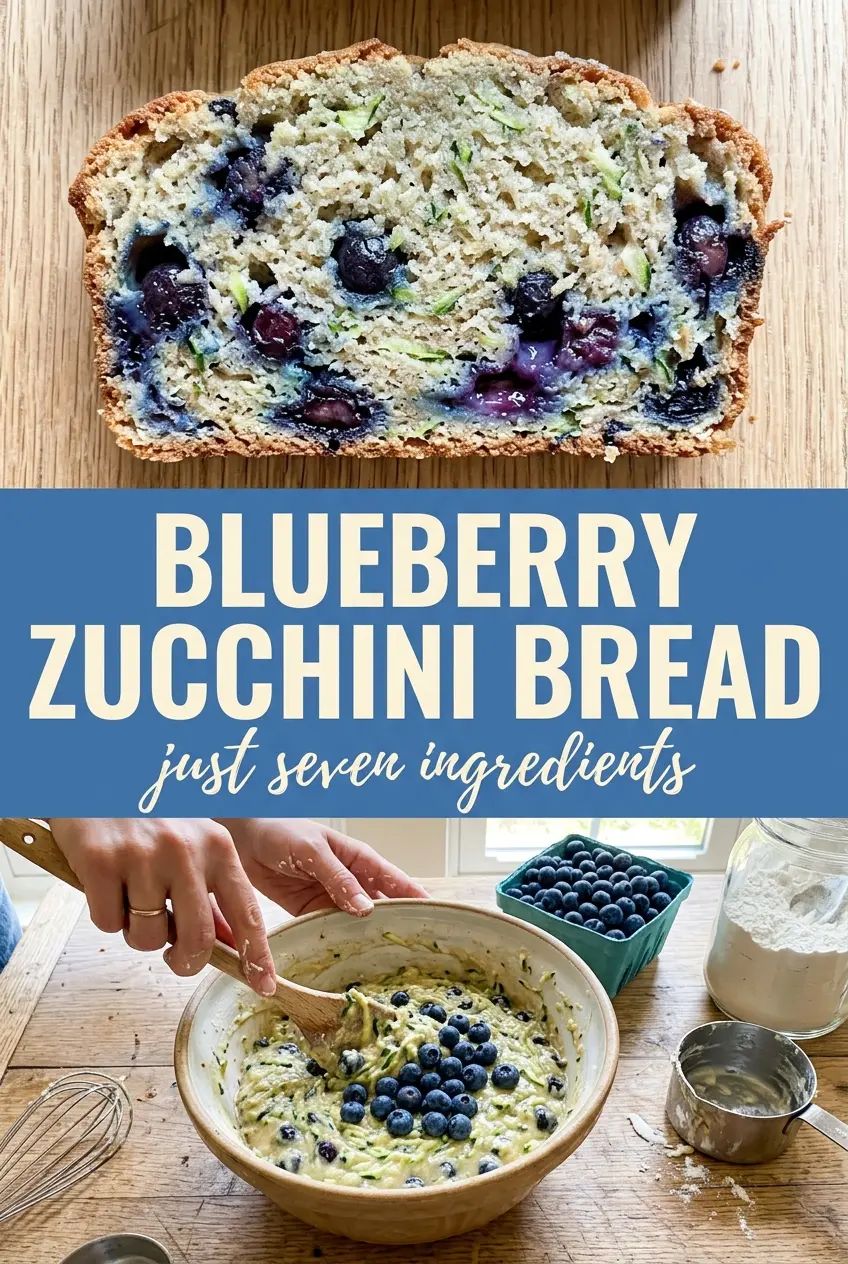
Blueberry Zucchini Bread
Ingredients
Equipment
Method
- Preheat the oven to 350°F and grease a loaf pan, so it’s ready when the batter is mixed.
- Whisk together the eggs, vegetable oil, and granulated sugar until smooth, until the mixture looks glossy and fully combined.
- Stir in the shredded zucchini, scraping down the sides so no dry mixture remains and the batter looks evenly streaked with zucchini.
- Fold in the all-purpose flour and baking soda until just combined, stopping as soon as you don’t see dry flour.
- Gently fold in the blueberries, using a light touch so the berries stay intact and you see blue pockets throughout the batter.
- Pour the batter into the prepared loaf pan, spreading it to an even layer so it bakes uniformly.
- Bake for 50-55 minutes at 350°F, until a toothpick inserted in the center comes out clean and the top is lightly golden with a set look.
- Cool in the pan for 10 minutes before transferring to a wire rack, so the loaf firms up and releases cleanly.