
Thin strips of butternut squash turn into something unexpectedly addictive in the oven: crisp-edged, caramelized, and tender in the middle, with just enough seasoning to keep every bite interesting. When the pan is hot and the squash is cut into even batons, you get the kind of roast that tastes richer than the ingredient list suggests, without ever going near a fryer.
The trick is giving the squash enough space and enough heat. Butternut squash carries more moisture than a potato, so overcrowding the pan is the fastest way to end up with soft edges and a steamed texture. A simple coating of olive oil, smoked paprika, garlic powder, salt, and pepper helps the surfaces dry out and brown, while Parmesan goes on at the very end so it melts lightly instead of scorching in the oven.
Below, I’ve included the small details that matter most: how to cut the squash so the fries cook evenly, what to watch for when they’re ready to flip, and a few smart swaps if you want to change the seasoning without losing that crisp finish.
The fries got those crisp little corners I was hoping for, and the Parmesan at the end made them taste like a restaurant side. I used the smoked paprika exactly as written and the whole pan disappeared fast.
Crispy baked butternut squash fries are at their best when the edges caramelize and the Parmesan hits the pan hot.
The Difference Between Crisp Edges and Soft Squash
Butternut squash fries fail for one reason more than any other: they’re crowded. Once the pieces touch too much, they release steam faster than they can brown, and you end up with a tray of softened squash sticks instead of fries with structure. The answer is simple, but it matters more here than it does with potatoes because squash starts out wetter and more delicate.
Cutting the squash into even strips is the other piece that changes everything. Thick ends need longer in the oven, thin ends burn early, and uneven pieces force you to choose between underdone and overdone. Roast at 425°F and flip halfway through so both sides get direct contact with the hot pan, which is where the caramelization happens.
If the fries are pale at the end, they probably need a few more minutes, not more oil. More oil can soften the surfaces; more time lets the edges dry out and crisp.
What Each Ingredient Is Actually Doing in This Dish
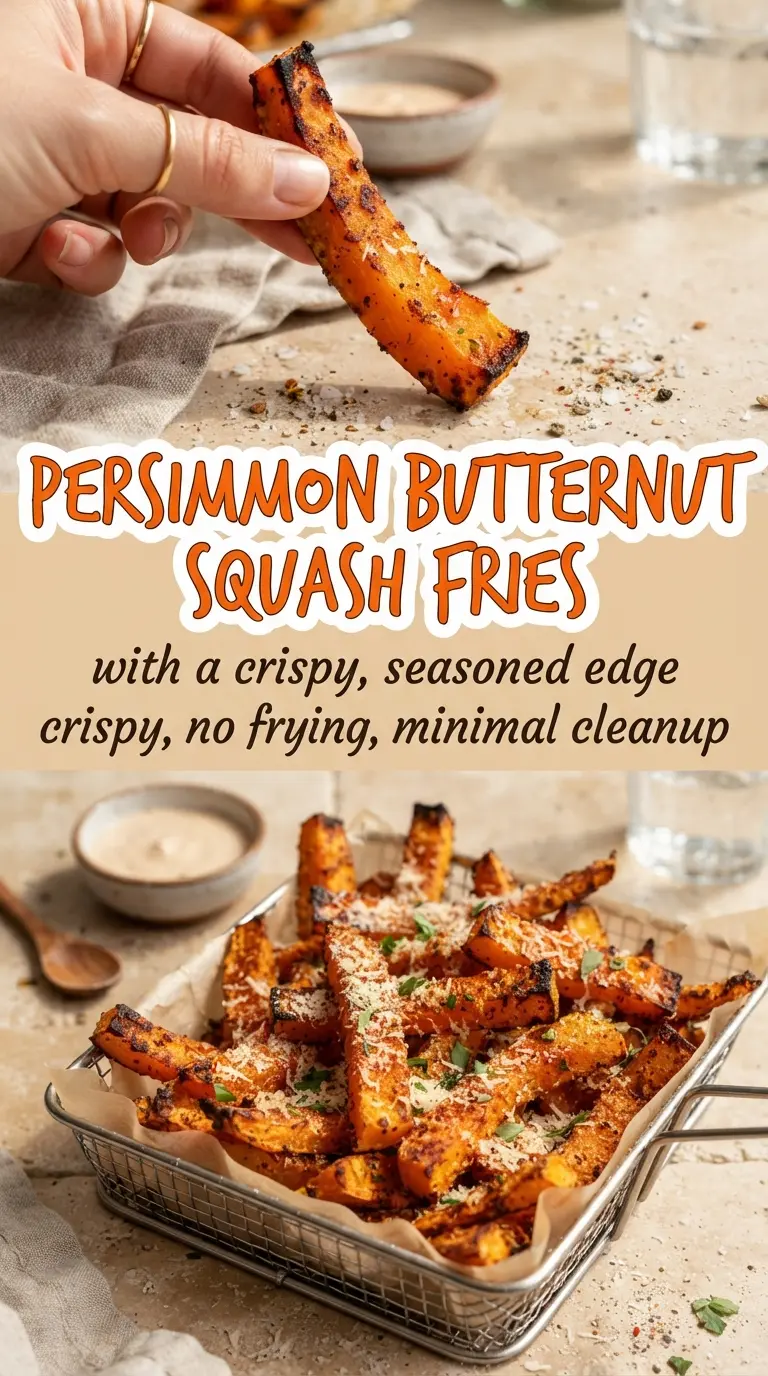
- Butternut squash — This is the whole recipe. A firm, fresh squash with dense flesh gives you better fry-shaped strips and a sweeter interior that holds up in the oven. If the squash feels unusually soft or stringy, skip it; the texture won’t roast into fries cleanly.
- Olive oil — You need enough to coat every surface lightly so the seasoning sticks and the edges brown. Too little and the fries dry out before they caramelize; too much and they slide into a greasy, softened finish.
- Smoked paprika — This adds the savory depth that makes the fries taste complete instead of just roasted. Regular paprika works in a pinch, but you lose the subtle smoky note that plays so well with the squash’s sweetness.
- Garlic powder — Powder is better than fresh garlic here because fresh garlic can scorch before the squash is done. The dry version spreads evenly and gives the fries a steady, rounded garlic flavor.
- Parmesan — Add it after roasting, not before. It melts against the hot squash and gives you salty, nutty finish without burning on the pan.
The 30 Minutes That Actually Matter
Seasoning the Squash Evenly
Toss the squash strips with olive oil, smoked paprika, garlic powder, salt, and pepper until every piece looks lightly coated, not slick. A thin, even layer of seasoning is what gives you consistent browning. If you see seasoning pooled in the bowl, it’s too much oil for the amount of squash.
Laying Out a Single Layer
Spread the fries out with a little space around each piece. They should sit on the baking sheet without overlapping or nesting together. This is the point where most soggy fries are decided, because contact points trap steam and prevent the edges from crisping.
Roasting Until the Edges Caramelize
Roast at 425°F for 25 to 30 minutes, flipping halfway through. You’re looking for browned edges, tender centers, and a surface that has lost its raw shine. If the fries are browning before they’re tender, the strips are too thin; if they’re tender before they brown, the pan was likely too crowded.
Finishing with Parmesan
Sprinkle the grated Parmesan over the hot fries as soon as they come out of the oven. The heat helps it cling without turning gritty or burnt. Serve them warm, when the edges are still crisp and the centers are soft enough to bite cleanly.
How to Adapt These Fries Without Losing the Crisp Finish
Dairy-Free Version
Leave out the Parmesan and finish with a little extra salt after roasting. You’ll lose the nutty, salty finish, but the fries still crisp up well and the paprika-garlic seasoning carries the flavor on its own.
How to Make Them More Crisp
If you want a firmer edge, pat the cut squash dry before seasoning and use two pans instead of one crowded sheet. Extra space matters more than extra oil. The fries will brown faster and hold onto their shape better.
Changing the Seasoning
Swap the smoked paprika for curry powder or chili powder if you want a different direction. Keep the garlic powder and salt in place so the fries still taste balanced, but know that stronger spice blends can mask the squash’s natural sweetness.
Storage and Reheating
- Refrigerator: Store leftovers in an airtight container for up to 3 days. The fries will soften as they sit, which is normal for roasted squash.
- Freezer: I don’t recommend freezing these. The texture turns watery after thawing, and the fries lose the crisp edges that make them worth making.
- Reheating: Reheat on a sheet pan in a 400°F oven for 8 to 10 minutes, or in an air fryer until the edges wake back up. The microwave will heat them through, but it also guarantees a soft finish.
Answers to the Questions Worth Asking
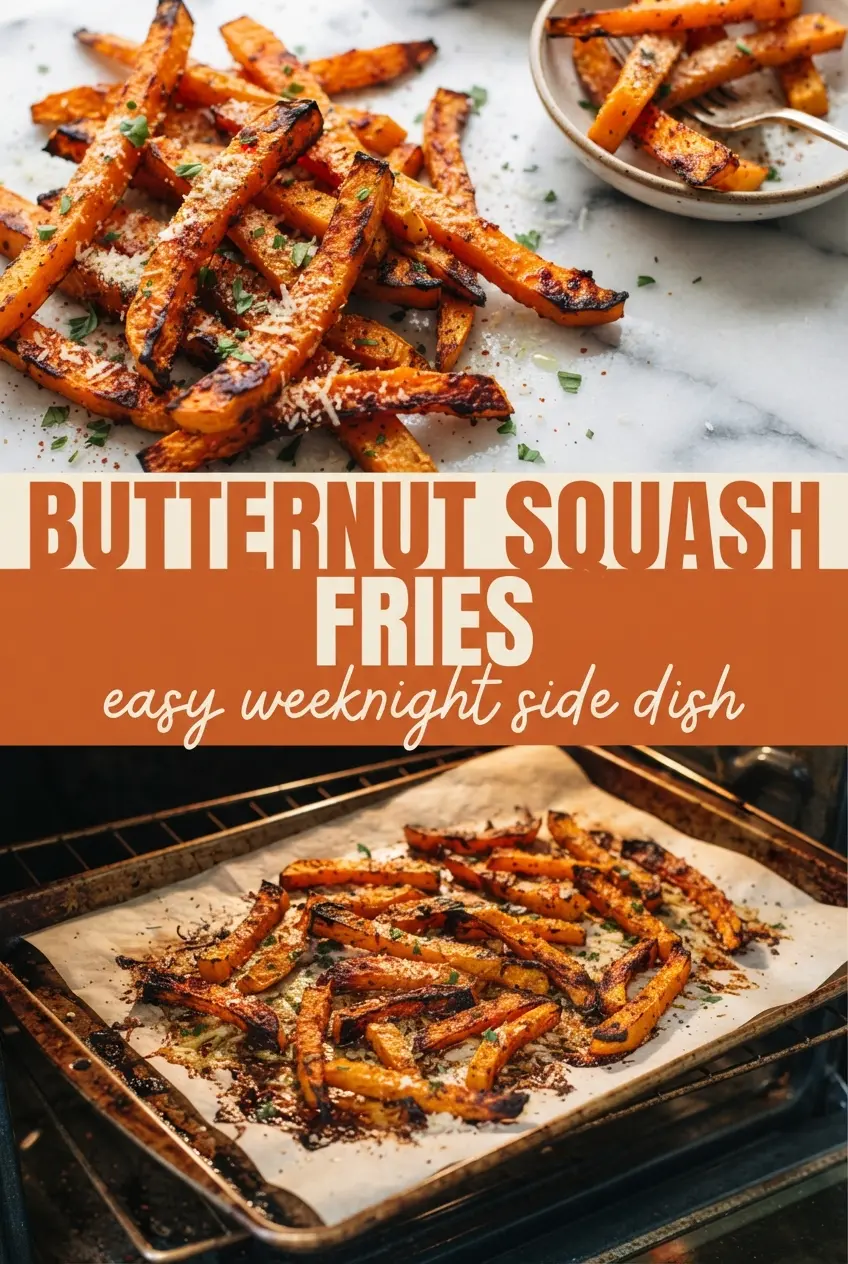
Baked Butternut Squash Fries
Ingredients
Equipment
Method
- Toss the butternut squash strips with olive oil, smoked paprika, garlic powder, salt, and black pepper until evenly coated.
- Spread the squash in a single layer on a sheet pan so the fries have space to crisp.
- Roast at 425°F for 25-30 minutes, flipping halfway, until the edges look crispy and caramelized.
- Sprinkle the grated Parmesan cheese over the fries immediately after roasting so it melts and clings to the hot surfaces.
- Serve the fries warm.