
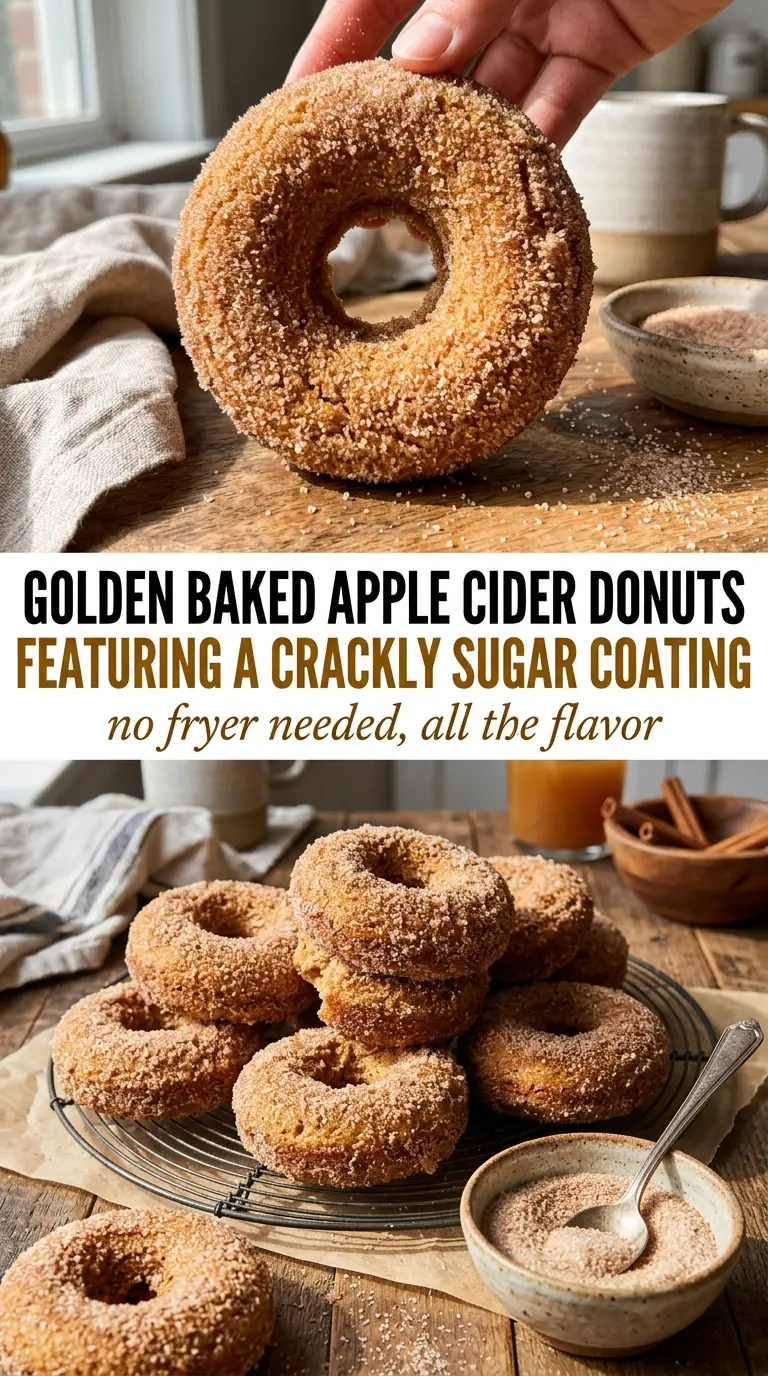
These baked apple cider donuts land with the kind of tender crumb and cinnamon-sugar crackle that makes a batch disappear before the pan has a chance to cool. The cider gets reduced first, which pulls the flavor into focus instead of leaving the donuts watered down or flat. What you get is a soft, cake-like donut with a warm apple note that tastes like it took more work than it did.
The batter depends on a few small choices that matter. Reducing the cider concentrates the fruit flavor, sour cream keeps the crumb plush, and the butter-sugar base gives the donuts enough richness to stay moist after baking. The cinnamon and nutmeg don’t try to take over; they just make the apple read as deeper and warmer. After baking, the melted butter coating is what helps the cinnamon sugar cling in that even, sandy layer people always hope for.
Below, I’ll walk through the step that keeps the texture light, plus the best way to coat them so the sugar doesn’t slide off while they’re still warm.
The cider flavor came through so clearly, and the coating stuck perfectly when I rolled them while they were still warm. Mine baked up with that soft, cakey middle I was hoping for.
Love these baked apple cider donuts? Save them to Pinterest for the weekend mornings when you want that cider-spice coating without frying a thing.
The cider reduction is what keeps these donuts from tasting bland
Apple cider has a lot of water in it, and if you pour it straight into the batter, the flavor gets diluted fast. Reducing it to half a cup concentrates the apple note and gives the donuts a deeper, rounder taste without making the batter heavier. That one extra pan on the stove is the difference between a donut that tastes like warm spices and one that tastes distinctly like apple cider.
The other trap is overmixing. Once the flour goes in, the batter should look just combined, with a few streaks disappearing as you stop stirring. Stir it smooth and you’ll work too much gluten into the batter, which leaves the donuts tight instead of soft and cakey.
What each ingredient is doing in the batter
- Apple cider — Reducing it first is non-negotiable if you want the apple flavor to show up. You’re not just adding liquid here; you’re building the main flavor. If you only have apple juice, it works in a pinch, but the result tastes cleaner and less layered.
- Brown sugar — This brings moisture and a light molasses note that makes the donuts taste richer than plain white sugar would. Packed brown sugar gives the crumb a softer, slightly denser bite that suits a baked donut well.
- Sour cream — This is what keeps the texture plush. It adds acidity for lift and enough fat to keep the crumb tender after baking. Plain Greek yogurt can stand in if that’s what you have, but use full-fat yogurt for the closest texture.
- Butter — Softened butter gives the batter structure and helps the donuts bake up with a fine, even crumb. The melted butter for coating is separate and has a different job: it gives the cinnamon sugar something to grab onto.
- Cinnamon and nutmeg — Cinnamon carries the main spice note, while nutmeg adds that familiar bakery warmth in the background. Freshly grated nutmeg is nice, but regular ground nutmeg still does the job well here.
How to mix, pipe, and bake them without losing the soft crumb
Reducing the cider
Pour the cider into a small saucepan and simmer it until it’s reduced to 1/2 cup. You want steady bubbling, not a hard boil, so the flavor concentrates without turning syrupy or tasting cooked down. Let it cool a bit before it goes into the batter, or it can start softening the butter too early.
Building the batter
Cream the softened butter and brown sugar until the mixture looks lighter and a little fluffy around the edges. Beat in the eggs one at a time, then add the sour cream and reduced cider. When the flour mixture goes in, fold only until the dry streaks disappear. If the batter looks thick, that’s correct; a loose batter spreads too much in the donut pan and loses the shape.
Filling the pan and baking
Pipe or spoon the batter into the donut cavities, filling each one about three-quarters full. A piping bag keeps the center holes cleaner, but a zip-top bag with the corner snipped works too. Bake until the donuts spring back when pressed lightly and the tops are set with a pale golden color. If they go too far, the crumb turns dry fast, so start checking at 12 minutes.
Coating while they’re warm
Let the donuts cool just long enough that they won’t fall apart, then brush them with melted butter and roll them in cinnamon sugar. Warm donuts catch the coating better than fully cooled ones, and that’s what gives you the even, crackly finish. If the sugar looks patchy, the donuts were too cool for the butter to spread cleanly.
Three ways to make these fit what you have on hand
Gluten-free version
Use a 1:1 gluten-free baking flour that already includes xanthan gum. The texture stays close to the original, though it may bake up a touch more delicate, so let the donuts cool in the pan for a few extra minutes before turning them out.
Dairy-free adaptation
Swap the butter for a dairy-free baking stick and use a thick dairy-free yogurt in place of the sour cream. The flavor stays warm and spiced, but the crumb can be a little less rich, so don’t overbake them or they’ll lose the tender middle.
Extra cinnamon-sugar crust
If you want a thicker coating, brush the donuts with butter twice: once right after baking, then again after a minute or two. Roll them in the cinnamon sugar both times. That builds a more textured shell and gives you a stronger crunch when you bite in.
Storage and Reheating
- Refrigerator: Store in an airtight container for 3 days. The sugar coating softens a little, but the crumb stays tender.
- Freezer: Freeze the uncoated donuts for up to 2 months. Thaw at room temperature, then warm briefly and coat fresh for the best texture.
- Reheating: Warm uncovered in a 300°F oven for 5 to 7 minutes. Microwaving makes them soggy and can melt the sugar coating into a sticky patch.
Questions I Get Asked About This Recipe

Baked Apple Cider Donuts
Ingredients
Equipment
Method
- Simmer the apple cider in a small saucepan until reduced to 1/2 cup, then cool slightly.
- Place the reduced cider aside to cool while you prepare the rest of the batter.
- Preheat the oven to 350°F and grease a donut pan.
- Grease all donut cavities thoroughly so the donuts release cleanly.
- Whisk together the all-purpose flour, baking powder, baking soda, cinnamon, and nutmeg until evenly combined.
- Break up any spice lumps so the batter bakes uniformly.
- Cream the softened butter and brown sugar, then beat in the large eggs, sour cream, and reduced cider.
- Mix until smooth and glossy, with the reduced cider fully incorporated.
- Fold the dry ingredients into the wet ingredients until just combined, with no visible dry streaks.
- Pipe or spoon the batter into the donut pan cavities, filling each about 2/3 full.
- Bake for 12-14 minutes at 350°F, until springy to the touch.
- Let the donuts cool slightly so they hold their shape during coating.
- Brush each donut with melted butter while still warm for best adhesion.
- Roll the donuts in cinnamon sugar, then set them on a rack until the coating looks set.