
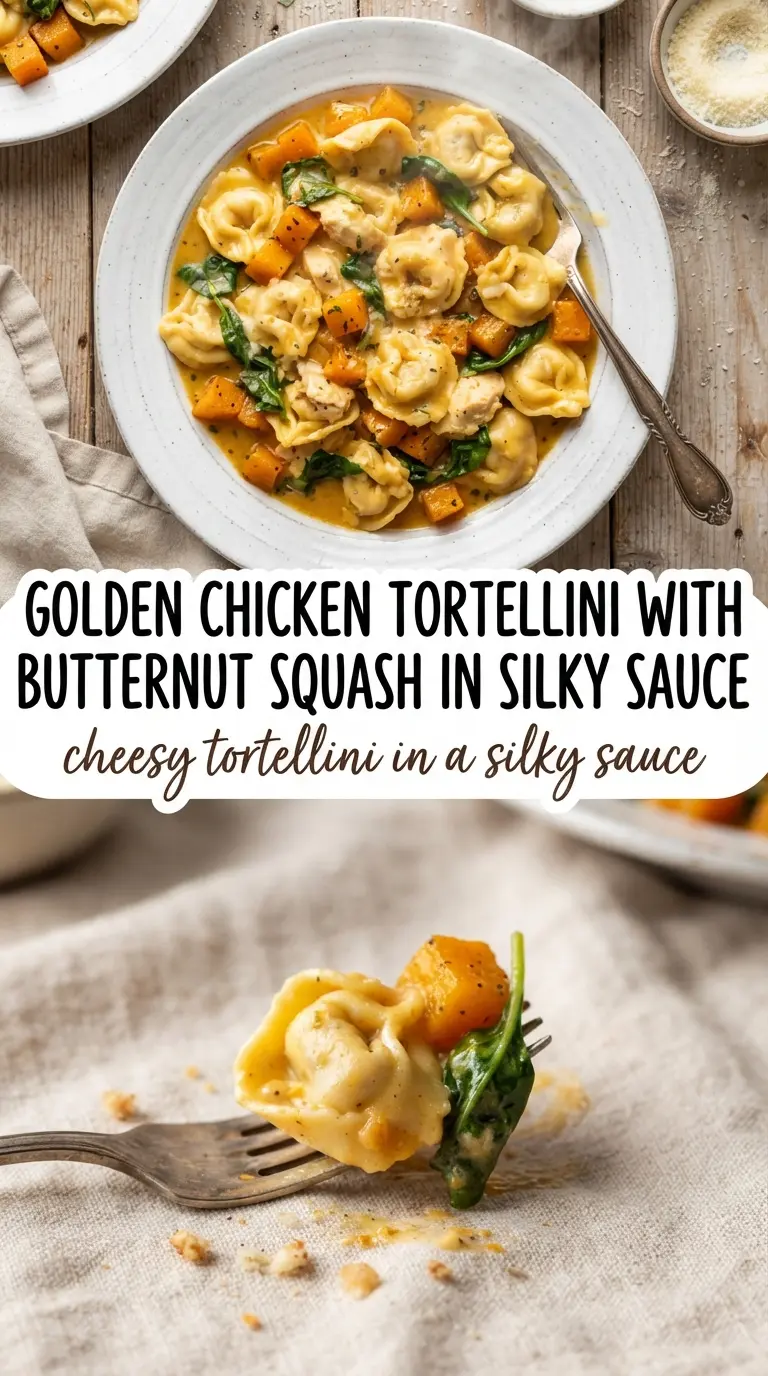
Cheese tortellini, tender chicken, and sweet butternut squash come together in one skillet with a sauce that turns silky and coats every bite. The squash softens just enough to give the cream a little body, while the tortellini stays plump and the spinach wilts into the sauce at the very end. It eats like a dish that took much longer than 30 minutes, which is exactly why it ends up back on the table again and again.
The key here is layering the flavors instead of dumping everything in at once. Browning the chicken first leaves fond in the pan, and that stuck-on color becomes part of the sauce once the broth goes in. The squash simmers in the broth until it’s tender, which keeps it from turning watery later. Then the cream and Parmesan go in off the strongest heat so the sauce stays smooth instead of grainy.
Below, I’ve included the part that matters most: how to keep the tortellini from overcooking while the sauce finishes, plus the swaps that still work if you need to adjust the dairy or use a different pasta.
The squash got perfectly tender without turning mushy, and the sauce stayed smooth even after I stirred in the Parmesan. My husband said the tortellini tasted like it came from a restaurant.
Save this Autumn Chicken Tortellini with Butternut Squash for a creamy one-skillet dinner with tender chicken and sweet squash.
The Reason This Skillet Stays Creamy Instead of Turning Heavy
A cream sauce around tortellini can go flat fast if it gets boiled hard after the dairy goes in. That’s where this recipe is different. The broth reduces first, so the squash has a chance to soften and the liquid concentrates before the cream ever hits the pan. By the time the Parmesan goes in, the sauce already has body from the squash and starch from the tortellini, which keeps it lush instead of thin.
The other thing that matters is heat control at the end. Once the cream and cheese go in, the pan should be at a gentle simmer, not a rolling boil. If the sauce looks grainy, it usually means the Parmesan was added too quickly or the heat was too high. Pull the skillet off the burner for a minute and stir until it smooths out.
What Each Ingredient Is Actually Doing in This Dish
- Olive oil — Just enough to help the chicken brown and keep the squash from sticking before the broth goes in. If you only have butter, use it, but butter alone can brown too fast in the first stage.
- Chicken breast — Dice it small so it cooks fast and stays tender inside the skillet. Thighs work too and stay even juicier, though the finished dish will taste a little richer.
- Butternut squash — This is what gives the sauce its subtle sweetness and that soft, cozy texture. Buy pre-cut squash if that saves time, but keep the pieces small and even so they cook at the same pace.
- Cheese tortellini — The pasta brings its own richness, so you don’t need a complicated sauce. Fresh tortellini is best here because it cooks quickly and stays supple; frozen works too, but it may need an extra minute or two in the broth.
- Heavy cream — This finishes the sauce and makes it cling to the tortellini. Half-and-half will work in a pinch, but the sauce will be thinner and a little less stable.
- Parmesan — Use the finely grated kind for the smoothest melt. Pre-shredded cheese can work, but it’s more likely to leave the sauce a little sandy because of the anti-caking agents.
- Spinach — It softens almost instantly and balances the richness without stealing the spotlight. Baby spinach is easiest because the stems are tender and the leaves disappear into the sauce.
The 20 Minutes That Actually Matter
Brown the chicken first
Heat the olive oil in a large skillet over medium-high and add the diced chicken in a single layer. Let it sit long enough to pick up color before stirring; pale chicken makes a pale sauce. You’re looking for golden edges and no raw sheen in the center, not deep sear marks.
Soften the squash in the broth
Add the squash and broth to the pan and let it simmer until the squash gives cleanly when pierced with a fork. If the cubes are cut too large, they’ll still be firm when the tortellini is ready, so keep them around bite-size. The broth should reduce a little here, but not disappear completely.
Cook the tortellini in the sauce base
Stir in the tortellini and cook just until tender. Fresh tortellini can go from perfect to swollen and soft in a minute, so start checking early. If the pan looks too dry, add a splash more broth rather than turning up the heat, which can make the pasta burst or stick.
Finish with cream, spinach, and Parmesan
Lower the heat before you add the cream and cheese. Stir until the sauce turns glossy, then add the spinach and cooked chicken and let everything heat through. The sauce should coat the back of a spoon and the spinach should wilt without turning dull or overcooked.
How to Adapt This for a Bigger Crowd, a Lighter Finish, or a Dairy-Free Version
Make it dairy-free without losing the creamy texture
Use an unsweetened dairy-free cream and a Parmesan-style alternative that melts well. The sauce won’t taste exactly the same, but the squash still gives it enough body to stay satisfying instead of watery.
Swap the chicken for sausage
Italian sausage gives the skillet a deeper, saltier flavor and pairs especially well with the squash. Brown it first and drain off excess fat if needed, then follow the rest of the recipe as written.
Use pumpkin instead of butternut squash
Canned pumpkin puree can stand in for the squash if that’s what you have, but the dish turns smoother and more sauce-like. Stir it in after the broth reduces and thin with a little extra broth if the pan gets too thick.
Storage and Reheating
- Refrigerator: Store in an airtight container for up to 3 days. The tortellini will absorb some sauce as it sits, so expect a thicker texture the next day.
- Freezer: I don’t recommend freezing this one. Cream sauces can separate and the tortellini turns soft after thawing.
- Reheating: Warm it gently on the stove over low heat with a splash of broth or cream. Microwaving on high is the easiest way to make the sauce break and the pasta rubbery.
Answers to the Questions Worth Asking

Autumn Chicken Tortellini with Butternut Squash
Ingredients
Equipment
Method
- Heat a cast iron skillet over medium-high heat, then add the olive oil. Brown the diced chicken for 6 minutes, stirring occasionally, until no longer pink, then set aside.
- In the same skillet, add the butternut squash and chicken broth. Bring to a simmer and cook for 8 minutes, stirring once or twice, until the squash is tender.
- Stir in the cheese tortellini and cook for 5 minutes. Keep the mixture at a steady simmer, stirring so the tortellini doesn’t stick.
- Lower heat to medium, then stir in the heavy cream, baby spinach, grated Parmesan, and the browned chicken. Cook for 2–3 minutes until the spinach wilts, the chicken is heated through, and the sauce turns silky and lightly thickened.