
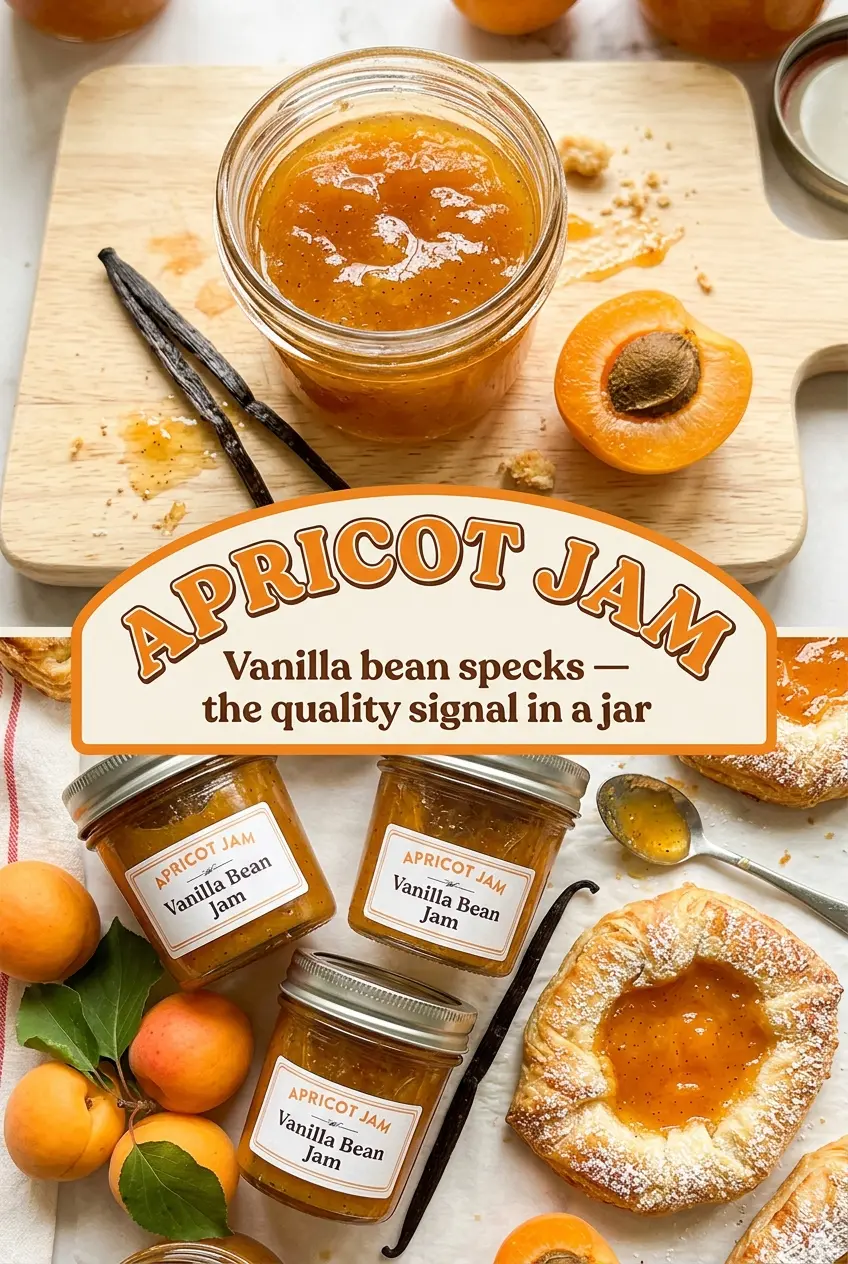
Apricot jam sets up with a glossy finish and a clean, bright fruit flavor that tastes far more layered than the short ingredient list suggests. The apricots cook down into something soft and fragrant, then the sugar and lemon work together to push the mixture toward that deep amber color and spoonable texture that clings to toast instead of running off it. The vanilla bean changes the whole jar. Those tiny black flecks and the floral warmth underneath the fruit make this taste rounded, not sharp, which is exactly why this version earns repeat batches.
The trick is giving the fruit time to rest with the sugar before the pot ever hits the stove. That draw-out period pulls juices from the apricots, which means the fruit breaks down faster and the jam cooks more evenly. Lemon juice matters here too, not just for balance but for helping the jam set; apricots are naturally low in pectin, so the acid and a good boil do some of the work that firmer fruits get for free.
Below, you’ll find the set test I trust most, the one swap that still gives you good flavor if you don’t have a vanilla bean, and the best way to turn one jar into a dessert that looks like it came from a pastry case.
The jam thickened exactly where you said it would, and the vanilla bean made it taste like apricots instead of just sweet fruit. I spooned some over cream cheese on puff pastry and my husband asked if I bought it from a bakery.
Save this apricot vanilla bean jam for the days when you want a jar that tastes bright, floral, and finished with those little black specks that tell you it was made right.
The Part That Makes Apricot Jam Set Instead of Staying Runny
Apricot jam can look done before it actually is. The bubbling gets aggressive, the fruit looks collapsed, and the pot starts to smell like concentrated sunshine. That’s not the end point. The jam is ready when the bubbles slow down and the mixture sheets off a spoon instead of dribbling away in a thin stream.
The biggest mistake is pulling it too early because the mixture seems thick while it’s hot. Jam always loosens a little as it cools. If you stop the boil too soon, you’ll end up with syrup in a jar. A cold plate test catches that before it happens: a small spoonful should wrinkle when you push it with your finger after a minute on the chilled plate.
- Apricots — Use ripe fruit, but don’t wait for it to turn mushy. You want fruit that smells sweet and yields slightly at the stem end. Very hard apricots stay chunky and taste flat; overripe ones can make the jam muddy.
- Granulated sugar — This does more than sweeten. It helps the jam gel and preserves the fruit. Cutting it drastically changes the set, so if you want a lower-sugar jam, use a tested low-sugar pectin method instead of trimming the sugar here.
- Lemon juice and zest — Fresh lemon is worth using. Bottled juice works in a pinch for the acidity, but the zest and fresh juice add brightness that keeps the jam from tasting one-note.
- Vanilla bean — This is the ingredient that changes the whole jar. Vanilla extract adds aroma, but not the same floral depth or those visible black specks that make the jam taste and look finished. If you must substitute, use 1 teaspoon pure vanilla extract and stir it in off the heat at the very end.
- Cinnamon — Keep it subtle. It rounds out the fruit without making the jam taste like pie filling. Too much takes over quickly.
- Salt — A pinch sharpens the apricot flavor and keeps the sweetness from flattening out. It won’t make the jam salty; it just makes the fruit taste louder.
How I Cook It Down Without Scorching the Fruit
Letting the Fruit Weep
Combine the apricots, sugar, lemon juice, and zest in a heavy pot and let it sit for 30 minutes. The sugar pulls juice out of the fruit, which keeps the pot from needing a long hard boil later. If you skip this rest, the outside of the fruit can overcook before the center has given up enough liquid.
Building the Boil
Add the split vanilla bean and scraped seeds, then bring the pot to a rolling boil while stirring. Use a heavy spoon and scrape the bottom and corners so nothing catches. Once it starts boiling, stay near the stove; apricot jam can go from foamy to scorched faster than you expect because the sugar concentration rises as the water cooks off.
Reducing to Set Point
Lower the heat and simmer for 20 to 30 minutes, stirring often. The jam should thicken, darken a shade, and look glossy rather than watery. If foam builds up, skim it off so the surface stays clean. The most common mistake here is chasing time instead of texture; a wide pot may finish sooner, while a deeper one may need longer.
Testing and Jarring
Remove the vanilla pod, then test a spoonful on a chilled plate. Push the jam with your finger; it should wrinkle and hold a path for a second before flowing back. Ladle the hot jam into sterilized jars while it’s still easy to pour. If you wait until it cools too much, it thickens in the pot and becomes harder to fill cleanly.
Maple Vanilla Apricot Jam
Swap 1/2 cup of the sugar for maple syrup and cook a little more carefully, since the extra liquid slightly slows the set. The flavor turns deeper and more caramel-like, but the jam will be a touch softer and less bright.
No Vanilla Bean Version
Use 1 teaspoon pure vanilla extract instead of the bean and add it after the pot comes off the heat. You’ll still get a warm background note, but you won’t get the same flecked look or the floral depth that comes from simmering the whole bean.
Lower-Sugar Apricot Jam
If you want less sweetness, use a low-sugar pectin designed for reduced sugar jams and follow that package ratio instead of cutting sugar from this recipe. Apricots need help to set, so a simple sugar reduction without another gelling method usually leaves you with a loose sauce.
Storage and Reheating
- Refrigerator: Store opened jars for up to 3 weeks. The texture tightens slightly when chilled, then loosens again once it sits at room temperature.
- Freezer: Yes, it freezes well if you leave headspace in freezer-safe containers. Thaw in the refrigerator overnight; don’t freeze in glass jars that aren’t marked freezer-safe.
- Reheating: You usually don’t need to reheat jam. If it becomes too firm after chilling, set the jar in warm water for a few minutes and stir gently. High heat can make it break down and turn loose.
Answers to the Questions Worth Asking
Apricot Jam
Ingredients
Equipment
Method
- Combine apricots, sugar, lemon juice, and lemon zest in a heavy pot, then stir to coat the fruit evenly. Rest 30 min at room temperature so the apricots release juice.
- Add the vanilla bean and scraped seeds, then bring the mixture to a rolling boil while stirring. Keep at a rolling boil for 1-3 min to dissolve sugar and activate thickening.
- Reduce the heat and simmer 20-30 min, stirring often, until the jam looks glossy and thick enough to mound slightly on a spoon. Continue simmering within this range until it coats the back of a spoon.
- Remove the vanilla pod, then test a small spoonful on a cold plate to see if it wrinkles when pushed. If it runs like syrup, simmer 3-5 min more and test again.
- Ladle the hot jam into sterilized jars and leave appropriate headspace for your canning method. Process 10 min in a water-bath canner or refrigerate up to 3 weeks.