
Roasted butternut squash turns silky and sweet in the oven, which is exactly why it makes such a strong base for a savory filling. Once the halves are tender, they hold a pile of browned Italian sausage, soft apple, herbs, cranberries, and pecans without collapsing, and every forkful lands with a mix of creamy, juicy, and crisp textures. It looks like a special-occasion dinner, but it eats like a practical weeknight meal.
The real balance here comes from treating each part separately before they meet in the squash shell. The squash needs enough time cut-side down to caramelize and soften all the way through. The filling needs to be cooked in stages so the onion goes sweet, the garlic stays fragrant, the apple keeps a little structure, and the cranberries and pecans go in at the end where they keep their shape.
Below, you’ll find the small details that matter most: how to tell when the squash is tender enough, why the sausage mixture shouldn’t be watery, and how to adapt the filling if you want to swap ingredients without losing that sweet-savory contrast.
The squash came out tender all the way through, and the filling stayed chunky instead of getting mushy. The apple and cranberries gave it just enough sweetness to balance the sausage, and my husband went back for seconds before I even sat down.
Save this apple sausage stuffed butternut squash for a cozy dinner with sweet apple, savory sausage, and a caramelized squash base.
The Secret to Stuffed Squash That Tastes Roasted, Not Watery
Stuffed squash goes wrong when the squash and the filling are treated like one cooking problem. They aren’t. The squash needs direct oven heat so the edges caramelize and the flesh softens into something spoon-tender. The filling needs to stay relatively dry, because any extra liquid pools inside the squash and turns the whole center soft and muddy instead of structured.
Roasting the squash cut-side down does two jobs at once: it keeps the cut surface in contact with the hot pan and it traps just enough steam underneath to finish the interior. If you roast it cut-side up, the top usually dries out before the center is tender. For the filling, cooking the sausage until it’s browned before adding the vegetables gives you flavor from the pan drippings, and that matters more than tossing everything together from the start.
What Each Ingredient Is Actually Doing in This Dish
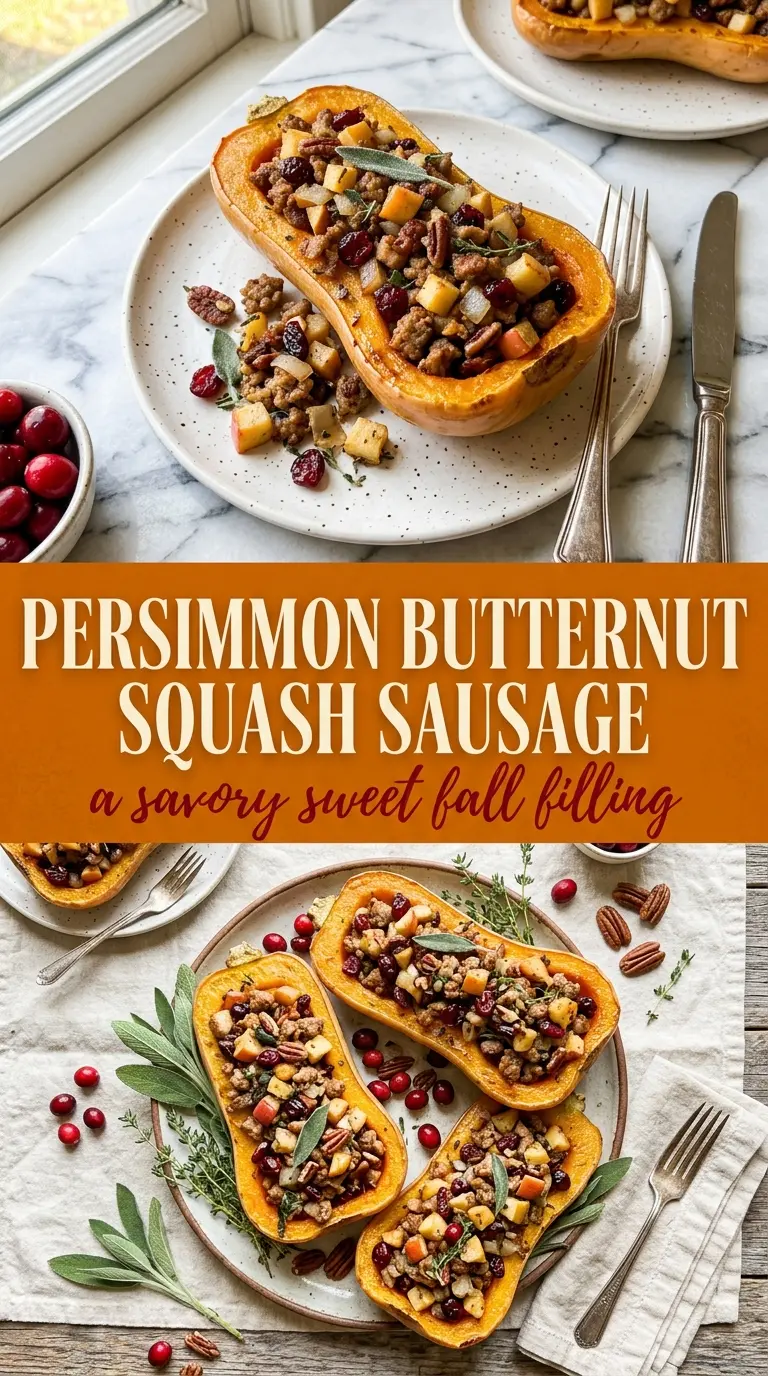
- Butternut squash — Look for one that feels heavy for its size and has a matte skin. A smaller squash roasts more evenly than a giant one, and you want the halves tender enough that a fork slides in without resistance.
- Italian sausage — This is the main seasoning for the filling, so use a sausage you actually like eating. Mild sausage keeps the apple and herbs forward, while hot sausage adds more bite. Chicken or turkey sausage works too, but it usually needs a little extra oil in the pan.
- Apple — Use a firm apple like Honeycrisp, Pink Lady, or Granny Smith. Soft apples disappear into the filling before the squash is done. You want pieces that soften at the edges but still hold their shape.
- Dried cranberries and pecans — These go in at the end for contrast. Cranberries give the filling little bursts of sweetness, and pecans add crunch that survives the bake. If you skip the nuts, the dish loses some of that layered texture.
- Fresh sage and rosemary — Fresh herbs are worth using here because they cut through the richness of the sausage and squash. Dried herbs can work in a pinch, but use less and add them with the onion so they have time to bloom.
Building the Filling So Every Bite Stays Distinct
Roasting the Squash Until It Gives Easily
Set the squash cut-side down on the baking sheet and roast until the flesh is soft enough to pierce with a fork without scraping effort. If the squash still feels firm near the neck, keep it in the oven; undercooked squash is the fastest way to end up with a filling that tastes done but a shell that eats raw. A little browning on the edges is a good sign, and you can scoop out a thin layer later if you want more room for the filling.
Brown the Sausage First, Then Build the Flavor
Cook the sausage over medium heat until it loses its pink color and picks up browned bits on the bottom of the skillet. Those browned bits are the flavor base, so don’t crank the heat high enough to scorch them. Once the sausage is cooked, add the onion and garlic and stir just until the onion turns translucent and the garlic smells warm, not sharp.
Cook the Apple Just Enough to Keep Its Shape
Add the diced apple, sage, and rosemary and cook for a few minutes until the apple edges start to soften. You are not trying to turn it into applesauce. If the apple turns mushy in the skillet, it will disappear after the squash bakes and you’ll lose the sweet-tart bite that makes this filling interesting.
Finish With Cranberries and Pecans Off the Heat
Stir in the cranberries and pecans after the pan comes off the burner. The residual heat is enough to warm them through, and that keeps the pecans from tasting stale or burnt. If you add them too early, the cranberries can get tough and the nuts can lose the clean crunch that gives the dish its best texture.
How to Adapt This for Different Tables and Different Pantries
Make It Dairy-Free Without Losing Richness
This recipe is naturally dairy-free as written, so there is nothing to replace. The richness comes from the sausage, the roasted squash, and the toasted nuts, which means you don’t need cream or cheese to make it feel substantial.
Make It Vegetarian With Mushrooms or Lentils
Swap the sausage for a mix of finely chopped mushrooms and cooked lentils, then season them aggressively with the same sage, rosemary, garlic, and a little extra salt. You lose the fat from the sausage, so add a splash of olive oil and cook the mushrooms until their moisture evaporates before mixing everything together.
Make It Nut-Free Without Flattening the Texture
Leave out the pecans and replace them with toasted pumpkin seeds for a similar crunch that keeps the filling interesting. If seeds aren’t an option, add a handful of extra cranberries and a little more diced apple so the filling still has contrast.
Storage and Reheating
- Refrigerator: Store leftovers in an airtight container for up to 4 days. The squash softens a little more after chilling, but the flavor holds up well.
- Freezer: Freeze the stuffed squash halves wrapped tightly for up to 2 months. The texture of the squash will be softer after thawing, but the filling freezes well.
- Reheating: Reheat in a 350F oven, covered loosely with foil, until hot in the center. The common mistake is blasting it in the microwave, which turns the squash stringy and makes the filling dry out at the edges.
Questions I Get Asked About This Recipe
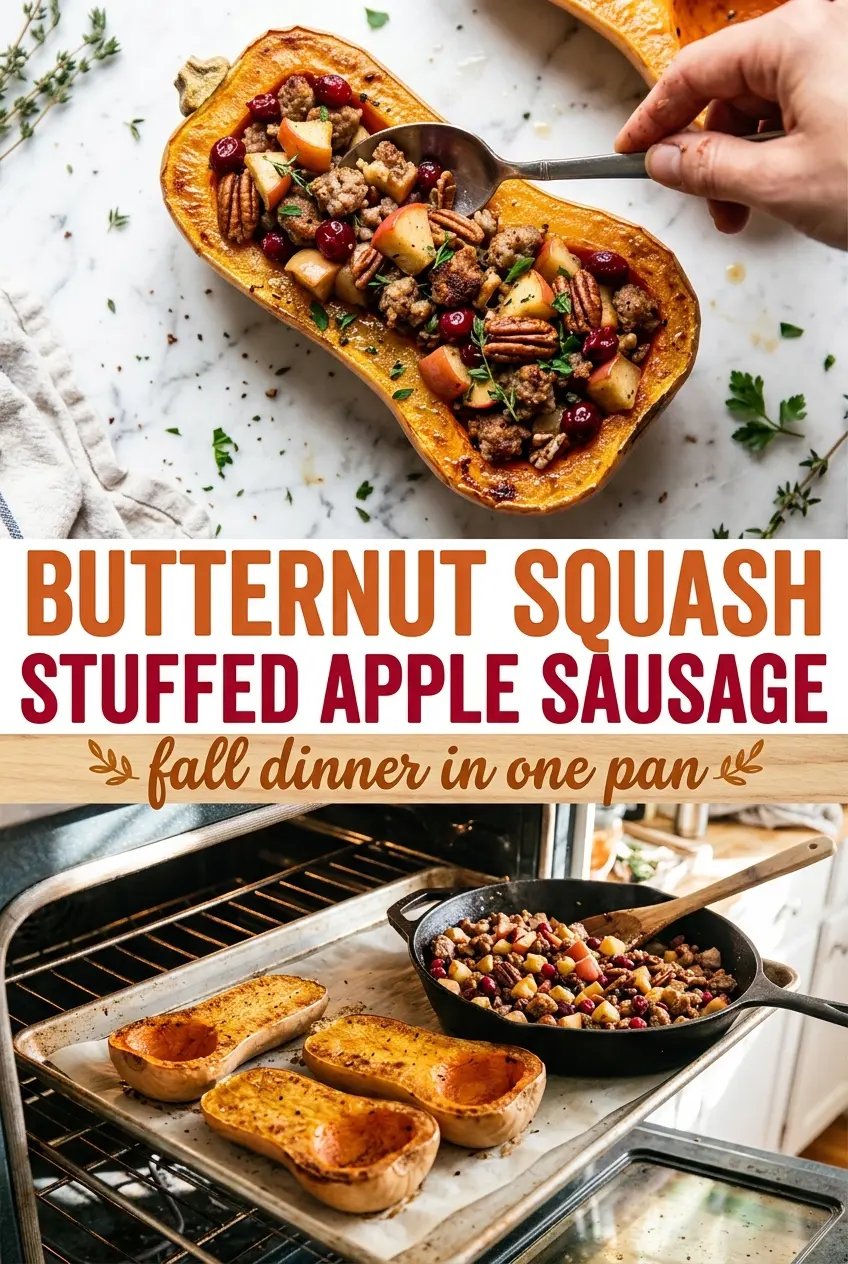
Apple Sausage Stuffed Butternut Squash
Ingredients
Equipment
Method
- Preheat the oven to 400F. Position a sheet pan in the oven while it heats for easier roasting.
- Rub the cut sides of the butternut squash with olive oil and season with salt and pepper. Keep the cut surfaces coated so they caramelize as they bake.
- Place the squash cut side down on a baking sheet and roast for 40-45 minutes until tender. Look for a fork-tender squash and lightly browned edges.
- Cook the Italian sausage in a skillet over medium heat, breaking it up until browned. Continue until no pink remains and the bits start to crisp.
- Add the onion, garlic, and baby spinach, stirring for 2-3 minutes until the spinach wilts. Stir until the spinach is fully wilted and the onion softens.
- Stir in the diced apple, fresh sage, and fresh rosemary, cooking for 2-3 minutes until the apple softens slightly. You want softened edges but still noticeable apple pieces.
- Remove from heat and stir in the dried cranberries and chopped pecans. The mixture should look evenly distributed with glossy cranberries.
- Flip the roasted squash halves over, scoop out a little flesh to make room, then fill with the sausage mixture and serve. The filling should mound in the cavities and cling to the hot squash.