
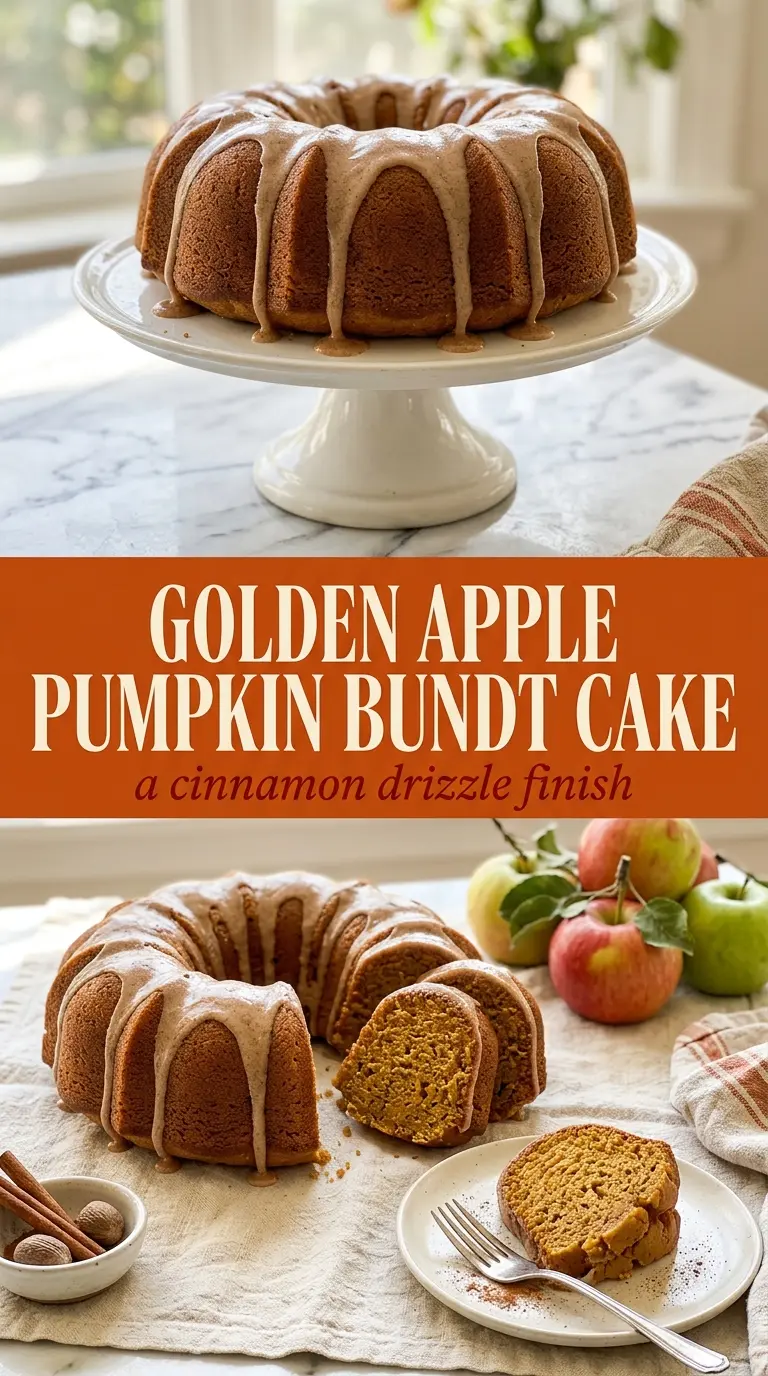
Apple pumpkin bundt cake bakes up with a tender crumb, warm spice, and soft ribbons of apple tucked through every slice. The pumpkin keeps the cake moist without making it heavy, and the bundt pan does the rest, giving you those crisp edges and a handsome shape that needs nothing more than a dusting of sugar or a thin glaze. It tastes like the kind of cake that disappears one slice at a time, then somehow gets cut into “just one more” wedges all afternoon.
What makes this version work is the balance. Pumpkin puree brings moisture and body, but the apples add little bursts of freshness so the cake doesn’t lean flat or one-note. The batter is mixed just enough to come together, which keeps the crumb soft instead of tight. The sliced apples are folded in gently at the end so they stay intact and don’t sink into the pan during baking.
Below, you’ll find the one mixing step that matters most, plus the small detail that keeps the cake from sticking in the bundt pan. I also included a few useful variations if you want to adjust the spices, swap the fruit, or make it fit what you already have on hand.
The crumb stayed so moist for days, and the apple slices didn’t sink to the bottom like they do in most pumpkin cakes I’ve tried. I served it plain and my family still went back for seconds.
Like this apple pumpkin bundt cake? Save it to Pinterest for a moist, warmly spiced dessert with tender apple slices in every bite.
The Secret to Keeping Apple Slices from Vanishing into the Batter
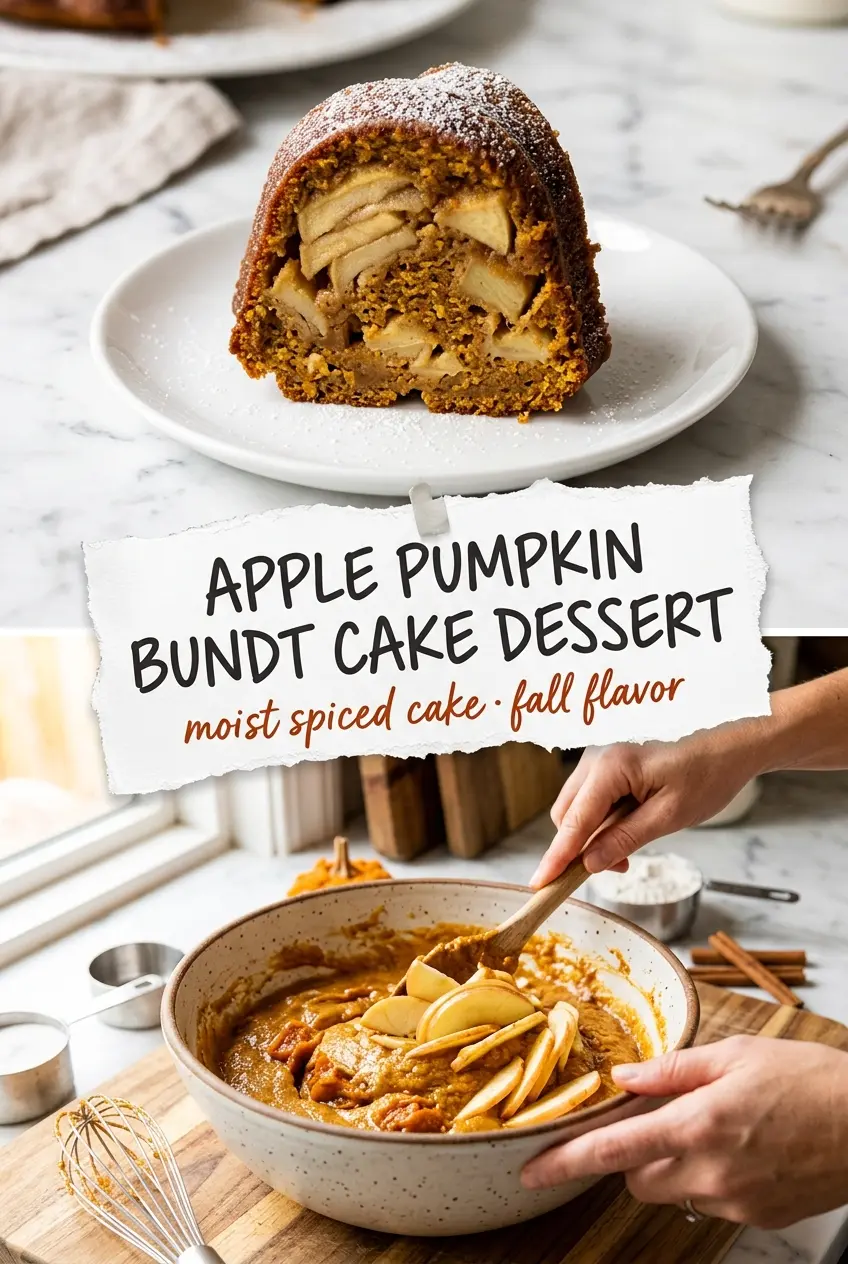
A bundt cake like this can go wrong in one quiet way: the apples can disappear into the batter and leave you with a good pumpkin cake that doesn’t taste like apples at all. Thin slices help, but the real trick is folding them in at the very end and stopping as soon as they’re coated. If you stir aggressively, the batter tightens up and the fruit breaks down before it ever reaches the oven.
The other piece people miss is batter thickness. This isn’t a pourable cake batter with fruit suspended like confetti. It’s a thicker, spoonable batter that can hold the apple slices in place long enough to bake around them. That structure is what gives each slice those visible layers of soft cake and tender fruit.
What Each Ingredient Is Actually Doing in This Cake
- Pumpkin puree — This gives the cake moisture, color, and that earthy pumpkin flavor. Use plain pumpkin puree, not pumpkin pie filling, or you’ll throw off the sweetness and spice balance.
- Unsalted butter — Butter is what gives the crumb its richer, more cake-like texture. If you only have salted butter, use it and cut the added salt a little, but don’t swap in oil here if you want the same dense-tender bite.
- Apples — Choose firm apples that hold their shape in the oven, like Granny Smith, Honeycrisp, or Pink Lady. Softer apples turn mushy and disappear into the batter instead of giving you clean little pockets of fruit.
- Cinnamon and nutmeg — These are not background notes here; they carry the whole spice profile. Freshly ground nutmeg makes a noticeable difference, but the pre-ground kind still works well enough for everyday baking.
- All-purpose flour — This gives the cake enough structure to support the pumpkin and apple without collapsing. If you need a gluten-free version, use a good 1:1 baking blend, not almond flour, or the texture will turn fragile and wet.
Building the Batter Without Overworking It
Creaming the Butter and Sugar
Beat the butter and sugar together until the mixture looks pale and fluffy, not greasy or grainy. This step traps air, which helps the cake rise in a bundt pan and keeps the crumb from turning heavy. If the butter is too cold, it won’t cream properly; if it’s melted, the cake bakes up dense.
Adding the Pumpkin in the Right Order
Once the eggs are in, mix in the pumpkin puree until the batter looks smooth and a little glossy. The batter may look slightly curdled at first, and that’s normal as long as it comes back together when the dry ingredients go in. Don’t keep beating once the flour is added, or the cake can turn tight and tough.
Folding in the Apples
Use a spatula and fold just until the apple slices are distributed through the batter. You want to see distinct slices, not broken pieces of fruit mashed into the bowl. If the batter is resisting, stop sooner than you think you should; overmixing here is what causes fruit to sink and the crumb to lose its softness.
Baking and Unmolding
Bake until a toothpick comes out clean from the center and the cake pulls slightly from the edges of the pan. Let it cool for 20 minutes before turning it out, because a hot bundt cake is fragile and more likely to tear if you rush it. If the cake sticks, it usually means the pan wasn’t greased thoroughly in every ridge, so go over those grooves carefully next time.
How to Adjust This Cake for Different Kitchens and Diets
Gluten-Free Version
Use a well-balanced 1:1 gluten-free baking flour in place of the all-purpose flour. The cake will still be moist and sliceable, though it may be a little more delicate when warm, so give it the full cooling time before unmolding.
Dairy-Free Swap
Replace the butter with a neutral dairy-free baking stick. The flavor stays rich enough, though the crumb loses a little of that classic butter note, so a dusting of powdered sugar or a light glaze helps round it out.
Changing the Fruit
Pear slices work well if you want a softer, slightly more floral version of the cake. Use firm pears and keep the slices thin so they bake through without turning watery.
Storage and Reheating
- Refrigerator: Store covered for up to 4 days. The crumb stays moist, though the apple pieces soften a little more by day two.
- Freezer: This freezes well. Wrap individual slices tightly and freeze for up to 2 months, then thaw at room temperature still wrapped so the cake doesn’t dry out.
- Reheating: Warm slices in the microwave for 10 to 15 seconds or in a low oven until just heated through. Long reheating dries out the edges and makes the apples lose their soft texture.
Answers to the Questions Worth Asking
Apple Pumpkin Bundt Cake
Ingredients
Equipment
Method
- Preheat the oven to 350°F and grease and flour a bundt pan, then set it aside for filling.
- Slice the firm apples thinly and keep them ready so you can fold them into the batter at the right time.
- Cream the butter and sugar together until light and fluffy, about 2-3 minutes.
- Add the eggs one at a time, beating well after each addition, then mix in the pumpkin puree.
- In a separate bowl, whisk together the all-purpose flour, baking powder, baking soda, salt, cinnamon, and nutmeg until evenly blended.
- Add the dry ingredients to the wet mixture and mix until well combined.
- Gently fold in the apple slices with a spatula so the batter stays airy and the fruit is evenly distributed.
- Bake for 55 minutes at 350°F, or until a toothpick inserted into the center comes out clean.
- Cool in the pan for 20 minutes before turning out onto a wire rack to set the ridges.