
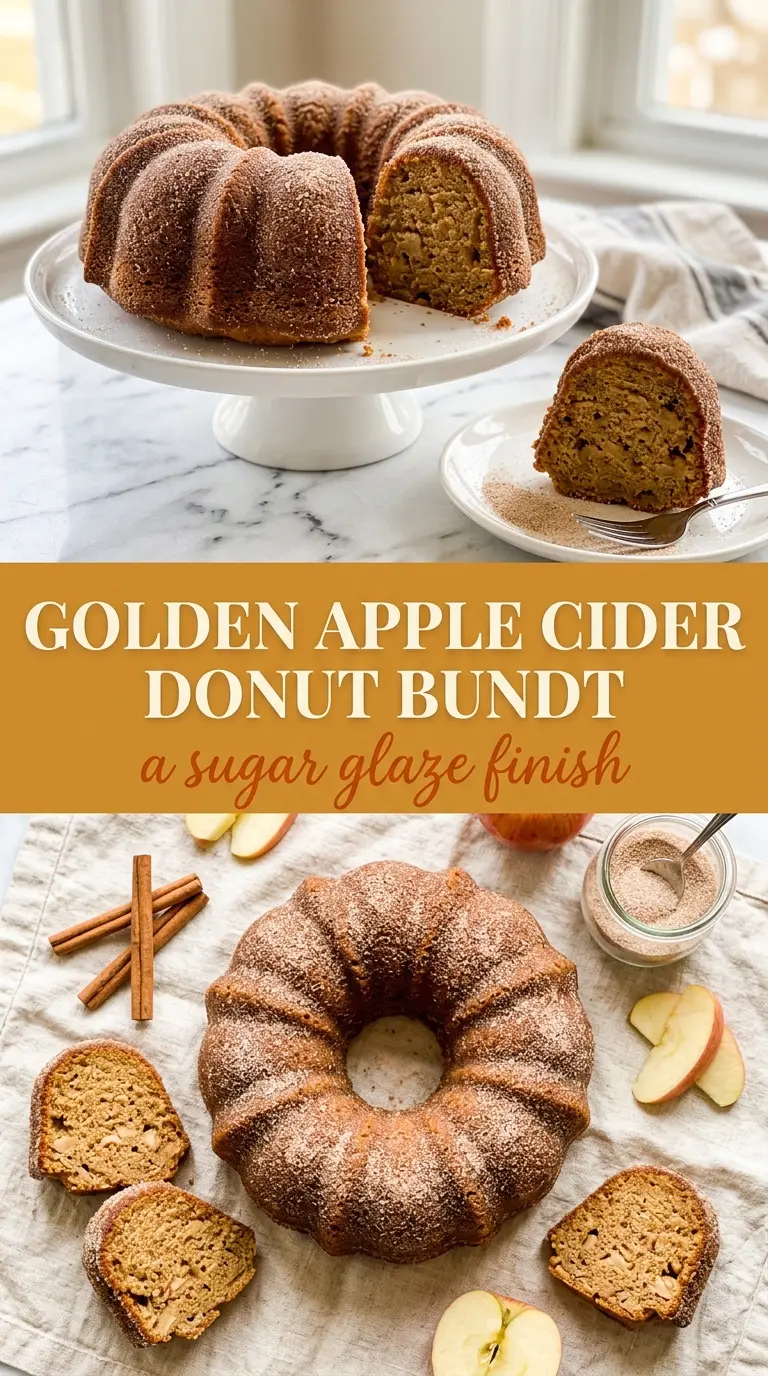
Apple cider donut bundt cake brings the best parts of a fresh cider donut into a sliceable cake: a tender, moist crumb, warm spice in every bite, and that buttery cinnamon-sugar finish that cracks just a little when you cut into it. The texture lands somewhere between a bakery-style snack cake and a proper old-fashioned donut, which is exactly why it disappears so fast once it hits the table.
The batter stays soft because it leans on both applesauce and sour cream, which keep the crumb plush without making it heavy. Apple cider gives the cake its signature flavor, but it works best when the spices are balanced and the cake isn’t overmixed. That bundt shape matters too — it gives you more browned edges and a sturdy surface for the butter and sugar to cling to.
Below, I’ve included the part that matters most: how to keep the crumb tender, how to get the sugar coating to stick, and what to change if you need a dairy-free version without losing the cake’s donut-like finish.
The crumb stayed unbelievably soft, and the cinnamon sugar stuck perfectly after brushing on the butter. I brought it to brunch and there wasn’t a slice left by the end.
Save this apple cider donut bundt cake for the moment you want a soft, spiced crumb with that classic cinnamon-sugar finish.
The Reason This Cake Stays Moist Instead of Drying Out
Bundt cakes fail when they’re treated like standard butter cakes. Too much mixing tightens the crumb, and too little fat or moisture leaves you with a dry slice that tastes better the first day than it should. This one avoids that by leaning on oil, applesauce, and sour cream, which keep the cake soft even after it cools.
The other thing that helps is the bake temperature. At 325°F, the cake has time to rise evenly without setting too fast at the edges. If your bundt cake ever comes out with a dry ring on the outside and a gummy center, the oven was probably too hot or the pan was under-greased and the cake baked unevenly against the metal.
- Oil gives this cake a softer, longer-lasting crumb than butter alone would. That’s a good trade here because you’re not chasing a fluffy layer cake texture.
- Applesauce adds moisture and a quiet apple note without making the batter heavy. Unsweetened is best so the sugar level stays balanced.
- Sour cream brings richness and helps the crumb stay fine and tender. Plain full-fat yogurt works in a pinch, but the cake will taste a little sharper.
- Apple pie spice carries the warm bakery flavor. If you don’t have it, use cinnamon with a little nutmeg and allspice, but the blend won’t taste quite as rounded.
What Each Ingredient Is Doing in the Bowl
- Apple cider is the backbone of the flavor. If you want it to taste more like a bakery cider donut and less like spice cake, simmer the cider down a bit first so the flavor concentrates.
- Applesauce and sour cream work together to keep the cake plush. One adds moisture, the other adds richness and structure, and neither one should be swapped out for plain milk.
- Vegetable oil keeps the crumb soft even after the cake sits overnight. Neutral oil is the right choice here because butter would muddy the clean cider-spice flavor.
- Eggs give the cake its structure and help the bundt release cleanly after cooling. Room-temperature eggs mix in more evenly, which helps avoid streaks in the batter.
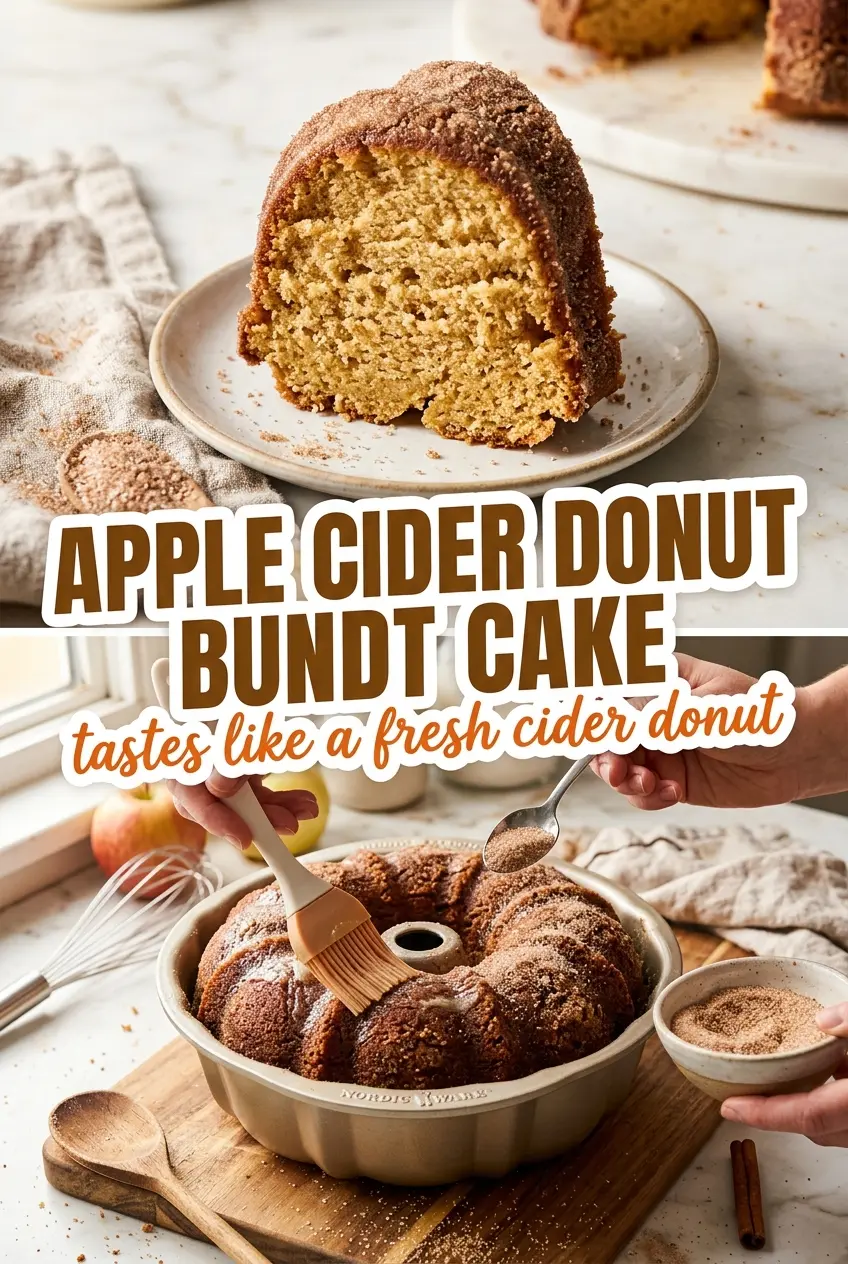
- Cinnamon sugar topping is the finish that makes this taste like a donut instead of just a spice cake. Brush the cake with butter while it’s fully cool so the sugar stays on the outside instead of melting into patches.
The 20 Minutes That Matter Most
Mix the Dry Ingredients First
Whisk the flour, apple pie spice, salt, baking powder, and baking soda together before anything else goes into the bowl. That keeps the leaveners and spice from clumping, which matters in a bundt cake because you want the rise and flavor to be even from the top edge to the center tube. If you see little pockets of spice in the finished cake, the dry ingredients weren’t blended well enough.
Build the Batter Without Beating It
Whisk the sugars, oil, eggs, cider, applesauce, sour cream, and vanilla until the mixture looks smooth and glossy. Add the dry ingredients and mix only until the flour disappears. Overmixing tightens the crumb and can leave the cake a little tough around the edges, which is the opposite of what you want in a donut-style cake.
Bake Until the Crumb Just Sets
Pour the batter into a very well-greased bundt pan and bake until a toothpick comes out with a few moist crumbs, not wet batter. The cake should pull slightly from the sides and smell strongly of spice and caramelized sugar. If the top looks done but the center still jiggles like custard, give it more time; bundt cakes need the middle to catch up before you turn them out.
Coat It While the Texture Is Right
Let the cake cool in the pan for 20 minutes, then turn it out onto a rack and wait until it’s no longer hot before brushing on the melted butter. If the cake is steaming, the sugar melts and turns blotchy instead of giving you that classic sandy donut coating. Once the butter is on, sprinkle the cinnamon sugar generously so it lands in an even layer.
How to Adapt This Cake Without Losing the Donut Feel
Dairy-Free Version That Still Stays Tender
Swap the sour cream for a thick unsweetened dairy-free yogurt and brush the cooled cake with melted vegan butter or neutral oil before the cinnamon sugar goes on. The crumb will stay soft, though the flavor will be a little less rich than the original. Keep the yogurt thick; thin dairy-free substitutes can make the batter looser than it should be.
Gluten-Free With a Better Chance of Holding Together
Use a 1:1 gluten-free baking flour that includes xanthan gum. The cake will be a little more delicate, but it should still slice cleanly if you let it cool fully before turning it out. Don’t use almond flour here; it won’t give the cake the structure a bundt pan needs.
A Stronger Apple Flavor
Reduce the apple cider on the stove until it’s about half its original volume, then cool it before mixing it into the batter. That gives you a deeper cider taste without adding extra liquid. It’s the easiest way to make the cake taste more like fresh cider donuts from a mill or orchard bakery.
Storage and Reheating
- Refrigerator: Store covered for up to 4 days. The cinnamon sugar softens a little, but the crumb stays moist.
- Freezer: Freeze the plain cake, without the butter and cinnamon sugar, wrapped tightly for up to 2 months. Add the topping after thawing so the coating stays crisp and pretty.
- Reheating: Warm slices in the microwave for 10 to 15 seconds or let them sit at room temperature. If you reheat too long, the sugar coating melts and the texture turns sticky.
The Things That Trip People Up With This Cake
Apple Cider Donut Bundt Cake
Ingredients
Equipment
Method
- Preheat the oven to 325F and generously grease a bundt pan with nonstick spray, so the cake releases cleanly after baking.
- Whisk together all-purpose flour, apple pie spice, salt, baking powder, and baking soda in a medium bowl until evenly combined and lump-free.
- Whisk the granulated sugar, brown sugar, vegetable oil, eggs, apple cider, applesauce, sour cream, and vanilla extract in a large bowl until smooth and fully incorporated.
- Add the flour mixture to the wet ingredients and mix until no streaks of flour remain, keeping the batter cohesive.
- Pour the batter into the prepared bundt pan and bake for 50-55 minutes at 325F, until a toothpick comes out with a few moist crumbs.
- Cool the cake in the pan for 20 minutes before turning it out onto a wire rack to prevent sticking and soggy edges.
- Brush the cake with melted butter, then sprinkle generously with cinnamon sugar while the surface is still slightly warm so it adheres.